

Taking Advantage of ISO Invariance for Bird/Wildlife/Sports Photography

sk66

Advertiser
Messages
9,615
Name
Steven
Edit My Images
Yes
First, I'll cover the basics of how I have my Z9 camera set up. To start, the exposure mode is set to either aperture priority (A) or shutter priority (S)... These days I often choose S mode because I am typically using the Z180-600 lens and I'm usually fine with it being set wide open; which is what S mode usually does. And when in S mode the minimum shutter speed for auto ISO is whatever I set with the command wheel. But if I want/need more depth of field, or if I care more about maximum sharpness, I would choose A mode.

The reason I pick the A or S modes is so that I have EASY EC enabled and accessible on the other command wheel. I don't want to be entirely dependent on the metering, and I don't want to have to find a button and then the dial. And because I want Auto ISO enabled. If in A mode it's important to set the minimum SS in the Auto ISO options; and because I am usually using a zoom lens I usually have it set to auto +1 ( 1/(2xFL) ). If I need a specific SS I would select the manual mode and lose Easy EC (e.g. forcing slow SS for panning). The negative of using Easy EC is that it is pretty easy to inadvertently change it, so I see that as more of a trade-off.

And finally, I have it set to highlight weighted metering; which is matrix metering that will purposely underexpose in order to retain smaller areas of highlights. Be aware that it tends to overdo it a bit, so you might want some +EC dialed in by default ( I didn't).

And the point of all of this is to ensure that the camera is automatically protecting highlights by reducing the ISO in order to exploit the Z9's ISO invariance.

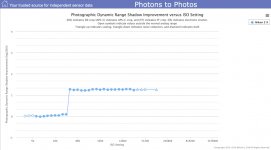
This chart shows the Z9's dual gain ISO invariance... kind of.
Untitled-1.jpg

The reason I say "kind of" is because the Z9 (and presumably the Z8) has a quirk where the dual gain switching occurs at ISO 560 when in auto ISO, and ISO 500 when in manual ISO (used for the charts). ISO 560 is not a setting you can select manually, but the camera can select it and report that in the exif.

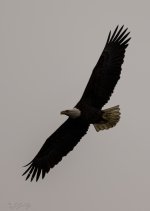
Here is an example image taken in aperture priority (exif included).
_SGK5463-1024jpg-2.jpg

The settings were f/6.3 (wide open), 1/1250 (for motion blur at 600mm), and ISO 72. ISO 72 is almost at base (64), and it is also another ISO that is not user selectable. The feathers on the head are the brightest part of concern and have been protected from clipping. They are actually nearly 1 stop "underexposed," but that doesn't make any difference because it was underexposed using a lower ISO in the ISO invariant range. And ISO isn't light, nor sensor exposure.

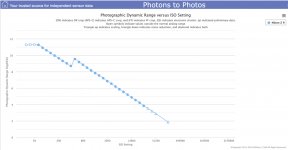
For the Z8/Z9 there is the range between auto ISO 250 and 500 where ISO 560 is actually as much as 1 stop better in reduced shadow noise and dynamic range. But I don't worry about that unless I know I am going to be using elevated ISO's. And in that case I set the minimum ISO to 640 (closest selectable above 560).
The problem with setting a minimum (or fixed) ISO higher than necessary is that the camera will actually underexpose the sensor using aperture or shutter speed when the ISO limit is reached; and that's not good. But it's not necessarily worse than letting the camera choose ISO 400. And the loss of headroom (highlights) at ISO 500/560 may be more problematic than the reduction in read noise is beneficial... pick your poison.
Untitled-1.jpg

This is the same image edited in Lightroom Classic, not bad at all. I did use LR's denoise function at 50%; but it probably wasn't necessary for this size web display.
_SGK5463-2.jpg

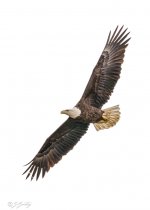
And this is the final image with clouds rendered in Photoshop; I'm quite happy with that.
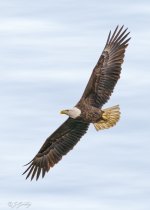
_SGK5463-2-2.jpg


This method isn't foolproof. If the ISO had reached base (64) and the metering still wanted a lower exposure then the camera would have lowered the sensor exposure using aperture or shutter speed. That's where the EC becomes more important because highlight weighted metering tends to overdo it. But then again, with action photography nothing is ever foolproof.

And this isn't any kind of fix for noisy images. If the aperture and shutter speed means you've collected less light from a dark scene/subject then the result is going to be noisier; nothing can change that fact.
 
Last edited:
Looks good and a nice in depth explanation
 
First, I'll cover the basics of how I have my Z9 camera set up. To start, the exposure mode is set to either aperture priority (A) or shutter priority (S)... These days I often choose S mode because I am typically using the Z180-600 lens and I'm usually fine with it being set wide open; which is what S mode usually does. And when in S mode the minimum shutter speed for auto ISO is whatever I set with the command wheel. But if I want/need more depth of field, or if I care more about maximum sharpness, I would choose A mode.

The reason I pick the A or S modes is so that I have EASY EC enabled and accessible on the other command wheel. I don't want to be entirely dependent on the metering, and I don't want to have to find a button and then the dial. And because I want Auto ISO enabled. If in A mode it's important to set the minimum SS in the Auto ISO options; and because I am usually using a zoom lens I usually have it set to auto +1 ( 1/(2xFL) ). If I need a specific SS I would select the manual mode and lose Easy EC (e.g. forcing slow SS for panning). The negative of using Easy EC is that it is pretty easy to inadvertently change it, so I see that as more of a trade-off.

And finally, I have it set to highlight weighted metering; which is matrix metering that will purposely underexpose in order to retain smaller areas of highlights. Be aware that it tends to overdo it a bit, so you might want some +EC dialed in by default ( I didn't).

And the point of all of this is to ensure that the camera is automatically protecting highlights by reducing the ISO in order to exploit the Z9's ISO invariance.

This chart shows the Z9's dual gain ISO invariance... kind of.

View attachment 477016

The reason I say "kind of" is because the Z9 (and presumably the Z8) has a quirk where the dual gain switching occurs at ISO 560 when in auto ISO, and ISO 500 when in manual ISO (used for the charts). ISO 560 is not a setting you can select manually, but the camera can select it and report that in the exif.

Here is an example image taken in aperture priority (exif included).

View attachment 477017

The settings were f/6.3 (wide open), 1/1250 (for motion blur at 600mm), and ISO 72. ISO 72 is almost at base (64), and it is also another ISO that is not user selectable. The feathers on the head are the brightest part of concern and have been protected from clipping. They are actually nearly 1 stop "underexposed," but that doesn't make any difference because it was underexposed using a lower ISO in the ISO invariant range. And ISO isn't light, nor sensor exposure.

For the Z8/Z9 there is the range between auto ISO 250 and 500 where ISO 560 is actually as much as 1 stop better in reduced shadow noise and dynamic range. But I don't worry about that unless I know I am going to be using elevated ISO's. And in that case I set the minimum ISO to 640 (closest selectable above 560). The problem with setting a minimum (or fixed) ISO higher than necessary is that the camera will actually underexpose the sensor using aperture or shutter speed when the ISO limit is reached; and that's not good. But it's not necessarily worse than letting the camera choose ISO 400... pick your poison.

View attachment 477021

This is the same image edited in Lightroom Classic, not bad at all. I did use LR's denoise function at 50%; but it probably wasn't necessary for this size web display.
View attachment 477018

And this is the final image with clouds rendered in Photoshop; I'm quite happy with that.

View attachment 477019


This method isn't foolproof. If the ISO had reached base (64) and the metering still wanted a lower exposure then the camera would have lowered the sensor exposure using aperture or shutter speed. That's where the EC becomes more important because highlight weighted metering tends to overdo it. But then again, with action photography nothing is ever foolproof.
Rereading this useful post, I'm interested in how you discovered the ISO 560 quirk with the Z9.

Is there a source of information that covers other Nikon bodies. I am assuming, that since you have assumed the Z8 will be the same, this hasn't come from published data.

As an aside, do you find the highlight weighted metering on the Z bodies to be more aggressive than it was on the F bodies. It seems to need far more "correction" with the EC dial than I remember needing with the F mount bodies. But it might be my imagination.
 
Rereading this useful post, I'm interested in how you discovered the ISO 560 quirk with the Z9.

Is there a source of information that covers other Nikon bodies. I am assuming, that since you have assumed the Z8 will be the same, this hasn't come from published data.

As an aside, do you find the highlight weighted metering on the Z bodies to be more aggressive than it was on the F bodies. It seems to need far more "correction" with the EC dial than I remember needing with the F mount bodies. But it might be my imagination.
The potential ISO 560 issue was pointed out to (asked of) me so I did some testing. I haven't verified it, but what I think is likely is that ISO 500 in manual is actually ISO 560 (as reported in auto). After all, the camera is using REI ISO values; and 60 is an inconsequential offset from 500, which is itself only a 1/3 step increment. I.e. 560 is not user selectable in the 1/3 step increments; so they made/called it 500 instead.

I don't have a Z8 so I haven't confirmed this for a fact; but they are basically the same camera. The Photons to photos website has the relevant data for ISO invariance for all of the Z bodies.

And yes, I find highlight weighted metering to be more aggressive on the Z9 than on the D series.

View: https://youtu.be/GAc_izQzmj8
 
Last edited:
Personally I hate the "take a bad picture and fix later" approach to photography :(

#JustSayin
 
Personally I hate the "take a bad picture and fix later" approach to photography :(

#JustSayin
Which is a "bad picture"; one that is intentionally underexposed in order to save important highlights, or one where important highlights are clipped?
 
The potential ISO 560 issue was pointed out to (asked of) me so I did some testing. I haven't verified it, but what I think is likely is that ISO 500 in manual is actually ISO 560 (as reported in auto). After all, the camera is using REI ISO values; and 60 is an inconsequential offset from 500, which is itself only a 1/3 step increment. I.e. 560 is not user selectable in the 1/3 step increments; so they made/called it 500 instead.

I don't have a Z8 so I haven't confirmed this for a fact; but they are basically the same camera. The Photons to photos website has the relevant data for ISO invariance for all of the Z bodies.

And yes, I find highlight weighted metering to be more aggressive on the Z9 than on the D series.

View: https://youtu.be/GAc_izQzmj8
Thanks for this. I actually have my Z8 set up to work pretty well identically to the way you have described(based on the info at the Photons to Photos site, but this 500 vs 560 was new to me.

But from what you have shown, it certainly makes sense to use 640 as the change over point rather than the 500 that I am currently using.

And I'm glad it's not just me that's finding highlight weighted metering to work a bit differently with the Z cameras.
 
Personally I hate the "take a bad picture and fix later" approach to photography :(

#JustSayin
If this is in response to the post from @sk66, then I think you are maybe missing the point, which is entirely about getting the exposure correct (optimising) "in camera", not about fixing something later.
 
Last edited:
If this is in response to the post from @sk66, then I think you are maybe missing the point, which is entirely about getting the exposure correct (optimising) "in camera", not about fixing something later.
To be fair, I would call it more of a tradeoff. I.e. highlights shouldn't always be saved; sometimes they should be blown (i.e. white records as white). And intentional underexposure (of the main subject) does necessitate editing to correct it. I wouldn't be doing this if recording jpegs for delivery...

But that said, whenever you are metering dependent in changing light there's almost always tradeoffs. And you are usually metering dependent, even if it is only in setting the manual exposure.
 
To be fair, I would call it more of a tradeoff. I.e. highlights shouldn't always be saved; sometimes they should be blown (i.e. white records as white). And intentional underexposure (of the main subject) does necessitate editing to correct it. I wouldn't be doing this if recording jpegs for delivery...

But that said, whenever you are metering dependent in changing light there's almost always tradeoffs. And you are usually metering dependent, even if it is only in setting the manual exposure.
I think this was why I added "optimising" as I see it as optimising the data captured to allow the desired dynamic range in the final image while minimising noise and maximising detail.

Personally, I'm nervous about using the term "underexposure" in this context as it suggests the exposure is incorrect,when it's the "correct" exposure to keep essential highlight detail.

But I don't disagree with what you said, and I certainly agree that the "correct" exposure for JPEGs isn't necessarily the same "correct" exposure for RAWs.
 
Personally, I'm nervous about using the term "underexposure" in this context as it suggests the exposure is incorrect,when it's the "correct" exposure to keep essential highlight detail.
We could get even more pedantic; because ISO isn't really "exposure" at all with digital.

(except the dual gain step, if applicable)
 
We could get even more pedantic; because ISO isn't really "exposure" at all with digital.

(except the dual gain step, if applicable)
Indeed we could :)

I think that coming from a film background (I processed my first film nearly 60 years ago) grasping that film ISO isn't the same as digital sensor ISO, took me a while to get my head around.
 
Thanks for this. I actually have my Z8 set up to work pretty well identically to the way you have described(based on the info at the Photons to Photos site, but this 500 vs 560 was new to me.

But from what you have shown, it certainly makes sense to use 640 as the change over point rather than the 500 that I am currently using.

And I'm glad it's not just me that's finding highlight weighted metering to work a bit differently with the Z cameras.
It just occurred to me that I failed to mention that the loss of headroom at ISO 500/560 may be more problematic than the reduction in input referred read noise is beneficial...
Every increase in ISO is an incremental loss in headroom and ability to record highlights; what was previously recordable gets pushed into clipping. And the increased DR in the shadows due to reduced read noise does not negate that.

(added to original post)
 
Last edited:
It just occurred to me that I failed to mention that the loss of headroom at ISO 500/560 may be more problematic than the reduction in input referred read noise is beneficial...
Every increase in ISO is an incremental loss in headroom and ability to record highlights; what was previously recordable gets pushed into clipping. And the increased DR in the shadows due to reduced read noise does not negate that.

(added to original post)
It's all a bit of a balancing act.
 
To be fair, I would call it more of a tradeoff. I.e. highlights shouldn't always be saved; sometimes they should be blown (i.e. white records as white).
To balance on the head of a pin, I think we need to be clear about what's to be recorded as 'white', and where our boundaries lie. For instance, we may want a white-painted wall to reveal some texture, which can't happen if we allow the whole expanse of it to record as 255/255/255. There will be other similar circumstances - notably bird feathers from what I've seen.

I usually find that textureless areas of blown pure white in an image both claim the eye & are psychologically disconcerting - which is obviously a double whammy! And a very common fault: we expect to find texture & detail in surfaces. In general to me there's a lot of reason for making highlights the priority exposure hinge, whatever might be sacrificed.

Light sources & blank specular reflections may be let off the hook.

I tend to use auto-iso with its default at base iso. If the vf has a histogram, I pay note to that, & juggle the exposure comp to reshape it to my best guess, even crowding the right end of it because yes, I know it doesn't fully represent the RAW (as pedants often like to point out).

If it's a dslr with an ovf lacking a histogram, I'm happy enough to wing it by guesswork - for out & about photography there's no way I'm going to turn into a chimp! (I feel sorry for Ricoh GR users, but am amazed by some of the pictures they make! ;) )

So how much is related to each of our own values & aims? Or indeed any particular image?
 
Last edited:
To balance on the head of a pin, I think we need to be clear about what's to be recorded as 'white', and where our boundaries lie. For instance, we may want a white-painted wall to reveal some texture, which can't happen if we allow the whole expanse of it to record as 255/255/255. There will be other similar circumstances - notably bird feathers from what I've seen.

I usually find that textureless areas of blown pure white in an image both claim the eye & are psychologically disconcerting - which is obviously a double whammy! And a very common fault: we expect to find texture & detail in surfaces. In general to me there's a lot of reason for making highlights the priority exposure hinge, whatever might be sacrificed.

Light sources & blank specular reflections may be let off the hook.

I tend to use auto-iso with its default at base iso. If the vf has a histogram, I pay note to that, & juggle the exposure comp to reshape it to my best guess, even crowding the right end of it because yes, I know it doesn't fully represent the RAW (as pedants often like to point out).

If it's a dslr with an ovf lacking a histogram, I'm happy enough to wing it by guesswork - for out & about photography there's no way I'm going to turn into a chimp! (I feel sorry for Ricoh GR users, but am amazed by some of the pictures they make! ;) )

So how much is related to each of our own values & aims? Or indeed any particular image?
My balance certainly lies towards getting detail in the highlights, and sacrificing the shadow (and noise).
 
To balance on the head of a pin, I think we need to be clear about what's to be recorded as 'white', and where our boundaries lie. For instance, we may want a white-painted wall to reveal some texture, which can't happen if we allow the whole expanse of it to record as 255/255/255. There will be other similar circumstances - notably bird feathers from what I've seen.
What makes the difference is the angle of light revealing any texture (creating shadows). Without the shadows/contrast, the details will not show regardless of the exposure level.
 
The ambient's usually a given, & when was it ever without an angle - unless totally diffused, in which case we're in a different realm where contrast is low & blown highlights aren't an issue?
 
The ambient's usually a given, & when was it ever without an angle - unless totally diffused, in which case we're in a different realm where contrast is low & blown highlights aren't an issue?
If it's frontal (from behind you) it fills in the shadows... you know, like a fill light.

I.e. if white records at 255 then the shadows/details will show; if they exist. If white records above 255 and clips, then the shadows may also record at 255 and not be visible. And that's the point of exploiting ISO invariance. One can record whites at any level below clipping without any negative effects.
 
Back
Top