CSC+wide apertures+night time shooting.

woof woof

I like a nice Chianti
Messages
44,017
Name
Alan
Edit My Images
No
I have a couple of little complaints with my little G1 chief ones being limited to a max shutter speed of 1/4000 sec and its EVF performance in low light and the eye strain it causes but as there are now several CSC that would satisfy me for image quality I'd like to ask users of Oly OMD, any Panasonic GX7 and Fuji owners for feedback on how there cameras cope in the following conditions...

Shooting at wide apertures in good light...

My G1 has a base ISO of 100 and a max shutter speed of 1/4000 and this gives problems when shooting with wide apertures in good light and without ND's I'm limited to f2.8 or even smaller and I find that I need ND's for perhaps one shot in three and this is pushing me away from my G1 as for me fitting and removing ND's is a two handed operation which detracts from the portability, convenience, and discrete nature of the camera. Basically I hate using ND's.

I'm concerned that as the latest cameras come with 1/8000 but with a higher base ISO and only a hobbled reduced dynamic range (highlights) base of 100/125 I'll be no better off with these cameras and will still need to use ND's.

So, does anyone out there shoot with wide apertures in good light and if so do you need ND's?

My next issue is with my G1's EVF. It fails to display things clearly visible by eye but I think that this is cured with later cameras, see here...

http://www.dpreview.com/forums/thread/3560987?page=3

So that just leaves the issue of eye strain as apart from the issue of not actually displaying anything in low light the light output of my G1's EVF in low light is horrendous and renders it unusable as it causes me to suffer immediate eye strain. It's important for me to point out that I don't mean using ISO 1600 on a well lit high street when it's possible to read a news paper, I'm talking about genuine low light and night time shooting. If anyone uses their CSC in genuine low light I'd appreciate any feedback on how usable the EVF is, if there's any light output and if it causes eye strain.

If the latest batch of CSC can't cure my good light and low light issues I think I'll just buy a Sony A7 which I'm sure will enable me to shoot with wide apertures in daylight without ND's and keep my 5D for occasional low light shooting.

I'd appreciate any feedback from users and then I suppose I'll have to head off to Newcastle and/or York to give a short list of cameras a try. Thanks for any feedack users can give.
 
I guess everyone just shoots at f8.

No, I tend to shoot between f2.8 and f11 for the vast majority of the time, as going any wider for what I shoot tends to give me problems with not enough DoF. Because of that, using an ND filter on the occasions I want a faster aperture isn't really an issue for me.

An EVF is to all intents and purpose a mini computer monitor. Because of that, and unless I'm missing something, every EVF will output light to some degree or other at night. I just can't see how that wouldn't be the case, although I'm sure some will emit less than others. Every single camera I've ever owned has been a compromise in one way or another. I guess you've just got to decide which compromises you can live with.

Simon.
 
No, I tend to shoot between f2.8 and f11 for the vast majority of the time, as going any wider for what I shoot tends to give me problems with not enough DoF. Because of that, using an ND filter on the occasions I want a faster aperture isn't really an issue for me.

An EVF is to all intents and purpose a mini computer monitor. Because of that, and unless I'm missing something, every EVF will output light to some degree or other at night. I just can't see how that wouldn't be the case, although I'm sure some will emit less than others. Every single camera I've ever owned has been a compromise in one way or another. I guess you've just got to decide which compromises you can live with.

Simon.

Over the years I've come across many displays in other devices that don't output anything like the light my G1 does as I think it uses a backlight and I'm hoping that newer cameras don't or at least adjust their light output in low light situations and that's why I'm asking as I can't walk into a local camera store and try these cameras, it means a day out in Newcastle or York and even then there'll be limited chance of trying the cameras in low light. Hiring them is an option but asking for feedback is much cheaper.

Low light shooting and eye strain just isn't covered in any review I've ever read and although I've fired off the question to several reviewers I've never received a reply so I'm interested in feedback from anyone who's shot in low light with newer CSC (my G1 is quite old and I'm hoping that more recent cameras have better EVF's with much less light output.) If they are all the same... I just can't see how they can be usable in low light. Here's it is and this is with all settings turned down for best effect.


Regarding shooting with wide apertures, newer cameras have much more dynamic range than my G1 and I wonder what effect this has when shooting wider than f2.8 but as a lover of fast primes and artistic use in good light I seem to be in a tiny minorioty. Like you most people seem to be shooting at f2.8+ which personally I find very limiting especially when considering the FF equiv DoF.

I know that shooting at wide apertures in daylight isn't for everyone and that most people don't shoot in genuine low light either and I know my gripes place me in a minority but what I want to hear is the experiences of anyone out there who shoots in those situations.
 
Alan, I think with part of this we have to differentiate between the different sized sensors due to how they react to apertures, though all will have the same light grasp when it comes to depth of field the sensor size affects it, for instance f2.8 on an aps-c will have a shallower depth of field than f2.8 on a m43 sensor being equal to about f4 on the aps-c sensor.

So you could get away with f4 on an aps-c and still get a similar depth of field to that you get at f2.8 on the panny.

I cant comment on good light shooting as I don't get a lot of it, but I do shoot regularly in low light @ f2 or wider (depending on the lens) and have never had a problem with the X-Pro1 in that respect, in fact it out performs my previous dslr by a healthy margin.
The only EVF issue I've ever had is in very low light ie room lit by a 40 watt bedside lamp, when pointed at that light source I sometimes get banding in the evf, but not on the shot. even the jpgs sooc @ iso 3200 are very clean.

Shooting birds outside the window on sunny days with the nikon 300mm @ f4.5 I've never run out of shutter speed and most are still shot @ 1/1000th - 1/2000 th sec @ iso 200-400 and I always dial in -1/3 stop exp comp (I shoot manual mainly so achieve it by increasing the shutter speed).

I think your best bet considering your love of limited depth of field is to go for a camera with an aps-c sensor or FF and with either at least a 1/4000 th sec top shutter speed or built in ND filter.
 
when it comes to depth of field the sensor size affects it, for instance f2.8 on an aps-c will have a shallower depth of field than f2.8 on a m43 sensor being equal to about f4 on the aps-c sensor.
Not quite. APS-C is only slightly larger in height, so if you crop to 4:3 off an APS-C sensor you have almost equivalent DoF.

If you want to do the maths, to get the "same" image (i.e. one that looks the same when blown up to the same size - ignoring differences in aspect ratio) on an APS-C to micro 4/3 you need to multiply both by the relative crop factor which for Canon (a 1.6 crop factor) is 1.25, so 50mm f1.4 on micro 4/3rds is 62.5mm f1.75 (so not quite 2/3rds of a stop) on a Canon. It is 2 full stops on a FF camera though.

Carry on :D
 
Alan, I think with part of this....

I've very familiar with MFT, APS-C and FF and the effect on DoF as I've owned all three at the same time and just for the hell of it I did extensive testing. The smaller formats are flexible enough, DoF wise, for me as long as the shutter speed isn't an issue but when it is an issue I do find myself pushing the boundaries of what my G1 can do more than I did with my 20D as shootig with the 20D at f1.4 and 1/8000 in daylight was possible without ND's whilst shooting with my G1 at f0.95 to f2.8 in daylight often isn't possible without ND's. Setting my G1 to ISO 200 (the base ISO of the newer CSC) one day to see how I could cope limiterd me to f7.something in some shots and to me that was just unaccetable, shooting at f8 all day just isn't for me.

Built in ND's isn't going to be possible woth interchangable lens cameras, I don't think so anyway. The GX7 and later Olympus cameras may be able to shoot at wide apertures in good light as although they have a higher base ISO they have higher DR, I don't know, and I'm seeking feedback.

Thanks for the feedback on the Fuji.

As I seem to be in a tiny minority of one with these two issues I think that sadly my only course of action will be to hire a few cameras. I wish that these things were covered in reviews or at least that someone here could take their camera out into the garden one evening or turn the light off indoors and see how usable the EVF is and what the light output is like, if it looks like the output from my G1 and if it causes eye strain.
:D
 
Last edited:
Not quite. APS-C is only slightly larger in height, so if you crop to 4:3 off an APS-C sensor you have almost equivalent DoF.

If you want to do the maths, to get the "same" image (i.e. one that looks the same when blown up to the same size - ignoring differences in aspect ratio) on an APS-C to micro 4/3 you need to multiply both by the relative crop factor which for Canon (a 1.6 crop factor) is 1.25, so 50mm f1.4 on micro 4/3rds is 62.5mm f1.75 (so not quite 2/3rds of a stop) on a Canon. It is 2 full stops on a FF camera though.

Carry on :D

As I said, I've done a lot of side by side testing with MFT, APS-C and FF and I now only own MFT and FF.

MFT DoF is easily flexible enough for me if the shutter speed isn't a problem.
 
Low light shooting and eye strain just isn't covered in any review I've ever read and although I've fired off the question to several reviewers I've never received a reply so I'm interested in feedback from anyone who's shot in low light with newer CSC (my G1 is quite old and I'm hoping that more recent cameras have better EVF's with much less light output.) If they are all the same... I just can't see how they can be usable in low light. Here's it is and this is with all settings turned down for best effect.

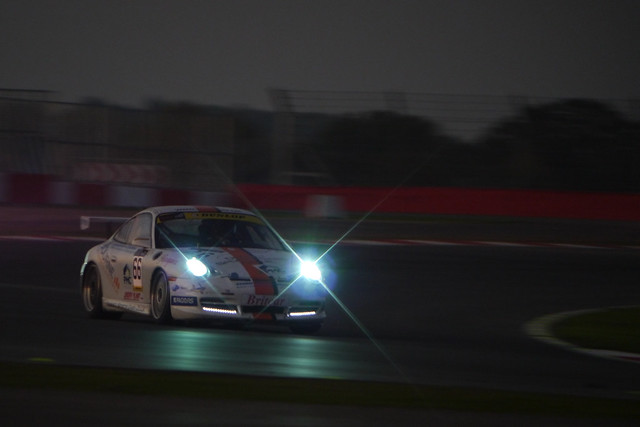
I used a G3, G5, OMD and Sony a77, never noticed the issue with EVF eye strain despite shooting in some very dark conditions, i.e...


Silverstone Britcar 24hr 2011
by Harry_S, on Flickr

I've never known anyone else mention it aside from yourself either to be honest. If anything I found it excellent in very dark conditions, whilst very grainy the gaining up of the EVF made shooting much easier than with a DSLR with OVF.
 
I can only speak for certain about the G1 and it's deffo an issue as you can see from the light output on my hand... it just isn't usable in low light.
Got some good feedback and found some fellow sufferers on another forum and the consensus seems to be that later EVF's are better so I've taken a leap of faith and ordered an A7. If it too is unusable in truly low light I'll just have to keep my 5D for occasional night shooting.
 
Back
Top