

Exposure help

Messages
2,403
Name
Bruce
Edit My Images
No
I often find I'm shooting into brightish sky at landscapes or birds
How do you stop overexposure on background killing the detail to the fore
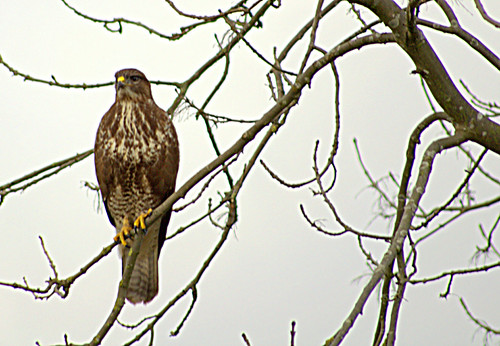

whats this? by Bruce Mo, on Flickr

Dont know what kind of bird this is, anyone?
This was kinda sorted with fill light and touch up with picassa, but how do you get best results in this situation?
 
Ive got a tripod, but tried birds at slow shutter speeds and they twitch and blur, if i turn up ISO it gets noise and if i open the apperture, it gets too bright
AAAAAAAAAAaaaaaaaaaaaarrrrgggghhhhh
Will have a wee look at your link in a bit, cheers for the response
 
try altering your light metering settings..... obtain the smallest metering (partial metering, not evaluative metering) option and focus on the bird..... the depress button half way, recompose your shot and fully depress button when happy with contents......

also use your av +/- by taking a shot of a white bit of paper, which you can use to obtain balance, and alter weather settings within your camera too (such as cloudy etc)- should be able to substantially improve shots by one of or combination of these above.... hope this helps
 
To try to avoid overexposure possibly shoot with a higher aperture or lower ISO. With a higher F/number more of the frame will be in focus because of an increased depth of field, making all the branches appear sharp. It'll also reduce the amount of light hitting the sensor. I've often found that a lower ISO decreases the sensitivity & skies often don't appear as bright or overpowering. Try to keep the shutter speed from going too low as of course this would pick up movement from the bird. I'm not sure how much advice you'll actually take from this but these sort of adjustments have assisted me in the past. Best wishes.
 
To even out exposure all round you'd be best getting a reading for the sky (only needs done once every hour or two) & writing it down. Then get a reading for the subject & set your exposure somewhere in between. If they're less than 4/5 stops apart you'll be able to adjust in PS without too much noise.
 
Wow, totally impressed with the response ladies and gents
Some great advice here, which I will take on board and probably revisit this thresd from my phone when shooting to refresh the old memory
That flash extender thing might be just the job too, will a sb400 work well with this, or is that another thing to put on the wish list (soon to be renamed the money pit list :-) ? )
What a nice bunch on this site....... I'm staying :-)

Prolly won't fit SB400, though they make various versions of the X-tender. Anyway, you need as much power as possible using fash at distance. Need a bigger gun.
 
Cheers hoppy
So, having just bought my 1st camera, thinking it was the dawgs danglies, I now find I want more lens, better tripod, some tubes, a studio background, some proper studio lights and a new flash!!!!
MY WALLET NEEDS HELP!!!!!!! :-)
And the list grows dailly
 
To try to avoid overexposure possibly shoot with a higher aperture or lower ISO. With a higher F/number more of the frame will be in focus because of an increased depth of field, making all the branches appear sharp. It'll also reduce the amount of light hitting the sensor. I've often found that a lower ISO decreases the sensitivity & skies often don't appear as bright or overpowering. Try to keep the shutter speed from going too low as of course this would pick up movement from the bird. I'm not sure how much advice you'll actually take from this but these sort of adjustments have assisted me in the past. Best wishes.

The issue is the dynamic range of the sensor which wont change if you alter the ISO. The only way is to get more light on the subject, or change the shooting position
 
My solution is to shoot raw and to spot meter the brightest part of the scene that matters at +3, which is pretty much the clipping point of Canon cameras. That way I can record as much mid tone and shadow detail as possible without losing any important highlights. The intention is to record as much image DATA as I possibly can. Then I use my raw converter to make the image LOOK as nice as possible.

Here is a rough and ready example. You will see that as recorded the sky appears to be clipped, but by dropping the exposure by 1/3 stop in the raw converter I can pull back some colour in the sky and restore something slightly more interesting than pure white. The bird gets a little darker too, but if necessary it is an easy fix to jiggle the mid tones without a noise crisis.

20120203_185142_000.jpg


I do also try to pay attention to my position relative to the subject and the lighting, trying if possible to put a darker bit of sky behind the subject and brighter areas of sky behind me, but sometimes that kind of luxury is beyond my control.

I have a Better Beamer and I've tried using on camera flash a few times for birds, but often I find the results to be unsatisfactory, with "steel eye" often spoiling the photo. Results are better with off camera flash, but while that's easy enough to set up for birds near a feeding station it's not so practical when on general walkabout.

From the little i know of Nikon I think trying this approach of metering at +3 would lead to strong highlight clipping and +2 1/3 is a more realistic target. Experimentation is the key, in order to determine how your own kit behaves.
 
As with many things in photography, that nails it...."Expermimentation is the key"
Ive been experimenting with light and portraits in my studio with a model (spare room, with a set of site lights and the mrs)
And I went out shooting yesterday, on manual, and didnt have many disasters, even thouh I've not shot in snow before
As usual, the help and advice on here is fantastic and very helpful, cheers everyone
 
Back
Top