Help with ND filter

Messages
1,899
Edit My Images
Yes
Where am i going wrong?
Recently bought an ND filter (ND500) took it out the other night but the shots are coming out under exposed no mater how long i leave the exposure for.
These two pictures are very similar, the settings very different regarding shutter speed and ISO. Does the ISO have more effect than the shutter speed?
I feel somethings not right. As it doesn't seem to matter how long i leave the shutter open for.
Anyway, here are the two shots both straight out the camera (i know they are very much under exposed, should they both be considering the shutter speed);


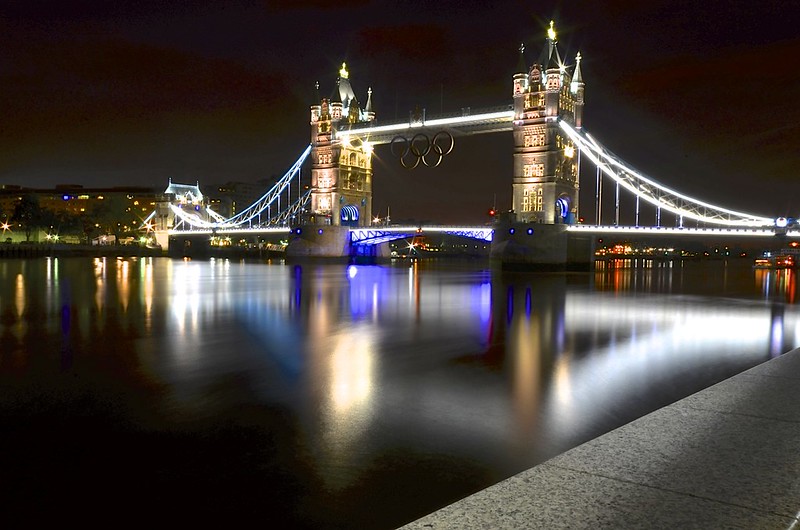
DSC_9783 by ts446, on Flickr


DSC_9782 by ts446, on Flickr

Really am looking for a little bit of help her as i cant seem to work it out.
Also see here for a little more info (another pic)
http://www.talkphotography.co.uk/forums/showthread.php?t=427208
 
i don't understand why you would want to use a ND filter at the time of night/morning, usually they are used in bright light, i suspect to get the correct exposure in the dark you would have been looking at leaving the shutter open for many minutes
 
Its not usual to use ND filters for night photography as exposure are usualy long enough without them, but looking at the Exif data it seems you didnt give it long enough even at 800 ISO, Bulb mode would have been better then you could have given it much more that the 30 seconds Manual is restricted to. Something like this at 800 iso would probably need a few minutes imo but its trial and error working on the meter reading your given.
 
Last edited:
The issue i have with them is the shutter speed, it doesn't really matter how long i leave it open as it doesn't really change much.
The first picture above had the shutter open for 18.8 seconds, not long enough i know. The second was open for 145.2 seconds, now id expect that to be brighter than it is. These 2 pictures are only here to show the point im making and to see where im going wrong with the shutter speeds.
The second picture in the thread i posted 226 seconds. For well over 3 minuets id expect brighter than i got.
 
Last edited:
I think the real issue is using the ND filter at night,

The ND filter will stop light entering the lens, as has been mentioned this is usually used to get longer exposures in bright light.

While there is nothing wrong with using then at night, the problems you seem to be having appear to stem from using at night.

Try taking the same shots again without the ND filter and I'm sure you will find it much easier to get properly exposed images :)

Hope that helps
 
You really shouldn't be doing long exposures at iso 800 either. Long shutter speeds and high iso's do not mix. Keep the camera at iso 100 for long exposures.

Like everyone above what were you trying to achieve using an ND at night?
 
Let's start at the beginning then, ignoring why you would want such long exposures for a shot like that in the first place!

What were the settings for the unfiltered shot? ISO, f/number, shutter speed. Ditto for the under-exposed filtered shots. (Sorry my Exif reader isn't picking this info up.)
 
Ok, flickr should have the full exif. But here we are
The shot above, no filter is 54.1 sec, f32, ISO100.
The second picture here; http://www.talkphotography.co.uk/forums/showthread.php?t=427208 is with ND500, 226 sec, f11, ISO100 (have put up the exposure and brightness in aperture)
The top one on this thread is with the ND500, 18.8 sec, f11, ISO800.
The second on this thread is also with the ND500 145.2, f11 ISO100.

Then you're way under-exposed - obviously, looking at the pictures. Your filter is nine stops, though your sample may be a bit more or less than that, anyway ND500 is nine stops.

So, taking the shot above as correct at f/32, ISO100 and 54 secs, then adding nine stops would give you f/11, ISO800 and 432 secs. That's over four stops more than 18.8 secs.

A 'stop' is any halving or doubling of exposure. Eg with shutter speeds starting at 1sec, nine stops would be 2, 4, 8, 16, 32, 64, 128, 256, 512 secs.
 
Thanks Richard.
The 2 pics at the top of this thread was more just to try and show my problem.

The other thread shows the underexposure when i didnt expect it to be.
Thats the ND500, 226 sec, f11, ISO100 shot.
Are you saying i still need to nearly double that?
 
Dont use the ND, simple really unless you want to walk away from your camera for a few hours while it exposes!!!!!!!!!!!!!!!!!!
 
There's no need to use the ND at night...a 30 second exposure with no filter would mean with the ND filter you would have to expose for roughly 4 hours 15 mins if my maths are correct! Always stick to ISO100 on LE's.
 
Last edited:
Thanks Richard.
The 2 pics at the top of this thread was more just to try and show my problem.

The other thread shows the underexposure when i didnt expect it to be.
Thats the ND500, 226 sec, f11, ISO100 shot.
Are you saying i still need to nearly double that?

I'm not saying that, the physics is. ND500 is a huge amount, you're cutting out 499/500ths of the light.

Understand your stops, write down a conversion table for shutter speeds and keep it to hand. Don't mess with ISO and aperture as it just makes the calculation confusing.

And don't use ND500 at night or you'll never get to bed.
 
Thanks,
I think i'm getting there.
Any recommended websites that explains the conversion well?

All you need to know is explained in post #11 ;)
 
It explains the conversion, but with the relation to the f number im still not there. The example you gave (or i gave) has a f32 to a f11.

Ah right :)

A 'stop' is any halving or doubling of exposure. Shutter speeds are easy, eg 1/125sec is clearly twice as long as 1/250sec, etc. ISO is also easy, eg ISO100 is half as sensitive as ISO200.

It's lens aperture that's the tricky one, expressed as an f/number. There are mathematical reasons for this, but higher f/numbers pass less light and lower numbers pass more, and the relationshiop between 'stops' is the square root of two, ie 1.4.

Therefore, the range of full f/numbers runs like this, each one passing either half or double the amount of light compared to the numbers either side. f/1, 1.4, 2, 2.8, 4, 5.6, 8, 11, 16, 22, 32, 45, 64. There are intermediate f/numbers too, like f/3.5 or f/6.3. You just have to learn this.

HTH :)
 
Last edited:
Back
Top