Beginner Spot metering and such.

Messages
489
Edit My Images
Yes
Yes I have now discovered metering and in particular spot metering.
This was due to me watching a video by Richard Brockwell on shooting the highlights which really brough the shadows in Black and white photographs.
Up to this point I have been using centre weighted metering for everything.

1, Have I been wasting my time with not finding out more and using this method ?

2, Is it in particular for Black and White and Street style photography ?

3. Does it really matter and how big a difference will it make ?

4, Is is only useful for sunny days or can I use it on cloudy or overcast days ?

5, We don't hear too much about it, we see all the data about photographs but not a lot about the metering aspect, so for beginners should it be not worried about until they are more capable with their camera.

I did notice my light meter appeared to be far more active when I was out yesterday, it made me slow dow and really pay attention to what I was doing.
 
Last edited:
There are people who believe that spot metering is the only way of getting perfect results, and refuse to be convinced otherwise. Likewise (though more understandable) those who only trust incident metering.

I’m not either.

The proper use of any metering mode relies on the photographer understanding a bit about what they’re metering. Most cameras for the last 30 yrs have a form of matrix metering, where there’s some level of computation to try to avoid the pitfalls of simple centre weighted metering. And so long as you understand when the meter will be fooled, and you review your decisions with the histogram, you should never get a badly exposed shot.

I don’t even use flash meters nowadays because chimping is so much more effective.
 
There are many ways to skin a cat, on digital cameras the Exposure Compensation dial has a similar effect. And used in conjunction with that underutilized function bracketing. There are lots of buttons and functions on digital that I have not a clue how they are best utilized.

I think that (beginner here) for film work it is just as important to have an understanding of how much light is actually available?
And just some random thoughts, what is the difference between a lovely blue sky and a hard shadow and a nice cloudy day sky with soft shadows. Although you may be picking an area of the sky to meter from, are you are only seeing the exposure setting ? and not understanding the differences in the scene which can be explained by exposure values.

This will be an interesting topic for me also.
 
1. No, you been taking your time, this is a good thing.
2. No, not particilarly, but it's a good example of when it can be useful.
3. On a bright sunny day with lots of dark shadows it can make a huge difference...On a grey overcast day it may make no difference at all.
4. See 3.
5. For a beginer there can be a lot to learn, best take one thing at a time...choose your own priorities.

A well thought out question...you'll be fine. (y)
 
There are many ways to skin a cat, on digital cameras the Exposure Compensation dial has a similar effect. And used in conjunction with that underutilized function bracketing. There are lots of buttons and functions on digital that I have not a clue how they are best utilized.
I appreciate you’ve been experimenting with film, but I guess it’s with quite old cameras. We had exp comp and bracketing well before digital.

Cameras like the Nikon f5 and Canon T90 are the basis of the modern DSLR.

The only real differences between film and digital exposure control are selectable ISO and a histogram view.

The bigger differences come with the march of technology, with processing speeds and AF that feels like cheating.
 
and not understanding the differences in the scene which can be explained by exposure values.
And this is precisely why we need to understand what we’re actually metering as per my comment above.

The how is relatively unimportant in reality, but because it’s using dials and buttons rather than brains, it’s what people focus on. :thinking:

I do recall one idiot who was absolutely convinced that an image shot with Manual settings would be different to an image shot on auto settings that were identical :wave:
 
Another possibility for film camera use is a separate meter, which opens up the ability to use "incident light" metering...

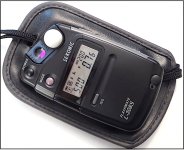
Sekonic L308s in shutter - aperture mode TZ70 P1030899.JPG
The white thing, at the top right of the meter shown above, is an incident light adapter which, when slid to the left to cover the light sensitive cell, changes the function of the meter from reflective to incident mode.

The point of using incident metering is discussed here...

 
I don’t even use flash meters nowadays because chimping is so much more effective.
Most of my digital output is rather specialised, in a museum archive setting, and is taken with the camera tethered so I effectively chimp but also have the histogram on the big monitor showing the Lightroom screen.

I have two ways of working in the studio, both based on exposure compensation, and somewhat prescriptive, after quite a few months of experimentation.

Firstly, for smaller subjects, I use the camera and speedlights in ETTL mode and use the camera in AV mode. I set the camera aperture to f16, ISO 100 or 200, the shutter speed is chosen by the camera, usually 180th, irrelevant really as the exposure is dominated by the flash as I have the room lights turned right down. The background is almost always a white infinity curve so I use the histogram to adjust the exposure which depends on the amount of background white, using the flash exposure compensation. I sometimes have an extra speed light to burn the background out as well.

Secondly, for larger subjects, I use two Bowens heads with diffusion. The exposure is manually set, ISO 100, 200th second, f16, manual flash. I shoot using the histogram, tethered of course, and adjust the individual flash head powers to get a good spread of tones. It's not too bad to let the background burn out for the subject matter to stand out.

And thirdly, in an location situation mostly without tethering, for more difficult subjects, I might resort to manual incident readings.

Fourthy, I photograph some of the museum events. Actual people learning bout the fabulous collections.

I must admit to being lazy when it comes to exposure especially, I can take as many shots as I like to get a decent image of course. I have the utmost admiration for past museum photographers who used film, but surely they developed prescriptions for different situations. We shouldn't underestimate the post processing, darkroom printing skills of the photographers as well and their ability to exploit the film characteristics.

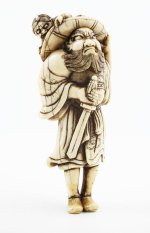
In the studio, Shoki, the Demon Queller, ivory netsuke, Edo period, i.e. anything between about 1650 and 1870! Fantastic craftsmanship. I should point out that this is copyright Bolton Library and Museum Services.

1780225318729.jpeg

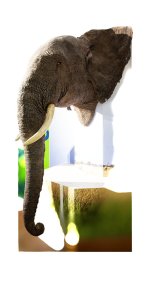
On location. The elephant head.

1780226618145.jpeg
Terribly difficult subject, taken in situ in the gallery with its very subdued lighting and a really cluttered background. Manually metered and post processed in Photoshop to blur the dreadful background.

I'm not sure as to whether I have contributed to the spot metering debate, but I haven't felt the need for the technique. My photography over many years has been based on incident light readings, whenever possible, probably because the best light meter I ever owned was, no, is, a Weston Master IV with Invercone, the incident light attachment, very effectively for slide film.
 
I use spot metering occasionally. Generally, if I'm shooting at a zoo when the subject is inside the house, I'll take a spot reading from the doorway to get a glimpse of what might be inside then, if there's anything of interest there, I'll adjust the next exposure and use M mode to get it better if necessary.
 
I like spot metering, and use it all the time, to prevent blowing highlights for digital, but as PhilV says, the most important thing that can control exposure is the stuff between the ears.

Worth saying, it's hard to blow highlights on film, but easy to lose shadow detail.
 
Last edited:
I used to use spot metering for some pictures but these days I can't remember the last time I used it because there are other ways of doing it. Firstly, exposure compensation with WYSIWYG because it may be quicker to do that than change the exposure mode. Secondly I find that modern cameras and processing software are so good that I can probably use evaluative metering and then in my processing software I can select the area I want to alter the exposure of and do it post capture.

Both of these ways of affecting the exposure arguably have less chance of leading to blown highlights if you're spot metering a darker area of the frame.
 
Own a couple of small pocket cameras, one is a canon Powershot SX240 HS, which I used for years as a point and shoot when I am fishing.
Its been in the river a couple of times over the years and its a bit battered.
Now that I have a far better idea about cameras, I have had a second look at this thing, its very well equipped with tech and has spot metering and host of other things.
Use it to photograph trout fishing flies that I tie myself.
These things are small, very small, three on a ten pence piece with room to spare,
A light bulb moment arrived in my head that I should tie a few new flies, but use spot metering to photograph them and see how I get on.
I have lights and a window for natural light.
Just moved house and have now room to do more stuff that I did do.
I feel good.
 
Back
Top