Wildlife - how much -EV do you use on sunny days?

Messages
3,755
Name
Keith
Edit My Images
Yes
I know there's a lot of factors to consider here, I doubt people keep the same exposure compensation for a brown cow that they would use for a white seagull.

And of course the sky conditions may dictate, or whether the sun is bouncing off of the back of an animal or the wings of a bird etc.

Does the size of the sensor make a difference or are the exposure compensations basically set to reflect each particular camera?

I use a Panasonic G9 and on sunny days I tend to stick with a full stop -1 EV. I tend to find it's safe for most sunny day shoots with the sun at my back and then lift things in post to suit my eye. I do go as low as -2 on some white/bright subjects, on bright days.

Occasionally I will adjust it if the sun goes behind a cloud or if it gets particularly bright so I can move it either way if the conditions change but a full stop -1 EV is my go to, with flying birds and running animals at 2000 shutter speed knocking it back accordingly if it's static images and it's not a windy day.

Interested to know if people think I'm on the right track and what they do.
 
Last edited:
I mostly keep everything on matrix metering 99% of the time. And on occasion for a given subject dial in some compensation, but normally no more than 2/3 of a stop. I find my cameras do an excellent job and I often prefer the 0 compensated shot more.
 
I use a pair of Panasonic G9s and just leave the computer to sort out the exposure. It's probably a lot more accurate than I would be!

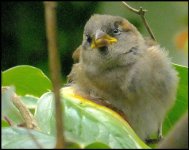
Small brown bird through window FZ82 P1010324.jpg
 
For seagulls I often go down to -2.7EV. I judge it by eye and experience with my particular camera. Other people use the histogram. For other shots I will tend to underexpose to be on the safe side. -1 EV sounds reasonable to me. -2 would be unusual.
I've recently upgraded from an Olympus EM1 to the OM1 and I'm having to retrain myself because the viewfinder behaves differently.
 
It all sounds very complicated to me. It doesn't have to be. I will always have my blinkies on to warn me if my exposure is going to blow the highlights, and adjust accordingly. You've got loads of latitude, and so you can raise the shadows afterwards.
 
The only time I use any plus compensation is on birds in a bright sky . But that’s only if I’m in av mode if in m mode I let the camera handle it
 
There’s no ‘settings’ for a subject.

It’s always about how much light, what’s your subject and where’s your subject.
In exactly the same amount of light, your little white bird can be against a very bright background or a very dark one.
Your meter will make a set of assumptions, and you can use your experience to override those assumptions or not. That’s what learning photography is.

If you keep trying to believe that photography is about ‘settings’, you’re destined to a future of constant disappointment.
 
These days, I have accepted my limitations and generally only take bird shots for ID purposes and they are usually at a significant distance, of dark birds' undersides against fairly bright sky, so it's more likely to be + a stop or 2. Even spot metering is likely to include too much sky and will confuse the meter - and footzoom is NOT an option!
 
There’s no ‘settings’ for a subject.

It’s always about how much light, what’s your subject and where’s your subject.
In exactly the same amount of light, your little white bird can be against a very bright background or a very dark one.
Your meter will make a set of assumptions, and you can use your experience to override those assumptions or not. That’s what learning photography is.

If you keep trying to believe that photography is about ‘settings’, you’re destined to a future of constant disappointment.
Yes exactly, as I said at the start there's a lot of factors to consider here, amount of light, sun bouncing off the subject and conditions will often dictate.

I was just looking for some starter for 10s, if people had “go to” options and work around it from there.

Interesting comments on using different types of metering, something I've started to play with a bit more lately and now on the learning curve.
 
I use a pair of Panasonic G9s
So the image'll be in stereo?

and just leave the computer to sort out the exposure
.... which could be why there are blown highlights on the leaf? :police: :exit:

Sorry, Andrew! :D
I tend to stick with a full stop -1 EV.
That's a good generality but a blunt instrument. The principle aim is to protect the highlights - all other tones can be modified later. With a mirrorless camera you can have a histogram in the evf (or on the back screen, also in live view with a dslr), but that will exagerate the risk (though on the safe side) since it's geared to jpg output - RAW gives extra leeway! Experience is the best modifier! I'd avoid blinkies myself - they clutter & distract the view. I'm not particular to subject matter, but just the light.

As a mindset I'm tempted to say "just imagine that you're shooting Velvia", but realise that doesn't really help - there must be many here who've never shot any kind of film!

Steven's 'highlight-weighted metering' sounds as good a gambit as any & is something I've thought about but never tried.

Blown highlights kill a shot. I see them often in pictures shown in this place. They're a threshold in determining what's exhibition or print quality, or even what you'd want to share casually, & it seems odd to me that so many seem content to fall below that threshold - maybe they're intoxicated with the ignorance of cheap 'likes'?

<rant> Whatever the quality of your vision is, it remains a baseline to get the technicalities right! </rant>. ;-)
 
Last edited:
So the image'll be in stereo?


.... which could be why there are blown highlights on the leaf? :police: :exit:

Sorry, Andrew! :D

That's a good generality but a blunt instrument. The principle aim is to protect the highlights - all other tones can be modified later. With a mirrorless camera you can have a histogram in the evf (or on the back screen, also in live view with a dslr), but that will exagerate the risk (though on the safe side) since it's geared to jpg output - RAW gives extra leeway! Experience is the best modifier! I'd avoid blinkies myself - they clutter & distract the view. I'm not particular to subject matter, but just the light.

As a mindset I'm tempted to say "just imagine that you're shooting Velvia", but realise that doesn't really help - there must be many here who've never shot any kind of film!

Steven's 'highlight-weighted metering' sounds as good a gambit as any & is something I've thought about but never tried.

Blown highlights kill a shot. I see them often in pictures shown in this place. They're a threshold in determining what's exhibition or print quality, or even what you'd want to share casually, & it seems odd to me that so many seem content to fall below that threshold - maybe they're intoxicated with the ignorance of cheap 'likes'?

<rant> Whatever the quality of your vision is, it remains a baseline to get the technicalities right! </rant>. ;-)
Thank you, a lot to think about there.
 
.... which could be why there are blown highlights on the leaf? :police: :exit:
Those are artistic representations of the morning sun! :banana:
 
I was just looking for some starter for 10s, if people had “go to” options and work around it from there.
Your ‘starter for 10’ is what’s the camera meter think.
And adjust from there.

If you’ve already predefined something, and then find you have to adjust, you’re fighting 2 lots of assumptions! Surely it’s easier to start by only dealing with one?
 
Your ‘starter for 10’ is what’s the camera meter think.
And adjust from there.

If you’ve already predefined something, and then find you have to adjust, you’re fighting 2 lots of assumptions! Surely it’s easier to start by only dealing with one?
I get what you're saying, but sometimes I'm in a situation where I know I'll blow out the highlights, so I set -1 EV as a safety net. If I adjusted in the moment I would miss the birdie, or the animal would have disappeared through the hedge etc.

It works pretty well most of the time especially when I'm in places that I'm used to I know the kind of sun levels and effects on the subjects when I take a picture, I just wondered if anybody else make any adjustments in readiness.

I'm definitely going to play with the metering options a bit more, I tried the ages ago but then stopped which was probably a mistake.
 
Yes exactly, as I said at the start there's a lot of factors to consider here, amount of light, sun bouncing off the subject and conditions will often dictate.

I was just looking for some starter for 10s, if people had “go to” options and work around it from there.

Interesting comments on using different types of metering, something I've started to play with a bit more lately and now on the learning curve.
My starter for 10, is like the one @sk66 described, as in using Nikon's highlight weighted metering and auto-ISO, but I also have the exposure compensation dial set to "plus" one stop.

That may seem rather counterintuitive, but the highlighted weighted metering on the Nikon Z is more aggressive than it was on the Nikon F bodies, and the +1 setting seems bring a better balance between shadow and highlights than using the highlight weighted metering on it's own.

With Nikon, the highlight weighted metering uses the Nikon matrix metering plus some undisclosed method that uses luminance and colour to bias the exposure towards the highlights. From experience, the plus one stop exposure compensation seems to avoid underexposure when the subject has walked into shadow, but with some largish areas of highlight in the background.

However, this is just a starting point, and I have my Nikons set up to use the rear control dial as "easy exposure compensation" and although the plus one stop is my default I am very likely, to manually apply some exposure compensation on most pictures, depending on the subject and how it's being lit. But, I set it back to plus one stop, before moving on.

Generally, I try to underexpose rather than risk over exposing, because once you blow out an important highlight, there is no way of recovering it, and I find it easier to live with blocked-up shadows than clipped highlights.

Note that high-light weighted metering works differently between different cameras, and whether you are using JPEGS or raws.

With Jpegs the camera might do some fancy in-camera processing to bring back shadow or highlight details. With raws, some cameras just apply a "fixed" exposure reduction, and others, like Nikons, calculate a variable exposure reduction based on analysing the lighting conditions at the time of exposure.
That's really interesting thank you very much.

I'll have to look at the advanced metering options on my Panasonics.

There is something in the menu where you can set a highlight and shadow curve into a slight S shape with plus and minus bias towards dropping the highlights and raising the shadows. Then the camera metres over the top. I saw a chap on YouTube using it very effectively for video and suggested it would work equally well for pictures.

I'll have a look at the meter options and then I'll have a play with both. One of my biggest weaknesses is I do not spend enough time understanding what my camera can give me and trying these options out properly in the field. I've learned a fair bit over the last few years but I know I've stopped short of understanding everything and exploring all the options properly. That's something I want to change.
Changing the curve in camera adjust how the camera processes the JPEGs.

With difficult lighting I wouldn't use JPEGs as you want all the data that RAW files collect, and not let the camera through some date away before getting to the computer.

Additionally, I'm not sure, with the rapidly changing subjects/lighting conditions, how practical adjusting the curves might be. I assume you can set up curve options that can be quickly switched, But I wouldn't be using JPEGs anyway.

Using the exposure compensation dial with or without highlight weighted metering seems a more practical approach.

As you suggest, the best thing to do, is experiment, and find what you can cope with applying in the field, and how big a difference it makes.

Most of the time, it doesn't have to be "right" but just enough to avoid losing a picture through badly exposed highlights.
 
I'm definitely going to play with the metering options a bit more, I tried the ages ago but then stopped which was probably a mistake.
I think you made the right decision personally.

The skill with metering is understanding exactly when your meter will get it wrong, and by how much.

All metering modes will be fooled sometimes. So if you start switching about the modes, all you’re doing is adding in further variables to learn your way round.

My view is that the more you stick to your chosen mode, the more practice you get, the sooner you will learn.

BUT; no one is getting everything right first time every time. And that you improve your odds not by having cheat codes but from experience.

It’s easy to look at all the switches and think you’re looking at an appliance that just needs you to press the right buttons to achieve a result. But the truth is that it’s more like a musical instrument where getting the right result is just down to thousands of hours of practice.
 
Changing the curve in camera adjust how the camera processes the JPEGs.

With difficult lighting I wouldn't use JPEGs as you want all the data that RAW files collect, and not let the camera through some date away before getting to the computer.

Additionally, I'm not sure, with the rapidly changing subjects/lighting conditions, how practical adjusting the curves might be. I assume you can set up curve options that can be quickly switched, But I wouldn't be using JPEGs anyway.

Using the exposure compensation dial with or without highlight weighted metering seems a more practical approach.

As you suggest, the best thing to do, is experiment, and find what you can cope with applying in the field, and how big a difference it makes.

Most of the time, it doesn't have to be "right" but just enough to avoid losing a picture through badly exposed highlights.
That's a very good point and I haven't considered the fact that the curves that I'm setting may only apply to the JPEG which are only my backup files as I always edit raw. I'll have to have a look at the Panasonic G80 because it allowed me to set the curves but it's a single SD card and it's set to raw only. Usually it doesn't allow you to make changes if you're in a setting that can't be applied to raw.

Yes you do make a good point, having a preset level means you're baked into it unless you come out again while you're taking pictures. I tend to use it when I'm going to take a series of shots in a certain environment where I think it's going to benefit the whole set. It's all part of the learning curve just to see how they come out really.

Exp comp has been my go to adjuster in the past, everything else done neutral and if the zebra lines start kicking in then I tend to drop the exposure compensation a touch. The exception to this is on bright days what I'm going to do bird photography and I may not have time to play with settings if the subject it is only available for a brief moment. This is really the driver for the whole question about having a preset level. I set my shutter speed for moving targets and BIF, I drop my EV By -1 to ensure I'm not too bright on any white colours. Swans and seagulls are the worst especially if the sun's beating down on them. If other birds come along that are darker I can normally lift the shadows in edit to compensate.

I've always been a general whole area metering kind of guy in the past and not played with the other options enough.
 
I think you made the right decision personally.

The skill with metering is understanding exactly when your meter will get it wrong, and by how much.

All metering modes will be fooled sometimes. So if you start switching about the modes, all you’re doing is adding in further variables to learn your way round.

My view is that the more you stick to your chosen mode, the more practice you get, the sooner you will learn.

BUT; no one is getting everything right first time every time. And that you improve your odds not by having cheat codes but from experience.

It’s easy to look at all the switches and think you’re looking at an appliance that just needs you to press the right buttons to achieve a result. But the truth is that it’s more like a musical instrument where getting the right result is just down to thousands of hours of practice.
That all makes perfect sense.

It's not so much having a cheat code, it's scenarios where experience has taught me that the EV is going to need to come down. I have certain conditions where I know I'm going to get zebras in the EVF because I always do, so I drop it at the start, to be ready for a fleeting moment to grab a shot of a flying bird or an animal on the move, without the risk of blowing highlights in a moment where I don't have time to react to the zebras and adjust.

I just wondered really if other people did the same.

I will give some time to metering though and explore it in more depth.
 
That's a very good point and I haven't considered the fact that the curves that I'm setting may only apply to the JPEG which are only my backup files as I always edit raw. I'll have to have a look at the Panasonic G80 because it allowed me to set the curves but it's a single SD card and it's set to raw only. Usually it doesn't allow you to make changes if you're in a setting that can't be applied to raw.

Yes you do make a good point, having a preset level means you're baked into it unless you come out again while you're taking pictures. I tend to use it when I'm going to take a series of shots in a certain environment where I think it's going to benefit the whole set. It's all part of the learning curve just to see how they come out really.

Exp comp has been my go to adjuster in the past, everything else done neutral and if the zebra lines start kicking in then I tend to drop the exposure compensation a touch. The exception to this is on bright days what I'm going to do bird photography and I may not have time to play with settings if the subject it is only available for a brief moment. This is really the driver for the whole question about having a preset level. I set my shutter speed for moving targets and BIF, I drop my EV By -1 to ensure I'm not too bright on any white colours. Swans and seagulls are the worst especially if the sun's beating down on them. If other birds come along that are darker I can normally lift the shadows in edit to compensate.

I've always been a general whole area metering kind of guy in the past and not played with the other options enough.
Ideally, you need to try and anticipate things, and, in my case I have the Nikon memory banks (saved custom settings) set up for different circumstances.

This is far from perfect, but as I walk around, I will change settings to anticipate something happening in the next few minutes. A lot of the time this is just switching the +1stop exposure compensation setting back to zero as I walk.

Or if I am photographing ducks on the water into the light, and catch a peregrine out of the corner of my eye in the distance, I will try to work out if it's flying in my direction and how it will be lit, by the time it gets close enough to make the picture worth taking.

I don't find I'm all that successful with the "only seen for a millisecond" type of photographs, which I tend to just grab at whatever the camera is set at. But they tend to be so badly framed, badly focussed or too small (or big) in the frame that correct exposure is the least of my worries.
Yeah that's a fair point, if you haven't got time to change a setting you probably haven't got much chance of taking a good picture anyway, a lot of luck's going to be involved.

I know what you mean about trying to change settings for a subject that's on its way toward you or going to fly past you etc, and I'm the same, I try to make a quick adjust. Seconds to look at the settings push your thumb and press a button, then try to capture the moment before it's gone. That's still very much a learning curve but I do get it right sometimes.
 
Yeah that's a fair point, if you haven't got time to change a setting you probably haven't got much chance of taking a good picture anyway, a lot of luck's going to be involved.
There's a reason it's called "a snapshot"; and why that term has a negative connotation.

But these days you can often (usually?) set a camera up for a general situation to where it makes the technical choices for you, and if it errors it doesn't really hurt the results.
I.e. you can set your G9 to highlight-weighted metering with auto ISO. And as long as the camera is reducing the exposure by lowering the ISO there will be no real penalty to any underexposure error. However, that is not true if you let the camera adjust the amount of light recorded instead (Ap/SS).
Thanks Steven, I understand most of that, so:
I always have auto ISO, but often I shoot in SP and adjust Exp Comp for highlights on subjects.
Perhaps I need to use M a lot more and adjust the aperture more? rather than SP and just jump to Exp Comp?

I don't know if I'm imagining this, but if I go F7 - F8 -F11 it seems to raise the ISO more than using Exp Comp in SP?
 
Last edited:
I don't know if I'm imagining this, but if I go F7 - F8 -F11 it seems to raise the ISO more than using Exp Comp in SP?
Quite possibly. The camera can select/use settings that are not available to the user to select manually... e.g. ISO increments less than 1/3 stop. I believe my Z9 can use ISO settings in finer increments than it can even report (it appears that analog ISO is a voltage ramp, and it's only in "steps" when user selected).

The camera can also choose/use aperture settings and shutter speeds that are not user selectable, but they don't always report exactly what they did. At the very least it can use and report both the 1/3 and the 1/2 stop increment values; but I have also seen values that are not on either scale.
 
Last edited:
it's scenarios where experience has taught me that the EV is going to need to come down.
That’s your experience doing exactly what it should, I think you’re over complicating somewhat.
I just wondered really if other people did the same.
Yes of course we do, but back to my first post, all scenarios are different, and you’re the only one that’s there to judge it, so someone else’s judgement from afar is no use to you. Trust your judgement, learn from your mistakes and keep on doing what you’re doing
 
That’s your experience doing exactly what it should, I think you’re over complicating somewhat.

Yes of course we do, but back to my first post, all scenarios are different, and you’re the only one that’s there to judge it, so someone else’s judgement from afar is no use to you. Trust your judgement, learn from your mistakes and keep on doing what you’re doing
Thanks Phil, I appreciate that.
 
Quite possibly. The camera can select/use settings that are not available to the user to select manually... e.g. ISO increments less than 1/3 stop. I believe my Z9 can use ISO settings in finer increments than it can even report (it appears that analog ISO is a voltage ramp, and it's only in "steps" when user selected).

The camera can also choose/use aperture settings and shutter speeds that are not user selectable, but they don't always report exactly what they did. At the very least it can use and report both the 1/3 and the 1/2 stop increment values; but I have also seen values that are not on either scale.
Thanks Steven, great information.
 
Back
Top