AF technique with Canon 40D

Messages
123
Name
Colin
Edit My Images
Yes
Been having a poor hit rate recently with my 40D and both 24-105 IS and 70-200 f4 IS lenses when trying to get action shots of fast moving targets.

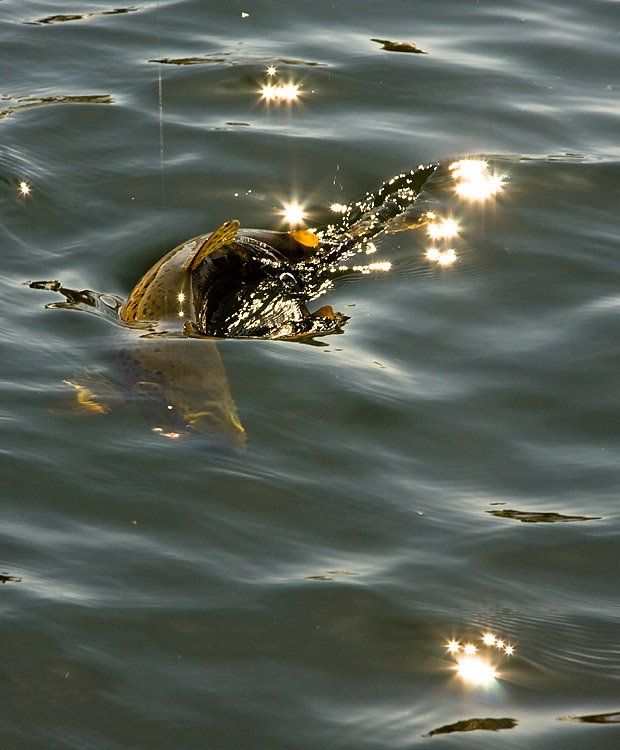
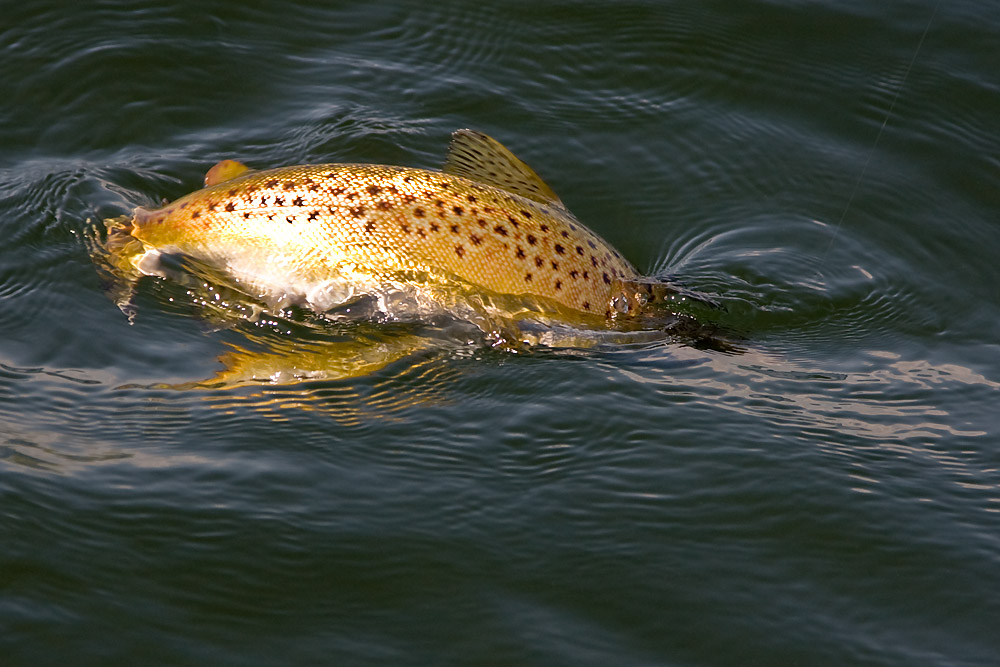
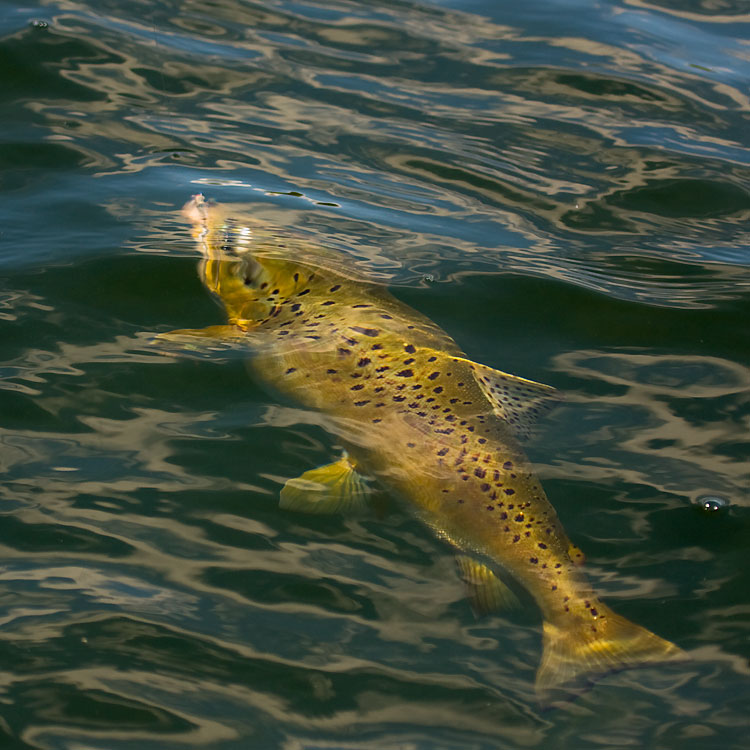
The particular shots I am trying to take are of fish when they break the surface of the water - very difficult to predict exactly when and where it is going to happen.

My hit rate is probably worse now than it was a year or so ago, and I have maybe drifted away from the particular method I was using back then - though I would struggle to remember exactly what I was doing (don't ever grow old!). What I am doing now is using Servo AF with it assigned to back button focusing and holding my thumb on it full time while waiting for the chance to shoot. (Experimented both with centre focus point active and all points active.)

I notice that neither lens is particularly keen to keep hunting when the subject jumps suddenly backwards or forwards in the field of view. They will twig that they need to refocus after a second or so, but that is often too late. A better bet seems to be to keep pumping the back button to force the lens to refocus, refocus, refocus... and they will do so... but it is a lot of extra effort when all your senses are trying to do different things at once!

The other problem with servo AF is that it is perfectly happy to take the shot when the whole thing is out of focus, whereas some other settings will not shoot until they have focus lock.

Anyone recommend a better way to keep the lens hunting for focus so that when the shot suddenly appears, the camera & lens are on the case and the shot is not taken until locked on?

Col

Hi col

If I am understanding the question correctly? ... That is, you want the camera to focus on the fish as it breaks the surface? Then I think you are pretty much asking the impossible, perhaps you may get lucky, perhaps not! ... If you know where the fish will jump, I would suggest you use manual focus on that spot with a large'ish DOF, use a tripod and a remote shutter release then 'spray and pray' when you think the fish will jump :thinking:
 
I've never tried to shoot such things, but here are some ideas....

AI Servo is intended to track a subject moving in a predictable fashion. It also works best if you acquire and track a subject for about a second or more before releasing the shutter. That is how long the AF system needs in order to work out what the subject is doing and how quickly it is changing distance and in what direction. It is not designed to respond in a nanosecond to a target exhibiting random motion, and if you are tracking the water in anticipation there is little reason to believe the AF will quickly lock on to a fish just because you suddenly bring the camera to bear on the fish.

I would think your best might be to shoot in One Shot mode, and if the fish has strong contrast with the background you might even try shooting with all AF points enabled. If you pre-focus the lens just a little further away than the expected location of the subject you should find that focus will snap to the subject when it appears and you hit the AF button.

I would also suggest that you stop down a bit to buy some extra DOF. I have no idea of you focal length and subject distance, or what shutter speeds you need, but assuming bright conditions you ought to be able to shoot at something like f/11, 200 ISO, 1/400, which might help.

Furthermore, if you are shooting with IS enabled, but whipping the camera around to target a fish, you may find it better to turn IS off. IS will try to combat movements and will fight your attempts to quickly acquire a subject that is out of position.

I don't know if any of that makes sense but if your current approach is failing then it is an alternative strategy to try out.
 
Thanks Tim and Steve - some useful input there. I do know I am asking a lot - it's the fact that I seem to be doing more poorly now than I was a year or a couple of years ago that has me wondering - because I used to get quite a few good shots, but I do keep tweaking my settings and I feel I have drifted off what works best.

I am usually working in the region of 100 mm or so. There really isn't time to use manual accurately. Presetting to a fixed point and hoping that is a good place is much more hit and miss than attempting to get instant AF. I am on board with the one-shot suggestion - I will give that a try. I am probably bending servo beyond what it is designed for, as you say... though I have had some good results that way! What determines just how quickly one-shot AF focuses? The lens? The body? Both? Are the likes of a 1D plus an f2 lens going to be naturally a lot quicker than my 40D and f4s?

Stopping down (for more DoF) would be great, but the problem I have being up here in the dim and dingy far north (ie Scotland) is that I don't have enough light to play with. I need about 1/500 - 1/750s to freeze the motion sufficiently and that is pretty much committing me to wide open most of the time - even wide open and high ISO a lot of the time!

Will try switching off IS - hadn't occurred to me I might be fighting against it for these shots - it is so blummin' useful for 90% of the time when I am trying to shoot from inside a boat. A tripod is as much use as an ashtray on a motorbike! I can manage without it at 1/500s though.

Cheers,

Col
 
At 100mm and 1/500-1/750 you really don't need IS, especially if you are swinging the camera about on purpose. I shoot BIF and find it better to disable IS when shooting at high shutter speeds, even at 400mm.

If you used to have better success in the past, can you open up some of your older shots in DPP and check out your EXIF and custom and other settings?

Also, if you are shooting fish at only 100mm either they are bloomin' huge fish or they are very close. If close, can you get any mileage from using flash? If you have a 580EX (not sure about lower models) then you can use flash in HSS mode and still get those high shutter speeds.

If you do try prefocusing and then expecting to snap focus to the fish when it appears, do make sure you prefocus beyond where you expect the fish to appear. If the AF system has any doubt about what it is focusing on it will always start to search by bringing focus closer. You want it to be able to find the fish ASAP, not have to rack all the way to MFD and then back out again. Depending on distance, maybe setting the focus limiter switch will help a little.

Af performance does depend on the body and the glass. The body needs the right sensors, and to be able to distinguish contrast as quickly as possible, then make calculations as quickly as possible as to where it wants the lens to move to. Also, aperture has a big influence, with lenses of f/2.8 and faster having a distinvt advantage in speed and accuracy. But there's more to it than that. The lens needs high quality, fast AF motors and the more glass that needs to be shifted the more oomph is needed from the camera to drive the AF motors. Interestingly, if you look at the white papers for the 40D and the 1D3, they both specify the same performance for AF tracking speed, but in my experience the 1D3 definitely locks focus faster initially. It also offers other advantages such as AF expansion points, which can help considerably if your subject is a little off centre. Unfortunately, the 40D just has ruddy great gaps between its nine sensors, so a small subject can easily slip through those gaps.

Furthermore, if using AI Servo and all point focusing, you must first lock focus initially with the centre point, and only then can the camera hand off to other points if the subject moves off centre. This is in stark contrast to One Shot AF, where the system will use any of the nine focus points to lock onto the nearest thing in the frame with adequate contrast. That's why One Shot may yield very different, and possibly better results, than AI Servo.
 
if you are shooting fish at only 100mm either they are bloomin' huge fish or they are very close. If close, can you get any mileage from using flash? If you have a 580EX (not sure about lower models) then you can use flash in HSS mode and still get those high shutter speeds.

We wish they were huge but, alas, usually just close... maybe in the 2 to 5 m range. I guess I sometimes go to 200-400 mm when they are more like 5 m away. The problem with flash is reflection. Here's what we are up against with no flash...

4557.jpg


4574.jpg


4613.jpg


Before anyone says Polariser... :D:D:D

More good advice there - thanks again. I have dabbled with the 100 mm f 2.8 macro - again with some good, and some bad results. From what you say, I am thinking more and more that I should try going back to one-shot AF, all points active.

Cheers,
Col
 
The 100 Macro, being a macro lens, is designed for very precise focusing, rather than speed. f/2.8 will help accuracy, but I think the AF speed of that lens may not be what you need. Mind you, I don't have one, but that's what I've read. Something like the 85/1.8 or 100/2 might get you better results.

This is something I managed with the 85/1.8 at f/2 on my 50D. Even at 100% it is pretty sharp, considering the speed and proximity of the dog, and the shallow DOF. This is unedited and shot in flat lighting, which does little to help the AF or to enhance the apparent sharpness.

20090301_120058_4919_LR.jpg
 
Excellent replies from Tim, as usual :thumbs:

Now with the benefit of having seen some sample pics, I think the favourite might be centre point AF on single shot, IS off, and reassign AF to the shutter release button. I think the back button is probably slowing you down.

100 macro is not the fastest as it has a fine focusing mech, but I'd have thought it should be okay if you're on the long side of the range switch.

You have the 70-200L 4 IS? That would seem about perfect and is pretty much as fast as it gets.

Thanks. Yep, already set up my C3 menu (the one I switch to for action shots) to shutter button focus and one shot AF. Out on Friday and Saturday nights this week and will experiment with centre point vs all points... and try to remember to switch off IS!

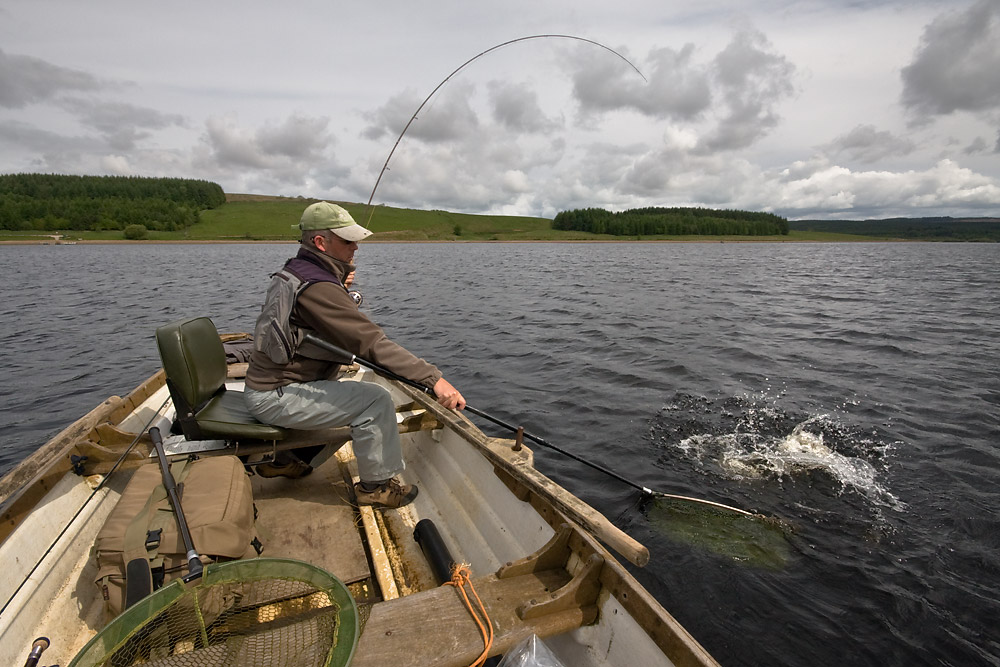
70-200 L 4 IS is indeed an absolute stoatir as we say around these parts... provided I get it all right at my end! I don't have it on all the time, as I am trying to do other stuff... wide inside the boat, long range outside the boat... The 24-105 is the best allrounder, and even then it isn't wide enough on the 40D to get shots inside the boat. Sigma 10-20 does that job...

5010.jpg


I realise I am trying to combine 2 activities at one time, and 2 sets of gear have to try to reach a compromise with each other in terms of what I can take out with me, and what I have to hand when an opportunity arises.

Col
 
Back
Top