Best ways to photo a starry sky

Messages
230
Name
Tim
Edit My Images
Yes
i am off to Colorado in a month, and whilst am there, thought would take advantage of the pollution-free skies, and get some shots of scenery and beautiful starry skies, and was wondering how best to capture all the stars, for example in this picture...
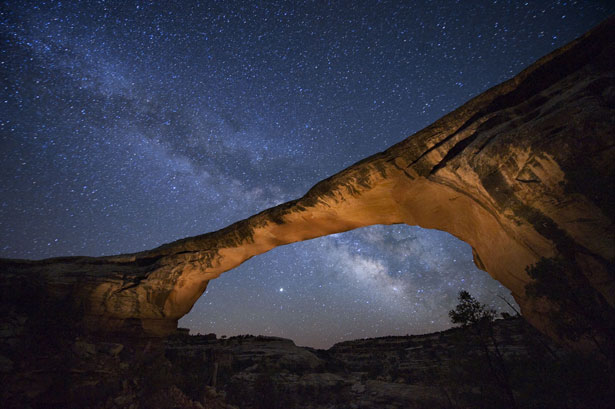
starry-night-sky-615.jpg


higher iso, but risk noise? longer shutter lengths, but possible star movement?

any processing techniques to improve overal clarity like blending options in photoshop?

thanks!
 
that looks like either a lot of photos stacked (different exposures) or possibly a long exposure with a brief flash/torch sine to expose the foreground.

I suspect the former but the latter should be possible
 
I wouldn't think the latter would be possible would it? A Long exposure wouldn't be great with the stars moving across the earth as you would just get a blur.
 
Use the widest aperture your lens is capable of. A fairly high ISO. I usually aim for between 800 and 1600. Then experiment with the shutter speed to see what works. Use a short focal length then you needn't worry too much about star movement.
 
What part are you visiting Tim? My sister lives in Colorado Springs. Just love visiting myself, one of the best States across there for scenery (but only my opinion)

Di
 
What part are you visiting Tim? My sister lives in Colorado Springs. Just love visiting myself, one of the best States across there for scenery (but only my opinion)

Di

I am actually going to Colorado Springs :D

My fiancée's parents live in Peyton
 
Have a great trip Tim, get yourself out to Garden of the Gods for a sunrise/sunset.

Di
 
Before I went away last summer I figured I would have a go at getting similar shots, so did a search and eventually found a tutotrial using a freeware software.

Tutorial:

http://www.asignobservatory.com/index.php?option=com_content&view=article&id=84&Itemid=125

Software:

http://deepskystacker.free.fr/english/index.html


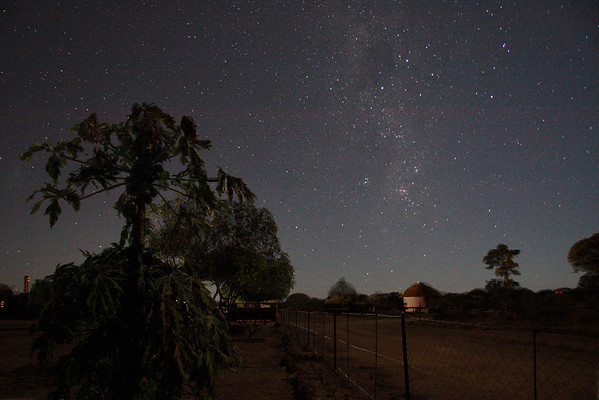
Unfortunately, when I got there I forgot everything I had read, so just did a single exposure then tweaked it in CS2. The moon can make a massive difference to the shot - where I was, it was just over a half moon, and I didn't need to use a torch to set my camera up, and I also had a shadow!

This was my attempt and settings: tripod, mirror lock up, 17mm, ISO 1000, 56 seconds, remote shutter release. I took a few shots with different shutter speeds, on a trial and error basis, then when I got home I processed it to bring the foreground out a bit more, and also to bring out more of the stars while keeping the noise to a minimum.

989616250_kULHM-M.jpg


Hope all that helps you a bit!
 
That photo in the first shot is either Stacked or, just as possible, the entire night sky is from an entirely different picture or source altogether! It wouldn't take much to make a mask of the rocks (very sharp edge....) and a single tree, and then slap anything in (Nasa is particularly helpful if you want an massive library of high-res pretty pictures of stars and galaxies!)
 
Shouldn't that first photo be credited to the photographer?
 
Do you credit Google image search?

Hi Tim

The image is someone's and even though you found it through google you should at least provide a link to the original ..... at least IMHO :cool:
 
That first image is a single of no more than 60 seconds but more likely 30. Lack of movement in the stars says it's not a longer exposure.

It'll be a high ISO shot - 2000 or more, maybe even 3200 - at no more than about f/4. The light on the rocks will be from a fairly low powered source, doesn't need much at those ISOs. There will have been little or no moon (it brightens the sky too much for photographing stars) and shadows on the rocks tell us the light came from below.

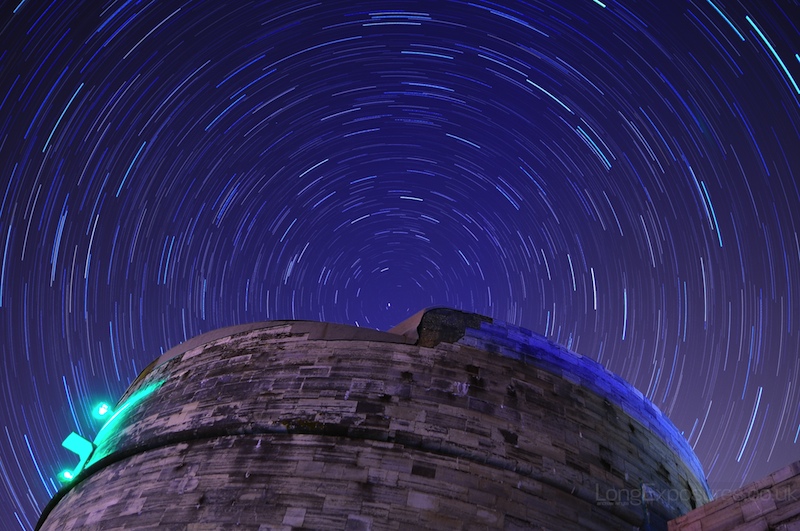
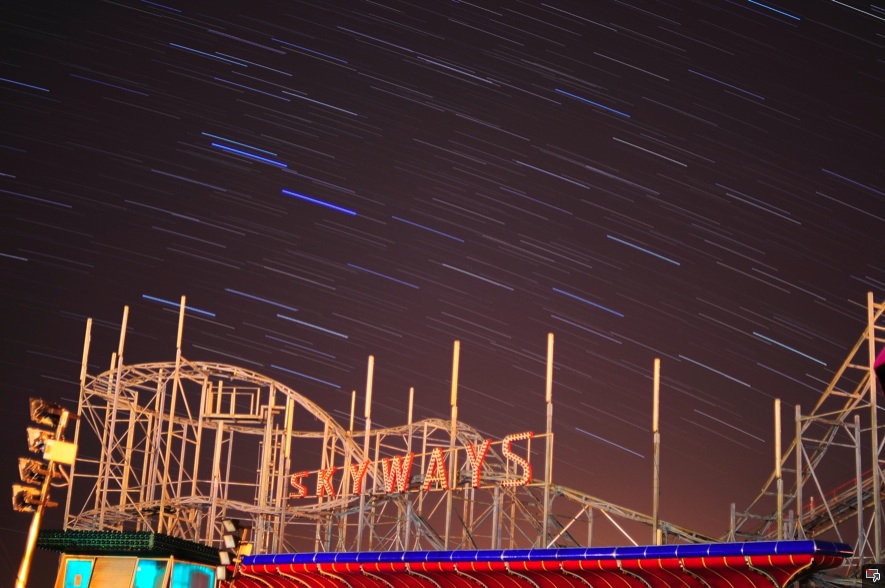
If you shoot consecutive frames from the same position you'll get star trails, and depending on focal length and which direction your camera's pointing you'll get anything from circular trails to dead straight lines - there's only a couple of hundred metres between my shots below.


Can look pretty cool but optimum star trail settings are different to the best settings for capturing the Milky Way, so be sure what you want before you set out and set up.
 
Back
Top