


- Messages
- 40
- Name
- Andreas
- Edit My Images
- No
It’s not always clear what CLA (clean, lube, adjust) actually means. The following is my personal take on the matter.
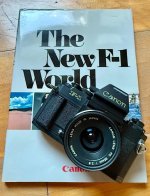
The photo shows a Canon New F-1 that I bought on a whim in Vienna from a private seller. It’s been used—you can tell by the signs of wear. A quick check shows that all the functions are working fine. Should I still have it serviced?
Based on my experience so far as both a user and a DIY repairer, I’ve established the following
Criteria for performing a CLA (clean, lube, adjust)
If action is needed, I determine what steps are necessary.
but to always weigh the options carefully.
This is because a thorough service requires extensive disassembly of the SLR, which is always risky.
If I decide to proceed, I plan to set aside sufficient time. It is a lot of work until everything is done.
I don’t service SLRs that I don’t work with. Unless there’s visible battery electrolyte leakage or mold. Both issues need to be addressed, as they can worsen and cause irreparable damage.
Do I have to perform a CLA myself?
No, I advise against it, unless you’re already into DIY and have experience.
I would entrust my SLR to a repair shop for servicing that has the necessary expertise and equipment.
In any case, make sure to ask what the CLA includes and what work will be done. A proper CLA inspection involves more than just looking under the bottom cover.
+++
 A word of caution
Please keep in mind that you’ll be using highly flammable solvents for service work, and their fumes are harmful to your health. Soldering also produces fumes that should not be inhaled. Dangerous high voltages can be present when handling electronics, especially in conjunction with electronic flash units and mains. Therefore, familiarize yourself with the safety regulations beforehand and ensure your safety. Depending on the activity, protective gear may be advisable.
All information is provided without guarantee. Any action you take upon the information in this report is strictly at your own risk.
This report describes my personal experience and approach; it does not constitute a professional or certified repair instruction. I am not liable for any property damage or personal injury resulting from actions taken based on the information provided in this report.
Acknowledgments
Without the work of Master Larry Lyells, in particular, we wouldn’t have the detailed technical information we need today for service/repair of electromechanical SLRs.
The SPT Journal and The Camera Craftsman, which he helped shape significantly as an author, and which contain all the necessary information and instructions are available for a fee through Learn Camera Repair.
We owe our access to them to Eugene Pate, the founder of Learn Camera Repair.
When does my electromechanical SLR need servicing?
This is a question I ask myself time and again when it comes to my SLRs. I use some of them regularly, while others sit in a closet for years.The photo shows a Canon New F-1 that I bought on a whim in Vienna from a private seller. It’s been used—you can tell by the signs of wear. A quick check shows that all the functions are working fine. Should I still have it serviced?
Based on my experience so far as both a user and a DIY repairer, I’ve established the following
Criteria for performing a CLA (clean, lube, adjust)
- External appearance. Does the SLR need cleaning? Does it show heavy wear? Is there any visible damage?
- Do the mirror dampener and light seals need to be replaced?
- Functionality of all operating modes and settings. Does the camera’s display and behavior make sense?
- Checking on the camera tester. Are curtains travel times, shutter speeds, the exposure metering system, and automatic exposure all functioning properly?
- Haptic and acoustic assessment. Does the SLR wind smoothly, are all levers and buttons easy to operate, and are there any abnormal noises during operation?
- Checking the focal flange distance with the depth micrometer > Is the lens mounting surface (lens mount) positioned at the specified distance from the film plane so that images at infinity are in focus?
If action is needed, I determine what steps are necessary.
- If the camera is heavily soiled, I remove the covers for a thorough cleaning.
- Heavy use is an indication that I should consider cleaning and re-lubricating the mechanics.
- Damage must be examined for its potential impact.
- Rotten/sticky mirror dampers and light seals(residue and crumbs) can contaminate the mirror and the shutter. They have to be replaced.
- With horizontal focal-plane shutters, it is usually possible to adjust the shutter without having to take the SLR apart extensively. With vertical focal-plane shutters, however, this usually requires removing the front plate along with the mirror box.
- Any irregularities noticed while making adjustments or unusual noises must be investigated further. This requires opening the SLR.
- If the focal flange distance is incorrect, check the screws securing the front panel to the housing. Ensure also that the lens mount is securely fastened.
but to always weigh the options carefully.
This is because a thorough service requires extensive disassembly of the SLR, which is always risky.
If I decide to proceed, I plan to set aside sufficient time. It is a lot of work until everything is done.
I don’t service SLRs that I don’t work with. Unless there’s visible battery electrolyte leakage or mold. Both issues need to be addressed, as they can worsen and cause irreparable damage.
Do I have to perform a CLA myself?
No, I advise against it, unless you’re already into DIY and have experience.
I would entrust my SLR to a repair shop for servicing that has the necessary expertise and equipment.
In any case, make sure to ask what the CLA includes and what work will be done. A proper CLA inspection involves more than just looking under the bottom cover.
+++
A word of cautionPlease keep in mind that you’ll be using highly flammable solvents for service work, and their fumes are harmful to your health. Soldering also produces fumes that should not be inhaled. Dangerous high voltages can be present when handling electronics, especially in conjunction with electronic flash units and mains. Therefore, familiarize yourself with the safety regulations beforehand and ensure your safety. Depending on the activity, protective gear may be advisable.
All information is provided without guarantee. Any action you take upon the information in this report is strictly at your own risk.
This report describes my personal experience and approach; it does not constitute a professional or certified repair instruction. I am not liable for any property damage or personal injury resulting from actions taken based on the information provided in this report.
Acknowledgments
Without the work of Master Larry Lyells, in particular, we wouldn’t have the detailed technical information we need today for service/repair of electromechanical SLRs.
The SPT Journal and The Camera Craftsman, which he helped shape significantly as an author, and which contain all the necessary information and instructions are available for a fee through Learn Camera Repair.
We owe our access to them to Eugene Pate, the founder of Learn Camera Repair.
Last edited: