

confused about exposure

Messages
258
Name
Nancy
Edit My Images
Yes
Hello

This is no doubt a stupid question but...

If I have a dark subject, say an animal up in a tree, and the background is a mix of branches/leaves and then sky. If the sky is clouded and very bright what is the best way to shoot that shot so that you retain detail in the animal without blowing the sky?

Should I be using evaluative metering? or spot metering? If the latter should it be spot on the animal? or the sky? or neither?

Here's an example shot:
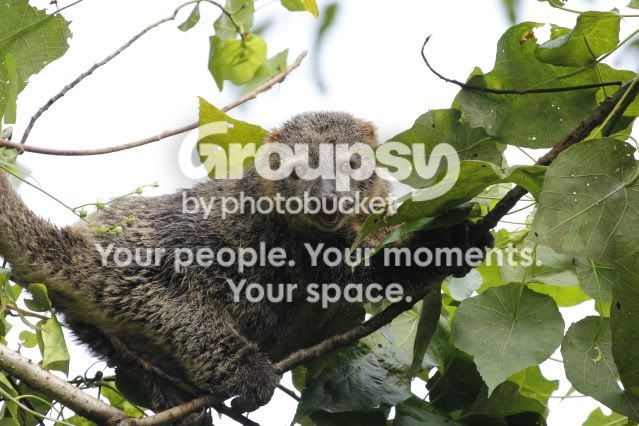
_MG_5008.jpg


This probably isn't the best example as the animal isn't so dark but in this sort of case what is the best option to achieve the best possible result?

thanks
Nancy :)
 
This may sound a cliche, but there really is no such thing as a daft question on this forum. We were all learners once :thumbs:

In my experience, there's two ways this can be approached. If you use evaluative metering, the subject matter in this case may well be underexposed. The answer to this would be to use exposure compensation, which, depending on the brightess of the sky could be in excess of +1EV.

The other way to do it, would be to spot meter, or partial meter off the subject, then recompose and shoot.

Unfortunately, with a very bright sky, the dynamic range would probably be too high with inevitable blown sky as a result, but the subject being exposed correctly. Use of a graduated filter in this particular instance would be fairly difficult too given the unpredictable nature of the background. The best idea would be to try and engineer a shot that cut out the sky altogether, or greatly minimised it at the very least

Always check the histogram afterwards as to the result to see how much of your image is blown.

Of these two methods, my preferred way to go is the second
 
Last edited:
Spot metering and set your exposure bracketing to +- 1 stop either side of normal, continuous shooting, and fire off a 3 shot burst, not only does this ensure you have at least one half decent shot but you can use the underexposed one and merge the sky from it in PP
 
I agree with Nigel about the brightness range being too much for the camera.

One possible solution would be fill in flash.
 
Ultimately there does come a point where your options are:

1) Overexposed sky
2) Underexposed subject
3) Half way between 1 and 2
4) Don't take the shot.

If you want the shot of the animal, then #1 is the only logical option. I find option 3 produces much worse shots than just a blown sky!

I use centre or spot metering - centre mostly, spot meters off too small an area at times for a good reading, ie a darker patch of fur and the rest of your subject is wrong.
 
Thanks everyone - that's really helpful. Clearly the best option is to find anothee angle/day etc but sometimes the chance to get a shot of something is too rare to risk waiting/moving etc.

Just a question - centre metering - is that the centre-weighted average?
Does that work if you focus on the subject then re-compose or would it end up re-metering at the centre of the image again?

:)
 
Does that work if you focus on the subject then re-compose or would it end up re-metering at the centre of the image again?

There should be an 'exposure lock' button on the back of your camera (a star/asterisk on mine). You meter on the subject then press the button and it locks the exposure for a set amount of time (it should give an indication in the view finder that it is locked as well).
 
There should be an 'exposure lock' button on the back of your camera (a star/asterisk on mine). You meter on the subject then press the button and it locks the exposure for a set amount of time (it should give an indication in the view finder that it is locked as well).

Ah ok - excellent. Do you you have to keep it pressed? If you wanted to un-lock it do you press it again? I have read about it in the manual but to be honest it wasn't that clear!
 
Is there not an option to expose for the sky and use a flash to get the subject too?
 
I dont know what kind of creature that is but I would'nt like to get close to it and fire a flash off, it looks pretty mean lol
 
Is there not an option to expose for the sky and use a flash to get the subject too?

That was what I suggested, but thinking about it I share Iclick's thoughts.
 
That was what I suggested, but thinking about it I share Iclick's thoughts.


Sorry Roger, looking back, I see your post, I missed it the first time :$

What's wrong with dazzling a jaguar with your flash when he's hiding in the tree above you??? :shake:

I suppose with the mention of tree I automatically assumed bird. :thinking:
 
Ah ok - excellent. Do you you have to keep it pressed? If you wanted to un-lock it do you press it again? I have read about it in the manual but to be honest it wasn't that clear!
You should just have to press it once and it'll lock for something like 5seconds (I think) - like I said there should be an indication in the viewfinder so that you know when it has lost the lock. Not sure off the top of my head how to cancel the exposure lock.
The manual may make more sense now you know what it does, so it's probably worth returning to it.
 
You can also tone the sky down a little bit afterwards if there's no other option, I agree with the fact that getting the subject right is the important bit. It's surprising how much detail can still be in the sky sometimes.
 
What's wrong with dazzling a jaguar with your flash when he's hiding in the tree above you??? :shake:

You might fetch up with a fur hat. :D
 
I dont know what kind of creature that is but I would'nt like to get close to it and fire a flash off, it looks pretty mean lol

:lol: It's a cuscus - it's unlikely to do anything other than stare at you with a slightly bemused look on it's face :)

You should just have to press it once and it'll lock for something like 5seconds (I think) - like I said there should be an indication in the viewfinder so that you know when it has lost the lock. Not sure off the top of my head how to cancel the exposure lock.
The manual may make more sense now you know what it does, so it's probably worth returning to it.

Thanks - I will do :)

You can also tone the sky down a little bit afterwards if there's no other option, I agree with the fact that getting the subject right is the important bit. It's surprising how much detail can still be in the sky sometimes.

Thank you.


I usually find a) it scares animals and b) I can't get close enough :shrug:

Yeah I'm not a fan of using flash really. As you say it scares the animals, often you're too far away and often it gives the fur a rather un-natural quality which I'm not a fan of :)
 
Back
Top