Correcting Verticals, if not, why?

Messages
7,179
Name
Edward Bray
Edit My Images
Yes
Why do photographers post images with either converging or diverging verticals?

I don't mean those done specifically for effect, I mean those that are just a bit off and have been taken like that to enable all of the subject to be captured in the frame.

Now in film days, it was quite difficult in monochrome and almost bloody impossible in colour due to the need to use some form of tilting baseboard to correct the verticals, and even if you tried, this was then limited to how much correction could be employed as the image would go out of focus at the extremes due to the lack of depth of field from the enlarger lenses (even at relatively small apertures).

Now with digital being the main medium and correcting verticals and lens distortion being easily corrected with software, why do so many photographers post images that have sloping horizons, converging verticals and barrel or pincushion distortion? Can they not see it, or do they just not care?

I have to say, I find it quite distressing when someone posts a really nice image that could have been near perfect if they had only corrected the (non-deliberate) distortions within the image.
 
:agree:
and I feel the same way about almost-horizons too!
 
That's a good point.

Maybe in film days you took it for granted that converging verticals would be present, and you still expect to see them.

Maybe people don't really notice the difference between what they saw and what the camera produces?

Sloping horizons really bug me, even the ones where it's obviously been done on purpose. You could hardly describe rotating and cropping 'post-processing'.

(Runs for cover....)
 
Converging Verticals do not bother me any more than Converging Horizontals.
No-one tries to correct a path leading off into the distance that appears to be getting narrower :)

I agree about sloping horizons and distortions though, so easy to fix and makes such a difference.
 
Distortion is seen as normal these days, peeps just don't question it.
In film times, you wouldn't shoot wide angles, or try to straighten distortion at the print stage, you'd use a camera with movements and capture it straight.

I hate wonky bent buckled warped, in things like architectural, I can live with distorted nature because its generally organicly curvy anyway.
 
I was in the board room of a construction company today and I could not take my eyes away from a building shot that had been printed on a large canvas.

Wonky verticals on both sides but one worse that the other because it had not even been shot head on. The roof line was all over the place! It was circular. :)

I so wanted to rip it off the wall and start ranting about converging verticals, but I have a feeling I'd probably have a meeting with the nice men in white coats.

So I'm just going to have to show them the difference while I have a peach of a tilt shift on loan from a very generous chap on here. :)
 
Converging verticals, can be used for good visual effect to accentuate height or distance. However leaning over building to me just don't look right. I was brought up with field cameras that had movements. So when you were photographing the average building you insured the verticals were, well, vertical.

I tried the baseboard option once, but it was very difficult to use, especially as the only method I had to tilt the masking frame was film boxes.

Nowadays you can use Photoshops perspective control, or Free transform ( this is the method I prefer as it does give you more control). For those who don't use Photoshop, there is inexpensive software out there , such as PT lens that does.

And don't start me on wonky horizons
 
I leave them as frankly, I`ve tried sorting them out in PS and made a pigs ear out of it.

*Makes a note to spend more time learning it*

****ed horizons though? Nope, too easy to sort out.
 
I did take a shot at a construction site with the tilt shift last week and someone commented that it was the first time in years their cranes had been up straight!

That was the problem I was having with correcting that one in PP. The cranes are at the outer edges of the frame so really suffer from distortion. By the time I corrected it in PP there was not enough of the frame left to make a decent pic out of it. The shot is also across water to I can't move my position so it was kind of tricky.

The tilt shift did the job first time!

Show off !!! :razz:

:lol:

Tilts, horizons, distortions, whatever look bad if they are close to being right - when they are so far out it's 'art' I'm fine with it

:)

DD
 
Just as careless as non-horizontal horizons are dust spots. I know we all accidentally overlook the odd one now and again, but some are so glaringly obvious it does make me wonder sometimes.
 
Distortion is seen as normal these days, peeps just don't question it.

It's something I've only recently started to look at myself and I think it has something to do with training my eyes along this path of photography. Much in the same way that you learn about composition.

I never used to question it, notice it, or think anything of it. I just accepted it as being what you got with a wide angle lens or shooting from a low/high position.
 
Ed is this one any better for you?


Click for the bigger picture. ;-)
 
Show off !!! :razz:

:lol:

Tilts, horizons, distortions, whatever look bad if they are close to being right - when they are so far out it's 'art' I'm fine with it

:)

DD

Naaa! :razz:

I'm just good at begging! :D
 
Ed is this one any better for you?


Click for the bigger picture. ;-)

Well I have to confess it was that image that prompted this thread. A brilliant image and it was almost like it was 'unfinished' if you know what I mean. I hope you didn't take offence at my remarks ;)

This is not the only example though and although I notice it a lot in less impressive images, it really seems to matter (and annoy) a lot more when the image is a good un! :suspect:

I think we are often prepared to make allowances for newbies and beginners as they often have more important things to worry about such as good exposure, correct focus and good composition before they can begin to take on the intricacies of converging and diverging verticals, lens corrections etc, although sloping horizontals should not really be that difficult to get right.

I just wondered why anyone would show a fantastic image that has obvious faults (albeit minor) that can easily be corrected, rather than spend a little longer before posting/printing to make it as near perfect as possible.

I think that version is better (well I would wouldn't I) but I think it could also do with a little sharpeneing for the web.
 
Ed is this one any better for you?


Click for the bigger picture. ;-)

Still looks to be doing something, maybe barrel/diverging, its not easy to correct completely, and not something I'd bother to even mention were it not for the subject of this thread, its just not taken that seriously.
Nice pic though, and take a look at all those starburst fingers....9 blade diaphragm...
 
One thing I miss in using my EOS450D compared to the 35mm and square format cameras I used to use is the focussing screen being etched with a squared-up pattern. With the film cameras, any converging verticals were spelled out to you in the viewfinder, and you tended to try as hard as possible to avoid them (especially as I tended to shoot trannie stock). Maybe, because I know i've not got the in-camera check, I generally do give the image a quick once over and tweak things if needed (at least, I do now i've worked out how to do it in CS4 :lol:)
 
this is not something I've ever really thought of in much detail. Could you show a few examples of what you mean please Ed?
 
Converging Verticals do not bother me any more than Converging Horizontals.
No-one tries to correct a path leading off into the distance that appears to be getting narrower :)
I totally agree. Can't see why anyone would have that much of a problem with them.

When I look up verticals converge.

So it goes.
 
Well I have to confess it was that image that prompted this thread. A brilliant image and it was almost like it was 'unfinished' if you know what I mean. I hope you didn't take offence at my remarks ;)

I think that version is better (well I would wouldn't I) but I think it could also do with a little sharpeneing for the web.

No offence taken. Criticism is always good so thanks. I have had the same comment about the horizon about this image before but I don't get a lot of time to mess about with my shots to be honest and have been lazy of late thanks to the baby. Am trying to get a contact to put this in front of the hotel owner to see if he likes it for his wall so anything to make it look better is good.

Still looks to be doing something, maybe barrel/diverging, its not easy to correct completely, and not something I'd bother to even mention were it not for the subject of this thread, its just not taken that seriously.
Nice pic though, and take a look at all those starburst fingers....9 blade diaphragm...

Mmmm the Tokina 11-16 is a nice lens. I agree something still looks a bit out and cannot work out how to drag it back in line and have tried allsorts but would not class myself as an awesome 'shopper to be honest.
 
what about this one....straight up the middle, wonky as a good un on the right, if there were two identical buildings next to each other the lefthand building would be doing the same as the right....still looks right ?

307oqjr.jpg
 
I'm with you Eddie. Wonky verticals really annoy me.

My guess is that, despite all this talk of shooting Raw and optimising the image in post processing, what most folks actually do is run out the file with the regular JPEG presets applied and leave it at that.

I see no end of images that, although good, would look even better with a bit of simple tweaking and polishing in post. And you don't need to shoot Raw to do it, either.
 
I think you have to take it on an image by image basis.

A lot of the time, images 'corrected' in Photoshop look awful to my eye. If you're looking up at a building, the top is further away, and therefore the verticals appear closer together at the top than they do at the base.

It's not just a photographic distortion, it's basic physics that is apparent to the naked eye. So you have to be careful if you start trying to 'fix' it. Of course very short or long lenses can accentuate the effect.

A heck of a lot of the stuff online is over-corrected as well, or has only the buildings in a scene fixed. Which makes things a whole lot worse than they started.

Personally I rarely bother. But then I don't shoot architecture to advertise the subject.
 
I totally agree. Can't see why anyone would have that much of a problem with them.

When I look up verticals converge.

So it goes.

Ask an architect. Or the project manager.

If you are taking these kind of pics in any kind of professional capacity then cranes that lean at bizarre angles are not going to get you through the front door.
 
Ask an architect. Or the project manager.

If you are taking these kind of pics in any kind of professional capacity then cranes that lean at bizarre angles are not going to get you through the front door.
Eh?
Why do photographers post images with either converging or diverging verticals?
Can't see why anyone would have that much of a problem with them.

When I look up verticals converge.

Duh.
 
Ask an architect. Or the project manager.

If you are taking these kind of pics in any kind of professional capacity then cranes that lean at bizarre angles are not going to get you through the front door.
:agree:
 
If you are taking these kind of pics in any kind of professional capacity then cranes that lean at bizarre angles are not going to get you through the front door.
:agree:
Clearly not
I was in the board room of a construction company today and I could not take my eyes away from a building shot that had been printed on a large canvas.

Wonky verticals on both sides but one worse that the other because it had not even been shot head on. The roof line was all over the place! It was circular.
:cuckoo:
 
Eh?

Can't see why anyone would have that much of a problem with them.

When I look up verticals converge.

Duh.

This misses the point. By looking up, verticals do indeed converge and if you ask the camera to 'look up' you get converging verticals.

However, when a straight on or level view is required, by tilting the camera to ensure the whole subject is captured, undesirable convergence is the result. Either the use of a lens/camera with shift features or (more likely for us non-millionaires) the appropriate use of Photoshop techniques, returns the converging verticals back to the appropriate view.

Anthony.
 
Eh?

Can't see why anyone would have that much of a problem with them.

When I look up verticals converge.

Duh.

That is true, but that is not really what i am talking about.

When you look at a standard scene (not specifically looking up or down) you do not see verticals converge, you normally see buildings with straight walls, when you are taking an image, you may well tilt the camera up or down slightly to fit everything in, or to include something in the foreground, you may be using a lens with inherent distortions and these issues can then makes the image you have taken look perceptibly different from what your eye would actually see from the same position. Most of these issues are easily corrected in PP if the photographer can be bothered.

They don't bother you, well that's fine, each to their own, but images are generally improved if these slight anomalies are corrected and surely we should be aspiring to show our work in the best manner possible?

Must type faster!
 
However, when a straight on or level view is required, by tilting the camera to ensure the whole subject is captured, undesirable convergence is the result. Either the use of a lens/camera with shift features or (more likely for us non-millionaires) the appropriate use of Photoshop techniques, returns the converging verticals back to the appropriate view.
I don't disagree with that. But that is not the OP's point (is it?)
I have to say, I find it quite distressing when someone posts a really nice image that could have been near perfect if they had only corrected the (non-deliberate) distortions within the image.
It is really not actually 'distressing' that a picture doesn't meet some arbitrary criteria that EdBray considers is 'non-deliberate'. It could be that the photographer is happy with the image and doesn't want (or need) to spend hours on a computer 'correcting' something that they are not concerned about.
 
They don't bother you, well that's fine, each to their own, but images are generally improved if these slight anomalies are corrected and surely we should be aspiring to show our work in the best manner possible?

Must type faster!
So must I.

If you (or AliB) want to tweak your converging verticals then that is fine. But it is really not 'distressing' if they are not 'improved'.

I must say that that you think you are the person who should decide what 'showing work in the best manner possible' is that really irks me! No-one should think they are the final arbiter of what should or should not be shown.
 
So must I.

If you (or AliB) want to tweak your converging verticals then that is fine. But it is really not 'distressing' if they are not 'improved'.

Perhaps disturbing would have been a better word than distressing.

I must say that that you think you are the person who should decide what 'showing work in the best manner possible' is that really irks me! No-one should think they are the final arbiter of what should or should not be shown.

Fair comment, but it is still my opinion that images with slight unintentional distortions would be improved by their correction, as I said earlier, each to their own!
 
I am quite anal about it....
I was brought up on cameras with movements.
College instructors were no less anal...
Later, Clients were even more so.

Today all my shots containing straight lines are corrected for lens distortion with PTLens. and then have verticals corrected. It is only a few seconds work so why be lazy.

There comes a point where converging vertical become acceptable, when pointing up or down; though this is not a fixed angle but more subject oriented.

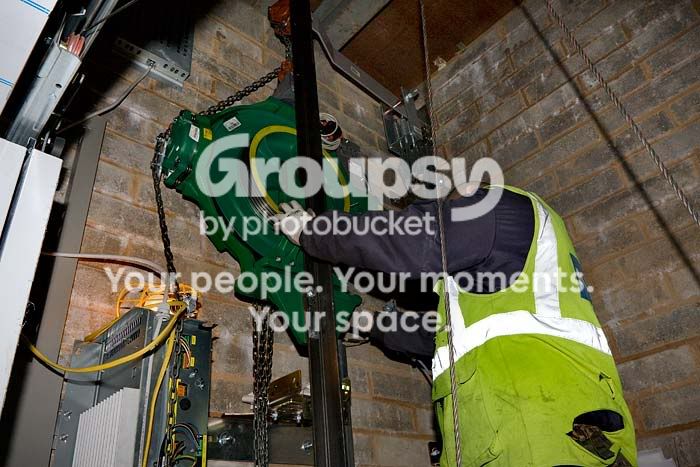
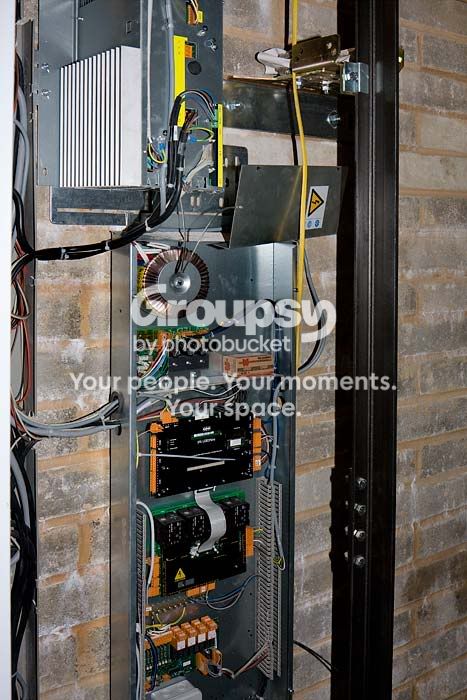
These two shots of a lift assembly indicate the difference.

lift-motor.jpg


lift-controll.jpg
 
Eh?

Can't see why anyone would have that much of a problem with them.

When I look up verticals converge.

Duh.

Clearly not

:cuckoo:


Let's try and keep this civil and level headed please, it's an interesting discussion which hopefully won't be dragged down (with or without converging verticals. :))

Thank you.
 
Interesting debate. Personally I take it on an image by image basis, some get a fair amount, some get none, some just get the wide angle lens distortion corrected. Generally what I 'aim' for is something that looks like what my eye could see at the time though that doesn't mean I wont go for something a little different if I feel it improves the image....and just think, at 5'2", my parallels convere a lot more then you 6 footers :lol: :p
 
Back
Top