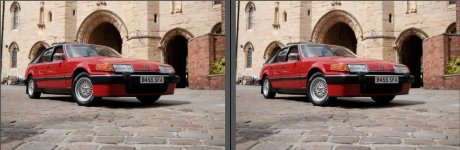
CPL filters for car and bike photography?

Messages
26,554
Name
Toby
Edit My Images
No
I've been to many car and bike shows/eventsand it never dawned on me to use a CPL until it was mentioned in the Sony thread recently, are they worth using or do people tend to find them more hassle than they're worth? Also do you suffer lens flare as it's not ideal to use a lens hood with a CPL as very few have 'windows' to access the filter?

I've been looking at Breakthough X4 and B&W filters but they're pretty pricey these days, are there any cheaper ones that don't sacrifice in quality? My main 'concerns' are flare/ghosting and colour cast.
 
I've been to many car and bike shows/eventsand it never dawned on me to use a CPL until it was mentioned in the Sony thread recently, are they worth using or do people tend to find them more hassle than they're worth? Also do you suffer lens flare as it's not ideal to use a lens hood with a CPL as very few have 'windows' to access the filter?

I've been looking at Breakthough X4 and B&W filters but they're pretty pricey these days, are there any cheaper ones that don't sacrifice in quality? My main 'concerns' are flare/ghosting and colour cast.

IMO they have their uses, they can be fiddly to use if you have a hood on the lens, but they can reduce relections, and help cut through glass

Bigger vented hoods (like the official Fuji one for your X100VI) do allow better finger access, but they are a riight PITA on traditional tubular hoods

I've always used decent filters and never noticed any colour casts on CPLs
 
IMO they have their uses, they can be fiddly to use if you have a hood on the lens, but they can reduce relections, and help cut through glass

Bigger vented hoods (like the official Fuji one for your X100VI) do allow better finger access, but they are a riight PITA on traditional tubular hoods

I've always used decent filters and never noticed any colour casts on CPLs
Thanks David. I might use a step up for the one I have and see how I get on. If I find it useful then I could invest at a later date.

What brands have you used?
 
Just a quick note on CPL or PL for that matter. They remove reflections in non metallic surfaces which improves colour saturation including on paintwork and glossy foliage. They also deepen the blue in sky. With some windscreens they will reveal stress lines of the glass so keep an eye out for that.

They give best results used at an angle of 30-40 degrees to the plain of the subject. If you stand right in front of a flat subject it will have little effect, step to the side a bit and it will help.

They are one of the most useful filters to have. Stick to good quality ones however, not the eBay specials
 
Personally, I'll use the CPL most of the time unless I specifically want reflections. Main CPLs are B+W, Hoya, smaller sizes Nisi, and Canon's own drop-in version.
 
I use a CPL on shorter lenses for static subjects. I have one large filter and step rings to adapt it to other lenses... I think it's a NiSi (?). Normally without a lens hood, but because the subjects are static I have time to adjust the filter and use my hand to flag off the lens if needed (or make other adjustments.

I do not use one with longer lenses and moving subjects... that's fairly pointless.
 
Last edited:
I do not use one with longer lenses and moving subjects... that's fairly pointless.
Could you expand on why? I'm asking because I have many examples when it's a benefit. Canon's big whites have drop-in cpls to meet the need.
 
  • Like
Reactions: A_S
Could you expand on why? I'm asking because I have many examples when it's a benefit. Canon's big whites have drop-in cpls to meet the need.
I don't use them for panning as you'd have to constantly rotate the CPL as you pan to get the desired result, and it'd be nigh on impossible imo (y)
 
I generally have a CPL on all the time on my 16-80mm lens because I like the effect on most scenes, and it is easy enough to turn the effect off.

For many years I used Hoya filters, but bought a Kase magnetic filter set which has CPL and ND filters a couple of years ago. The CPL is a bit harder to rotate with the lens hood, but the benefit of easily removing and adding the magnetic filters are worth it imho.

Many years ago I got a cheap CPL and when I used it with a 70-300mm lens, the AF seemed to stop working, and indeed the shop were trying to say there was something wrong with my camera, but the magnification of the lens showed up the lower quality of the filter.

Buy the best filter you can.
 
All the time. Hoya HD. Good light transmission compared to others

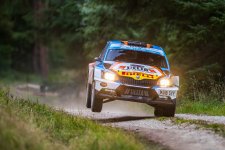
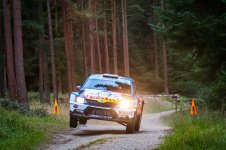
Just to clarify this a bit more as I was in the office at the time, Either Circuit or Rally I'll always use CPL. Get rid of metal reflections, get rid of shine on windows, ability to see the driver through the windscreen.

I'd go as far as saying if i'm struggling with light in the dark forests (where CPLs are actually really necesery as the difusion of light through the trees can play havoc with windscreen reflections) I'll change lenses rather than take the CPL off
 
I don't use them for panning as you'd have to constantly rotate the CPL as you pan to get the desired result, and it'd be nigh on impossible imo (y)

I do use for panning quite a lot if light level allows for it (sometimes the ND effect is quite a benefit here too!). My process is usually to pick my target area for where I'd like the car in my shot and adjust the CPL to that and then leave it there until I move to a different location. It's not too restrictive because normally you're likely wanting the car square on anyway. Setting the CPL is tricky because you don't always have something available to test the CPL position against so sometimes the first few cars past will be 'wrong' but I think the results can be excellent. I love it when you can clearly see the driver through the window, same with head on shots.
 
Last edited:
I do not use filters at all now as they risk low contrast due to unseen flare. I certainly would never have considered them for Cycle and car photography. Always keep a lens hood on to minimise flare.

Dave
 
I do not use filters at all now as they risk low contrast due to unseen flare. I certainly would never have considered them for Cycle and car photography. Always keep a lens hood on to minimise flare.

Dave

But how big is that risk? I'd say 95%+ of people that I see trackside use one and have for many many years. Its not about flair, its about reflections and the difference they can make, which is huge.
 
Could you expand on why? I'm asking because I have many examples when it's a benefit. Canon's big whites have drop-in cpls to meet the need.
I probably should have said "unpredictable" moving subjects... if you know where your subject is going to be when you take the pic it can be useful.
 
I use CPL on and off but this season I have used them more, I personally stick the filter on set the polarity by looking through the view finder then slap the lens hood on an leave it alone. I use Auto ISO so don't have an issue if I loose a stop or two, works for me and I think it helps especially when you have the sun glinting off the cars on the circuit, also helps with getting through windscreens and visors (depends if they have dark sun visors on, don't work then :ROFLMAO: ).
 
I use CPL on and off but this season I have used them more, I personally stick the filter on set the polarity by looking through the view finder then slap the lens hood on an leave it alone. I use Auto ISO so don't have an issue if I loose a stop or two, works for me and I think it helps especially when you have the sun glinting off the cars on the circuit, also helps with getting through windscreens and visors (depends if they have dark sun visors on, don't work then :ROFLMAO: ).
But surely as soon as you move or take a photo of another car the filter will need adjusting again?
 
But surely as soon as you move or take a photo of another car the filter will need adjusting again?
Why?

I don't and so far everything has worked OK.

At the end of the day, if you have a CPL then try it on a few shots then look in post and see what it has done, it's the easiest way to find out :)
 
Too late then! Chimp to see the effect.

Personally, I don't use a pol at the track but do at car shows (if I've taken one!) and do the fiddling for each shot if I feel the need.
 
Why?

I don't and so far everything has worked OK.

At the end of the day, if you have a CPL then try it on a few shots then look in post and see what it has done, it's the easiest way to find out :)
Polarisers depend on the angle of light therefore as soon as you (or the light) move the angle of light hitting your camera will change and therefore your polariser will need adjusting. You can’t just set it up once and use it for everything, if it worked like that then you wouldn’t need to rotate it and so CPL’s would be fixed.
 
Polarisers depend on the angle of light therefore as soon as you (or the light) move the angle of light hitting your camera will change and therefore your polariser will need adjusting. You can’t just set it up once and use it for everything, if it worked like that then you wouldn’t need to rotate it and so CPL’s would be fixed.

Yes that's very true and it is something I don't deny but as I mentioned above, that is how I roll and like everything in photography there are no hard and fast rules :)

It's how I use a CPL around a track and it works for me, maybe if I did rotate the CPL between places I walk to I may get better images? I don't know, but either way I'm happy with what I create :)
 
But how big is that risk? I'd say 95%+ of people that I see trackside use one and have for many many years. Its not about flair, its about reflections and the difference they can make, which is huge.
The first time I was aware of this was for a studio model shoot when I noticed the images on my screen were soft. Once I realised what had happened I removed the filter(s) which was not really needed and replaced the lens hood to have sharp images again. While the reduced contrast due to flare is not always easy to spot, it can be readily measured. If you take a raw file with and with out and check the file size, an image suffering from flare will have a smaller file size. This is not just opinion but fact. Why take a chance when it is easier to not use any filters but keep the lens hood on. There are no filters I need as all effects can be achieved in post processing. Occasionally, there might be a case for reducing a reflection but this situation has not occurred for me for the last 5 years.

Dave
 
The first time I was aware of this was for a studio model shoot when I noticed the images on my screen were soft. Once I realised what had happened I removed the filter(s) which was not really needed and replaced the lens hood to have sharp images again. While the reduced contrast due to flare is not always easy to spot, it can be readily measured. If you take a raw file with and with out and check the file size, an image suffering from flare will have a smaller file size. This is not just opinion but fact. Why take a chance when it is easier to not use any filters but keep the lens hood on. There are no filters I need as all effects can be achieved in post processing. Occasionally, there might be a case for reducing a reflection but this situation has not occurred for me for the last 5 years.

Dave
Reflections can be an issue, especially with automotive photography. However, software now has reflection removal so it would be interesting to see how effective this is.
 
Personally I quite like the reflections that you get on the bodywork of cars/bikes. It stops them looking flat and boring.
 
Back
Top