CPL filters

Messages
1,163
Name
Maciej
Edit My Images
No
Hey gang!
I'm going on a trip to Italy in few weeks (Venice, Garda, Florence) and its going to be very hot and sunny :)
I was wondering, should I get a CPL filter for all those sunny days shooting?
I'm not a pro, just an enthusiast shooting my family environmental portraits on our trips.
I wasgoing to get a UV filter just to cover my Nikon 17-28mm lens front (it moves a bit inside a barrel when focusing), so it won't catch any dust, but maybe CPL would be more accurate to bring up some colors?
I dont care about reflections on water etc, so CPL would work as lens protection and color enhancement for me.
Also, not planning to buy very expensive one, but something in the middle, as long as it won't mess up image quality - K&F Concept Nano-D looks ok price wise.
 
Well worth it, will make water look better too (even if you're not fussed about it).

Be careful using it at wide angles, it will cause the blue skies to have darker parts and looks artificial.

My go to is Hoya Digital HD for filters if not buying expensive ones.
 
Well worth it, will make water look better too (even if you're not fussed about it).

Be careful using it at wide angles, it will cause the blue skies to have darker parts and looks artificial.

My go to is Hoya Digital HD for filters if not buying expensive ones.

Hoya looks expensive to me :)
£94 for example this one.

I was looking at this one, £30.

I would be using it on 17-28mm - you're saying it may make sky artificial?
Is it always the case with UWA lens? Should I maybe ditch the idea of cpl on this lens?
 
CPLs are great but NEED to be adjusted to get any useful effect.
As has been said above polarisers don't work well with very wide angles, it shouldn't be an issue at 28mm but probably would at 17mm (on FF) this is down to he physics of the world about us where the polarisation of light scattered in the sky is dependant on the angle to the sun.

In landscapes I find them every bit as useful in boosting reflections from water/glass as in killing them, and of course can be adjusted to intermediate positions too.

I have to say most of my polarisers have been considerably less than £30 (generally brought used from charity shops)
 
Hoya looks expensive to me :)
£94 for example this one.

I was looking at this one, £30.

I would be using it on 17-28mm - you're saying it may make sky artificial?
Is it always the case with UWA lens? Should I maybe ditch the idea of cpl on this lens?

I have that exact filter and it's fine. Most of my filters are from K&F.

In terms of focal length - you'll see. The effect is dependant on your angle relative to the sun, and the angle of the filter affects the strength of the effect. At ultrawide focal lengths, at a 90 degree angle to the sun (the most effective angle), and with the filter turned to the most effect - You can get uneven polarisation in the sky. It just looks like a dark blob.

In fairness it's not a very common scenario, and you can usually fix it by just rotating the filter a little to lessen the effect and make it less prominent, you'll find a sweet spot where the landscape/water is still getting some benefit, while the sky looks almost normal.

Not my photo, but here's an example with the dark blob -

1786104726670.png
 
CPLs are great but NEED to be adjusted to get any useful effect.
As has been said above polarisers don't work well with very wide angles, it shouldn't be an issue at 28mm but probably would at 17mm (on FF) this is down to he physics of the world about us where the polarisation of light scattered in the sky is dependant on the angle to the sun.

In landscapes I find them every bit as useful in boosting reflections from water/glass as in killing them, and of course can be adjusted to intermediate positions too.

I have to say most of my polarisers have been considerably less than £30 (generally brought used from charity shops)

Thanks for confimring this. SOunds like I should not worry about paying for those little cheaper filters.

I have that exact filter and it's fine. Most of my filters are from K&F.

In terms of focal length - you'll see. The effect is dependant on your angle relative to the sun, and the angle of the filter affects the strength of the effect. At ultrawide focal lengths, at a 90 degree angle to the sun (the most effective angle), and with the filter turned to the most effect - You can get uneven polarisation in the sky. It just looks like a dark blob.

In fairness it's not a very common scenario, and you can usually fix it by just rotating the filter a little to lessen the effect and make it less prominent, you'll find a sweet spot where the landscape/water is still getting some benefit, while the sky looks almost normal.

Not my photo, but here's an example with the dark blob -

View attachment 489650

I see, so I udnerstand that I would see the effect straight in a viewfinder?
Even with 17mm I should be able to find best result without those darker blobs by turning the filter?
 
I see, so I udnerstand that I would see the effect straight in a viewfinder?
Even with 17mm I should be able to find best result without those darker blobs by turning the filter?

Yes, you'll see the effect in viewfinder.

You'll see that as you rotate the filter the "blob" will form on one side, then move across as you rotate more until it goes off the other side.
Ultimately, that blob is the polarising effect - the darkest part being maximum effect. Normally it covers the whole frame, but when you go ultrawide you see the whole area, similar to how an APSC lens on a full frame sensor will show vignetting.

At 17mm you'll still be able to use it by offsetting it one side or the other, you just won't be able to use it at 100% strength, which is often too much anyway.
 
Yes - just get one, don't think too hard about it. It's the one thing that can't be replicated in later processing.

In fact, my first camera was my uncle's old 35mm camera that had a polariser. When I went travelling I bought an excellent Ricoh point and shoot - which I used all round Australia. Back in Sydney before leaving for New Zealand I bought a new SLR as it was tax-free if leaving in a month or so. And I basically bought it just for two reasons - firstly I wanted a zoom for taking some photos of cockatoos, and secondly, I really missed the polariser - as quite a few photos looked washed out and the waterfalls weren't great.

For £30, it's well worth it. And with K&F concept you also get a couple of nice microfibre cloths!
 
Thanks for confimring this. SOunds like I should not worry about paying for those little cheaper filters.


I see, so I udnerstand that I would see the effect straight in a viewfinder?
Even with 17mm I should be able to find best result without those darker blobs by turning the filter?

Yes, you'll see the effect in viewfinder.

You'll see that as you rotate the filter the "blob" will form on one side, then move across as you rotate more until it goes off the other side.
Ultimately, that blob is the polarising effect - the darkest part being maximum effect. Normally it covers the whole frame, but when you go ultrawide you see the whole area, similar to how an APSC lens on a full frame sensor will show vignetting.

At 17mm you'll still be able to use it by offsetting it one side or the other, you just won't be able to use it at 100% strength, which is often too much anyway.

Or you quickly take two frames - One polarised how you want it for the foreground/water & then one without so you don't get the sky effects you don't want.

I sometimes do this with car photos.
 
Or you quickly take two frames - One polarised how you want it for the foreground/water & then one without so you don't get the sky effects you don't want.

I sometimes do this with car photos.
I can definitely see the advantages for cars. Most cars have reflective surfaces at significantly different angles,,,
 
If you aren’t overly concerned with image quality, the K&F nano-X filter will deliver nice results. As for uneven skies, anything wider than 28mm’s will require extra attention when using a polarizing filter.

IMG_1897.jpeg
 
What size filter are you looking for? I managed to get a pretty good deal on a Hoya CPL recently. They’re great for those tourist pics in the midday sun.
 
If you aren’t overly concerned with image quality, the K&F nano-X filter will deliver nice results.
That's not a nice way to put it for a filter that's basically equal to Hoya HD performance. Both have no issues outdoors but indoors, yes lots of trouble.

nano x pro is supposedly even better. At this stage I wouldn't even bother with hoya and all the knockoffs, which are really exceptionally bad.

On the other hand I can definitely imagine that the intended use with 17-28mm lens will be causing a lot of unwanted effects in the sky. If the sky is anywhere close to clear and prominent, I intentionally avoid any polarising and derived filter under pretty much 50mm.

There is probably thinking that using filters is somehow professional, and it is expected to use something. Both are certainly demonstrably FALSE. Enjoy the unobstructed view!
 
I just purchased a nice Urth CPL 67mm here on our forum. I hope it may be useful next week on our trip to Italy (Venice, Garda, Florence, Pisa, Toscany)

I believe Urth are pretty good too, is that correct?
 
It all depends on which camera you have. For example, the Lumix TZ100 has such good lens coatings that you simply don't need a CPL filter. I don't know about your Nikon.
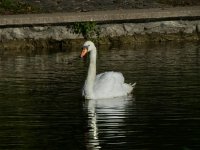
The church was shot with a Lumix TZ100 without CPL, while the swan was shot with a Lumix FZ82 with a Japanese CPL filter.
 

Attachments

  • 1090749.jpg
    1090749.jpg
    132.3 KB · Views: 7
  • 1030104(0).jpg
    1030104(0).jpg
    143.2 KB · Views: 7
It all depends on which camera you have. For example, the Lumix TZ100 has such good lens coatings that you simply don't need a CPL filter.
Lens coatings can't possibly replace a polariser. Indeed a fixed polariser would also ruin it's usefulness. The key to a polariser is the ability to select the polarisation that best helps the image, this is often by minimising/maximising reflections (or some partial degree of such) but they have other uses too such as showing stresses when used with a polarised light source

Stressed filter by Mike Kanssen, on Flickr

I tend to view darkening skies to be very much a fringe usage of polarisers, but that's perhaps because I shoot a lot of IR which does it much better
 
Back
Top