Day to night technique... how is it done?

Hmmm, there's not much info to go on here but having a wild stab in the dark (pun intended), I'd say you've seen a shot that was taken in the day but it looked considerably darker, as if by night?

If that's the case then using a fast shutter speed to underexpose the ambient can be one way, the problem you'll encounter however, if subjects where present in the frame, is that they too would be underexposed, you would have to use another light source such as flash to balance the scene out to your liking.

Any help?
 
I'd say you've seen a shot that was taken in the day but it looked considerably darker, as if by night?

Thats exactly what I meant Tomas... The picture was a portrait, and the subject was well lit, and the bench she was sat on was also well lit, but everything else in the background was underexposed to look like it was taken in the dark, although it was taken in broad daylight.

So do i underexpose the whole shot, and use flash to light the subject in order to compensate? And is it just the shutter speed I use, so that the aperture can be left constant to allow for the flash light?

Ok, you'll need to get your flash off camera for a start, on camera flash is most certainly not the way the photographer lit the shot that you've seen.

You'll need to put your subject in the shade if the sun's out and light your subject very closely with some diffusion.
Flash guns are typically around the 60 watt second power output, in terms of power it's not too much so you need to light closely.

Shutter speed controls the ambient and aperture controls the flash. The faster your shutter speed the more ambient you won't allow to your sensor, typical flash sync speed though is 1/250th of a second.

That's a real crash course and I'm pretty tired and probably missed a million things, there's simply too much to cover in one post.

I'd really recommend shuffling over to www.strobist.com for real education on how to light ;)
 
Never thought about trying it with Stills photography, but guess there is no reason why it wouldnt work. Day for night is used a lot in cinematography and I think it is done with blue filters and strong lighting on subjects or through objects to create moon/dusk lighting effects.

http://en.wikipedia.org/wiki/Day_for_night - that sort of explains it a bit. Will see if I can find any more info as I am interested now :D

Indeed, slap a colour temperature orange gel on your flash and change your white balance to tungsten and you'll make the sky very blue and your subject nice and warm too!

Jim, why are you labelled a party pooper? I haven't experienced any pooping as far as your concerned :shrug:
 
Not heard of it used in stills photography... but it was a normal technique in cine photography in black and white. They used a deep red filter and let the shadows fill in.

It is also done today by desaturating the colour and using a blue filter.
 
Ringflash is often used for this technique as it doesn't cast long shadows which make the picture look too unnatural.

This are a few of my first attemps taken at about 1pm on a sunnyish day!

jump1.jpg


jump2.jpg


lucas2.jpg
 
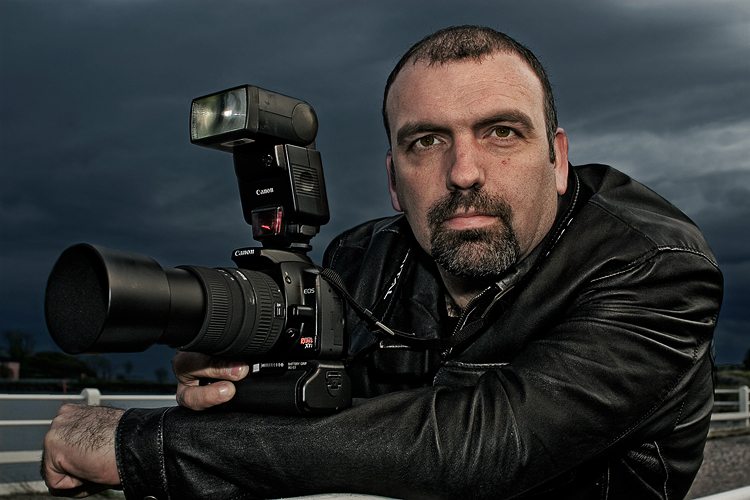
A very corny and cheesey portrait of a mate of mine, terrible photo I know but it illustrates how you can underexpose the available light to get a much darker and moodier result.
Lit with a single off camera flash, CTO gel and tungsten white balance to get a deeper blue to the cloudy grey sky.
The time of day was around 18:30 in June last year (it doesn't get dark until 2AM in Finland during the summer).

2597687598_7c2df1b429_o.jpg
 
Back
Top