Depth of field too shallow to use - what am i doing wrong?

Messages
1,310
Name
Amir
Edit My Images
Yes
Hi

In wedding threads people recommend using fast glass for available light photography. Well, when i use my 17-55mm lens at 2.8 i find the depth of field is too shallow to be useable! The eyes will be in focus and the ears won't - stuff like that. The subject is typically one of my twins (1 year old).

How are people managing to use such large and larger apertures at weddings!

I know I must be doing something wrong and I hope someone can help me.

In desperation,
Dub
 
Hi Dub

Just because you have 'fast glass' doesn't mean you have to shoot at the largest aperture-most don't, unless the light is so poor they have to stop down to f2.8

The main reason for using 'fast glass' is that the autofocusing is much quicker, which can be important when shooting weddings. Or they need to kick the BG out of focus.

So shoot away at f4, f5.6, f7 etc, the IQ will be much better at these apertures.
 
Thanks for the reply - but - when they ARE shooting at 2.8 how on earth do they get anything more than one side of one persons face in focus? That has been my experience with the 17-55mm range at least!
 
Thanks for the reply - but - when they ARE shooting at 2.8 how on earth do they get anything more than one side of one persons face in focus? That has been my experience with the 17-55mm range at least!

They probably don't, unless shooting from a distance and cropping heavily, or taking group shots.

I rarely shoot at the maximum aperture on any of my lenses (unless I really have to), even at F4 with a head & shoulders shot, one of the eyes can be out if you don't have the face looking directly at you.
 
Often having such narrow depth of field is precisely the reason people buy such wide aperture lenses. Having just the eyes in focus really draws attention to them, and away from any otherwise distracting background.

To solve it, make your aperture smaller if you want, or be further away.
 
It also depends how far away you are from your subject

http://www.dofmaster.com/dofjs.html

Ahh i thought that might be the case... so i need a longer zoom and more distance between me and the subject perhaps. Then what on earth are people using their 17-55 lenses at 2.8 for then?
 
I do understand that you can use aperture to selectively focus on a subject separating the subject from their background and generating a nice bokeh. I get that. But when people are using really big apertures like 1.4, 1.8 and then like the 2.8 on my lens at weddings I am wondering how they are getting more than just one eyeball in focus!

I want to know this so that i can employ similar techniques on my twins with them both in focus in their entirity and using only available light.

Dub, I really thought I'd explained some of the issues, to repeat, most photographers don't shoot at big apertures like 1.4, 1.8 etc, firstly it causes the problems you mentioned, and secondly the image quality is not as good as say F5.6 or F8

I'm struggling to understand why you want to shoot at F2.8, when you can get far better results (and a pleasant bokeh) at f4, f5.6, f8 etc.

And if the light isn't bright enough to be shooting at these apertures, it's far better to improve the light.
 
I don't always have the option of improving the light (especially at a wedding) I have been known to go round switching lamps on!

I have shot at f1.8 and f2 as well.

The key is in the distance from your subject. Have a look at those DOF tables and you will see that at 10 ft you can have 1 ft DOF, enough room for a head. :)
 
Not to hi-jack a thread... But I had the same problems with my Nikon 28-70mm 2.8 & like the OP mentioned problems when shooting at 2.8...

:thinking: It seems that I was doing the wrong thing as well as him...
So having a pro lens doesn't really mean that you have to shoot everything at 2.8 - & best to have apertures "further down the line" is better then I take it (as so to speak) along the lines of f5.6 f8.. (just clarifying so I undertand)..

As I was at the Tower of London taking pictures & some had blurring to the edges so taking these shoots at 2.8 would have caused this then would've it - & I should have been around f8 ish?
 
Not to hi-jack a thread... But I had the same problems with my Nikon 28-70mm 2.8 & like the OP mentioned problems when shooting at 2.8...

:thinking: It seems that I was doing the wrong thing as well as him...
So having a pro lens doesn't really mean that you have to shoot everything at 2.8 - & best to have apertures "further down the line" is better then I take it (as so to speak) along the lines of f5.6 f8.. (just clarifying so I undertand)..

As I was at the Tower of London taking pictures & some had blurring to the edges so taking these shoots at 2.8 would have caused this then would've it - & I should have been around f8 ish?

All lenses have sweet spots, (even pro lenses) around the f5.6 mark, and yes, like Allison I've shot at f1.8 and f2 (and at f1.2) but would prefer not to, but sometimes have to, wedding photography when you can't always control the light is a good example.

In dubcat's case, where the light is controllable, for the reasons I've given, it's far better to shoot at f4. 5.6 etc.
 
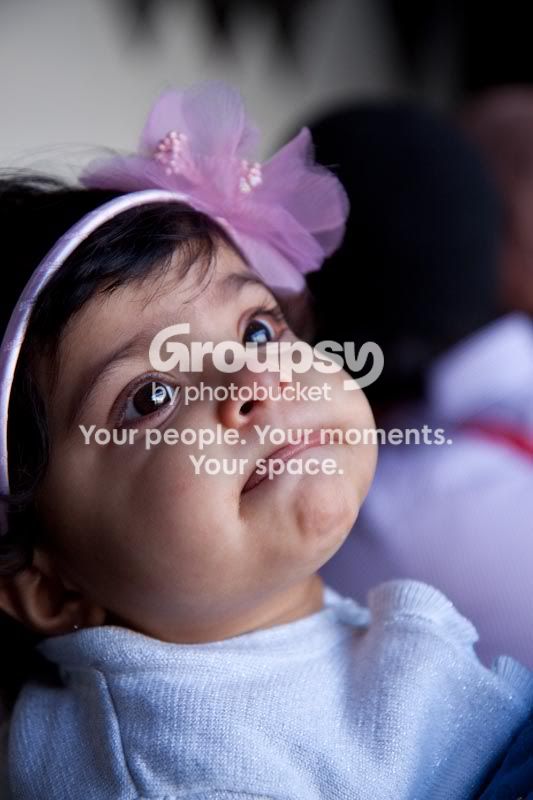
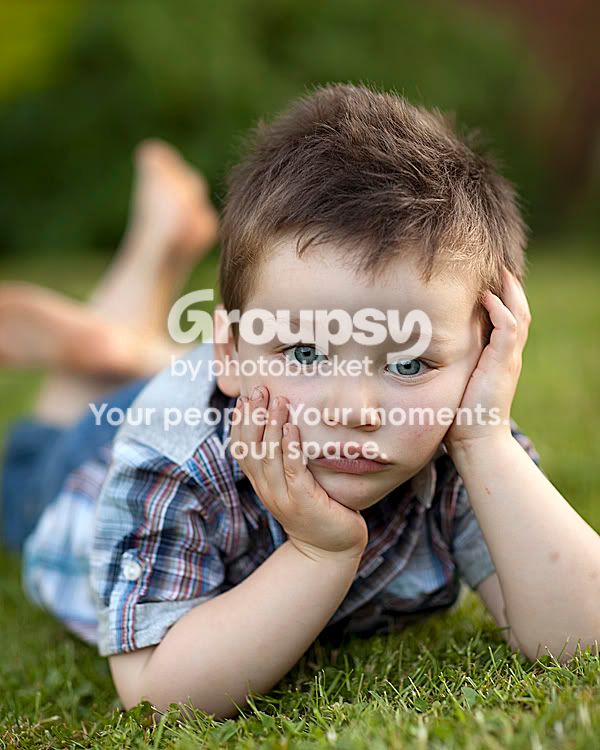
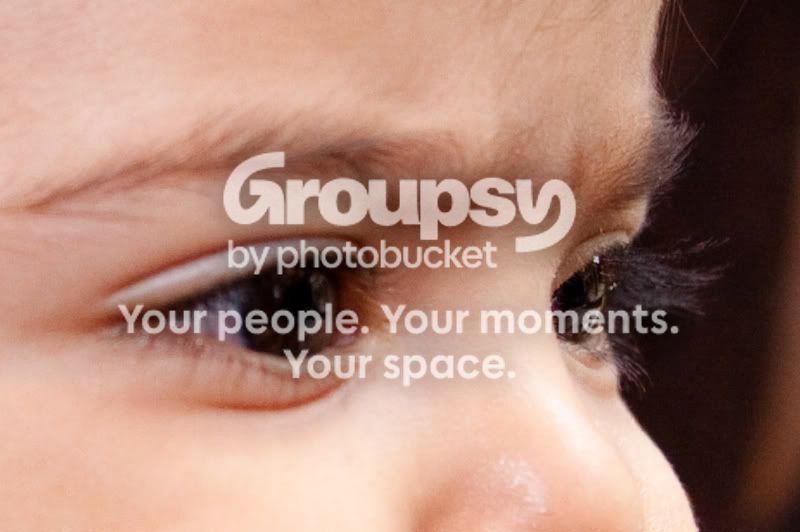
Ok here are a couple crops to highlight my problem:

In this one the far eye is more in focus than the near one:
IMG_1248.jpg


Chin is in focus but eyes are not (my child does not have an abnormally long head :) She has a normal length head for a sub 1 year old - which is not that long!
IMG_1111.jpg
 
Ok just so we can stop the 'stop shooting at 2.8' thing - I know that the sweet spot of my lens is probably at around f8. When I want to isolate my subject I tend to shoot at f5.6 or f4. When I can control the light I do so. However, with two little ones i often don't have the TIME to control the light and i want to take some shots in the available light (which I prefer the look of anyway to be honest).

So, I can bump up the ISO but then I get noise.
I can slow down the shutter speed but then i get blur.
So - having read lots of threads about weddings where people use large apertures i thought that this might be the way to go. Then when I got the situation as shown in the pictures I posted I thought maybe I am doing something wrong.

To be clear - I do not shoot at 2.8 because i think it makes me look pro or because my lens HAS a 2.8 setting. I was simply trying to take advantage of this capability when needed as any softness in the lens at this setting or reduction in IQ is less of an issue than noise generated by a higher ISO or blur from a slower shutter speed.

Now... I can see from a couple of the posts that maybe i need to be further away. I guess I could do this with the 17-55 and crop more. Alternatively would another solution be to have a longer zoom lens?

Thanks for the comments so far guys.. i am playing with the dof calculator in parallel to reading your comments :)

thanks,
Dub

ps. out of interest i would love to see other peoples 2.8 aperture pictures to see how they are using it etc. I will start another thread for that.
 
If you want to do your own test to find the aperture that's best for you prop up a 30CM ruler and shoot it from about 30degrees altering the F Stop as you go. Do this over differing distances and you'll have a mental guide of what distance you'll have in focus.

EG if you can get 10cm in focus you'll know you can cover an entire set of features on the face!
 
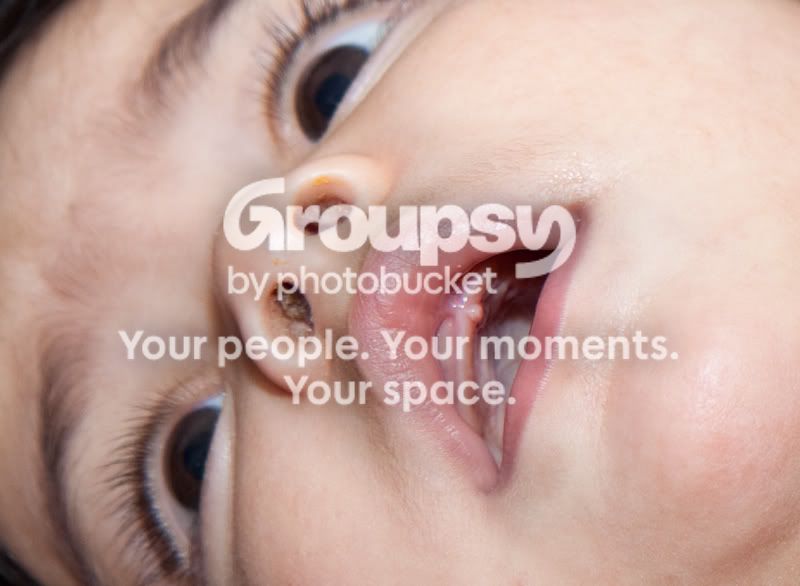
Here is the BEST example of what I mean. This is shot at 55mm and so I was not even that close. It IS shot at 2.8. I had already bumped up ISO to 400. I could have dropped the shutter speed a little more perhaps.. but lets just say i couldn't and that is why i had to go to 2.8 aperture. Look at the eyes:

IMG_1318.jpg
 
Here is the BEST example of what I mean. This is shot at 55mm and so I was not even that close. It IS shot at 2.8. I had already bumped up ISO to 400. I could have dropped the shutter speed a little more perhaps.. but lets just say i couldn't and that is why i had to go to 2.8 aperture. Look at the eyes:

Just off the cuff I've have shot that at 70mm putting my about 8ft away and at F4 at about 640iso that should have got the lot in
 
Look at the eyes:

Not that I am a pro (hence my post in here) but did you focus on the eye's as I read it somewhere that when taking a picture justb like what you have done here - that you should always focus on the eye's....

I do apologize if this has nothing to do with that particular picture by the way.. Just that I am virtually in the same boat as you trying to understand all this..
 
It's all about compromise:
Wide apertures = narrow depth of field.
High ISO = noise.
Slow shutter speeds = blurred images from camera shake.

So: if you're shooting in low light, you're basically stuffed...something has to give...it's up to you to choose which you're going to sacrifice for that shot.

If you shoot up-close you have even less depth of field to play with, so your focussing technique needs to be even more spot-on...

If you 'up' the ISO then you'll get noise - so those of us who can afford it, buy expensive Pro Bodies that have this capability.

As you've said - you want to take advantage of the wide aperture on your lens, as this gives you the most pleasing results...
In your images shown here, the point of focus on those baby-pix was wrong - always focus on the eyes - if you can't get both eyes in focus, focus on the nearest eye.

Your second image, you've used flash - as soon as you switch your flash on, you no longer need to shoot at f/2.8 - you can increase the aperture to give you more depth of field.

One other thing - unless you're recording bogie-growth, there's no need to shoot up babies' noses...it's pretty yukky, you have to admit...
 
[edit] Beaten by Arkady!!
Hi Dubcat, is flash not an option, especially with the kids etc?? You can then use a smaller aperture AND higher shutter speeds to get sharp images and minimise blur... just a thought.
 
Shooting at wide apertures requires a practised technique. In your first two examples your focus point is in the wrong place. You should focus on the eye nearest the camera but with the subject at these kind of angles you are not going to get both eyes sharp at f/2.8. In the second shot you focussed on the child's mouth and not on the eyes.

Here's a shot taken at f/3.5 but I have the eyes almost parallel to the focal plane so both are sharp.

2AW_3520-Edit.jpg


It takes a knowledge of DoF and your equipment, and lot's of practice, but the results can be well worth it.
 
Flash is what I thought too, but I know just what you mean dubcat, it can be frustrating, unfortunately all kit has limitations, albeit much less than years ago. As Arkady says, something has to give at low light - unless you use a point and shoot with a tiny sensor which gives a big DOF but that's another argument altogether! (Or perhaps a D3, they seem to shoot bright pics in coal bunkers at night...)
 
Flash gives a completely different look to the pictures of course. Whenever possible I prefer the creamy shallow DoF you get with wide apertures. Like I said - keep practising - it can be done. :)
 
Also don't forget that you will get about 1/3 of the shot in front of your focus point in focus and 2/3rds in focus behind the focus point.
Therefore if you focus on the back eye.. you will have 2/3rds of your "in focus depth" behind the face and wasted.

Try to focus about 1/3rd into the shot.. if you can roughly work out where that is.., to optimise your depth of field to its utmost.

If its narrow.. there is no point in wasting 2/3rds of it!! :thumbs:
 
- always focus on the eyes - if you can't get both eyes in focus, focus on the nearest eye.

If you look at the DoF calculator results carefully, this has the advantage that there's more stuff in focus behind the focal point than there is in front of it, so the far eye will be less out of focus when focusing on the near eye than the near eye would be when focusing on the far one, IYSWIM.
 
Also don't forget that you will get about 1/3 of the shot in front of your focus point in focus and 2/3rds in focus behind the focus point.
Therefore if you focus on the back eye.. you will have 2/3rds of your "in focus depth" behind the face and wasted.

Try to focus about 1/3rd into the shot.. if you can roughly work out where that is.., to optimise your depth of field to its utmost.

If its narrow.. there is no point in wasting 2/3rds of it!! :thumbs:

Not always:
At camera to subject distances of over 9 focal lengths (45cm using a 50mm lens for example) this is true - at under 9 focal lengths it's split 50-50...
 
Thanks for all the feedback guys. Now at least i feel much better that I am not doing something drastically wrong.

Focus point: I read on this forum that you should focus on the nearest eye between taking the first two pics and the last one - hence the focus point is right in the last one :)

Bogies: That's my baby :) (twin 2) her bogies are like gold to me but I can see how they might not have the same value to others :)

AWP hit the nail on the head. I love the smooth look of available light. I will continue to work on my technique but thanks to your comments I realise I was not going completely insane or doing anything drastically wrong (apart from focussing on the wrong place) and that I need to get a better feel for how much depth i will get in any given situation.

I will try the ruler thing mentioned. I have also installed a depth of field calculator on my nokia phone.

Thanks again,
Dub
 
Never heard that either! :)

Do you mean 0.9? ie, 9/10ths of the focal length?
 
If you want to get really technical about it (I had to learn all this shi'ite for my degree... and I've forgotten most of it since then...):

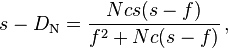
From the “exact” equations for near and far limits of DOF, the DOF in front of the subject is

ad943601fb5f733333aa79e0a2b0d839.png


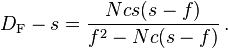
and the DOF beyond the subject is

4c9e55c0296397a6f07f91f1a8bdaa9a.png


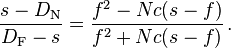
The near:far DOF ratio is

d528a07182416ebe9926fedccba1720a.png


This ratio is always less than unity; at moderate-to-large subject distances,
98395838c44726e9b3bb05a80f24dd84.png
,

and

e7a80782c2708a162adc122964e5c9f5.png


When the subject is at the hyperfocal distance or beyond, the far DOF is infinite, and the near:far ratio is zero. It’s commonly stated that approximately 1/3 of the DOF is in front of the subject and approximately 2/3 is beyond; however, this is true only when

aec9751bb7bca4369053f55ebd1ee2b3.png
.
 
At closer subject distances, it’s often more convenient to express the DOF ratio in terms of the magnification

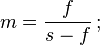
da61347e4ed36704becbb10c146b1dbe.png


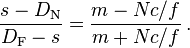
substitution into the “exact” equation for DOF ratio gives

0c3256af953c8f4e2370b500494ebd5c.png


As magnification increases, the near:far ratio approaches a limiting value of unity.
 
Which is wa-aaaaaaay too complicated so:

over 9 focal lengths 1/3 near: 2/3 far

under 9 focal lengths 1/2 and 1/2
 
Which is wa-aaaaaaay too complicated so:

over 9 focal lengths 1/3 near: 2/3 far

under 9 focal lengths 1/2 and 1/2


I understand about the 1/3rd - 2/3rds when over and 1/2 -1/2 etc when under.

but i still dont understand what 9 focal lengths means. :bonk:
 
9 x the focal length

50mm lens
50 x 9 = 450
45 cm

so 9x the focal length of a 50mm lens is 45cm from the camera's focal plane...
 
Ah.. the penny drops!!!

Thanks for your patience! :thumbs:
 
but i still dont understand what 9 focal lengths means. :bonk:

:thankyou: I was going to ask exactley the same.. But am even more pleased that a more experienced photography had asked instead of a meer mortal :notworthy:
 
I dont really see your problem, f2.8 at 55mm on a crop camera will give you more depth of field than an 85mm lens @ f2 on FF. But even that is not a problem if you have your subject in the right plane!

85L @ f2 approx 5ft away on 5DMk2

WebAsh2.jpg
 
Back
Top