Does wide open tally with the F no. for dof.

Janice's fault - she thinks about stuff far too much. :D

Ah, woe is me. Looking at J`s avatar I was smitten by her beauty, but alas and alack, she is married with 2 grown up children. Still there is plenty more fish in the sea.But who wants to date a dogfish. :lol:
 
I don't understand what you're saying. If you move closer to the subject, it gets bigger. That's magnification.

The sensor doesn't care if that increased magnification is achieved by moving closer, or by using a longer lens. It doesn't change depth of field.

You do not have to separate focal length and distance in order to calculate depth of field, and I think it makes the concept easier to understand if you don't. If you separate out focal length in this way, it implies that focal length alone per se affects depth of field. It doesn't, and if you fit a long lens but then move back to maintain image size (magnification) then depth of field remains unaltered.

So how do you calculate magnification? To me it has to be by focal length and distance to subject!

Focal length alone does change the dof. What you are doing is changing both focal length and distance to subject to maintian the same composition/ Where is the sense in that? I appreciate what you are trying to do but it is a fact

DoF is dependant on 3 factors.

Aperture
Focal Length (magnification)
Distance to subject

Streuth, are we selling tickets to this now :lol:

EOS JD, you don't need to calculate magnification except in macro, in which case it's engraved on the focusing scale. You just have to know that it is magnification that determines depth of field. I think it makes it easier to understand what actually changes depth of field, especially in view of the popular assertion that "telephotos give less depth of field" which they don't. Not by themselves, as previously explained.

In order to calculate depth of field, then yes you need to input both focal length and focusing distance (and sensor size) because both of these affect magnification and that is the key. Feel free to differ :)

Right, I'm off to do those snaps for the heretic pxl8. I may be some time...

 
Ok, another test, this time I have been able to recreate the effect you're talking about.

lifesize2.jpg

The full frame.

cropped2.jpg

The cropped and scaled version.

Clearly the 2nd one show less blurring than the first and the maximum amount of blurring is also much less. Here's a couple of 100% crops although the focus is shifted slightly to the front in the cropped/scaled version.

cropped_crop.jpg

cropped/scaled 100% crop

fullsize_crop.jpg

fullsize 100% crop

So I can see the effect in action and understand my mistake in thinking scaling at print time would cancel out the effect - interpolation only blurs the captured data, it doesn't defocus the rays of light.

But I have to be honest and say I'm not convinced the method has much merit, the 100% crop shows a considerable drop in quality and in an abstract way is replacing one type of blur (OOF) for another (interpolation) Yes I know that OOF is really just size of blur (CoC) but I was hoping for greater depth of sharp focus rather than less blurry blur :lol:
 
Ok, another test, this time I have been able to recreate the effect you're talking about.

Phew! Thank heavens for that.

Your pics do show what I'm talking about, but I think I've just taken another couple of snaps that show it even better. I did say that it was an emergency technique as obviously quality drops - it's just another potential tool. It would work much better when working on full-frame. But the point here is to establish the principle invloved.

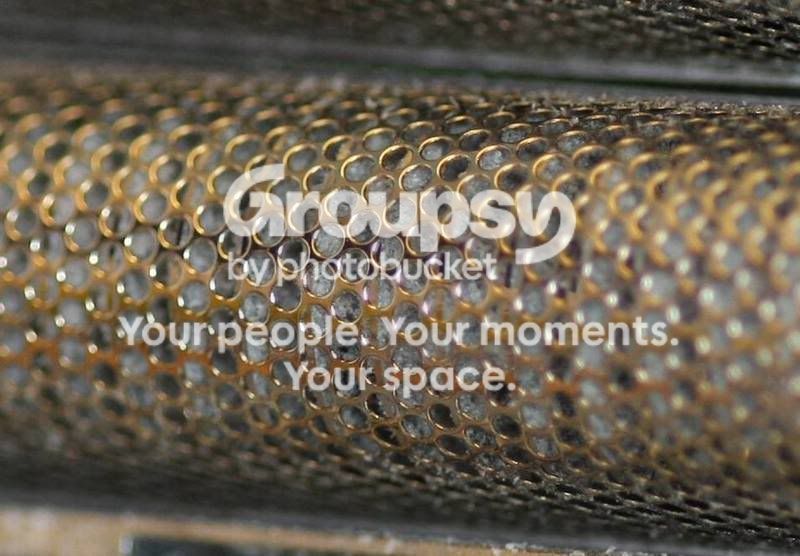
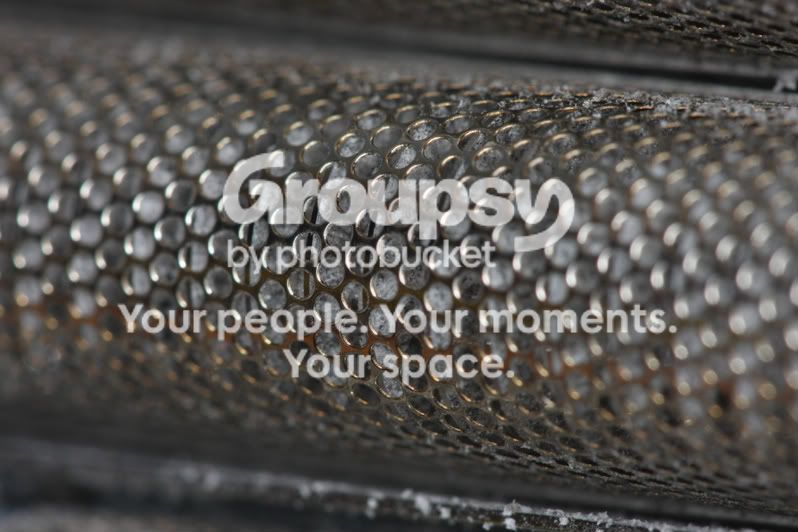
My pics are of the curved foil of my electric razor, a nice detailed close-up of a 3D subject. You can clearly see the 'pool' of sharp focus wrapping around the shaver head, and it gets bigger in the cropped version.

I'll still try and post them but I'm at the mercy of the limited proprietary software on this PC (my imaging computer has gone AWOL).

Thanks for taking the time Andy :)
 
:popcorn:
 
Ah, woe is me. Looking at J`s avatar I was smitten by her beauty, but alas and alack, she is married with 2 grown up children. Still there is plenty more fish in the sea.But who wants to date a dogfish. :lol:

Are you implying I'm a dog... or a fish??? ;) :D

I cant believe this thread,,, I only asked if F4 on an F4 lens gives the same dof as F4 on an F2.8 lens!! :D
 
Are you implying I'm a dog... or a fish??? ;) :D

I cant believe this thread,,, I only asked if F4 on an F4 lens gives the same dof as F4 on an F2.8 lens!! :D

Oh my Gawd! Hell hath hath no fury like a woman scorned.
 
Oldfella, if you want to link to an application you need to upload it somewhere first and then create a link to where the file is hosted.
 
Here we go then. Three pictures of the foil on an electric razor head, all shot with Canon 40D, EF 100mm Macro with Kenko 1.4x Extender, and the excellent RingFlash Adapter ( http://www.flaghead.co.uk/pages/ringflash-intro.html )

They demonstrate that if you pull back (either by zooming, or moving the camera) and reduce the magnification of the image, then enlarge it back up in post processing to the final print size required, depth of field is usefully increased. It is excatly the same principle that applies to compact cameras which characteristically always deliver great depth of field, which is a direct function of their very small image sensors. And by the same token, crop-format DLRS also give more depth of field than full-frame cameras.

While this technique holds good in all photography, at all focusing distances and with all lenses, it is particularly helpful in macro where depth of field is always very shallow. And there is a further benefit in that lower magnification requires less exposure compensation, so there's at least a stop to be gained there. (Shooting at 1:1 demands an extra two stops of exposure over normal focusing distances, so f/2.8 for example becomes effectively f/5.6 for exposure purposes.)

The first pic is uncropped, 1:1 at f/2.8.

For the second pic is also at f/2.8 but I moved back and used a magnification ratio of 1:3, then enlarged the centre of the image back up to size. It looks okay here, because screen resolution is very low and frankly almost anything looks good on a PC monitor, but there is noticeable quality fall-off. I've pushed it to the limit here to demonstate the effect, but I wouldn't normally go further than 1:2, and only then if there was no alternative. Anyone lucky enough to be shooting full-frame with 20m pixels has much more quality head-room to play with, so 1:3 and maybe further is probably okay for most things, without image quality falling off a cliff.

The third pic is at 1:1 but at f/8, to give an idea of how much extra depth of field can be obtained by stopping down, compared to the crop-technique illustrated in pic 2.

f/2.8 1:1 full image
DoFtestrazorFeb09001-1.jpg


f/2.8 1:3 image cropped to size
DoFtestrazorcropFeb09003.jpg


f/8 1:1 full image
DoFtestrazorFeb09002-1.jpg
 
*...and the penny drops...I think...eventually!*

I can't add anything of use to this discussion, I just wanted to say a big thanks to pxl8 and Hoppy for taking the time and considerable effort to explain, test, shoot and post their theories and findings. :clap:Top reading and much appreciated guys. :thumbs:
 
irw1, thank you. You're welcome :)
 
It's been a useful thread for me too, no doubt I was too focused (groan) on a particular point but I guess at least one person found the information that emerged as a result useful so my thanks also to Hoppy for his efforts in making me see the light (double groan) :thumbs:

If nothing else, the thread shows a picture really can speak a thousand words, alright I'll stop now :coat:

:D
 
Streuth, are we selling tickets to this now :lol:

EOS JD, you don't need to calculate magnification except in macro, in which case it's engraved on the focusing scale. You just have to know that it is magnification that determines depth of field. I think it makes it easier to understand what actually changes depth of field, especially in view of the popular assertion that "telephotos give less depth of field" which they don't. Not by themselves, as previously explained.

In order to calculate depth of field, then yes you need to input both focal length and focusing distance (and sensor size) because both of these affect magnification and that is the key. Feel free to differ :)

Right, I'm off to do those snaps for the heretic pxl8. I may be some time...

I appreciate what you are saying and I agree :)
 
What I do not understand is, why take macro shots at such wiide apertures. I always use F22-F32. I can only assume the fault lies in the p**s poor front flash. If you look at my gallery you will see a DIY front flash that is adequate for small apertures.
 
What I do not understand is, why take macro shots at such wiide apertures. I always use F22-F32. I can only assume the fault lies in the p**s poor front flash. If you look at my gallery you will see a DIY front flash that is adequate for small apertures.

What about f/4?
http://pxl-8.deviantart.com/art/Morning-Damselfly-1-34946544

f/5.6?
http://pxl-8.deviantart.com/art/Spider-2008-mk1-97537202

ok, f/8 when I'm really pushing it...
http://pxl-8.deviantart.com/art/Hoverfly-5-22481856

All natural light...
 
What I do not understand is, why take macro shots at such wiide apertures. I always use F22-F32. I can only assume the fault lies in the p**s poor front flash. If you look at my gallery you will see a DIY front flash that is adequate for small apertures.

I hesitate to step into this thread without full body armour, but stopping down that far usually results in diffraction issues. I'd have thought macro would be no different in that respect? Serious question from one who just dabbles in macro now and again.
 
Before dismissing or embracing this technique, here are its characteristic features. I won't say benefits, or pros and cons, because they can be either or neither, depending on the subject and the result you're after. I'll assume here that image size is reduced by half, which is a realistic ball-park maximum you can get away with before image quality deteriorates too much.

Two stops gain in effective depth of field.

Or two stops increased shutter speed if you prefer to work it that way. Given that camera shake probably spoils more pictures than any other single cause, this is worth remembering. Also in macro, no macro lens (other than Nikon) has image stabilisation.

In macro shooting, if you can pull back from 1:1 to 1:2, then there is another stop to be gained in exposure terms, which you can either apply to shutter speed or f/number (or even ISO, though I think that would be a poor trade-off generally).

If you use this technique by moving the camera back from the subject to reduce image size, you are altering the perspective and field of view. The main thing here is that as the effective field of view is narrowed, so there will be less background visible behind the subject, which makes it stand out more. But if you reduce image size by zooming back from the same camera position, then this effect doesn't apply of course.

With macro, this technique might get the result you're after without using flash. Handy if you haven't got a proper macro ring-flash with you! On-camera pop-up flashes are often not much help in macro - the light is too high, and often the lens shades the subject anyway. Flash is usually great for macro, but often results in very dark backgrounds. Pure daylight gives a very different pictorial effect.

You can avoid diffraction effects which blurs fine detail sharpness at small (dark) apertures like f/22 or certainly f/32.

There's obviously a loss of image quality when you enlarge a small section of the image. This technique works really quite well for small prints, or screen images. How far you can push it depends on what you like, and how good your equipment and technique is. Full-frame DSLR users with 20m pixels and high quality lenses shouldn't have too much trouble here, as they have three times the sensor area relative to crop cameras to start with.

PS Four-Thirds System cameras like Olympus already have a smaller sensor than Nikon/Canon and most others, so they are already half way there with this technique - whether they want to be or not!
 
Back
Top