EOS 10D Overexposure with Studio Lighting

Messages
2
Edit My Images
No
Hi everybody, I really need some help.
I’ve got the EOS 10D and I’ve recently purchased three Neewer 180 studio strobe lights. I am able to sync all three lights so that they flash on triggering the camera. The problem is that the shots are overexposed because the camera isn’t taking into account the effect of the flash when automatically setting the aperture and shutter speed. I gather that only certain flashes are E-TTL compatible, does anyone know how I can get correctly exposed photographs? Do I need to purchase a light meter and set the aperture and shutter speed manually?
Thanks for your help
 
You will need to shoot in manual. Light meter isn't that important if your camera has a histogram and you know how to read the data. I suggest a bit of trial and error. As a starting point put your lights to around 3/4 power (this will give you a bit of headroom later), turn your iso to the lowest setting and your shutter speed to around 125-200 then adjust your aperture till you think it looks right. You can adjust camera settings from there depending on your subject. Hope that helps!

*forgot to say, welcome to talkphotography forum!
 
Last edited:
You will have to shoot manually. A light meter will help, especially if you are using more than one light, for setting ratios. Start as Chris has said.

Oh, and welcome.
 
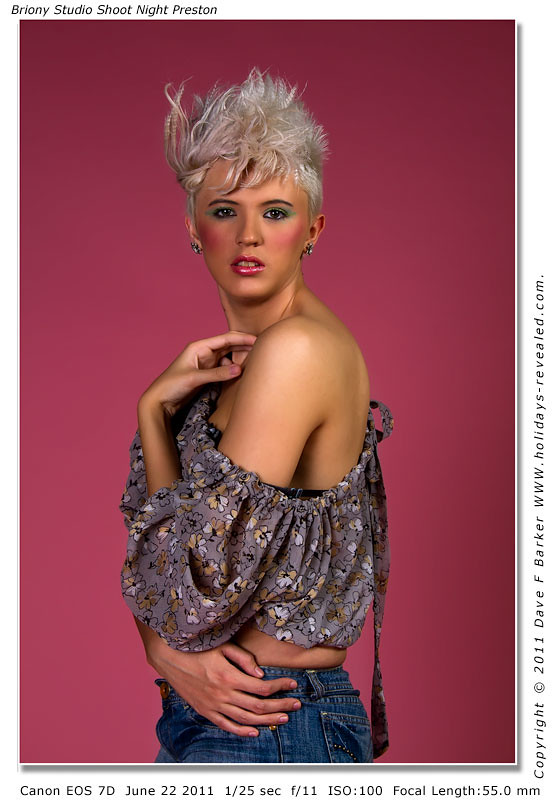
1/25th a sec will be very lens dependent. Shooting at that speed at anything over 50mm on a crop without IS (exp handheld) is asking for a blury photo!

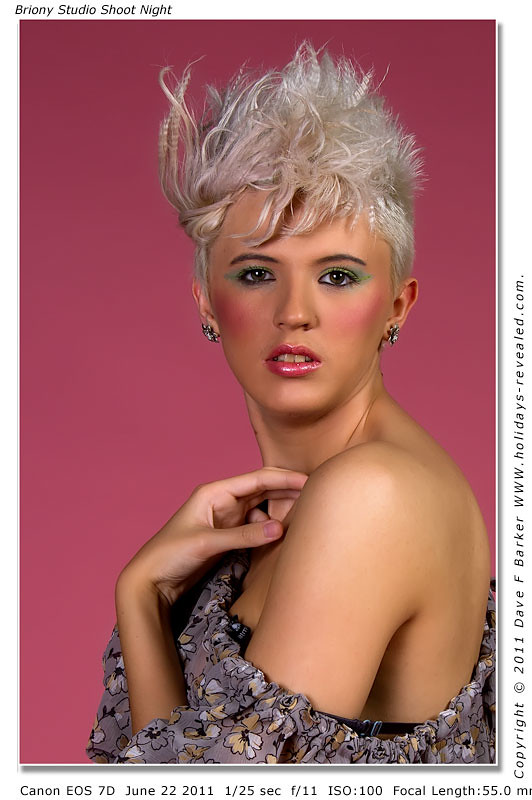
Chris they was shot hand held with a 18-55mm kit lens no IS, its the sync speed of the lights we used, so sharp, or are they not
 
In a studio type environment with low ambient light at f8 plus the exposure is effectively the flash duration about 1/1000 sec, so the shutter speed is not relevant.
 
either way, I still wouldn't shoot at 1/25th, no need to and it just means that whatever ambient there is will get involved badly. Sync speed is defined by your camera, not the lights, and definitely would not have been 1/25th. 1/125th for a bad bowens radio trigger, or 1/250th, yes, but not 1/25th.

shoot at 1/125th.
 
Last edited:
Chris they was shot hand held with a 18-55mm kit lens no IS, its the sync speed of the lights we used, so sharp, or are they not

I guess that depends if hes using continuous lights or not, I'm not familiar with the setup hes using. I was also told when using model lights on a strobe you can get a bit of spill when using a lower shutter speed too. :shrug:

*edit* I just re-read his post, and noticed the "strobe" part :lol:
 
Last edited:
Does the 10d have flash exposure compensation?

The easy way would be to dial that right down, dependent on what mode you are shooting.
 
Does the 10d have flash exposure compensation?

The easy way would be to dial that right down, dependent on what mode you are shooting.

no it wouldn't...that changes the power of a ttl flash over or above what the camera meters it to be during the TTL preflashes.

OP, use manual mode, you were given a set of starting points to work from above.
 
Hi everybody, I really need some help.
I’ve got the EOS 10D and I’ve recently purchased three Neewer 180 studio strobe lights. I am able to sync all three lights so that they flash on triggering the camera. The problem is that the shots are overexposed because the camera isn’t taking into account the effect of the flash when automatically setting the aperture and shutter speed. I gather that only certain flashes are E-TTL compatible, does anyone know how I can get correctly exposed photographs? Do I need to purchase a light meter and set the aperture and shutter speed manually?
Thanks for your help

1. how are you trigering the flashes, radio? or using the light sensor? If you are using the light sensor, you are possibly tied to using onboard (or ontop) flash to trigger, and that will cramp your style
2. E-TTL isnt relevant for studio lighting, you need to be on manual
3. There are 3 schools of thought regarding Lightmeters/flashmeters If you use one, your results will be reproducible (if you take notes) and you can check out other useful things like how even your background lighting is. If you don't use one, you have to "do it by eye", using "trial and error"... or there is the thirdway - you use a lightmeter for the base set up, and you then tweak out the lights depending on the result
4. A lot of people seem to approach lighting arse about face. Start with the camera and the composition, decide what F-stop you want for the shot and then light accordingly (as opposed to setting up the lighting and finding out you need F-whatever)
5. Once you have overpowered the ambient, shutter speed is fairly irrelevant, as most studio flashes will freeze most (normal) things moving in a studio. So unless you specifically want a long exposure, just use a normal shuter speed (1/60th or 1/125th second or there abouts)
 
Thanks for all your replies, it’s a relief to hear you all say that automatic light metering is not the answer because it means I can stop trying to get it to work.
Richard King - I am using a radio trigger.
Chris Primadona - My camera has a histogram although I’ve never used it before.
I’ll try the methods you’ve suggested including getting to grips with the histogram function and see how I get on.
Thanks again.
 
Back
Top