You are using an out of date browser. It may not display this or other websites correctly.
You should upgrade or use an alternative browser.
You should upgrade or use an alternative browser.
F1.4 or F1.8
- Thread starter ImageView
- Start date


I just brought one,when for the 85mm F1.8 just couldnt adford the extra for the F1.4.
I see your is going on a crop camera,giving you about 130mm lens,if you were just looking for a portrait lens,maybe an 50mm giving you an 75mm lens,and and bit cheaper
I see your is going on a crop camera,giving you about 130mm lens,if you were just looking for a portrait lens,maybe an 50mm giving you an 75mm lens,and and bit cheaper


woof woof
I like a nice Chianti
- Messages
- 44,034
- Name
- Alan
- Edit My Images
- No
There is a surprising amount of difference in DoF in 1.4 and 1.8 even in 50mm. Much more at 85
i'd go for the 1.4, its worth it in the long run.
It's a matter of opinion of course but personally I don't think there's anything in it DoF wise between f1.4 and f1.8. I'd say that you really have to go to something like f2.8 before differences become apparent although personally I too would go for a f1.4 rather than f1.8 but rather for the occasions when you're fighting for shutter speed and to keep the ISO down as much as possible.
Personally with wide aperture lenses I think that the bokeh and the overall look is what matters so that's what I'd base my choice on. I have the Siggy 50 and 85mm f1.4's and I think that both are good, the 85mm being the best. It's a stonkingly good lens and the bokeh is nice too.
It's a matter of opinion of course but personally I don't think there's anything in it DoF wise between f1.4 and f1.8. I'd say that you really have to go to something like f2.8 before differences become apparent although personally I too would go for a f1.4 rather than f1.8 but rather for the occasions when you're fighting for shutter speed and to keep the ISO down as much as possible.
Personally with wide aperture lenses I think that the bokeh and the overall look is what matters so that's what I'd base my choice on. I have the Siggy 50 and 85mm f1.4's and I think that both are good, the 85mm being the best. It's a stonkingly good lens and the bokeh is nice too.
I'm perfectly open to taking your opinion and thats cool. But i don't understand how you can say you don't think there is a difference between 1.4 and 1.8. If there wasn't a difference, they wouldn't be separate.
Although i see your using M43 where DoF is much less prominent...
woof woof
I like a nice Chianti
- Messages
- 44,034
- Name
- Alan
- Edit My Images
- No
I also have a 5D and a bag full of lenses including 50 and 85mm f1.4's.
The best thing to do if you have a f1.4 lens is to shoot a series of shots at various camera to subject distances stepping through the aperture range for each shot. Once you've uploaded the shots to your pc you can then decide if the difference, DoF wise, between f1.4 and f1.8 matters to you.
Personally the difference in shutter speed/ISO matters more to me.
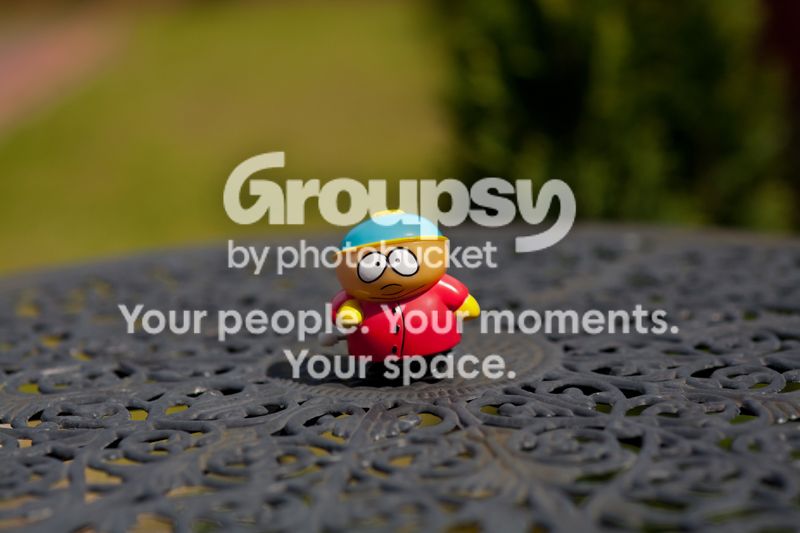
Here's two 85mm test shots, one at f1.4 and one at f1.8...


There's slight lighting differences, as the lighting changed from moment to moment but the actual difference in DoF may or may not be significant...
PS. This is f2.8...
The best thing to do if you have a f1.4 lens is to shoot a series of shots at various camera to subject distances stepping through the aperture range for each shot. Once you've uploaded the shots to your pc you can then decide if the difference, DoF wise, between f1.4 and f1.8 matters to you.
Personally the difference in shutter speed/ISO matters more to me.
Here's two 85mm test shots, one at f1.4 and one at f1.8...
There's slight lighting differences, as the lighting changed from moment to moment but the actual difference in DoF may or may not be significant...
PS. This is f2.8...
Last edited:
woof woof
I like a nice Chianti
- Messages
- 44,034
- Name
- Alan
- Edit My Images
- No
Although i see your using M43 where DoF is much less prominent...
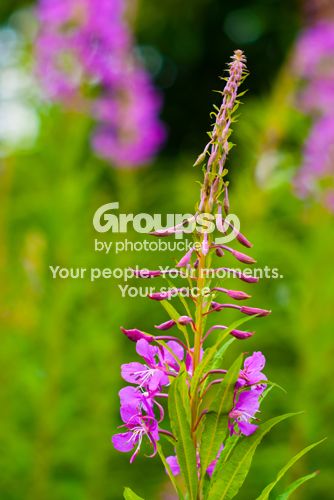
Yeah, right. Everyone knows you can't get shallow DoF from MFT

Yeah, right. Everyone knows you can't get shallow DoF from MFT
I wasn't saying you couldn't, but with a much smaller sensor, achieving DoF is much harder.

- Messages
- 1,818
- Name
- James
- Edit My Images
- Yes
I wasn't saying you couldn't, but with a much smaller sensor, achieving DoF is much harder.
To be fair to m4/3 it's not that much smaller than APS-C, APS-C is definitely much closer to m4/3 that it is to full frame.
woof woof
I like a nice Chianti
- Messages
- 44,034
- Name
- Alan
- Edit My Images
- No
I wasn't saying you couldn't, but with a much smaller sensor, achieving DoF is much harder.
No, achieving shallow DoF is harder with wide angle lenses or if you increase the camera to subject distance but use a longer lens or keep or even reduce your camera to subject distance and... voila... shallow DoF.
woof woof
I like a nice Chianti
- Messages
- 44,034
- Name
- Alan
- Edit My Images
- No
To be fair to m4/3 it's not that much smaller than APS-C, APS-C is definitely much closer to m4/3 that it is to full frame.
Yes. Just look at "standard" lenses.
Full frame... 50mm.
APS-C... 30/35mm.
MFT... 25mm.
Not a lot in it between APS-C and MFT IMVHO, although every mm may matter

- Messages
- 9,438
- Name
- Andy
- Edit My Images
- Yes
It depends how you measure it. APS-C and full frame are 3:2 ratio, MFT is (perhaps not surprisingly!) 4:3. The crop factor comes from the diagonal.Full frame... 50mm.
APS-C... 30/35mm.
MFT... 25mm.
MFT is pretty close to APS-C in height - printing an image where the (landscape) height is the same between APS-C and MFT will narrow the difference even further. Yes, the landscape print will be a different shape, but the DoF will be pretty much the same.
- Messages
- 9,438
- Name
- Andy
- Edit My Images
- Yes
Aha! Alan: NOW I think I understand why you and I clash over DoF. What you are showing as DoF is that you can achieve (very nice) OUT of focus areas with smaller format cameras. What I mean by DoF is the bits of the picture that are actually IN focus.
In this case, increasing the distance and lengthening the lens means the different picture comes from perspective change, not from shallower DoF per se. The Digital Picture explains it perfectly (my bold in the quote to emphasise the point) here (http://www.the-digital-picture.com/Reviews/Canon-EF-100mm-f-2.8-L-IS-USM-Macro-Lens-Review.aspx):
Hopefully, you can see we've been talking at cross purposes. I'm certainly not out to argue - you went above and beyond the call of duty last week helping me choose my 25mm lens. I'm very grateful for that
No, achieving shallow DoF is harder with wide angle lenses or if you increase the camera to subject distance but use a longer lens
In this case, increasing the distance and lengthening the lens means the different picture comes from perspective change, not from shallower DoF per se. The Digital Picture explains it perfectly (my bold in the quote to emphasise the point) here (http://www.the-digital-picture.com/Reviews/Canon-EF-100mm-f-2.8-L-IS-USM-Macro-Lens-Review.aspx):
TDP said: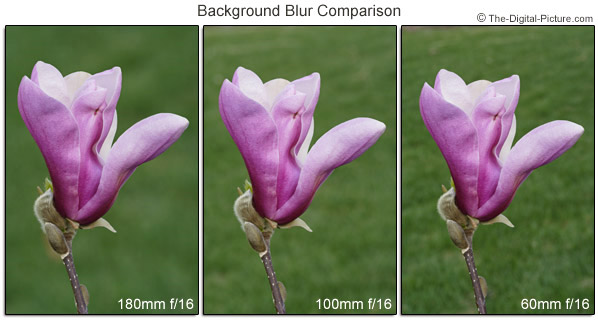
The pictures above were taken with three macro lenses (180mm L, 100mm non-IS and 60mm). They are identically framed using the same camera, the same aperture setting (f/16) and have identical subject to background distances. DOF (Depth of Field) is not different (same framing, same aperture = same DOF until closer to the hyper-focal distance), but perspective / compression / angle of view are very different. The 180mm lens shows only a small physical area of the subject's background that is enlarged - magnifying the blur. Background subjects in the 60mm picture appear to be more in focus. They are not - they are just about as blurred, but they appear much smaller in the picture - and there are more of them because of the 60mm's angle of view. This yields a less diffusely-blurred background.
Yup.. moving closer alters the DoF - assuming you are keeping the lens the same.or keep or even reduce your camera to subject distance and... voila... shallow DoF.
Hopefully, you can see we've been talking at cross purposes. I'm certainly not out to argue - you went above and beyond the call of duty last week helping me choose my 25mm lens. I'm very grateful for that
woof woof
I like a nice Chianti
- Messages
- 44,034
- Name
- Alan
- Edit My Images
- No
...you went above and beyond the call of duty last week helping me choose my 25mm lens. I'm very grateful for that
Anytime. I'm glad to help anyone who is interested in any gear I have.
We seem to argue the toss over exact definitions of DoF but it doesn't matter and hopefully the banter helps those who can't be bothered or haven't got access to different cameras to try it all out for themselves.
One major disagreement between me and others is that I think that the CofC has next to no place in any discussion about DoF for anyone printing between a stamp sized print and an A3. Aperture, focal length and camera to subject distance are what matter, IMVHO, and after that it's a combination of image size and viewing distance that alter our perception of what is there. I also perhaps mistakenly believe that cropping an image and/or printing it at different sizes or viewing it from different distances has no effect on DoF. Only upon our perception of what already exists.
None of this matters to anyone else. What matters is what works for each of us and the fact that I can get whatever DoF I want from MFT, APS-C or FF means that I have enough understanding, even if wrongly understood, to make it work for me.
PS. "They are identically framed using the same camera, the same aperture setting (f/16) and have identical subject to background distances. DOF (Depth of Field) is not different"
Yes. I understand that. There are many clear write ups on this on the net but in reality although the DoF is the same if you keep the framing the same in reality with longer lenses background things are "brought forward" and so can be seen to be OOF. To achieve the same look with a shorter lens you'd have to increase the size of some image emements whilst keeping others the same and my PS skills aren't up to that. Of course using a longer lens and maintaining the same camera to subject distance will give shallower DoF. Or appear to
Last edited:
- Messages
- 9,438
- Name
- Andy
- Edit My Images
- Yes
I can see the way you are thinking and we really aren't that far apart. I'd love to have 10 minutes with you and a pen and paper to draw out what is happening - especially the cropping, print size and viewing distance bit - I'm sure you'd go "doh - I see where you're coming from" and we'd all live happily ever after in DoFland....One major disagreement between me and others is that I think that the CofC has next to no place in any discussion about DoF for anyone printing between a stamp sized print and an A3. Aperture, focal length and camera to subject distance are what matter, IMVHO, and after that it's a combination of image size and viewing distance that alter our perception of what is there. I also perhaps mistakenly believe that cropping an image and/or printing it at different sizes or viewing it from different distances has no effect on DoF. Only upon our perception of what already exists.
The only "proof" that I can readily think of to show viewing distance matters is an impressionist painting. Up close, it is a collection of dots (just like ink dots on a printed image). Viewed from a distance, it becomes an image. Same thing (but on a different scale) with photos.


- Messages
- 6,584
- Name
- Phil
- Edit My Images
- Yes
ImageView said:am I going to notice a BIG difference in 1.8 and 1.4 ?
No.
woof woof
I like a nice Chianti
- Messages
- 44,034
- Name
- Alan
- Edit My Images
- No
I can see the way you are thinking and we really aren't that far apart...
The only "proof" that I can readily think of to show viewing distance matters is an impressionist painting...
I do know where you are coming from but my brain works in a different way.
I do know that viewing distance matters... to that viewer... but what that viewer perceives dosn't matter to another and doesn't change the inherent relationships within the image itself.
An example I've given before... Look at a picture with very shallow DoF. The only way you can "change" the DoF so that things that aren't in it appear to be is to print the image so small or view it from so far away that as an image it becomes meaningless. And at the other extreme, the only way to push things that are in the DoF out of it is to print the image so large or view it so close that it becomes meaningless as an image.
As I've always said, IMVHO things like CofC and to an extend viewing distance probably really don't matter to most hobby photgraphers printing anything between a passport photo and an A3. We need to keep these things in mind, but really, mostly they'll not matter.
- Messages
- 9,438
- Name
- Andy
- Edit My Images
- Yes
Yup. Totally agree. DoF calcs assume a person with a specific visual acuity viewing a standard sized picture from a standard distance.I do know that viewing distance matters... to that viewer... but what that viewer perceives dosn't matter to another and doesn't change the inherent relationships within the image itself.
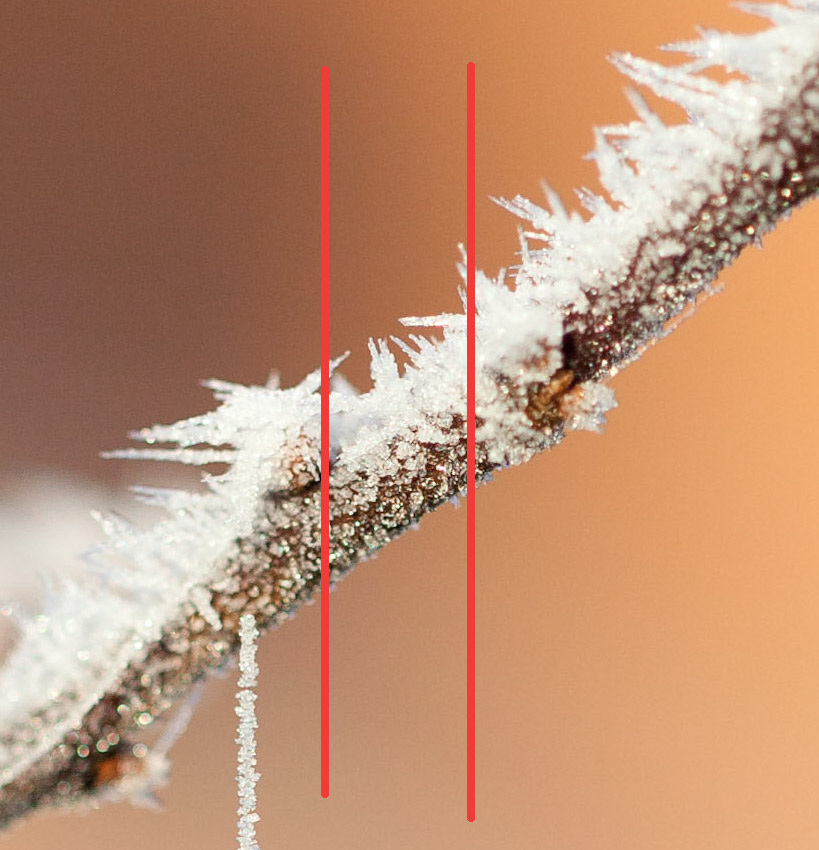
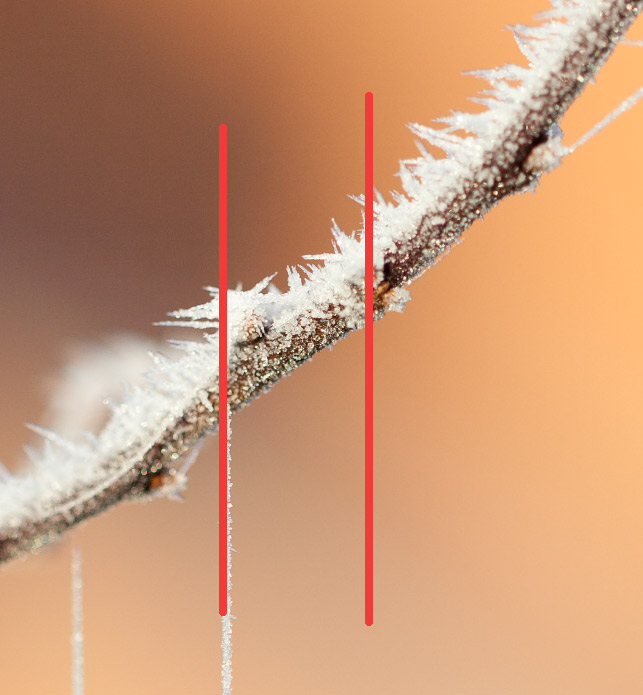
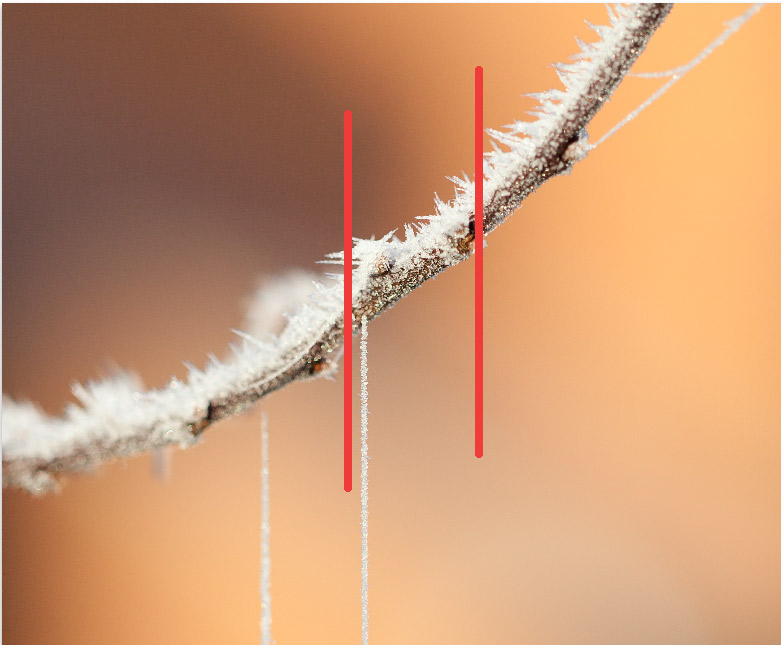
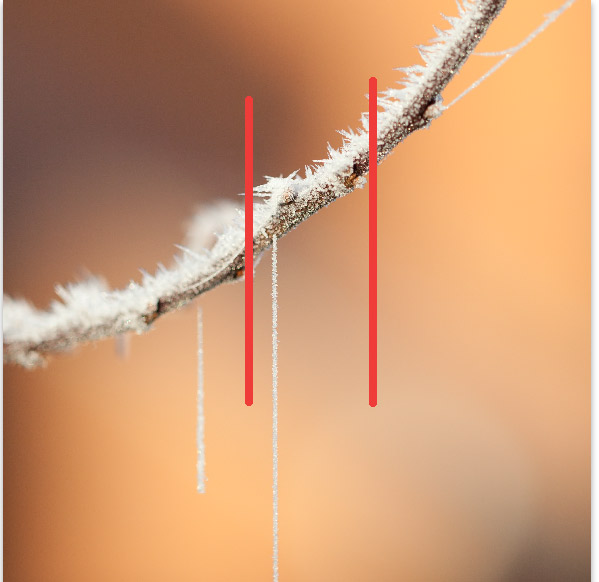
So the only thing we seem to disagree about is the rate of change. So, how about this. Same image, as 1:1 screen captures from an image in lightroom viewed at 1:1, 1:2, 1:3 and 1:4 (apologies that they aren't all a consistent size, they are, however not resizes...).An example I've given before... Look at a picture with very shallow DoF. The only way you can "change" the DoF so that things that aren't in it appear to be is to print the image so small or view it from so far away that as an image it becomes meaningless. And at the other extreme, the only way to push things that are in the DoF out of it is to print the image so large or view it so close that it becomes meaningless as an image.
The red lines show where I percieve the image to go out of focus. The smaller the image is rendered, the bigger the percieved DoF. IMHO of course