Flash! Saviour of the universe?

Messages
1,063
Name
Ciaran
Edit My Images
Yes
You each have every right to berate me for my question as it is undoubtedly one you've read (and responded to) several times before. Nonetheless, please bear with me.

I am currently snapping away (albeit on seldom occasion) with a Nikon D40 and the standard pop-up flash atop it. However, a recent thread in which I asked for recommendations on what photographic equipment threw up a suggestion I was not expecting - a flashgun.

So far as I understand, this is one of those bits that you affix to the camera (or hold off-camera) which is essentially a brighter, more programmable flash. The purpose for which it was suggested was of great interest to me as it has been the bane of my photographic light - illuminating up-close subjects without losing background interest at night.

Now for the questions:

1. How does it work in a night-time situation where I have background interest (such as a lit-up promenade) and I want to flash onto the people up-close? How does it differ from just using a pop-up flash?

2. I would never take the flash off-camera to use it - does it have a real discernible benefit even if I keep it on top of the camera?

3. What decent, semi-futureproof flashgun (speedlight the same thing?) should I be looking at? The SB-600s second-hand fall just within my price range, I believe.

Regards. :thumbs:
 
1. What you're looking for is called "dragging the shutter" you use flash to firstly light up the subject in the foreground, then the shutter stays open a little longer, even after the flash has popped to collect ambient light for the background.

2. Off camera flash is a hell of a lot nicer with regards to portraiture, it gives real definition to faces and peoples bodies, where as on camera flash will leave the flaces looking flat and chubby. However you can use on camera flash, but point the flashgun at the ceiling/wall to achieve "bounce" flash, where by the flash hits the ceiling/wall then reflects onto your subject. This bounce method gives a similair effect as off camera flash.
Either way, generally any new flash you buy can be used both on camera and off camera, for either the small price of a sync cable ~£20, or the more expensive radio triggers anything up to and exceeding ~£200 can be expected for radio triggers.

3. SB-600's certainly would be good, I personally only have the £30 jessops own flash gun, which has no controls at all, but it has a tiltable flash head, so you can achieve bounced light. If you are only looking for a very basic flashgun, much like your Nikon D40 built in flash, then I'd say you may not even need the SB600, and go for something very basic like the Jessops flash I have - but really it's down to how much you plan on using it, and for what purpose.
 
I'm still getting used to my flash gun but here are two examples

Last year with no flash

flash2.jpg


This year with external flash

flash1.jpg


I'm still getting used to it but it was probably the bit of kit that's made the most difference to my shots :thumbs:
 
first and foremost you can get it off the hotshoe, the biggest adavantage in the world when you get to know it

it doesn't rape your camera batteries it uses cheap rechargable aas

it is further off the lens axis so gives nicer more 3d light (less rabbit in the headlights) - works best with wider lenses and closer subjects

makes you look more professional (sounds like a joke but im serious)

High speed sync (low power flash at like a 1/1000th shutter speed which works great for fill

more power - can push into daylight

seriously OCF I know I said it first but I need to come back to it go read strobist, then go shoot a wired cover with like 10 flashguns gelled to hell :D
 
Thanks for all of the replies. I think a cheaper flash might be in order until I'm competent at using the flash and also certain it'll be of benefit to my photography. Do you use these much outdoors? My main use, I presume, will be taking nighttime photos outside monuments and landmarks and not wanting to lose the lighting of the building or the faces before it.

Can the cheaper ones flash go off-camera? Also, how do you "stand" the flash when it's off-camera? I'm not going to be able to take a second tripod (or lightstand) with me when I'm off on holidays but don't want to lose all the functionality of a flashgun.

Unfortunately Wigster, the Jessops one you're talking about is no longer available!
 
Given that the £30 Jessops flash is no longer available, what cheap alternative would people suggest until I'm certain that this will benefit my photography? Or am I best-off straight away looking at the likes of the Jessops 360AFD or Nikon SB-600?
 
id say go for the sb 600 ,because you will get ttl flash with it ,only manual with any other one ( even the earlier sb 's )
 
If you want something affordable that will use Nikon's iTTL then go for a SB400. Have a look here for more info.

:agree:

You can use it off camera with a lead but it's great on camera and bouncing the light.

However the D40 pop up flash will allow you to illuminate people at night and still get the background, the easy way is to set the D40 to Night Portrait. The "better"? way is to set the aperture to suit the subject & flash and then increase your shutter speed so that the exposure for the background is OK.
 
However the D40 pop up flash will allow you to illuminate people at night and still get the background, the easy way is to set the D40 to Night Portrait. The "better"? way is to set the aperture to suit the subject & flash and then increase your shutter speed so that the exposure for the background is OK.

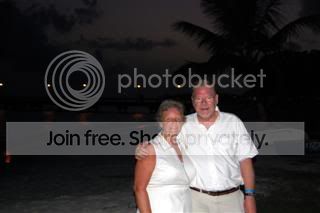
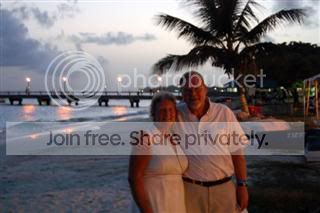
Would you take a look at these two photos - this is the seminal moment when I realised I wasn't any good at properly illuminating the foreground and background in low-light. This was taken on a beach in Barbados at about 6.00pm.

1. Taken at 1/60, f4.8, ISO 400 w/ flash

DSC_0177Custom.jpg


2. Taken at 1/5, f4.8, ISO 1600 w/o flash

DSC_0178Custom.jpg


Obviously the second photo is much preferred but the high ISO rating left the picture noisy and the longer shutter speed led to some blurring as it was hand-held. I'd like an option which allowed me to hand-hold the camera in these sorts of instances whilst still getting a good capture.

What do I need to do? It's not always possible for me to carry around a tripod and, in this case, it wasn't possible to rest the camera anywhere suitable.
 
That is where "dragging the shutter" comes into play Astraeus, you illuminate the foreground subject, then the shutter stays open for a little bit longer to capture the ambient light.

Tutorial here:
http://www.ephotozine.tv/video/dragging-the-shutter-with-michael-bielat-995

Thanks. I've watched that tutorial and found it very useful. So, if I extend my shutter speed to, say, 1/15 of a second, I'll still be able to handhold without noticing any significant blurring? I have a fairly steady hand.

I think, Wigster, with thanks to you, that I'm able to understand this a little better now!
 
It depends how dark the background ambient light is. (i ii)
i: 1/15th-sec is fairly slow, I would prefer not to hand hold even the steadiest of hands will shake at 1/15th, I would advise a tripod certainly for anything below 1/60th.

ii: If the background light is very dark, i.e shooting at night, then you only really have 2 options, bump the ISO (sensor sensitivity) up, so that the shutter speed stays fast enough to hand hold. Or put it on a tripod.
If you're just shooting a couple with their backs to the sunset and just want to use the flash to get rid of the silhouette created, you can retain a fairly fast shutter speed (Dependant on aperture and ISO) as sunsets tend to be bright enough.
 
Thanks for the reply.

I think I'll need to give this a go to practice how the different settings affect the situation. I'm off to Iceland in mid-December and there'll be lots of remote-release shots of my partner and I against night-time backgrounds (with only 5 hours of daylight!).

Hopefully I can shoot at ISO 800 and only drop the shutter speed to about 1/60th, thus avoiding blur whilst still getting some of the ambient light in there. In my experience, ISO 800 hasn't caused any noise issues for me.
 
I notice you have a Nikon D40, that makes thinks simpler for me :p.
You don't phsyically need a new flash at all to do as I was explaining; the built in pop-up flash should illuminate your subject enough. (Thought depends on distance from camera/angle of lens).

When you get time give it a play, change the built in flash setting to "slow" you should have options like "slow rear","Rear","Slow Eye". Or along those lines. Slow is the main one you want to play with. When you press the shutter button with the built in flash set to "slow" mode the built in flash will flash, then the shutter will automatically stay open even after the flash has finished to collect the ambient light for the background.

Give it a go; tell me how you get on. :)
 
My professional chum who used to work for the Times (and if you wanted to make sure you got paid for your pictures) has a saying he uses every time the gun comes out - "Flash for Cash"
 
After this discussion, I found the Jessops 360AFD flash for £39.99 including some voucher codes and snapped it up straight away. It made its debut on Christmas Day and hasn't been off the camera since whilst ever I've been shooting family or friends indoors.

I am absolutely sold on flashes and what they're capable of achieving. I've been bouncing flash all over the place and have received some wonderful, warm, well-rounded photos without any of the in-your-face flash which has plagued my photography to date.

I'll be honest in saying I was more than half-tempted to snap up another 360AFD at that price but decided against it until I'm certain I'd find a use for another flash.

Thanks for the help guys!
 
Would you take a look at these two photos - this is the seminal moment when I realised I wasn't any good at properly illuminating the foreground and background in low-light. This was taken on a beach in Barbados at about 6.00pm.

1. Taken at 1/60, f4.8, ISO 400 w/ flash

DSC_0177Custom.jpg


2. Taken at 1/5, f4.8, ISO 1600 w/o flash

DSC_0178Custom.jpg


Obviously the second photo is much preferred but the high ISO rating left the picture noisy and the longer shutter speed led to some blurring as it was hand-held. I'd like an option which allowed me to hand-hold the camera in these sorts of instances whilst still getting a good capture.

What do I need to do? It's not always possible for me to carry around a tripod and, in this case, it wasn't possible to rest the camera anywhere suitable.

Now get 50mm f/1.4 or another fast prime to get somewhere in between the two!
 
I seem to be championing this at the moment, but one of the extras for a flashgun is a diffuser. Stofen do one for about £15, and nikon and canon and jessops all do them. It is essentially a frosty peice of plastic which sits over the flash and makes the light a bit softer. However, a carex soap bottle can be used and costs about a pound - search for 99p stofen diffuser, or though some of my old posts. I find it improves things even further.

here we go

http://www.talkphotography.co.uk/for...ghlight=stofen
 
I seem to be championing this at the moment, but one of the extras for a flashgun is a diffuser. Stofen do one for about £15, and nikon and canon and jessops all do them. It is essentially a frosty peice of plastic which sits over the flash and makes the light a bit softer. However, a carex soap bottle can be used and costs about a pound - search for 99p stofen diffuser, or though some of my old posts. I find it improves things even further.

here we go

http://www.talkphotography.co.uk/for...ghlight=stofen

The Jessops flash comes with a built-in diffuser and white card which you just pull out and drop down over the flash. As I'm loving the bounce flash at the moment, I've not really played around with it.

Any good books/websites worth reading which give me a bit more information on how to use flash? I'm not wanting a book detailing studio setups etc. because this isn't an avenue I'll be exploring.
 
strobist.com is a great site, it's for off camera flash though - I'm pretty sure you will end up there but it can be a bit heavy to start off with
 
Back
Top