Garry Edwards
Moderator
- Messages
- 13,677
- Name
- Garry Edwards
- Edit My Images
- No
Are pretty useless indoors and totally pointless outdoors, This video may help to explain why


I won'tIt drives me crazy too. I've given up trying to explain things to people who just won't listen due to their preconceived ideas.
Don't get me started on sensor sizes and long lenses . . .

We used to have a very active and knowledgeable member here, HoppyUK, who wrote technical articles for photography magazines. He did a lot of testing and, from memory, found that using a diffuser on a hotshoe flashgun inside a softbox, umbrella or whatever not only levelled the playing field, creating much more consistent results regardless of the design/quality of the modifier, but also created much more even illumination on the front diffuser.The only suggestion I've seen on using those dome diffusers where they might be good is using a camera flashgun(with Fresnel lens) inside a softbox - where spreading the light from the flash makes it closer to a bare bulb effect, evening out the light from the softbox - can someone with more experience confirm (or dismiss) this?


Don't get me started on sensor sizes and long lenses . . .

It drives me crazy too. I've given up trying to explain things to people who just won't listen due to their preconceived ideas.
Don't get me started on sensor sizes and long lenses . . .
haha , what is the controversy?Don't get me started on sensor sizes and long lenses . . .
How long is long ? How do you get the flash to reach out that far?


We used to have a very active and knowledgeable member here, HoppyUK, who wrote technical articles for photography magazines. He did a lot of testing and, from memory, found that using a diffuser on a hotshoe flashgun inside a softbox, umbrella or whatever not only levelled the playing field, creating much more consistent results regardless of the design/quality of the modifier, but also created much more even illumination on the front diffuser.
Back in the day, I did similar tests myself, and found that he was right. His tests were much more comprehensive than mine because they needed to be, my preferred option has always been to use studio flash instead of flashguns whenever possible, so I only half-did it

If you are talking about using a speedlight in a front firing softbox, then it is absolutely beneficial. In a rear firing softbox it is much less so.The only suggestion I've seen on using those dome diffusers where they might be good is using a camera flashgun(with Fresnel lens) inside a softbox - where spreading the light from the flash makes it closer to a bare bulb effect, evening out the light from the softbox - can someone with more experience confirm (or dismiss) this?
There are variables that can make big differences.If you are talking about using a speedlight in a front firing softbox, then it is absolutely beneficial. In a rear firing softbox it is much less so.

How long is long ? How do you get the flash to reach out that far?
haha , what is the controversy?


To add to @Garry Edwards note re Hoppy, I think he ended up with a simple Stofen type diffuser with a piece of foil in the top and some of the long edges removed to mitigate the hot spot effect. I have considered trying it.where spreading the light from the flash makes it closer to a bare bulb effect,
You may be right, I can't remember the details.To add to @Garry Edwards note re Hoppy, I think he ended up with a simple Stofen type diffuser with a piece of foil in the top and some of the long edges removed to mitigate the hot spot effect. I have considered trying it.

Here's the thread (or a thread from Hoppy on the subject anyway) https://www.talkphotography.co.uk/threads/filling-a-softbox-with-a-speedlight.656033/You may be right, I can't remember the details.
What matters is that @HoppyUK (Richard Hopkins) did was to use a diffuser to spread the light within the softbox (or other modifier), which from memory also created a level playing field that allowed him to calculate the true power output (which is often very different from manufacturer claims about guide numbers). His approach worked.

It's not quite the one I remember either tbh. He does reference an earlier thread on that one but I don't think that one was it either.Good find, with very useful, detailed info. This post is typical of Richard, everything very carefully researched, very detailed and well-explained,
But it isn't the one I had in mind, I've been trying to find it without success. From memory, the one about creating a level playing field was much earlier,
This thread is really about the hype surrounding flashgun diffusers and the ridiculous claims made about them,Hmm. Wish I had seen this before i clicked buy! I have just ordered a Godox 1 Mid O flash with the X3-O trigger and AK-R1 accessory kit, to use with my OM Systems OM3 I was looking for a portable flash that I could use off camera for some portraits of family while on holiday ie early evening. @Garry Edwards should I be sending it back?
Phew! My criteria was more around portability and ability to recharge and being compatible with my camera, like you said the kit was cheap (£35) so I wasn’t expecting great things, I’ll probably invest in a soft box in the future but it wouldn’t have been practical on holiday anyhow!This thread is really about the hype surrounding flashgun diffusers and the ridiculous claims made about them,
I think that it all started years ago with an American gentleman who claimed to be one of the most successful wedding photographers, and the most expensive, in the world, and he told people that his magic bit of grossly overpriced plastic was the secret to his success. And, as always, a lot of people believed him, at which point he probably did become successful.
I doubt whether the AK-RI accessory kit is worth having, but at least it's cheap.
The flashgun that you've ordered is fine. I don't believe that it has any special qualities, and you should totally ignore any marketing BS about "beautiful soft light" but there's nothing wrong with the flashgun, so I can't think of any reason why you should return it.
This thread is really about the hype surrounding flashgun diffusers and the ridiculous claims made about them,
I think that it all started years ago with an American gentleman who claimed to be one of the most successful wedding photographers, and the most expensive, in the world, and he told people that his magic bit of grossly overpriced plastic was the secret to his success. And, as always, a lot of people believed him, at which point he probably did become successful.

Not just me then!Gary Fong?
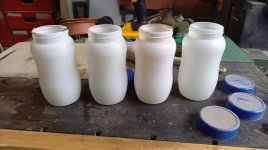
I seem to remember that it was pretty mush the same as putting a one litre (empty) milk carton on the end of your flash.

I can't remember his name, either that or I don't want to be suedGary Fong?
I seem to remember that it was pretty mush the same as putting a one litre (empty) milk carton on the end of your flash.

I can't remember his name, either that or I don't want to be sued