

You are using an out of date browser. It may not display this or other websites correctly.
You should upgrade or use an alternative browser.
You should upgrade or use an alternative browser.
Getting good bokeh
- Thread starter Skyline
- Start date

- Messages
- 9,818
- Edit My Images
- No
Use a lens with the out-of-focus characteristics you want to include. Some lenses are regarded as having better bokeh than others, there are certain design elements that work towards this.
But I wonder from the second part of the question if you mean bokeh, or bokeh balls.
But I wonder from the second part of the question if you mean bokeh, or bokeh balls.

- Messages
- 291
- Name
- paul
- Edit My Images
- No
the more Aperture blades your lens has the rounder the Bokeh will be less blades and they will appear more hexagonal. Shoot at wide apertures I think this was shot at f2 with a 50mm f1.4 http://www.flickr.com/photos/pablo_paul/6904107009/
To
To

- Messages
- 1,756
- Name
- Chris
- Edit My Images
- Yes
Use a longer focal length and open the aperture. Stand back from the subject and get some distance between it and the background.
OP

Skyline
Emmet Brickowski
- Messages
- 4,592
- Name
- Dave
- Edit My Images
- No
Use a lens with the out-of-focus characteristics you want to include. Some lenses are regarded as having better bokeh than others, there are certain design elements that work towards this.
But I wonder from the second part of the question if you mean bokeh, or bokeh balls.
Either. Thank you for the explanation.
the more Aperture blades your lens has the rounder the Bokeh will be less blades and they will appear more hexagonal. Shoot at wide apertures I think this was shot at f2 with a 50mm f1.4 http://www.flickr.com/photos/pablo_paul/6904107009/
To
That's the one. How far away were the lights from the subject? I have a 50mm so can practice with that.
OP
Skyline
Emmet Brickowski
- Messages
- 4,592
- Name
- Dave
- Edit My Images
- No
Use a longer focal length and open the aperture. Stand back from the subject and get some distance between it and the background.
Thanks Chris. I will be trying all these tips tomorrow.

OP
Skyline
Emmet Brickowski
- Messages
- 4,592
- Name
- Dave
- Edit My Images
- No
This is very similar, taken with the sun in the background through trees, a bit of exposure allowance, taken with a 70 - 210 F4 at around twenty feet.
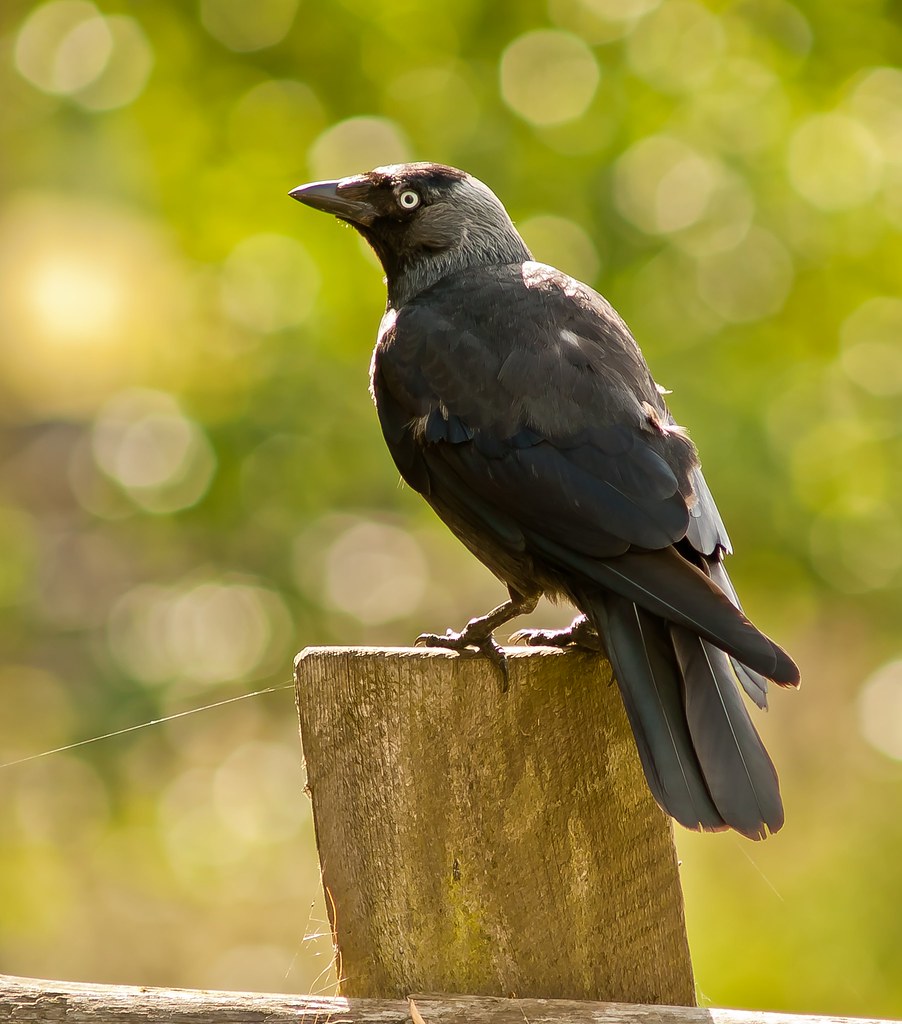
That has worked very well Andy. Mine came out more of a smudge


You do not see a lot of them these days,but mirror lenses had a typical doughnut shape.
Hi. I've only been doing the a couple of years and only got my dslr about 6 months ago. So don't know what a mirror lens is. (where's embarrassed smiley)

As Alastair and Pablo have said, certain lenses have very distinctive characteristics on OOF backgrounds. Some produce nice round circles, some very small, harsh shapes. Then you have the lighting conditions, and this is just a personal thing, but I prefer quite harsh sunlight which has been partially shielded to produce a pleasing bokeh. Others may have their own ideas.
A lot of this is just down to practice.
A lot of this is just down to practice.
OP
Skyline
Emmet Brickowski
- Messages
- 4,592
- Name
- Dave
- Edit My Images
- No
As Alastair and Pablo have said, certain lenses have very distinctive characteristics on OOF backgrounds. Some produce nice round circles, some very small, harsh shapes. Then you have the lighting conditions, and this is just a personal thing, but I prefer quite harsh sunlight which has been partially shielded to produce a pleasing bokeh. Others may have their own ideas.
A lot of this is just down to practice.
Practice is what I'll do. Just need a point in the right direct. Cheers again for the help


- Messages
- 456
- Edit My Images
- No
Some of my old film cameras give square bokeh, as the lens only had two aperture blades!
To sum up:
Lens - the longest you have. I'd say a minimum of 50mm.
Aperture - the widest it will go
Distance from camera to the subject - as short as you can get it
Distance from the subject to things in the background - as far as you can get it.
The closer the subject you're focussing on, the softer and blurrier the background will be. The further away the background, the even more softer and blurrier it will be.
A simple way of seeing how the bokeh of a lens is, is to put it into manual focus and set it so that it's at its closest focussing. Then point the camera in the direction of some lights that are a fair distance away, and they should appear as nice soft circles.
Don't be worrying about the number or shape of aperture blades. Pentagonal bokeh is just as cool as round bokeh (and there are tricks you can use to make cross shaped bokeh, or heart shaped bokeh, but that's for another day).
OP
Skyline
Emmet Brickowski
- Messages
- 4,592
- Name
- Dave
- Edit My Images
- No
This lens has 20 blades, wide open it produces perfect discs but I'm not sure the bokeh is all that, so perfect disks and perfect bokeh don't always go hand in hand, there's a lot more to it than a high blade count..

Cool example. Nice one.
Agree with joxby, a higher blade count will just mean any highlights present in the out of focus areas will be nice and round.
Thanks for explaining.
Some of my old film cameras give square bokeh, as the lens only had two aperture blades!
To sum up:
Lens - the longest you have. I'd say a minimum of 50mm.
Aperture - the widest it will go
Distance from camera to the subject - as short as you can get it
Distance from the subject to things in the background - as far as you can get it.
The closer the subject you're focussing on, the softer and blurrier the background will be. The further away the background, the even more softer and blurrier it will be.
A simple way of seeing how the bokeh of a lens is, is to put it into manual focus and set it so that it's at its closest focussing. Then point the camera in the direction of some lights that are a fair distance away, and they should appear as nice soft circles.
Don't be worrying about the number or shape of aperture blades. Pentagonal bokeh is just as cool as round bokeh (and there are tricks you can use to make cross shaped bokeh, or heart shaped bokeh, but that's for another day).
Great explanation. Thanks for taking the time help me
