

You are using an out of date browser. It may not display this or other websites correctly.
You should upgrade or use an alternative browser.
You should upgrade or use an alternative browser.
NSFW How to get sharp shadow edges
- Thread starter ndwgolf
- Start date


ancient_mariner
Moderator
- Messages
- 28,563
- Name
- Toni
- Edit My Images
- No
A bare bulb should help - you need a point source of light for sharp shadows.

- Messages
- 4,329
- Name
- Wayne
- Edit My Images
- No
I am no expert but I have been having similar concerns when dodging in the darkroom.
How far away from the light source is the model ?
The further away you get the light the harder the shadow edge.
Try putting your light on maximum output and moving it as far back as your exposure requirement allows.
A smaller diameter reflector should help as well if you have one.
How far away from the light source is the model ?
The further away you get the light the harder the shadow edge.
Try putting your light on maximum output and moving it as far back as your exposure requirement allows.
A smaller diameter reflector should help as well if you have one.


- Messages
- 4,329
- Name
- Wayne
- Edit My Images
- No
You cant beat a hard nipple shadow.who wants to look t the shadows?


Garry Edwards
Moderator
- Messages
- 13,677
- Name
- Garry Edwards
- Edit My Images
- No
A honeycomb (grid) will stop the light spreading to some degree, so may have some value because it will effectively make the light a bit smaller and will also reduce the amount of unwanted light bounce from reflective surfaces, but won't make a lot of difference.Flash further away...much further away? (Grid?)
None of the data you've posted makes a scrap of difference, you just need to increase the distance from flash to subject and use the smallest possible light source
OP

- Messages
- 4,776
- Name
- Neil Williams
- Edit My Images
- No
Okay I will try bare bulb next timeA honeycomb (grid) will stop the light spreading to some degree, so may have some value because it will effectively make the light a bit smaller and will also reduce the amount of unwanted light bounce from reflective surfaces, but won't make a lot of difference.
None of the data you've posted makes a scrap of difference, you just need to increase the distance from flash to subject and use the smallest possible light source
Garry Edwards
Moderator
- Messages
- 13,677
- Name
- Garry Edwards
- Edit My Images
- No
No, NOT bare bulb. Use a reflector, the narrower and longer it is, the better.Okay I will try bare bulb next time
Garry Edwards
Moderator
- Messages
- 13,677
- Name
- Garry Edwards
- Edit My Images
- No
Agreed, but it's an inefficient and clumsy approach to a simple problem. We've been here before, the OP already has an ideal reflector for this purpose, although of course it needs to be used without the diffusion sock


sk66
Advertiser
- Messages
- 9,858
- Name
- Steven
- Edit My Images
- Yes
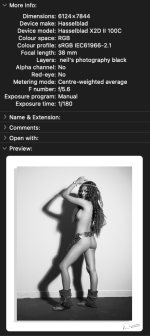
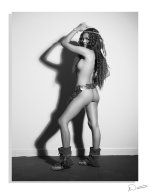
The wide/translucent shadow edges show that your main problem is "spill"; because your studio is fairly small and has light colored walls.
This is part of a drawing I made many years ago to help explain/show why "soft" modifiers become "hard" when used from too far away... and using your reflector from too close may be part of your problem. But the primary shadow edge is already fairly hard; it's just that the shadow edges have been lightened with "bounced fill."
But you can also see all of the light which goes around the subject... in a small/light room that light is reflected back into the subject, and the walls/ceiling/floor become part of your modifier/reflector. This is actually how/why a lot of beginners get soft light results in small spaces with cheap/small kit; a lack of control of the lighting.
This shows a reflective umbrella, but the specific type of modifier doesn't much matter.
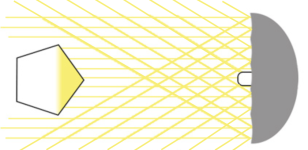
To get the result you want you need two things. As hard of a light source as you can generate (small/distant/focused/etc), and control of whatever spill that source generates (no side walls, black flags, etc). In your case the best bet may be to make as small/hard of a source as possible with minimal spill. I would probably use as tight of a reflector as you own (e.g. snoot), and then possibly restrict that farther (grid/etc). One way is to make a "pinhole" mask from foil over your reflector... you will waste a ton of light, but it will/should work. The best way is probably to use optically focused (collimated) light.
This is part of a drawing I made many years ago to help explain/show why "soft" modifiers become "hard" when used from too far away... and using your reflector from too close may be part of your problem. But the primary shadow edge is already fairly hard; it's just that the shadow edges have been lightened with "bounced fill."
But you can also see all of the light which goes around the subject... in a small/light room that light is reflected back into the subject, and the walls/ceiling/floor become part of your modifier/reflector. This is actually how/why a lot of beginners get soft light results in small spaces with cheap/small kit; a lack of control of the lighting.
This shows a reflective umbrella, but the specific type of modifier doesn't much matter.
To get the result you want you need two things. As hard of a light source as you can generate (small/distant/focused/etc), and control of whatever spill that source generates (no side walls, black flags, etc). In your case the best bet may be to make as small/hard of a source as possible with minimal spill. I would probably use as tight of a reflector as you own (e.g. snoot), and then possibly restrict that farther (grid/etc). One way is to make a "pinhole" mask from foil over your reflector... you will waste a ton of light, but it will/should work. The best way is probably to use optically focused (collimated) light.
Last edited:
Garry Edwards
Moderator
- Messages
- 13,677
- Name
- Garry Edwards
- Edit My Images
- No
Steven,
You're absolutely right, small and light/white walls and ceilings are part of the problem, and your solution is correct.
But, I believe that if Neil does as suggested, i.e. a small, deep reflector as far away from the subject as possible, the results will be good enough - just try it and see
If I'm wrong, that's the time to try adding further control.
You're absolutely right, small and light/white walls and ceilings are part of the problem, and your solution is correct.
But, I believe that if Neil does as suggested, i.e. a small, deep reflector as far away from the subject as possible, the results will be good enough - just try it and see
If I'm wrong, that's the time to try adding further control.
sk66
Advertiser
- Messages
- 9,858
- Name
- Steven
- Edit My Images
- Yes
But, I believe that if Neil does as suggested, i.e. a small, deep reflector as far away from the subject as possible, the results will be good enough - just try it and see
I believe Neil could place his light outside the entrance to his studio which would (potentially) accomplish everything at once (distance, spill control, etc)...and using your reflector from too close may be part of your problem...
I would probably use as tight of a reflector as you own (e.g. snoot), and then possibly restrict that farther (grid/etc).
Last edited:
OP
- Messages
- 4,776
- Name
- Neil Williams
- Edit My Images
- No
Ill give it a go over the weekend.....thanksSteven,
You're absolutely right, small and light/white walls and ceilings are part of the problem, and your solution is correct.
But, I believe that if Neil does as suggested, i.e. a small, deep reflector as far away from the subject as possible, the results will be good enough - just try it and see
If I'm wrong, that's the time to try adding further control.

LongLensPhotography
Th..th..that's all folks!
- Messages
- 18,863
- Name
- LongLensPhotography
- Edit My Images
- No
Projector or focused fresnel would be best. Next up snoot, bare bulb far away. No reflectors, no nothing else.
sk66
Advertiser
- Messages
- 9,858
- Name
- Steven
- Edit My Images
- Yes
Note that the edges are already pretty "hard" and defined... they just look more like an outline due to the "bounced fill."Ill give it a go over the weekend.....thanks
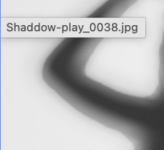
(I hope that doesn't qualify as "edit my images")
Last edited: