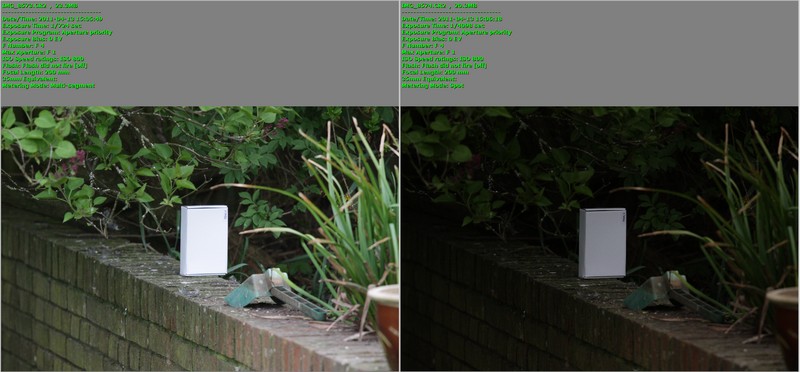
Understanding exposure, of which metering is a part is fundamental to getting a good shot. Most cameras have a variety of metering modes, Evaluative, where it looks at the whole frame, spot, where it picks a small area for example, also partial or perhaps centre weighted.
Now cameras despite their sophistication are quite stupid and have no idea what you want. So say you are using spot metering and have it pointed at a white bird against a dark background. The camera thinks it is bright so underexposes to try and get some detail in the white bird, hence the bird looks grey and the background so dark that there is no detail at all.
So what is going on, the camera guages things by what is called 18% grey, so point at 18% grey and it will get the exposure correct, point it at white and it will underexpose, and point to something dark and it would overexpose. So you need to think about what is the camera seeing. The other metering methods, evaluative for example takes an average of the scene, but that can be thrown off by large areas of dark or light.
A good rule of thumb is green grass or tarmac ( which is usually grey) give a pretty good approximation of 18% grey and thus a fairly decent reading. This is fine if you subject is in the same light level as the grass or tarmac.
Take your camera out set it up on a scene and change the metering modes and see what differences you get, then pick very light and very dark parts. Then think about, has the light changed (i'm assuming it's steady), no, but what the camera thinks it is seeing has. That's why when you shoot a bird that suddenly moves from the bush up into the sky the camera suddenly thinks it's a lot lighter as the background sky overwhelms the meter (assuming the standard grey sky here

)
Hopefully this will have given you an insight into what is going on.