I have questions on using 4/3rds

Messages
639
Name
Alan
Edit My Images
Yes
This might be a pretty obvious question but it's been baffling me as i have had mixed answers from supposedly good sources.

Ok, so i'm looking at buying a 4/3rds body to use for shooting birds and other distant subjects.
My understanding is that having a crop factor of 2x effectively doubles the focal range of the lens in use, so i'd get a 35mm equiv of 600mm from a 300mm lens.

But how is the aperture affected?
For instance if i had the Olympus Zuiko ED 50-200 f2.8-3.5, that would give me a 400mm f3.5?

Can someone clear this up for me please.
 
it would give you a similar field of view that a 400mm lens would on a 35mm camera, but focal length is still 200mm.

The smaller sensor is also more susceptible to noise than the x1.6 and full frame cameras, so you can't use as high an ISO as you could otherwise.
 
The smaller sensor wont be an issue, I very rarely use above ISO 200 anyway.
 
The biggest issue with going for a 4/3rds body for bird photography is the lack of available long lenses. A 200mm lens on a 4/3rds body will indeed give a FOV the same as a 400mm lens on a full frame body, but a 300mm on a 1.6x cropper will give you more 'effective reach'. For bird photography I'd recommend looking at either a Canon or a Nikon as they have faster AF systems (in my experience) and a much wider range of available long lenses.
 
"The biggest issue with going for a 4/3rds body for bird photography is the lack of available long lenses"

On the Sigma website they list a 50-500mm 4/3 lens. Might be an option :)
 
"The biggest issue with going for a 4/3rds body for bird photography is the lack of available long lenses"

On the Sigma website they list a 50-500mm 4/3 lens. Might be an option :)

Indeed but availability of these lenses can be an issue and there are lot less options, both new and secondhand. A quick look on Sigmas website shows that it is the only long option for 4/3rds - for Nikon or Canon you'd have another eight lens options and that's just from Sigma.
 
Indeed, but there are options away from the usual Canon / Nikon body choice and they're at least worth a look.
 
This might be a pretty obvious question but it's been baffling me as i have had mixed answers from supposedly good sources.

Ok, so i'm looking at buying a 4/3rds body to use for shooting birds and other distant subjects.
My understanding is that having a crop factor of 2x effectively doubles the focal range of the lens in use, so i'd get a 35mm equiv of 600mm from a 300mm lens.

But how is the aperture affected?
For instance if i had the Olympus Zuiko ED 50-200 f2.8-3.5, that would give me a 400mm f3.5?
Can someone clear this up for me please.

In a word, yes.

Equivalent field of view to 400mm on full frame, at f/3.5, with depth of field equivalent to f/7 (f/number x crop factor).
 
I had a 40D until recently and i'd used the 400mm f5.6 L for a week from Lenses For Hire. Although it was very fast i still thought i didn't have enough reach in the reserve i was at.
Just wanted to ask about 4/3rds as i wasn't exactly sure how it compares to the larger sensor of the Canon.

I think i'll stick with Canon, it's what i know and am used to. Besides, i dont really want to change my username to Olympian :lol:
 
I had a 40D until recently and i'd used the 400mm f5.6 L for a week from Lenses For Hire. Although it was very fast i still thought i didn't have enough reach in the reserve i was at.
Just wanted to ask about 4/3rds as i wasn't exactly sure how it compares to the larger sensor of the Canon.

I think i'll stick with Canon, it's what i know and am used to. Besides, i dont really want to change my username to Olympian :lol:

If you need a lot of reach and you're on a budget the Zuiko 70-300mm gives you 600mm equivalent focal length @ f5.6. Used with care and in good light you can get excellent reults with a x1.4 converter, giving 840mm effective focal length.

A lot of tosh is talked about Olympus not having the lenses. Sure, Canon and Nikon both have some tasty long lenses, but at what price? If money is no object, a Zuiko 300mm f2.8 (600mm equivalent) will knock 'em all into a cocked hat. Or there is the equally excellent 90-250mm (180-500mm) constant aperture zoom. With a whole stop extra light than the best Canikon can offer the "high ISO advantage" myth starts to disappear, too! The quality of these Zuikos is simply superb, even with a x2 converter - so you can have a 1200mm equivalent f5.6 if you really want!

As an added bonus, in the standard zoom range Olympus offers a superior optic to the competition at every price point - right up to the phenomenal 14-35mm (28-70mm) constant f2 which simply has no peers!

It has to be conceeded that 4/3 has a definite weakness at high ISO compared to the competition but this is partly mitigated by the fast optics and if optical range and performance is the main criteria then Olympus are well ahead of the game. :)
 
If you need a lot of reach and you're on a budget the Zuiko 70-300mm gives you 600mm equivalent focal length @ f5.6. Used with care and in good light you can get excellent reults with a x1.4 converter, giving 840mm effective focal length.

A lot of tosh is talked about Olympus not having the lenses. Sure, Canon and Nikon both have some tasty long lenses, but at what price? If money is no object, a Zuiko 300mm f2.8 (600mm equivalent) will knock 'em all into a cocked hat. Or there is the equally excellent 90-250mm (180-500mm) constant aperture zoom. With a whole stop extra light than the best Canikon can offer the "high ISO advantage" myth starts to disappear, too! The quality of these Zuikos is simply superb, even with a x2 converter - so you can have a 1200mm equivalent f5.6 if you really want!

As an added bonus, in the standard zoom range Olympus offers a superior optic to the competition at every price point - right up to the phenomenal 14-35mm (28-70mm) constant f2 which simply has no peers!

It has to be conceeded that 4/3 has a definite weakness at high ISO compared to the competition but this is partly mitigated by the fast optics and if optical range and performance is the main criteria then Olympus are well ahead of the game. :)

It's not as simple as that though. Everything there is because of the smaller 4/3rds sensor. Full frame is four times larger than 4/3rds, and approximately 2.5x larger than Canon/Nikon crop. That's where the benfit lies, and also the drawbacks.

If it was only about format, then compacts would win that one hands down with their tiny sensors. That's what digiscoping is about which gives collosal magnification (sticking a compact on the end of a telescope) but the image quality is poor.

I think it is more about compromise, and which combination of camera and lens gives the best result. That is always changing but it is undeniable that as sensor technology improves, the more 4/3rds format becomes attractive (and the very expensive full frame holds less of an advantage). That is, provided 4/3rds is equipped with lenses that are able to deliver the incredible resolution that very high pixel density demands - far more resolution than most film-heritage lenses were ever designed to produce.

The new ILC cameras (interchangeable lens compact) such as the Olympus E-P1, Panasonic GF1 and the just announced Samsung NX10, seem to be making good use of this technology. Likewise, the Canon 7D with 18mp can pull out more 'reach' in the sense of pixel density than most 4/3rds cameras. It's got to the stage where bigger (in terms of format) is not always better in every way, but different. Certainly in terms of size, weight and cost, for most people full frame has well and truly lost the race.
 
There is a lot of tosh talked about the 4/3rds system, mainly I suspect by folk who have never used Oly equipment or seriously looked at the quality of the photos that 4/3rds offer but rather listen to the uninformed and take that as gospel.
I use the E3 with the 14-35 and 35-100 f2 constant aperture lenses and the results are superb (the quality of these lenses is amazing and an f2 aperture is just the cream on the cake), I regularly shoot at 3200 ISO and have no issues with noise at all, if any noise becomes apparent it is easily reduced in LR2 but I rarely have to do that, certainly not to any degree.
I do agree that the range of Zuiko lenses is lacking in the longer reach and a 100-400 f4 high grade lens would be welcome, but for me that's not an issue as I find my combination of lenses covers all the work I do.

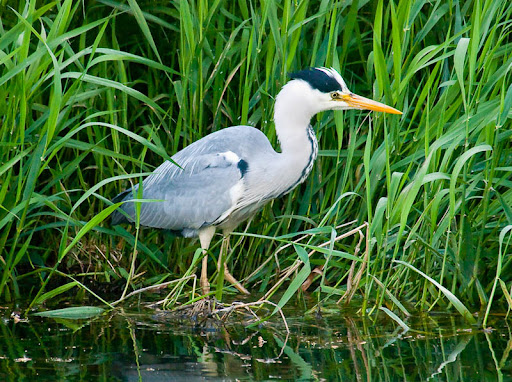
The following pic was taken with the E3, 3200 ISO, Zuiko 50-200 SWD + EC20 converter giving 400mm (full frame eqiv 800mm), shot as RAW and processed in LR2.

_5241787.jpg


Paul
 
There is a lot of tosh talked about the 4/3rds system, mainly I suspect by folk who have never used Oly equipment or seriously looked at the quality of the photos that 4/3rds offer but rather listen to the uninformed and take that as gospel.
I use the E3 with the 14-35 and 35-100 f2 constant aperture lenses and the results are superb (the quality of these lenses is amazing and an f2 aperture is just the cream on the cake), I regularly shoot at 3200 ISO and have no issues with noise at all, if any noise becomes apparent it is easily reduced in LR2 but I rarely have to do that, certainly not to any degree.
I do agree that the range of Zuiko lenses is lacking in the longer reach and a 100-400 f4 high grade lens would be welcome, but for me that's not an issue as I find my combination of lenses covers all the work I do.

The following pic was taken with the E3, 3200 ISO, Zuiko 50-200 SWD + EC20 converter giving 400mm (full frame eqiv 800mm), shot as RAW and processed in LR2.

_5241787.jpg


Paul

Nice shot, Paul, but where's the noise? :D ;)
 
I can add some in ;-)

Paul

Might be as well, Paul, otherwise this could be mistaken for a Nikon image despite being so sharp! ;)
 
I must admit, the 4/3rd system is very attractive. I for one would welcome the f number / focal length capabilities.

That photograph is excellent. Cleaned up nicely and everything.

I am looking forward to the E4/5. Rumors are rampant and one particular of interest (the Trine CCD) but we'll see.
 
Back
Top