

Just how shallow DoF can M43 achieve - car photography?

Messages
3,997
Name
Alan
Edit My Images
Yes
This is not intended to knock M43 and is not intended to start a DSLR vs M43 argument, but....

I am really interested in whether I can achieve the type of shallow DoF/subject isolation/3d effect automative photos that I like without adding a fake PS background blur.

A quick google images example (not sure what camera/lens this was with):
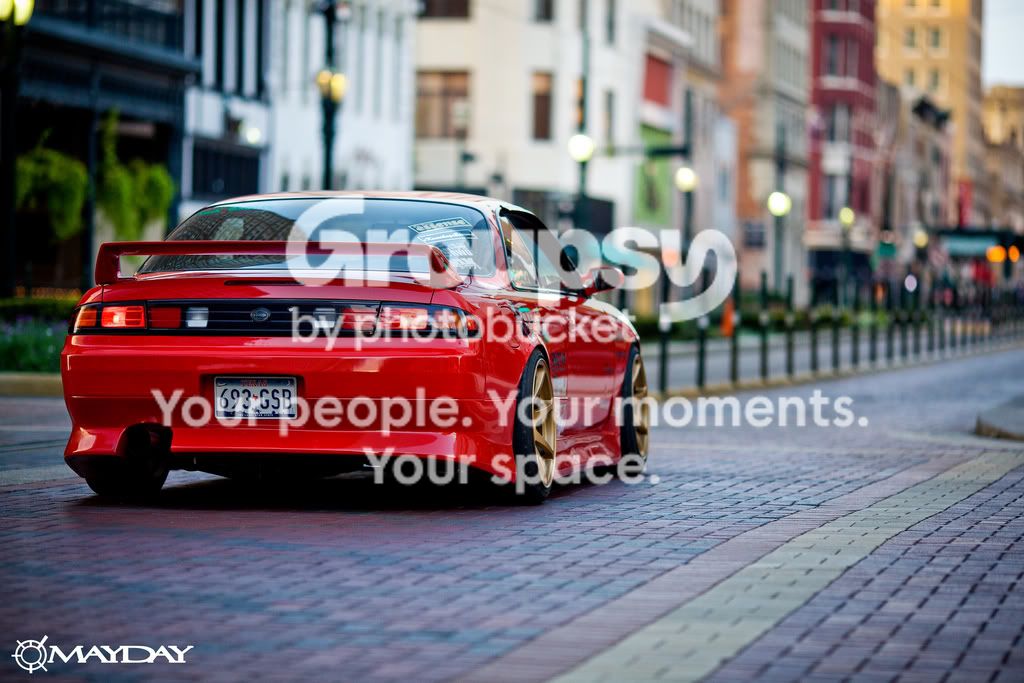


I own 20mm and 14mm Panasonic primes for m43 and have access to (through work) a D800 with 50mm f1.8 and 85mm 1.4 and a 5D2 with the 24-105 f4 lens so know what FF can do.

I assume I'd need to buy a lens as not really succeeded with the 14 or 20 primes - can a Pan 42.5mm or Oly 75mm achieve the same results? Or even the 35-100 2.8 Pan?
 
Last edited:
The 42.5mm at f/1.2 will give similar depth of field to what you can achieve with FF 85mm f/2.4.
75mm @ f/1.8 = 150mm f/3.6 equiv.
35-100mm f/2.8 = 70-200mm f/5.6 equiv.

These three lenses can probably achieve that shallow depth of field you see in the photo. The depth of field there isn't extremely shallow.
 
The 42.5mm at f/1.2 will give similar depth of field to what you can achieve with FF 85mm f/2.4.
75mm @ f/1.8 = 150mm f/3.6 equiv.
35-100mm f/2.8 = 70-200mm f/5.6 equiv.

Yup. The crop factor works and from the same position/camera to subject distance you'll get near enough the same shot assuming you can equalise the focal length and aperture for the crop factor and if you can the only differences should be down to the shape of the aperture blades and any other such character things. As Ido says, that shot doesn't look to have extremely shallow DoF so I assume that MFT produce a pretty similar result.
 
micro 4/3rds -> FF = 2x the F number. Ido is right on his maths, but if you think half the focal length AND 2x the aperture for equivalence, you'll be just about right. In other words, if you used 50mm @ F1.8 on FF for a photograph then you could take an equivalent photo from the same spot with a 25mm @ F0.9 on micro 4/3rds (and yes, I'm aware you can get f0.95 lenses for micro 4/3rds.

The other way to get really shallow DoF on micro 4/3rds is with adapted lenses and speedboosters....
 
Another example...

streets%20cars%20photography%20lamborghini%20bokeh%20lamborghini%20gallardo%202560x1600%20wallpaper_www.wallpaperfo.com_3.jpg
 
The next time I have free time for photography is Thursday afternoon but as this has got me thinking I might just see what's possible with MFT. I might try whole car and half car shots like in the examples. Dunno where I can park my car and shoot it without either blocking the road or getting run over though :D
 
Clearly you can achieve bokeh with most m43 lenses (or legacy glass) by having a small subject close to the lens like Simons example - same as zooming in with a telephoto.

I assume this becomes more difficult when using a car?
 
Cars are pretty big :D so with longer lenses you'll be further away and with distance comes increased DoF (edit - but the shot will look "flatter" and the background may look more OOF) and it all gets too difficult for me to imagine and compare :D

What you really need is to know the camera, lens and aperture setting and then you can work it all out with the crop factor. My own little test shots tell me that MFT does indeed = FF if you half the focal length and the aperture. eg. MFT 25mm at f1.4 will look very like FF 50mm at f2.8 but if I guessed what your test shots were taken with I'd very probably be wrong :D and I don't have any arty car shots of my own.
 
Last edited:
I couldn't find a quiet street which looked as nice as those shots and I had to be quick to avoid traffic but here goes...

20mm at f1.7 full and sort of half car...


50mm at f1.4.


85mm at f2.


Last edited:
This is not intended to knock M43 and is not intended to start a DSLR vs M43 argument, but....

I am really interested in whether I can achieve the type of shallow DoF/subject isolation/3d effect automative photos that I like without adding a fake PS background blur.

A quick google images example (not sure what camera/lens this was with):


I own 20mm and 14mm Panasonic primes for m43 and have access to (through work) a D800 with 50mm f1.8 and 85mm 1.4 and a 5D2 with the 24-105 f4 lens so know what FF can do.

I assume I'd need to buy a lens as not really succeeded with the 14 or 20 primes - can a Pan 42.5mm or Oly 75mm achieve the same results? Or even the 35-100 2.8 Pan?

Heres a shot i dug out of my 35-100 at 2.8, and that is pretty close focus, though not at full zoom.

Weston Beach Race 2013 #5 by /Cud, on Flickr
 
Thanks woof very useful...

I guess without knowing the exif for the 2 examples I posted it is hard to tell whether this is just OOF due to being at full zoom and a huge subject background distance or genuine bone fide bokeh from a fast wide open lens.

Your 20mm shots makes the colours look nicely saturated - really is a classic lens for m43.

I'm a bit underwhelmed with the others if I'm honest - clearly all the closer shots are due to the camera subject distance and only the last picture (135mm) is getting anywhere close to a decent amount of defocused background.

Since I started this thread I have really studied closely a lot of other car shots and a surprising amount don't feature shallow DoFs or any bokeh at all :(
 
Last edited:
probably a silly q, but would the m4/3 be closer to hyperfocal point, than say a full frame, or espcialy a medium format?
 
I reckon the original image was taken with something fairly long e.g. Canon 135/2L, the background looks quite compressed. I've just digged through the archives and reckon this was shot wide open (or at worst f/2) on a Planar 50/1.4 on my old full frame 5D:

Out to party by <<BackToTheFuture>>, on Flickr
 
Last edited:
Thanks woof very useful...

You are welcome.

When I take pictures of my own cars I do it in the countryside :D and I had a few problems taking these in town pictures...

- I forgot what the examples you posted looked like :D I should have taken my smart phone with me and checked...
- I couldn't find a nice quiet place to shoot, even just in the time it took to quickly grab these I was constantly interrupted by traffic and pedestrians wanting to know what I was doing.

Given the time to scout locations (that first shot you posted is great) and the time to shoot I think you could get a good shot with MFT and a lens longer than 20mm and shorter than 85mm. I wish I'd taken my 35mm f1.8 but I forgot it. Anyway, my personal choice would be the 50mm f1.4 and I'm sure that there are choices in the MFT that would get you the shot you want or pretty close to it.
 
Ok some quick and completely un-scientific tests with a small selection of the lenses I had to hand... oh, and sorry the car is dirty :(

Nikon D800 with 50mm @ f1.4
Nikon%2050mm%20at%2014.jpg


Nikon D800 with 85mm @ f1.4
Nikon%2085mm%20at%2014.jpg


Panasonic GX1 with 20mm @ f1.7
Pan%2020mm%20at%2017.jpg


Panasonic GX1 with 14-42 @ 42mm f5.6
Pan%2042mm%20at%2056.jpg
 
So what does any of that prove? no idea :rolleyes:

It didn't help that I wasn't really comparing like for like - ideally would have tested with the 42.5mm f1.2 or the 45mm f1.8 against the 85mm Nikon, but I don't own either of those - yet!
 
Last edited:
So what does any of that prove? no idea :rolleyes:

It didn't help that I wasn't really comparing like for like - ideally would have tested with the 42.5mm f1.2 or the 45mm f1.8 but I don't own either of those - yet!

I have the 45mm f1.8 and it's a good lens but you can get about the same look from a legacy 50mm f1.4 or f1.8 and you can get a f1.8 for under £20 so add a £10 adapter and you've got the equivalent of a FF 100mm f3.6 for under £30.

Anyway, on the subject of DoF - What I try to keep in mind is that MFT can get the same shot as FF if you can account for the crop factor of x2. So, the minute you stop FF down to f2.8 MFT can easily match it with a f1.4 lens or if you go the Voigtlander f0.95 route MFT can match FF at about f2. Then there's the speed booster thing and the possibilities they give you and there's also the option of creating a shallow DoF look by reducing your camera to subject distance or using a longer lens. Yes, the framing will be different and it'll be a different shot but the option is there if shallow DoF is your aim.

I think it's important to decide what matters to you and what you like. Does the DoF difference between FF f1.4 and f2.8 or whatever the numbers are for your lenses matter that much? I've decided that to me it doesn't matter all that much but it's obviously a personal decision. With FF back in the day when it wasn't FF but just 35mm film... many people spent much of their time fighting for more DoF not less and although I am a bit of a shallow DoF fan at times I also accept that it can be overdone and that some shots are better with a little more DoF than you'd get from a FF camera and a wide aperture lens used fully open. However, if you're only producing small prints or viewing smaller images on screen you may want wafer thin DoF so that it's more obvious. Only you can decide :D

As you have a FF camera what I suggest you do is study the same shot at apertures ranging from wide open to f4 or something like that and decide which you prefer and then look at the numbers and see if you can possibly get the same shot from MFT. If you prefer the FF f1.4 look you'll need to go down the expensive lens and speed booster route to get near it with MFT or you'll have to change your framing.
 
Last edited:
UPDATE - ignore this post since, as I feared, I was speaking rubbish. See posts below for the truth

Forgive me if I have missed this in an earlier post, and I am only repeating what I've been told so I may be spreading false rumours, but I understand the actual focal length of a lens has a substantial impact on the look of shallow DoF shots. While a 45mm on m43 becomes a 90mm FF equivalent, even if you match the f-stop speed the transition from sharp focus to blur is strongly influenced by the fact that the lens has a 45mm focal length. Given it is a relatively wide lens, the transition will be quite slow and gradual. An 85mm on a FF is a tele lens so the transition is much faster. That helps give fast 85mm (and 135mm) lenses a certain 3D quality.
 
Last edited:
  • Like
Reactions: ST4
Make of that what you will :D

Well it looks like a high performance, durable two wheeled bin, commonly known as a wheelie bin and used by several councils. Hard to see exactly which model as someone's parked a red sports car in the way.


:D
 
Forgive me if I have missed this in an earlier post, and I am only repeating what I've been told so I may be spreading false rumours, but I understand the actual focal length of a lens has a substantial impact on the look of shallow DoF shots. While a 45mm on m43 becomes a 90mm FF equivalent, even if you match the f-stop speed the transition from sharp focus to blur is strongly influenced by the fact that the lens has a 45mm focal length. Given it is a relatively wide lens, the transition will be quite slow and gradual. An 85mm on a FF is a tele lens so the transition is much faster. That helps give fast 85mm (and 135mm) lenses a certain 3D quality.
Not quite. Halving the focal length and sensor size still gives exactly the same perspective (since light travels in straight lines).

The thing that determines how quickly an item goes out of focus is the aperture not the focal length. If you do the same to the f number as you do to the focal length when converting formats, you will have an equivalent look and feel - i.e. 50mm @ f2 on FF ~= 25mm @ f1 on micro 4/3rds. Yes, you could say the aperture is changing because you are changing focal lengths, but what you are actually doing is keeping the physical aperture constant. 50mm @ f2 = an aperture of 25mm (50/2). 25mm @ f1 = an aperture of 25mm (25/1).

So, to choose the angular field of view, choose the right focal length. To choose the speed at which things go in and out of focus, select the correct physical aperture. What is true is that to get the same look and feel, you need faster and faster lenses the smaller the sensor.
 
Last edited:
Is that true? My own little test shots lead me to believe that the crop factor works and MFT at 25mm f1.4 is so close to FF 50 mm f2.8 etc and that differances are down to the characteristics of the lenses used and the chip tec such as pixel size and noise.

I may very well be wrong but if it will help anyone I'll gladly post whole images and crops from MFT and FF.

Sorry Andy, didn'see your post.
 
Last edited:
Is that true? My own little test shots lead me to believe that the crop factor works and MFT at 25mm f1.4 is so close to FF 50 mm f2.8 etc and that differances are down to the characteristics of the lenses used and the chip tec such as pixel size and noise.
Yes. That's exactly what I just said ;)

Physical aperture size on micro 4/3rds = 25/1.4 = 17.857mm
Physical aperture size on FF = 50/2.8 = 17.857mm

So they should look the same.

Or were you referring to ianmarsh's post and mine just got in the way? :D
 
Not quite. Halving the focal length and sensor size still gives exactly the same perspective (since light travels in straight lines).

The thing that determines how quickly an item goes out of focus is the aperture not the focal length. If you do the same to the f number as you do to the focal length when converting formats, you will have an equivalent look and feel - i.e. 50mm @ f2 on FF ~= 25mm @ f1 on micro 4/3rds. Yes, you could say the aperture is changing because you are changing focal lengths, but what you are actually doing is keeping the physical aperture constant. 50mm @ f2 = an aperture of 25mm (50/2). 25mm @ f1 = an aperture of 25mm (25/1).

So, to choose the angular field of view, choose the right focal length. To choose the speed at which things go in and out of focus, select the correct physical aperture. What is true is that to get the same look and feel, you need faster and faster lenses the smaller the sensor.

Seems I was talking rubbish. I wondered whether I should post what was little more than unfounded gossip! Thanks for clearing up my misconceptions
 
Seems I was talking rubbish. I wondered whether I should post what was little more than unfounded gossip! Thanks for clearing up my misconceptions

Maybe you have a point though. The OP talks about "shallow DoF/subject isolation/3d effect" and in terms of effective subject isolation, focal length (or rather field of view) has a big impact.

Two pictures where depth of field is technically the same, but longer focal length enlarges the background so the impression of subject isolation is much greater.

70mm f/4


200mm f/4
 
Yes. That's exactly what I just said ;)

Physical aperture size on micro 4/3rds = 25/1.4 = 17.857mm
Physical aperture size on FF = 50/2.8 = 17.857mm

So they should look the same.

Or were you referring to ianmarsh's post and mine just got in the way? :D

Yes, didn't see your post at the time and I was indeed referring to Ian's
 
Right, so a 42.5mm Panasonic at f1.2 will give same DoF as a Nikon 85mm at f2.4.

So I'd need an aperture of f0.7 to achieve the same as an 85 f1.4 wide open?

Or a f0.95 would give the same as a f1.8 FF lens at equivalent focal length?
 
Last edited:
Maybe you have a point though. The OP talks about "shallow DoF/subject isolation/3d effect" and in terms of effective subject isolation, focal length (or rather field of view) has a big impact.

Two pictures where depth of field is technically the same, but longer focal length enlarges the background so the impression of subject isolation is much greater.

But it's not focal length as such which does this is it? It's the aperture and the camera to subject distance and the distance between the foreground and background elements in the picture. We should be able to see this if we shoot MFT and FF and set the focal length and aperture to take account of the crop factor. So, MFT at 25mm and f1.4 will be near as damn it the same as FF at 50mm and f2.8 and the same will be true of any combination of focal length and aperture for which you can incorporate and match the x2 crop factor (for MFT or x1.5/1.6 for APS-C.)

The difference in how the background appears in your examples is due to the differing camera to subject distances to maintain the subject at the same size. If you shot from the same distance you'd get different framings for each shot but if you then cropped the shots so that they looked the same... they'd look the same... including the larger background effect of the longer lens. The difference between the shorter and longer focal length shots is simply due to the size of the foreground relative to the background and this is due to camera to subject distance.
 
Right, so a 42.5mm Panasonic at f1.2 will give same DoF as a Nikon 85mm at f2.4.

So I'd need an aperture of f0.7 to achieve the same as an 85 f1.4 wide open?

Or a f0.95 would give the same as a f1.8 FF lens at equivalent focal length?

YES :D

PS. I think it's worthwhile shooting a series of shots from wide open stopping down as you go and you can then decide if the difference between f1.2 and f1.8 matters and at what aperture you're happy.

Personally for me the tiny differences between wide apertures don't matter all that much and for me it doesn't matter if I use a lens at f1.4 or f1.8 and only at f2.8 do differences begin to be significant.
 
Last edited:
Back
Top