Lens recommendation for night photography

Messages
172
Edit My Images
No
Hello,

Apart from a general walkabout lens, I was also interested in a lens for night-time photography - street scenes, the night sky, star trails, the moon, etc.

I was thinking about the Nikon 10-24mm, but am concerned that this might not perform adequately in low light?

Thank you.
 
If you want to shoot in low light you have a number of options...

Use a wide aperture to get a faster shutter speed.
Use a tripod and use a longer exposure.
Turn your ISO up to get a faster shutter speed.
Or, a combination of two or all of the above.

For street scenes I assume you wont be using a tripod so you'll want to use a wider aperture and possibly increase your ISO to get a reasonable shutter speed.

You might shoot the moon at f8, 1/800 sec, ISO 400, probably with a longer focal length lens like 300mm.

I've never tried to shoot star trails but I assume you'll be using longer shutter speeds at lower ISO's and with a tripod.

I suppose you could do street scenes with almost any focal length lens but you'll probably want a wider aperturte to keep a tab on shutter speeds and ISO's so that might count against a 10-20mm as they usually don't have a very wide aperture. I suppose you will want a wide-ish zoom for star trails but a wide aperture will probably be less important as you'll probably be using a tripod and longer exposures so a 10-20mm will probably be fine. You'll almost certaily want a longish zoom for moon shots though, a 10-20mm wont get you a very big moon.

It looks like you'll need at least two lenses. One with a wide aperture for street scenes that could double for star trails and a longer zoom for moon shots.
 
Last edited:
insomniac said:
Hello,

Apart from a general walkabout lens, I was also interested in a lens for night-time photography - street scenes, the night sky, star trails, the moon, etc.

I was thinking about the Nikon 10-24mm, but am concerned that this might not perform adequately in low light?

I'm just a beginner so correct me if I'm wrong. I believe that night photography has more to do with exposure than the lens. I.e, ISO,shutter speed....
 
I'm just a beginner so correct me if I'm wrong. I believe that night photography has more to do with exposure than the lens. I.e, ISO,shutter speed....

Exposure is also controlled by Aperture which can greatly vary on different lenses. The lower the f stop the more light it will let in. e.g. a 50mm f/1.8 would perform much better in low light conditions than a 70-300mm f/4 - f/5.6.

The f/1.8 would allow more light in so would mean shorter exposure times and/or lower ISO, however would provide less depth of field. It really depends what you want to shoot and what style.

It's a balancing act really between the settings as to what effect/style you want to produce.

Apart from a general walkabout lens, I was also interested in a lens for night-time photography - street scenes, the night sky, star trails, the moon, etc.

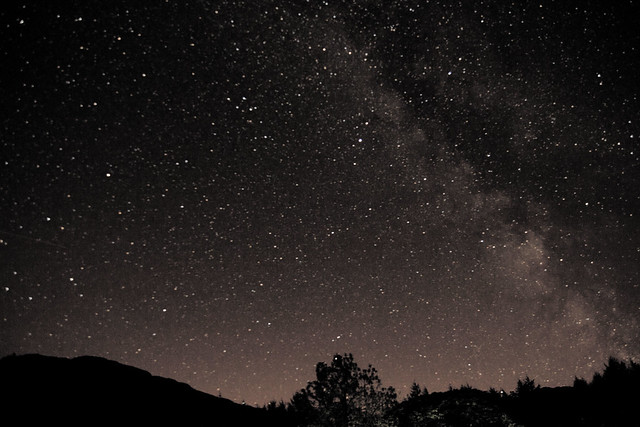
I use a Tamron 17-50mm f/2.8 for most night stuff (and all the stuff during the day too, it's my most used lens) and I think it is great. Check out some images on my flickr as most were taken with it.

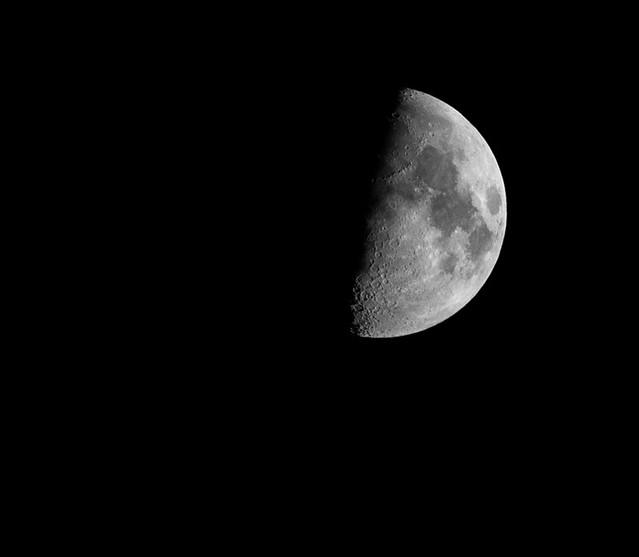
The moon is brighter than you think but you will need a lot of zoom. I have a 70-200mm f/4 L that I used for a moon shot, but even this is quite limited and required a massive crop.


Moon shot with 70-200:

6972493959_dbf3ae7e7f_z.jpg


Night sky shot with 17-50:

6128087469_262170c048_z.jpg
 
Last edited:
I was thinking about the Nikon 10-24mm, but am concerned that this might not perform adequately in low light?

Right.

Street scenes: as big an aperture as you can get or excellent IS system if you are taking shots of static nighttime objects. Focal length depends on your style, but I'd expect 10-24 to be too short (it would be for me but...)

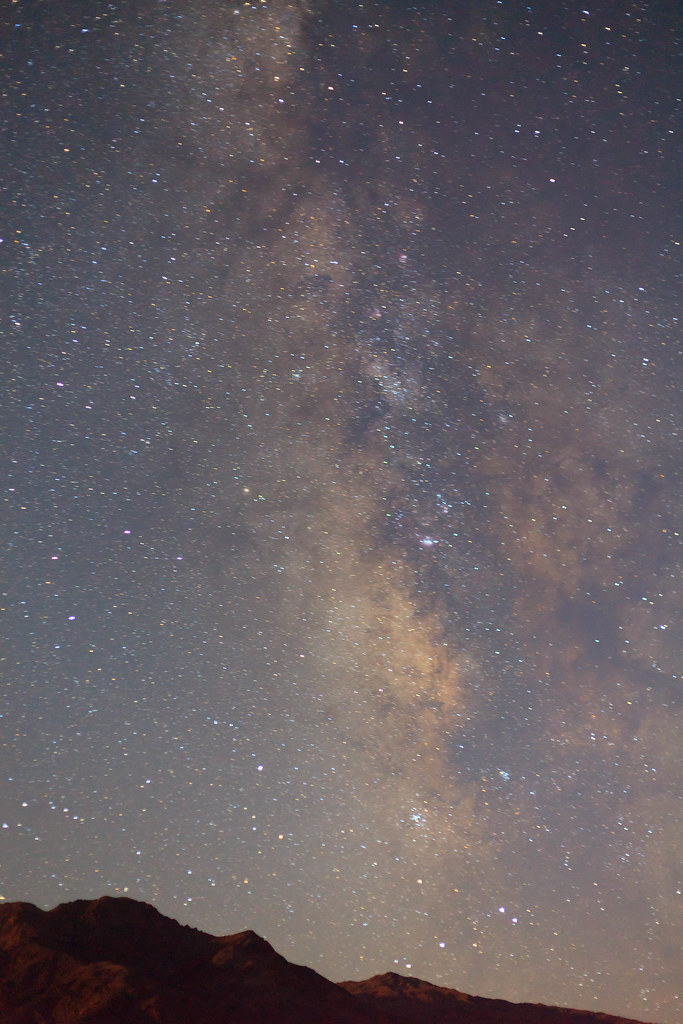
the night sky: What do you want to take photos of in "the night sky"? It can be very frustrating taking photos if you live in a built up area as light pollution can ruin any details. My best night sky shots were taken in Death Valley with a f1.8 50mm lens (on a full frame). Even then at 30 seconds, the shots have rotational blur in them (but I was looking towards the bit of the milky way that moves the quickest) See (50mm f2.2 @ ISO 1600):


Milky Way looking towards Sagittarius.. by arad85, on Flickr

star trails: again location is important due to noise pollution. Lens speed less so.

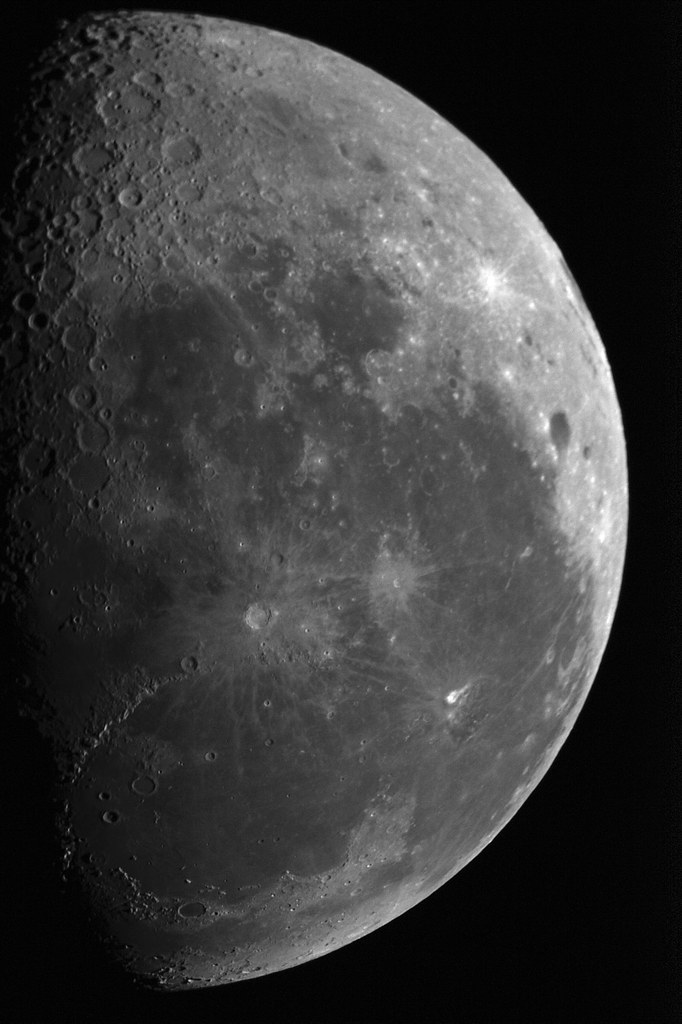
the moon: As long a focal length as you can get. Aperture isn't an issue. This was taken at 2350mm F10 (yes, that's 2.35metres). It is uncropped and full size is 4k x 3k


moon-2009-07-14-0230-450d-C9.25-processed.jpg by arad85, on Flickr
 
Last edited:
Back
Top