Measuring Autofocus Speed

Messages
2,079
Edit My Images
Yes
Whenever a new camera model in a range is launched usually one of the much vaunted benefits is improved autofocus speed. Looking at camera reviews I often read that the autofocus is much faster than its predecessor.
However is this a subjective statement (which may be correct)? or is there objective data to support this?
 
I think it's both. Some aspects of autofocus can be measured for specific camera body and lens combinations (CIPA wrote a spec for that). Personally, the reliability of continuous autofocus tracking matters more than single-frame speed, and I don't think there is a standardised testing methodology for it; reviewers each do their own thing, so it's best to try it hands-on if you can.
 
I think it's both. Some aspects of autofocus can be measured for specific camera body and lens combinations (CIPA wrote a spec for that). Personally, the reliability of continuous autofocus tracking matters more than single-frame speed, and I don't think there is a standardised testing methodology for it; reviewers each do their own thing, so it's best to try it hands-on if you can.
I did wonder and as you say tracking autofocus is what most photographers want in the real world. I think it's probably like taking a more modern car for a test drive; most things feel better but only having purchased it and driven for a while do the quirks start to become noticeable
 
Whenever a new camera model in a range is launched usually one of the much vaunted benefits is improved autofocus speed. Looking at camera reviews I often read that the autofocus is much faster than its predecessor.
However is this a subjective statement (which may be correct)? or is there objective data to support this?
I often think it’s just a perception, with some of the modern mirrorless cameras AF lock on is near instant, I don’t know how much faster it can be than that. Focus speed between near and far subjects can be detected more, however I would hazard a guess this is more down to the lens motors than the camera body.

Where you can (imo) see a noticeable difference in AF is subject recognition and the ability to track without getting distracted by backgrounds. However, we are now reaching a point where this is getting pretty flawless too so, barring the odd ‘anomaly’ I’m not sure how much better this can get either. If we’re not too careful we’re going to end up with 50 different subjects we can choose from.
 
If we’re not too careful we’re going to end up with 50 different subjects we can choose from.
right..... canon R1 has three subject types (people, animals and vehicles), and people tracking can be further refined by four sports, and you can pre-load up to 10 specific faces to prioritize. it takes a while to configure and learn to use, but you have a good chance of filling a card with 100% usable frames.
 
right..... canon R1 has three subject types (people, animals and vehicles), and people tracking can be further refined by four sports, and you can pre-load up to 10 specific faces to prioritize. it takes a while to configure and learn to use, but you have a good chance of filling a card with 100% usable frames.
On top of a plethera of focus modes (tracking, AF-C, AF-S etc etc) and focus areas (single point, wide, centre etc etc) my A1 II has the following subject detection:-

Auto
People (with face memory and face priority select)
Bird/Animal
Bird
Animal
Insect
Car/Train
Plane

You can then choose which eye, or whether that's auto. Then there's

Tracking Shift Rnage
Recognition priority set
Recognition part
Recognition part select
Tracking persistence level
Recognition sensitivity
Animal Detailed settings
Bird details settings

And if this isn't enough you have:-

AF Level for crossing
AF tracking for speed changes
AF transition speed (video)
AF subject shift sensitivity
AF area registration

There's probably a few more bits, but as you can see it's getting ridiculous. Of course some of the things are super handy, but if we continue along this path are we going to get other subject option sub menus such as:-

Birds > Small Birds > Large Birds > Birds of Prey etc. etc.

Obviously with the last bit I'm being a bit facetious but you get my point ;)

One subject that I would like that's missing is Motorcyle/Motorcyle rider, I do believe some other systems have this.

 
On top of a plethera of focus modes (tracking, AF-C, AF-S etc etc) and focus areas (single point, wide, centre etc etc) my A1 II has the following subject detection:-

Auto
People (with face memory and face priority select)
Bird/Animal
Bird
Animal
Insect
Car/Train
Plane

You can then choose which eye, or whether that's auto. Then there's

Tracking Shift Rnage
Recognition priority set
Recognition part
Recognition part select
Tracking persistence level
Recognition sensitivity
Animal Detailed settings
Bird details settings

And if this isn't enough you have:-

AF Level for crossing
AF tracking for speed changes
AF transition speed (video)
AF subject shift sensitivity
AF area registration

There's probably a few more bits, but as you can see it's getting ridiculous. Of course some of the things are super handy, but if we continue along this path are we going to get other subject option sub menus such as:-

Birds > Small Birds > Large Birds > Birds of Prey etc. etc.

Obviously with the last bit I'm being a bit facetious but you get my point ;)

One subject that I would like that's missing is Motorcyle/Motorcyle rider, I do believe some other systems have this.


by the tine all that is set up a guy in a car will be home with his feet up having a coffee :exit:
 
Autofocus speed is highly dependent on environment/scene and camera setup (there are CIPA guidelines for that), but also/equally/moreso upon the lens in use. If you have a lens of high IQ, with fast drive motor(s), and lightweight focus elements, then any differences in focus speed will most likely be "incremental" and difficult to discern/measure without highly technical testing/equipment.

IME a lot of it is "impressions", and to some extent wishful thinking/"glow." In general, there are "differences," but not that one is necessarily better overall or in all situations... E.g. there are plenty of times where I find mirrorless AF to be lacking compared to the DSLR's dedicated PDAF system.
 
. there are plenty of times where I find mirrorless AF to be lacking compared to the DSLR's dedicated PDAF system.
That’s interesting, I’ve got to say the mirrorless I’ve used have been streets ahead in all areas of AF for me, such as lock on speed, subject recognition, subject tracking etc. However, I did only shoot Nikon DSLR and I know they had a history of the AF being distracted by backgrounds. I remember someone on here with a D5 (I think it was) having plenty of discussions about this with Nikon to try and resolve the issue of it focussing on the background when the backgrounds were ‘busy’.
 
However, I did only shoot Nikon DSLR and I know they had a history of the AF being distracted by backgrounds.
I don't find my Z9 to be any better in this respect. I think perhaps with easier subjects the mirrorless AF AI (subject recognition, etc) performs "better"... but I didn't/don't really have significant issues with DSLR's in those scenarios either (although I really didn't like the D7000 I had for a while, so maybe model dependent).
 
Last edited:
I don't find my Z9 to be any better in this respect. I think perhaps with easier subjects the mirrorless AF AI (subject recognition, etc) performs "better"... but I didn't/don't really have significant issues with DSLR's in those scenarios either (although I really didn't like the D7000 I had for a while, so maybe model dependent).
In my experience, it varies a lot by camera body. My Fuji GFX, for example, has comparatively poor AF performance vs, say, a Canon 1DXM2 DSLR. On the other hand, the Canon R1 is a big step up from the 1DXM2. I understand that mirrorless bodies can't detect the low-light assist beams emitted by flashes (and which were designed for DSLRs), but I have never found that to be a problem.
 
I understand that mirrorless bodies can't detect the low-light assist beams emitted by flashes (and which were designed for DSLRs), but I have never found that to be a problem.
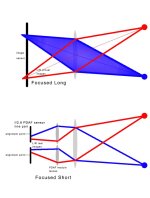
Yeah, it's not about the focus assist with speedlights. It's about the lack of cross type sensors, and the fact that the DSLR's PDAF system is almost always working with multiple real images that are (almost) always in-focus (as many as six) so it can (often) find subjects in/through distractions much better.

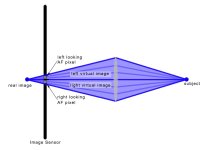
With mirrorless the AF is using the same image you see (actually two virtual images), so if the subject is way OOF the AF system can't see it; and it is likely to blow right past it if it is not large in the viewfinder. And the AI requires time to kick in and for the AF to switch modes (into subject recognition/tracking); it won't do that if it already locked onto something else w/o the subject also being discernable/recognizable and within the designated area (locked onto BG/FG).

There are tricks to help get the most out of the mirrorless AF, and those tricks also work with DSLR's... it's just that mirrorless is more dependent on using them. Of course, less demanding scenarios make the differences less apparent and even put the mirrorless ahead.

I wouldn't necessarily say the DSLR is way ahead in all demanding situations either; just "different." And I am comparing top level bodies (D4, D5, Z9)...
 
Back
Top