


- Messages
- 106
- Name
- Andreas
- Edit My Images
- No
Metal camera bodies are popular and are associated with high-quality materials and craftsmanship. This is in contrast to plastic, which is often considered a second-best option. Discussions about this on the web are numerous and timeless.
Metal and plastic housings absorb shocks and impacts to a certain extent. The absorbed energy causes the material to deform. Metal is left with dents, while plastic is elastic and returns to its original shape—or it breaks.
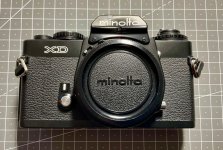
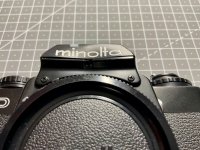
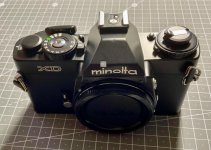
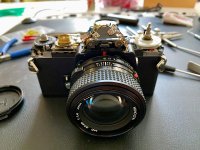
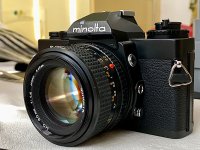
Here I have a Minolta XD in like-new condition that I bought a few years ago at a bargain price. The reason for this was a deep dent in the metal prism cover. I wanted to fix that, which I succeeded in doing.
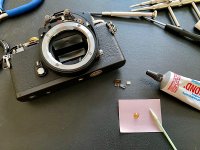
It turned into a major project, during which I partially disassembled the XD and performed some service work.
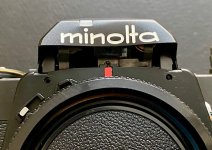
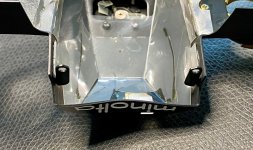
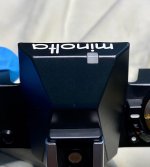
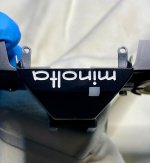
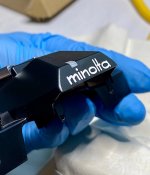
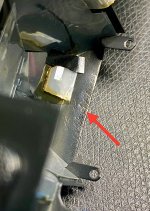
Indentation caused by the application of force.
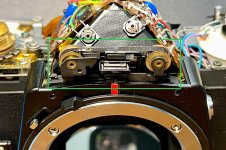
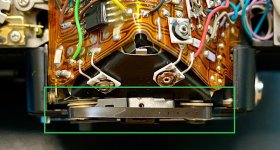
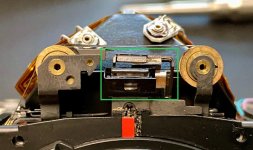
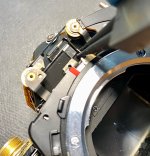
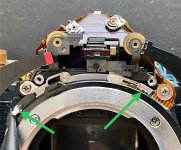
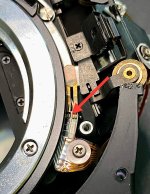
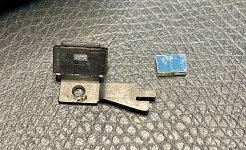
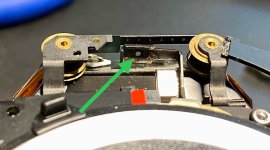
In the process, I was also able to adjust some internal components beneath the cover that had been damaged by the impact.
These include the mounting of the strip displaying shutter speeds and the Aperture Direct Readout system (ADR), which projects the aperture setting on the lens into the viewfinder.
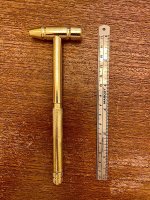
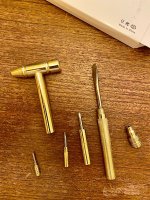
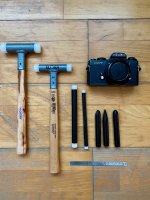
A small brass hammer.
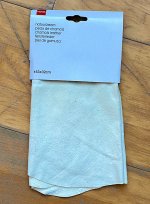
A soft cloth to use as a base.
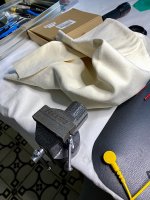
A small vise as an anvil.

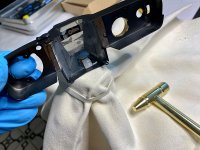
Gently tap out the dent.
Metal and plastic housings absorb shocks and impacts to a certain extent. The absorbed energy causes the material to deform. Metal is left with dents, while plastic is elastic and returns to its original shape—or it breaks.
Here I have a Minolta XD in like-new condition that I bought a few years ago at a bargain price. The reason for this was a deep dent in the metal prism cover. I wanted to fix that, which I succeeded in doing.
It turned into a major project, during which I partially disassembled the XD and performed some service work.
Indentation caused by the application of force.
In the process, I was also able to adjust some internal components beneath the cover that had been damaged by the impact.
These include the mounting of the strip displaying shutter speeds and the Aperture Direct Readout system (ADR), which projects the aperture setting on the lens into the viewfinder.
A small brass hammer.
A soft cloth to use as a base.
A small vise as an anvil.
Gently tap out the dent.
Last edited:
 A word of caution