Mirrorless AF: two years shooting fast things

Messages
3,839
Name
Chris
Edit My Images
Yes
I've been shooting motorsport for fun for about 10 years now, as a challenge two years ago I decided to start using Micro 4/3 equipment. I kept reading how it was impossible to shoot anything that moves etc etc, and that felt like a good opportunity to test my technique, not something to avoid. I also spent a few months with Fuji X gear (which is even worse for movement apparently), bought for travel but the unexpected bonus of the 55-200 being released meant I could try some moving stuff with that too.

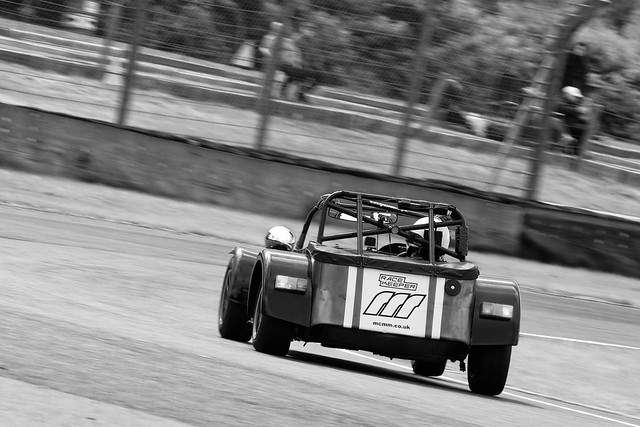
Panasonic G3 and 100-300mm in hand, I headed down to Castle Combe. After some teething troubles (which ended being focus priority switched on) it worked, pretty much just like a DSLR would, to my amazement I came home with some photos.
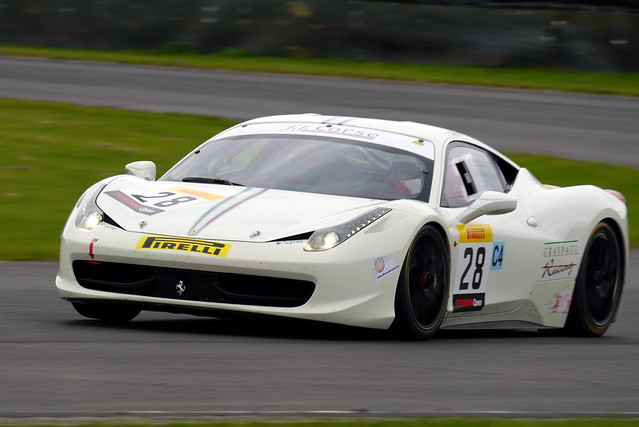

Castle Combe Sportscar Raceday by Harry_S, on Flickr

Head-on stuff was challenging, but slow-panning? No problem...
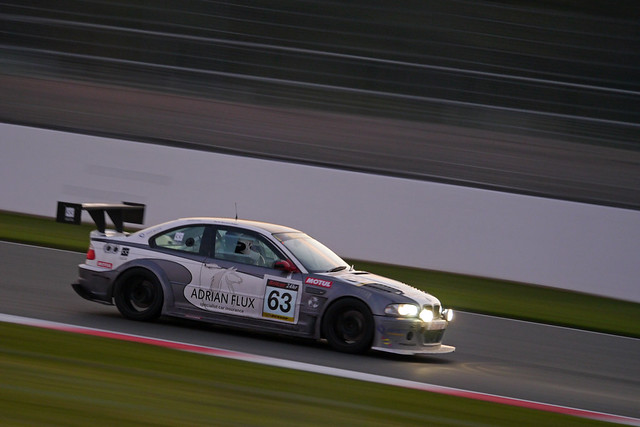

Silverstone Britcar 24hr 2011 by Harry_S, on Flickr

Generally a bit softer than I would like, but certainly enough encouraging signs to know it was up to the task.

Then unfortunately some very poor health knocked me out for the best part of a year, but I eventually headed back out with a Panasonic G5, where things improved dramatically.
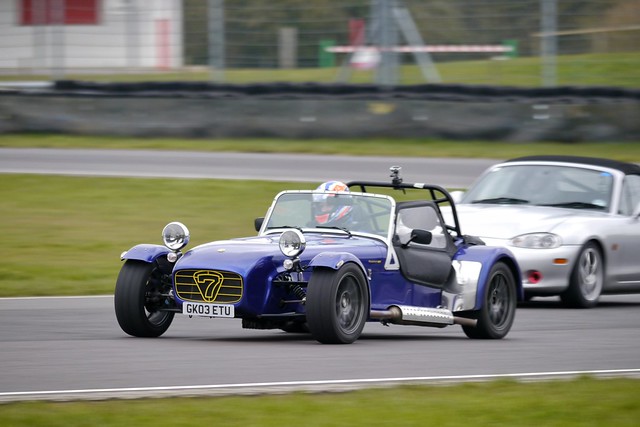

Castle Combe BHP Trackday by Harry_S, on Flickr

...and finally an OMD, which I struggled with compared to the G5, but they seemed roughly equal in terms of locking on and hanging on to moving subjects.
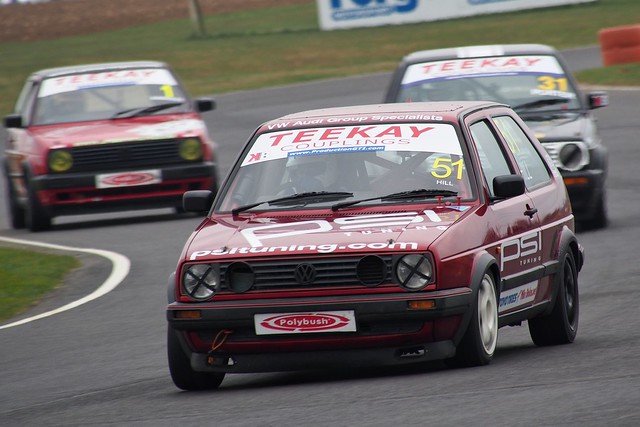

Castle Combe Howard's Day by Harry_S, on Flickr
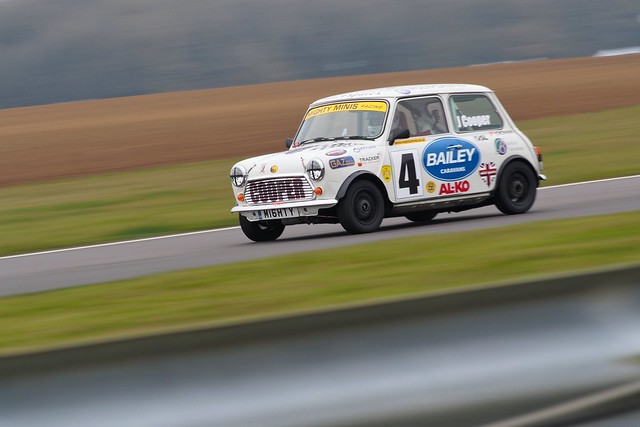

Castle Combe Howard's Day by Harry_S, on Flickr

By this point I was shooting exactly as I would have with a DSLR (feel free to check the last couple at original size, they look much sharper and more detailed than these previews suggest)
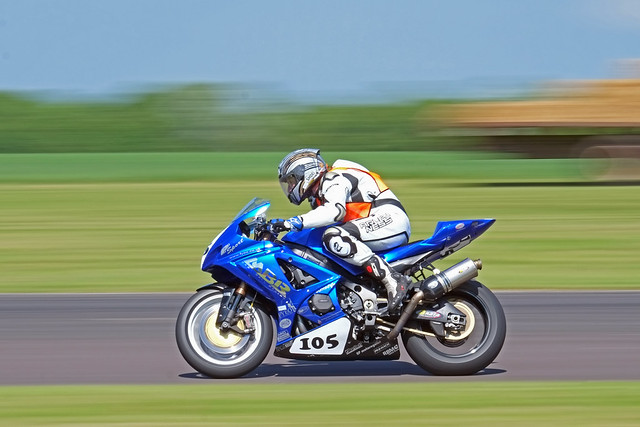
 
Next up was Fuji X, a system with a reputation of being the slowest out there. Within seconds of arriving at the Motorcycle Raceday I wondered what all the fuss was about...


Castle Combe Motorcycle Raceday by Harry_S, on Flickr

It was locking on and staying locked on with ease, and importantly for me (who hates editing) the default JPEG colours were lovely.

My favourite test is looking back at the entrance to Quarry Corner at Castle Combe, as you need a very quick lock on, the 55-200 was surprisingly excellent at this...


Castle Combe Wessex Chambers Raceday by Harry_S, on Flickr

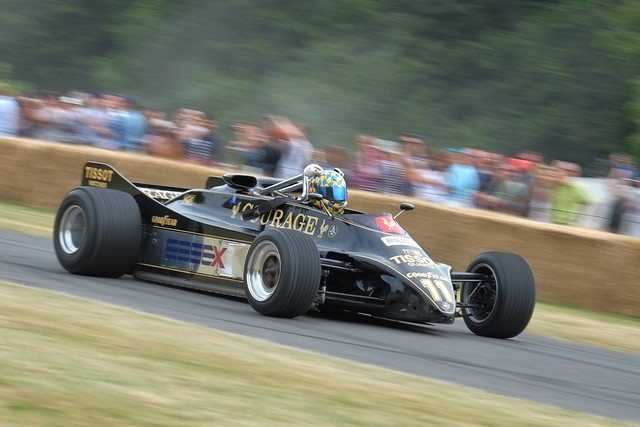
It did the business at Goodwood very nicely...


Goodwood Festival of Speed 2013 by Harry_S, on Flickr

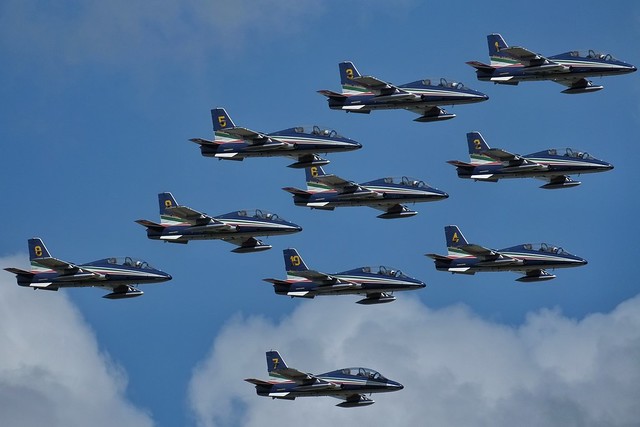
...and finally I headed to RIAT, which I thought would be a bit much for 200mm, but worked out ok...


RIAT 2013 by Harry_S, on Flickr

All in all very impressed by a few years with mirrorless gear, the Fuji in particular was my favourite camera full stop, but the lack of a long fast-ish prime with AF (on either system) meant for me at least they aren't quite the fully rounded systems to cover all the different things I shoot. If I could afford an X-E1 alongside my DSLR I would in a heartbeat as it was incredible on my honeymoon, I couldn't have dreamed of a better travel set-up.

Perhaps the most interesting/unexpected side effect was it completely killing off the social side of motorsport photography. Being a shy lad I quite enjoyed being approached by other photographers and chatting away back when I had big Nikon gear. With the little mirrorless stuff though...nothing, it was like I didn't exist. Just to hammer the point home, I went to an event with some big Canon gear a few weeks ago and within two minutes the photographer from the Western Daily Press was asking me for advice!

Big gear = 'pro' who knows what they're doing is still very much in evidence despite the popularity of smaller kit now.
 
Last edited:
To be specific, the problem with CSCs is focus tracking, in continuous shooting mode, of a moving subject at changing distance, ie a person walking/jogging/running towards the camera. This is where DSLRs are good, and where CSCs struggle, and is very different to just shooting moving subjects.

The problems depend on camera model, but they include:
- locking the focus with the first frame when in continuous shooting mode - obviously useless
- a delay between pressing the shutter release and shooting, sometimes up to one full second, meaning the subject has moved out of focus
- not showing the live image in front of the lens on the LCD/EVF, but instead a still of the last shot taken. Makes panning difficult

There are ways around these problems with CSCs, basically similar techniques used pre-AF DSLRs, but it's a major advantage that DSLRs have at present.
 
To be specific, the problem with CSCs is focus tracking, in continuous shooting mode, of a moving subject at changing distance, ie a person walking/jogging/running towards the camera. This is where DSLRs are good, and where CSCs struggle, and is very different to just shooting moving subjects.

The problems depend on camera model, but they include:
- locking the focus with the first frame when in continuous shooting mode - obviously useless
- a delay between pressing the shutter release and shooting, sometimes up to one full second, meaning the subject has moved out of focus
- not showing the live image in front of the lens on the LCD/EVF, but instead a still of the last shot taken. Makes panning difficult
There are ways around these problems with CSCs, basically similar techniques used pre-AF DSLRs, but it's a major advantage that DSLRs have at present.

Number two - 1 second delay? Are any cameras that slow these days?
Number 3 - Showing the image in the VF, surely this can be diabled?

CSC's are just getting started, things are only going to get better. Moving subjects aren't really my thing and I normally use the centre focus point or manual focus but when I do shoot moving things I find that DoF can give a bit of leeway.

Anyway, my gripes with CSC's are not focus related, I'm more irritated by EVF use in low light and that's something that I hope can improve dramatically.
 
Number two - 1 second delay? Are any cameras that slow these days?

Yes, they certainly are. It's only in the specific set of circumstances I outlined above, but a case in point is a comparison test I did over the summer for Advanced Photographer magazine (issue #33 for reference) of the new Fuji X100s, with on-sensor phase detect AF, and the Nikon-A.

Both cameras lock focus with the first frame in continuous shooting mode so you can't use that, so switching to single-shot and firing as fast as the camera will allow means a wait of often more than one second between frames by the time the camera has made up its mind and fired.

This was with the subject walking very slowly towards the camera from about 5-2m. Both the Fuji and Nikon were equally useless at this fairy basic task, though to be fair my Nikon V1 is notably better. However, even an entry level DSLR would rattle off twice as many frames in the same situation, with a good chance that 100% would be sharp.

Number 3 - Showing the image in the VF, surely this can be diabled?

When you're panning with continuous shooting, most CSCs show a mixture of the shot that's just been taken or black nothingness. Basically, if you follow what you see in the viewfinder you quickly lose framing of the subject that disappears out of shot.

CSC's are just getting started, things are only going to get better. Moving subjects aren't really my thing and I normally use the centre focus point or manual focus but when I do shoot moving things I find that DoF can give a bit of leeway.

Anyway, my gripes with CSC's are not focus related, I'm more irritated by EVF use in low light and that's something that I hope can improve dramatically.

Yes, CSCs are just getting started and will surely get better. And this particular AF weakness is not a deal-breaker for a lot of folks. But it is a key strength of DSLRs, and vital for some. CSCs will never replace DSLRs until they've cracked it. The new Canon 70D's on-sensor phase-detect AF is I think a sign that the technology is potentially capable, even though that's a DSLR. Still a way to go though.
 
I see what you mean.

The slowest even half way serious camera I've ever used was my LX2 but even that could be coaxed to take pictures as fast as you could press the button by sticking it in manual and pre setting the exposure and focus distance. I agree that workarounds like this are almost going back to manual days but for many people it's only going to be an issue for a percentage of shots and I suspect that issues like that 1 second delay will be few and far between these days and from companies behind the curve. I'm not surprised at Fuji but am surprised that anyone else matches them.

And at least on the plus side... with CSC's there no front / back focus and MA to bother with.

I'm anxious to move away from DSLR's because I find them too big, too heavy and too attention grabbing, far more so than a 35mm SLR, RF or quality compact. As I said, the biggest issue for me is the EVF. I find my G1's EVF renders the camera unusable for genuine low light shooting.
 
To be specific, the problem with CSCs is focus tracking, in continuous shooting mode, of a moving subject at changing distance, ie a person walking/jogging/running towards the camera. This is where DSLRs are good, and where CSCs struggle, and is very different to just shooting moving subjects.

The problems depend on camera model, but they include:
- locking the focus with the first frame when in continuous shooting mode - obviously useless
- a delay between pressing the shutter release and shooting, sometimes up to one full second, meaning the subject has moved out of focus
- not showing the live image in front of the lens on the LCD/EVF, but instead a still of the last shot taken. Makes panning difficult

There are ways around these problems with CSCs, basically similar techniques used pre-AF DSLRs, but it's a major advantage that DSLRs have at present.

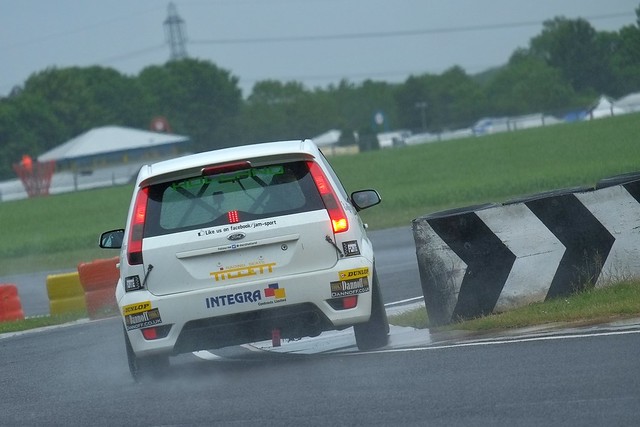
I've heard all of these issues mentioned many times, but in practice they might cause a problem for about 5 minutes on day one, for example after sharing some panning shots I was challenged to shoot a sequence of a car heading directly away, it was fine...


Castle Combe Wessex Chamber Raceday by Harry_S, on Flickr

I heard a lot about panning being difficult, but that was 100% not the case in my experience, I probably took 5000 panning shots on 3 or 4 different mirrorless cameras with cars pretty close sometimes doing 140mph+, it took all of 5 minutes to get used to it and I could easily jump between a CSC and a DSLR and not really notice it. It's an issue on paper but the very few mirrorless sport shooters I've spoken to have all said the same as me, it's something you just forget.

I'm not pretending they are as good as DSLRs, but I read so many entirely dismissive comments about them I thought I would share my experiences.
 
Last edited:
Back
Top