ND filters question

Messages
1,188
Name
Maciej
Edit My Images
No
I never used ND filters and decided to try out to see what can I do with them.
I have a general knowledge about them, understand what they do etc but I'm total noob in photography so wanted to ask you guys for help.
I'm going on holidays and wanted to try do some nice sea photos with longer exp water effects or try out some landscapes photos with ND filters.

I don't want to spend £££ for it just now, so thought I could get a cheap one first to get used to it. I found some VND and thought it could be good for beginner.
It's ND2-400. Also, I will be using on camera flash (E-M10), I guess it makes a difference too, don't know what is sync value for it...

Would I be able to do some decent water effects, maybe some nice portraits with darker background using internal flash and that filter?
Thanks in advance for your response.
 
There are long threads about two cheaper extreme ND filters on here, Camdiox and Haida. Have a search. Avoid the variable kind.

ND filters are also useful for the kind of flash portraits you mention, but not the extreme kind, and that's not the main problem anyway. The key thing is to get the flash brightness above the ambient light level, and that takes a very powerful flash in normal daylight.
 
I got myself a nice ND8 filter, £15, good price for this kind of quality I guess... Cheaper but should let me start playing with this NDs...

1547017.jpg


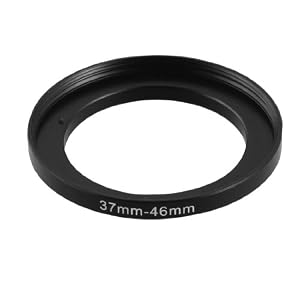
...and Kood Step-Up Ring 37mm - 46mm adapter to cover my both lens with 46mm filters...


41m0%2BH41mAL._SY300_.jpg


When I learn how to use it and decide that will keep using them, then will get this square holder and Lee rectangle filters...
 
phinix, I'm assuming, from your original post, that you are looking for the "misty water" effect or blurred clouds in landscapes?

In both instances, you are looking for an exposure time of at least 20-30 seconds, possibly longer if you want to diffuse clouds to the maximum.
This means you will need an ND3, 10-stop filter, and decent ones do not come cheap.
I can tell you, from experience, to avoid adjustable ND filters for this purpose, since cheap ones all suffer from the "cross" effect at maximum density, and better variable ones will cost even more than a fixed 10-stopper.
If you just want to try out the effect, although I've not used them myself, it might be worth trying a filter from these people.
For some reason they call them ND1000 filters, which is not a description I've seen used elsewhere.
They are made of resin, not glass, which means they are more delicate and more easily damaged, but if you just want to try out the effects then they are fairly cheap.
I don't think a fixed 10-stop filter will be suitable for flash work, but I don't use flash myself so I'm not the best person to advise on that aspect.

A cheap variable ND at maximum density will give a result like this:

View attachment 15759
 
Last edited:
Thanks for tips. The one I bought is ND8, fixed, I decided not to go for adjustable.

Also, would love to learn how to make this portrait effect, I'm guessing ND filter and flashgun?

maxresdefault.jpg
 
you wouldnt use an ND filter for the above. ND filters essentially have the effect of stopping down and allowing motion blur. last thing you want in a portrait shot. This is more likely to be done either using a coloured filter of post processing . its full of cool blue tones ( which you can also achieve by changing your wb in camera but i would bet odds its not any kind of ND filter.
shooting with WB set to Tungsten will create a cool blue look
 
Last edited:
phinix, I'm assuming, from your original post, that you are looking for the "misty water" effect or blurred clouds in landscapes?

In both instances, you are looking for an exposure time of at least 20-30 seconds, possibly longer if you want to diffuse clouds to the maximum.
This means you will need an ND3, 10-stop filter, and decent ones do not come cheap.
I can tell you, from experience, to avoid adjustable ND filters for this purpose, since cheap ones all suffer from the "cross" effect at maximum density, and better variable ones will cost even more than a fixed 10-stopper.
If you just want to try out the effect, although I've not used them myself, it might be worth trying a filter from these people.
For some reason they call them ND1000 filters, which is not a description I've seen used elsewhere.
They are made of resin, not glass, which means they are more delicate and more easily damaged, but if you just want to try out the effects then they are fairly cheap.
I don't think a fixed 10-stop filter will be suitable for flash work, but I don't use flash myself so I'm not the best person to advise on that aspect.

A cheap variable ND at maximum density will give a result like this: <snip image>

ND filter densities are expressed in three different ways, eg 10 stops, or ND1000x (technically 1024x), or 3.0 optical density.

All variable ND filters produce that dark cross pattern across the image, even the most expensive ones. This effect is most noticeable with wide-angle lenses with the filter set at higher density levels, making them pretty useless for landscape work.

I'd be surprised if that SRB filter is resin, and not glass.
 
i recently bought a SRB Photographic ND1000 filter, quality looks to be very good, albeit i had a bit of user error, in either keeping on the UV Lens cover and the sun boucing around the 2 lens, not using the rear eyepiece blanking cover or the fact the sun was overhead and i should have repositioned, but i ended up with a purple line going across the pictures, then the rains came and i could not try it out further.

Rutter Falls by npinks, on Flickr

Rutter Falls by npinks, on Flickr

Which means i need to arrange another day out
 
ND filter densities are expressed in three different ways, eg 10 stops, or ND1000x (technically 1024x), or 3.0 optical density.

All variable ND filters produce that dark cross pattern across the image, even the most expensive ones. This effect is most noticeable with wide-angle lenses with the filter set at higher density levels, making them pretty useless for landscape work.

I'd be surprised if that SRB filter is resin, and not glass.
And I'd be surprised if they were glass, at that price.
All the other SRB ND filters are resin so I don't see why the 3.0 filters would be any different.
How do they make them so cheap otherwise?
To quote from this page for example, it says (about a regular ND filter) "Made from resin, this filter is light and easy enough to take with you on any shoot."

ND1000x must be a seldom used description, since the SRB site is the only place I've ever seen it, and their 3.0 filters section is the only place they use the term.
Everywhere else on their site they use the conventional 0.3, 0.6, 0.9 ratings for ND filters.

Edit: Maybe npinks can enlighten us to whether the SRB is glass or plastic (sorry, "resin")?
 
Last edited:
Thanks for tips. The one I bought is ND8, fixed, I decided not to go for adjustable.

Also, would love to learn how to make this portrait effect, I'm guessing ND filter and flashgun? <snip image>

An ND filter could have been used for that shot, hard to say, but they're often needed when using flash outdoors when the ambient light is bright. The problem is bright ambient pushes the shutter speed above the x-sync limit (usually 1/200sec or thereabout) so an ND filter of two or three stops* is used to pull the overall exposure down and the shutter speed within the x-sync range. It's a completely different technique to very long landscape shots with a ten-stopper.

Using flash outdoors like that, to over-power and darken the daylight, needs a huge amount of flash power in bright sun, plus an ND filter. But if it's overcast, or later in the day when the sun is less bright, then everything becomes very much easier - you don't need anything like the same kind of flash power, and you'll not need an ND filter either.

* ND8 is three stops (2, 4, 8 = 3 stops).
 
i recently bought a SRB Photographic ND1000 filter, quality looks to be very good, albeit i had a bit of user error, in either keeping on the UV Lens cover and the sun boucing around the 2 lens, not using the rear eyepiece blanking cover or the fact the sun was overhead and i should have repositioned, but i ended up with a purple line going across the pictures, then the rains came and i could not try it out further.

<snip images>

Which means i need to arrange another day out

As guess, I'd day that was light through the viewfinder causing the problem, though stacking filters is never a good idea.

And I'd be surprised if they were glass, at that price.
All the other SRB ND filters are resin so I don't see why the 3.0 filters would be any different.
How do they make them so cheap otherwise?
To quote from this page for example, it says (about a regular ND filter) "Made from resin, this filter is light and easy enough to take with you on any shoot."

ND1000x must be a seldom used description, since the SRB site is the only place I've ever seen it, and their 3.0 filters section is the only place they use the term.
Everywhere else on their site they use the conventional 0.3, 0.6, 0.9 ratings for ND filters.

Edit: Maybe npinks can enlighten us to whether the SRB is glass or plastic (sorry, "resin")?

Normal ND filters of two or three stops are way different to ten stops. The dyes used in resin filters are not good enough for extreme densities and I don't know of any decent quality ten-stopper that isn't made of glass. Lee tried hard to make a resin one, but ended up importing their glass Big Stopper, made for them in the far east. There are quite a few good ten-stoppers about at low prices now, made of glass.

ps out of interest, I just checked with SRB - their 1000x ND filter is made of glass.
 
No Got it on me at the moment to check but looking at their catalogue,
Our Neutral Density filters are made from high quality multi
coated glass
. Mounted in a black anodised aluminium
holder. Our range comes in four strengths, 0.3 (1 stop),
0.6 (2 stops), 0.9 (3 stops), and 1.2 (4 stops). Perfect for
controlling the amount of light entering your lens.

http://www.srbfilm.co.uk/PDFs/SRBPhotographicCatalogue2014.pdf
 
update - just rang them

the man i spoke too, has started that they are made from very high qulaity piece of glass, so you should not get any colour cast, but as with all their products, if your not happy they will give you your money back
 
in terms of low cost ND 10 take a look at the Haida Pro II , its made using smae glass as B&W filters and is dust, oil and water resiatant coated too.. excellent quality and at around £30-40 is a great filter.

http://www.ebay.co.uk/itm/Haida-PRO...es_CameraLensesFilters_JN&hash=item4d1079d2ad

http://www.ebay.co.uk/sch/i.html?_trksid=p2050601.m570.l1313.TR0.TRC0.H0.Xhaida nd pro&_nkw=haida nd pro&_sacat=0&_from=R40

Yes, good filter, but using 'Schott glass' does not mean it's the same filter as B+W, or Heliopan for that matter.
 
No Got it on me at the moment to check but looking at their catalogue,


http://www.srbfilm.co.uk/PDFs/SRBPhotographicCatalogue2014.pdf
That's interesting, since on their website it clearly says (about the regular ND) "Made from resin, this filter is light and easy enough to take with you on any shoot."
So somebody is wrong somewhere.

I'm not knocking SRB, since their stuff is good, well made and excellent value.
I generally prefer brass mounts for filters, but I need a 0.9ND for the times when my Heliopan 3.0 is too much, so if the SRB are glass then I think I could go for one of those.
 
worth a read then
http://text.flowtographyberlin.de/neutral-density-filters-are-haida-nd-filters-as-good-as-bw/

when you consider the B&W is double the price i think the results speak highly favourably for the Haida Filter and on the several occasions ive used mine since ive had it ive never had issues with colour cast or any other problems that cant be easily fixed PP and which are generally common with all ND 1000 filters

Good review :) And I agree that the biggest benefit to B+W is probably the quality of their MRC multi-coatings, for flare resistance and easy cleaning. But the difference isn't huge while the price is.

I didn't mean to imply the Haidas weren't good, not at all. They are - long thread here http://www.talkphotography.co.uk/threads/haida-10-stop-filters.337439/
 
Back
Top