

ND Grads or HDR?

Messages
1,018
Name
Mike
Edit My Images
No
I have been reading so much about ND filters and I have seen so many great examples of there use most recently with the Highlands/Skye trip threads. I am heading upto Skye, Applecross and Torridon in Aug this year and I am hoping to return with some very nice pics.

So from what i have read you should/need to spend a huge amount for filters or its a complete waste of time, screw on is a waste due to the middle of the filter not always been where you want it so as a free options why not just use HDR, its the same end result but a little longer or am i mistaking? When I say HDR i do not mean the OTT lets turn all the slides up I just mean very subtle adjustments which can almost look non HDR.

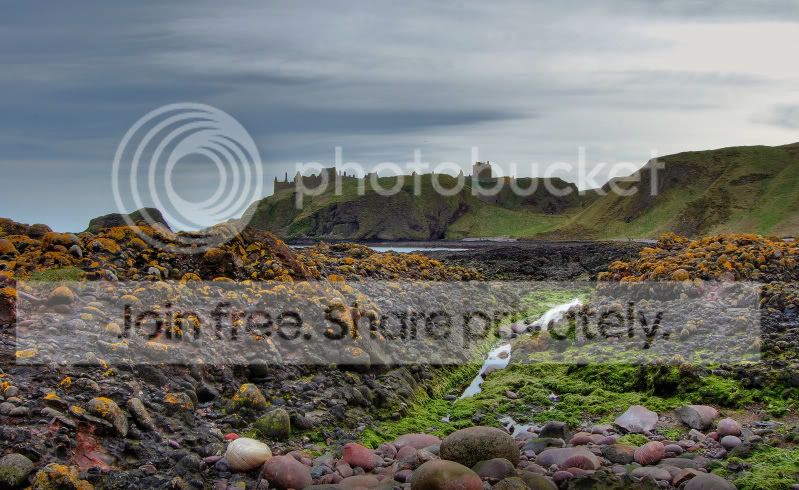
I have only been at this a year with my D40 so not expecting shots like the trip threads mentioned above but i do hope to achieve some good results. For landscapes i am currently stuck with the kit 18-55 lens, I do have hoya polarizer filter which i use. See an example of the HDR subtly i am refering too
below....(seems so much softer than before i uploaded to photobucket)
640d0a53.jpg


Can anyone give me some advice regarding this? :help:
 
Did you stop off at Plockton? Hamish McBeth country, very moody scenery!
I'm off upto Argyle soon hopefully get some Eagle/seal shots.
I'm interested in this HDR effect but haven't had time to experiment yet so will forward to hearing other peoples ideas etc?
Cheers
Brian
ps like the shot!
 
Here we go again, you've just lit the fuse, time to get the popcorn and sit back. I can tell you what you'll get out this thread; one side will say bin the grads, the other will say get it right in camera (then there will be a little bit of name calling in the middle ;) ). There is no right answer do what you feel comfortable with, for me, I use both and do what I feel is right at the time
 
Did you stop off at Plockton? Hamish McBeth country, very moody scenery!
I'm off upto Argyle soon hopefully get some Eagle/seal shots.
I'm interested in this HDR effect but haven't had time to experiment yet so will forward to hearing other peoples ideas etc?
Cheers
Brian
ps like the shot!

Thats Dunnottar Castle at Stonehaven, I hope to try that again sometime but complete with Tripod, iirc I had 5 exposures here which were put thru photomatix to create that. If i had the tripod with me i am guessing it would have been much better because without tripod i had to use the align image feature due to me moving slightly between shots

Here we go again, you've just lit the fuse, time to get the popcorn and sit back. I can tell you what you'll get out this thread; one side will say bin the grads, the other will say get it right in camera (then there will be a little bit of name calling in the middle ;) ). There is no right answer do what you feel comfortable with, for me, I use both and do what I feel is right at the time

Well you have already answered the biggest part of the question with your reply, now i know it is split opinions and neither is right or wrong so I will save me some cash and stick with HDR at the moment. I could understand if i had a camera and lens worth a few £k the difference between right in the camera and messed with after would be more noticable.

Im just a newbie trying to learn :thinking:
 
You don't need to spend a fortune on filters!
A set of Cokin P size HiTech grads (1, 2 & 3 stop) + Plastic holder & Adaptor ring from the Formatt site cost me ~ £40.

With the small diameter of the kit lens (assuming the Nikon one is around 58mm like the canon) the tinted portion of the grad will cover the whole of the lens, so you any that aren't being used as a grad can be put to work as a full ND filter to slow your shutter speeds down as well.
 
I think the simple answer is both, using whichever is most appropriate. I bought the cokin nd grads kit and the n8x, because sometimes you just can't stop down the camera enough to get a long exposure. i.e. milky water from a long exposure, with a car rig etc.

A word of warning, my cokin ND & grads when stacked have a magenta colour cast.
 
I think the simple answer is both, using whichever is most appropriate. I bought the cokin nd grads kit and the n8x, because sometimes you just can't stop down the camera enough to get a long exposure. i.e. milky water from a long exposure, with a car rig etc.

A word of warning, my cokin ND & grads when stacked have a magenta colour cast.


Yeah i have seen that magenta effect which was another reason i stayed away from ND filters, I feel i am no where near good enough to justify the Lee filters and I have to admit my opinion on the milky water is very mixed and again is not enough to justify purchasing of filters.

I think for the moment i will stick with subtle HDR and try my best to keep them looking as non HDR as i possibly can.
 
Well you have already answered the biggest part of the question with your reply, now i know it is split opinions and neither is right or wrong so I will save me some cash and stick with HDR at the moment. I could understand if i had a camera and lens worth a few £k the difference between right in the camera and messed with after would be more noticable.

Im just a newbie trying to learn :thinking:

I wan't trying to be harsh in my first post (after re-reading it is sounds a bit that way), it's just it's a question that usually ends up in a circular argument. I think you've got it right, do it your own way, and if you get a chance to borrow some grads and try them out then do that as well, you might find you like them :)

Edit; The above I would say applies to grads, solid ND's are a different matter, as you can't get the same effects they give you on the computer.
 
Grads are just a way of compressing dynamic range, same as HDR. But you couldn't do HDR as we know it with film.

I think grads are easier if the skyline is straight and uncluttered, and you can introduce different colours easily, all in one exposure. But if it's possible to shoot three quick frames for HRD (auto bracketing makes it a doddle) with a stationary subject, then you can do anything with it in post processing.

I have used both techniques, but I have to say the better I get at HDR, the more I like it. I'm tending to prefer 'faux HDR' off a single exposure, but maybe that's because I'm lazy.
 
I personally think you need the filters as well as a decent understanding of when to engage HDR. To ignore one over the other is silly.

If you fancy a catchup when you get here, let me know! :)

Gary.

Hey Gary absolutely awesome results from your trip by the way, wish I had been able to come along and get some expert advice. It’s your thread that started me on this thinking I must get filters or I have no chance of capturing/creating anything so outstanding and then I remembered I only have the D40 and kit lens at the mo so I never going to get anything too spectacular anyways. Heading up to the west coast middle of next month so really just thinking out loud and trying to prepare.

I can see both sides of the argument regarding filters / HDR so I think seeing as i have little time left to play i would be better sticking with what i know (or kind of learning) and hopefully capture the best i can. What i dont like about HDR is the sharpness loss and i dont know how to overcome that so maybe that is where the filters come into their own?
 
Hey Gary absolutely awesome results from your trip by the way, wish I had been able to come along and get some expert advice. It’s your thread that started me on this thinking I must get filters or I have no chance of capturing/creating anything so outstanding and then I remembered I only have the D40 and kit lens at the mo so I never going to get anything too spectacular anyways. Heading up to the west coast middle of next month so really just thinking out loud and trying to prepare.

I can see both sides of the argument regarding filters / HDR so I think seeing as i have little time left to play i would be better sticking with what i know (or kind of learning) and hopefully capture the best i can. What i dont like about HDR is the sharpness loss and i dont know how to overcome that so maybe that is where the filters come into their own?

Your D40 and kit lens is more than capable, and a nice set of filters will compliment the kit completely.

I know Hoppy has compaired HDR with a well balanced filter shot, but I don't buy it personally. You can normally always tell an HDR from non HDR. And unless it is really done right, the images often stink. If you can afford to, I would have to recommend again getting some Soft ND grad's and afterwards, a set of hard grads. Eventually a non graduated ND to slow exposures down - one thing HDR will never be able to trully do.

The trip was great fun, really enjoyed it. If you are up this way, give us a shout and we can go shoot!

Gary.
 
HDR vs filters
had this arguement with togging friends on a forum very recently.

personally I prefer the idea that the image should be tweaked as little as possible
however for some, in the digital age tweaking in PS is half the fun...
so it's completely up to you.
if I could, I'd use filters. and have bought some hitech ones...£50 over all budget, 3 filters and holder from ebay

if I'm in a hurry, no tripod etc. I'd take 3 RAW snaps and see if they were usable, otherwise use one RAW and fake teh HDR

over the top HDR look nasty unless it's done just right or really suits the scene.
it's all down to personal preference though
 
Hey Gary absolutely awesome results from your trip by the way, wish I had been able to come along and get some expert advice. It’s your thread that started me on this thinking I must get filters or I have no chance of capturing/creating anything so outstanding and then I remembered I only have the D40 and kit lens at the mo so I never going to get anything too spectacular anyways. Heading up to the west coast middle of next month so really just thinking out loud and trying to prepare.

I can see both sides of the argument regarding filters / HDR so I think seeing as i have little time left to play i would be better sticking with what i know (or kind of learning) and hopefully capture the best i can. What i dont like about HDR is the sharpness loss and i dont know how to overcome that so maybe that is where the filters come into their own?

Can I just say your opinion of not being able to catch just as good images as garry with a kit lens is utter tosh! Certainly not anything you would notice unless producing larger that 10"x8" prints! It's all about honing your technique with the kit you have... garys images are fantastic... no getting away with it... but I bet if you gave gary your camera he would apply the same tecniques and get stunning images... what garry does better than allot of us is get out his bed... and put himself in the right place at the right time... then apply some fairly simple landscape techniques... because nothing in landscape is that technical really...

As for my opinion on HDR... I've never tryed it... but as originally a film photographer I'll always prob go down the filter route... but if you are going with filters... go with the best you can afford.
 
Your D40 and kit lens is more than capable, and a nice set of filters will compliment the kit completely.

I know Hoppy has compaired HDR with a well balanced filter shot, but I don't buy it personally. You can normally always tell an HDR from non HDR. And unless it is really done right, the images often stink. If you can afford to, I would have to recommend again getting some Soft ND grad's and afterwards, a set of hard grads. Eventually a non graduated ND to slow exposures down - one thing HDR will never be able to trully do.

The trip was great fun, really enjoyed it. If you are up this way, give us a shout and we can go shoot!

Gary.

Ops... never even scrolled down and read your response garry before I replied above about the OP dissing his kit...
 
I don't think HDR is always (or maybe ever) the answer - below is just using the contrast masking tut in the tutorial section of the forum plus adding a bit of standard contrast boost... I think it improves it without it looking like a semi-cartoon... the grad filters are definitely worth using, as it'll save blown skies; something you won't ever recover in post processing...

2rop3sp.jpg
 
Thanks all for your replies to this, the D40 and kit lens excuse is not going to wash then lol I based that comment on the pics I have of my puppy using the 50mm F1.8 prime compared to the 18-55 kit, the difference between what i see as good glass is in a completely different planet altogether making me believe i need a better quality wide angle lens but for now its all i have for landscapes so i will just have to keep up the practice and learn.

Dekhog - for me personally I feel you have gone too far with the PP and its now a bit in your face but thanks for sharing.

I think this is almost a 50/50 split on the need for filter and knowing the pro's all use i think it is time to go get some. I will go hunt thru ebay and see what i can find.

If i only buy 1 filter which should i buy? Soft/Hard 1,2 or 3 stop?
 
Thanks all for your replies to this, the D40 and kit lens excuse is not going to wash then lol I based that comment on the pics I have of my puppy using the 50mm F1.8 prime compared to the 18-55 kit, the difference between what i see as good glass is in a completely different planet altogether making me believe i need a better quality wide angle lens but for now its all i have for landscapes so i will just have to keep up the practice and learn.

Dekhog - for me personally I feel you have gone too far with the PP and its now a bit in your face but thanks for sharing.

I think this is almost a 50/50 split on the need for filter and knowing the pro's all use i think it is time to go get some. I will go hunt thru ebay and see what i can find.

If i only buy 1 filter which should i buy? Soft/Hard 1,2 or 3 stop?

Buy a 3 stop soft to start with. I promise you, the kit lens will do the job. Sturdy tripod, and self timer delay or a remote. F11, it will work - you will not see any difference worth mentioning at forum size limits or a good sized print.

The kit you have will deffo do a good job.

Gary.
 
Spent so long writing my last post between working (although not hard seing as it is Friday) and then browsing other bits of forums i missed you sneak in there with that question, yes is the answer! Do you have some in mind?

No, just wanted to check. I have asked Woodsy to help out as he knows the cokin system well.

Gary.
 
Buy a 3 stop soft to start with.

I'd maybe go for a hard grad, if it's to be used with the kit lens.
I found that the front element of the kit lens is so small that the soft grad doesn't really take effect quickly enough. I ended up with the filter covering most of the image to get enough cover over the sky to stop it being blown.
I'll try to take some shots to prove this over the weekend and post them up.
 
I'd maybe go for a hard grad, if it's to be used with the kit lens.
I found that the front element of the kit lens is so small that the soft grad doesn't really take effect quickly enough. I ended up with the filter covering most of the image to get enough cover over the sky to stop it being blown.
I'll try to take some shots to prove this over the weekend and post them up.

Sounds like decent advice actually, I had not considered how tiny the front of the lens is.

Gary.
 
The rate these questions are cropping up this week, I think we could justify a dedicated filters section of the forum.
Maybe at least some sort of FAQ/Tutorial/Getting Started Guide/HOW-TO etc...

(That's not having a go at the OP, just in case it came accross that way)
 
I'd maybe go for a hard grad, if it's to be used with the kit lens.
I found that the front element of the kit lens is so small that the soft grad doesn't really take effect quickly enough. I ended up with the filter covering most of the image to get enough cover over the sky to stop it being blown.
I'll try to take some shots to prove this over the weekend and post them up.

The effect of the grad varies a lot with f/number, and also focal length. (Not size of front element ;) )

Edit: the distance of the filter from the front element can also have an effect (further away, stronger effect) but since this is usually the same with most lenses it makes no odds. Nifty-50 might be different though, as the front element is quite deeply recessed.
 
The effect of the grad varies a lot with f/number, and also focal length. (Not size of front element ;) )

I don't doubt that, but surely if the area of the transition between clear and fully filtered is larger than the size of the front element it's going to be impossible to get areas of the image that are both totally unfiltered and fully filtered?
 
I don't doubt that, but surely if the area of the transition between clear and fully filtered is larger than the size of the front element it's going to be impossible to get areas of the image that are both totally unfiltered and fully filtered?

Sounds reasonable to me, but I haven't a clue as I haven't tested.

Gary.
 
I don't doubt that, but surely if the area of the transition between clear and fully filtered is larger than the size of the front element it's going to be impossible to get areas of the image that are both totally unfiltered and fully filtered?

It's the angle of view that determines how much of the filter is seen by the lens, not the size of the front element.

What is actually happening is that depth of field is changing. The closer the filter gets to the plane of sharp focus, the harder the transition line becomes. That's the most accurate description I can think of right now.

With a longer lens at lower f/numbers a grad will be almost invisible. With a wide angle at higher f/numbers, the line will be distinct, often to the point of being too obvious and intrusive, which is why people often go for a soft cut.

When using grads, some of the variables are fixed, like focal length and focus ing distance, distance of filter from the lens etc, so the way to adjust the grad is with f/number and by shifting it up/down. Both these things make a big difference and if you have some leeway over them you can get by with just a couple of filters (I use just one 2-stop soft cut and I can usually get it to do what I want).

If f/number is also fixed for whatever reason, that is when you need to change to soft/hard cut and darker/lighter tones for the right effect. Even though the lightness/darkness of the filter isn't altered by any of these changes, as the transition line is pulled into sharper focus the appearance is like a darker tone is being used, even though it's the same tone but just pulled down further over the image. (Does that make sense?)
 
The effect of the grad varies a lot with f/number, and also focal length. (Not size of front element ;) )

Edit: the distance of the filter from the front element can also have an effect (further away, stronger effect) but since this is usually the same with most lenses it makes no odds. Nifty-50 might be different though, as the front element is quite deeply recessed.

Distance to the front element has no bearing. It is the distance from the nodal point of the lens that matters. As a result, the position of the grad, the type of grad, and the TYPE of lens (not necessarily the focal length of the lens) all make a difference.
 
It's the angle of view that determines how much of the filter is seen by the lens, not the size of the front element.

What is actually happening is that depth of field is changing. The closer the filter gets to the plane of sharp focus, the harder the transition line becomes. That's the most accurate description I can think of right now.

With a longer lens at lower f/numbers a grad will be almost invisible. With a wide angle at higher f/numbers, the line will be distinct, often to the point of being too obvious and intrusive, which is why people often go for a soft cut.

When using grads, some of the variables are fixed, like focal length and focus ing distance, distance of filter from the lens etc, so the way to adjust the grad is with f/number and by shifting it up/down. Both these things make a big difference and if you have some leeway over them you can get by with just a couple of filters (I use just one 2-stop soft cut and I can usually get it to do what I want).

If f/number is also fixed for whatever reason, that is when you need to change to soft/hard cut and darker/lighter tones for the right effect. Even though the lightness/darkness of the filter isn't altered by any of these changes, as the transition line is pulled into sharper focus the appearance is like a darker tone is being used, even though it's the same tone but just pulled down further over the image. (Does that make sense?)


Just out of interest, I want to clarify something for the benefit of all forum members. You seem to know a hell of a lot about exactly how these things work, and in several threads you have indicated as fact, various things - but you have also been challenged on more than one occassion by more than one member, and it confuses me. It results in me taking what you say with a pinch of salt, to the point where I haven't a clue what or who to believe.

So in short, do you *actually* know your stuff, or are you guessing / speculating?

Gary.
 
@HoppyUK
Just to add weight, without naming names, one of the members who thinks you "talk nonsense" has a degree in physics and "photonics", has a huge interest in all things optics. He really does know his stuff.

Gary.
 
Distance to the front element has no bearing. It is the distance from the nodal point of the lens that matters. As a result, the position of the grad, the type of grad, and the TYPE of lens (not necessarily the focal length of the lens) all make a difference.

It affects how far the filter is from the plane of focus, and the closer it gets, the sharper the transition line becomes. It's a depth of field effect, which is the important factor, so it does have a bearing.
 
It affects how far the filter is from the plane of focus, and the closer it gets, the sharper the transition line becomes. It's a depth of field effect, which is the important factor, so it does have a bearing.

Right, but the plane of focus is not defined by the front element; You are saying it is however. I agree that the further the grad is from nodal point / closer it is to the plane of focus, the stronger the graduation appears. However, the fact that it happens to be further from the front element is merely a deduced result, not a causing factor.
 
Just out of interest, I want to clarify something for the benefit of all forum members. You seem to know a hell of a lot about exactly how these things work, and in several threads you have indicated as fact, various things - but you have also been challenged on more than one occassion by more than one member, and it confuses me. It results in me taking what you say with a pinch of salt, to the point where I haven't a clue what or who to believe.

So in short, do you *actually* know your stuff, or are you guessing / speculating?

Gary.

Gary, I know a lot more than some, and that is not being arrogant, but I also know less than others.

But what I will say is that I only post something as true if I am pretty certain of it. However, I am not always right and am very open to correction. I am quite thick skinned so not easily upset, and am very happy to be put right, and to say so, in the interests of what is fact and what matters. I have done as much on several occasions. I am not interested in winning any personal battles ;)

If I'm not sure of something, I try to signal that in some way in the post. I think some people get upset by my style which tends to be quite robust, but I do get frustrated by some of the stuff that gets posted here that is plainly wrong. I also have a personal dislike of people who use complicated answers and resort to physics and formulae as some kind of justification. Photography is actually quite simple and one of the beauties is that all the evidence you ever need is in the photographs - if an effect has any relevance, you can see it, and if you can see it, then my overwhelming experience is that there is quite a simple explanation for it. That is the answer I look for and hope to put over, as clearly and unequivocally as possible. Sorry if it doesn't always come across that way, but I do try :)
 
Gary, I know a lot more than some, and that is not being arrogant, but I also know less than others.

But what I will say is that I only post something as true if I am pretty certain of it. However, I am not always right and am very open to correction. I am quite thick skinned so not easily upset, and am very happy to be put right, and to say so, in the interests of what is fact and what matters. I have done as much on several occasions. I am not interested in winning any personal battles ;)

If I'm not sure of something, I try to signal that in some way in the post. I think some people get upset by my style which tends to be quite robust, but I do get frustrated by some of the stuff that gets posted here that is plainly wrong. I also have a personal dislike of people who use complicated answers and resort to physics and formulae as some kind of justification. Photography is actually quite simple and one of the beauties is that all the evidence you ever need is in the photographs - if an effect has any relevance, you can see it, and if you can see it, then my overwhelming experience is that there is quite a simple explanation for it. That is the answer I look for and hope to put over, as clearly and unequivocally as possible. Sorry if it doesn't always come across that way, but I do try :)

The trouble I see, several people who are stating things as fact, and as such, someone has to be wrong. This is extremely annoying, as you are left with a situation as to where those of us who don't understand how it works - have to "guess" who to trust.

For example if you are 90% sure you are right, say so. If you are absolutely certain without any shadow of a doubt, say so. Its the ambiguity knowing if you OR the others actually know for certain which makes this "learning" difficult.

Gary.
 
Back
Top