


- Messages
- 145
- Name
- Andreas
- Edit My Images
- No
The day had to come when I would cause my own repairs.
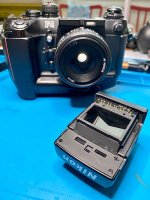
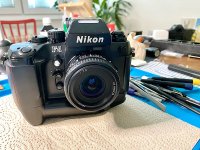
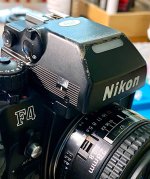
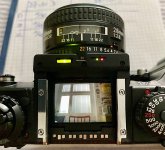
While I was rearranging my cupboard, a DP-20 viewfinder for the F4 fell from a height of 2.75 metres onto the parquet floor.
The viewfinder is intact on the outside, the glass inside is OK and the LCD works.
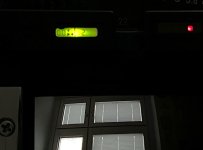
However, the LED displays have slipped up a bit:
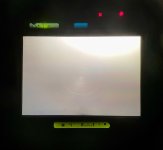
The top left LCD is OK, I just couldn't get it all in the picture.
Good thing I've already worked with the DP-20;
Nikon DP-20 viewfinder (for Nikon F4): LCD examined, case disassembled and reassembled
This needs to be repaired immediately!
Since the LEDs are located in the Nikon F4, which didn't crash, the problem will be in the viewfinder mirror system.
Thank goodness it's my spare DP-20, which isn't the prettiest anymore, but has an intact LCD that can be removed for future repair projects.
Intact LCDs (2) on the Nikon F4 with DP-20 are now the exception; they are Leaking and show black, red, and green artifacts.
Repair
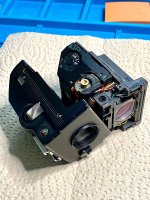
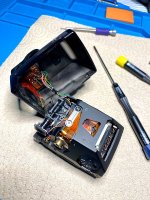
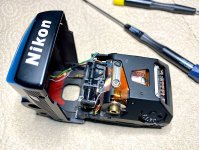
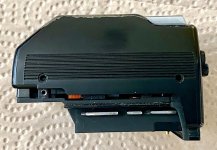
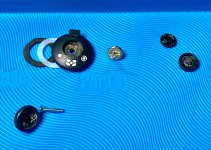
Removing the outer cover and loosening the inner cover.
The DP-20 has two covers that protect its interior. For details on disassembly see the link above.
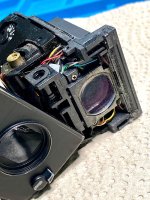
This should be cleaned later.
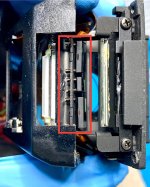
This is where the three deflection mirrors for the upper viewfinder displays are located.
From top to bottom:
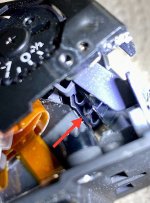
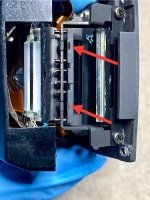
The mirrors are mounted on metal springs.
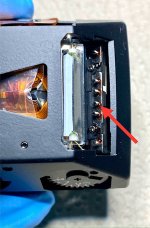
The metal springs press the mirrors against these adjusting screws.
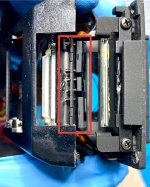
Here you can see that the upper and lower mirrors are not in contact with the adjusting screws.
The misalignment was caused by the fall.
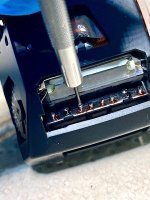
I unscrew the two adjusting screws for the lower mirror …
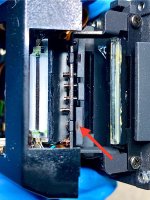
… and move the mirror on its metal spring towards the adjusting screws.
To do this, I take the blade of a flathead screwdriver and carefully press on the metal spring.
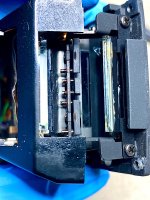
Now I can adjust the mirror against spring pressure using the screws.
First attempt.
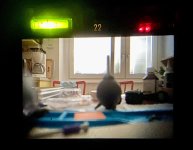
The red LEDs are now too low.
The LCD on the left needs to be corrected downwards.
The reference is the ADR display in the middle. Its mirror was not misaligned by the impact because it is still pressed against its adjusting screws.
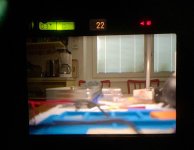
After I have adjusted the mirror for the LCD by bending its spring, I adjust it and the mirror for the LEDs using the screws.
After a few attempts, the positions are correct.
While I was rearranging my cupboard, a DP-20 viewfinder for the F4 fell from a height of 2.75 metres onto the parquet floor.
The viewfinder is intact on the outside, the glass inside is OK and the LCD works.
However, the LED displays have slipped up a bit:
The top left LCD is OK, I just couldn't get it all in the picture.
Good thing I've already worked with the DP-20;
Nikon DP-20 viewfinder (for Nikon F4): LCD examined, case disassembled and reassembled
This needs to be repaired immediately!
Since the LEDs are located in the Nikon F4, which didn't crash, the problem will be in the viewfinder mirror system.
Thank goodness it's my spare DP-20, which isn't the prettiest anymore, but has an intact LCD that can be removed for future repair projects.
Intact LCDs (2) on the Nikon F4 with DP-20 are now the exception; they are Leaking and show black, red, and green artifacts.
Repair
Removing the outer cover and loosening the inner cover.
The DP-20 has two covers that protect its interior. For details on disassembly see the link above.
This should be cleaned later.
This is where the three deflection mirrors for the upper viewfinder displays are located.
From top to bottom:
- LCD with exposure compensation and frame rate display,
- ADR (Aperture direct readout) for reflecting the aperture number on the lens, and
- the LEDs for AF, exposure compensation warning and flash readiness.
The mirrors are mounted on metal springs.
The metal springs press the mirrors against these adjusting screws.
Here you can see that the upper and lower mirrors are not in contact with the adjusting screws.
The misalignment was caused by the fall.
I unscrew the two adjusting screws for the lower mirror …
… and move the mirror on its metal spring towards the adjusting screws.
To do this, I take the blade of a flathead screwdriver and carefully press on the metal spring.
Now I can adjust the mirror against spring pressure using the screws.
First attempt.
The red LEDs are now too low.
The LCD on the left needs to be corrected downwards.
The reference is the ADR display in the middle. Its mirror was not misaligned by the impact because it is still pressed against its adjusting screws.
After I have adjusted the mirror for the LCD by bending its spring, I adjust it and the mirror for the LEDs using the screws.
After a few attempts, the positions are correct.
Last edited:
 A word of caution