Nikon or Canon?

Messages
296
Name
David
Edit My Images
Yes
It's probably been mentioned before but I'm a newbie, so I ask for forgiveness:)
I'm getting into bird photography and have seen in the bird section that nearly everyone has a canon. What I have seen, there are some cracking shots in that section. I am working with a D300 and a sigma 150-500mm, is it now because I'm learning or is it my equipment, but my pics are just not up to the standard of the others.
So my question is - Canon or Nikon for bird photography?:help:

Thanks in advance
 
Personally think Canon are more popular because of the affordable lenses in their range that are suitable for bird photography

For example the 100-400mm, 300m f/4 (often with 1.4 TC) and 400mm f/5.6, around the £1000 mark and nothing comparable in the Nikon line up
 
Last edited:
Canon probably have the better range of long telephotos, which may account for the abundance of canon users in the birding section, and probably why you are using a sigma telephoto:)
As a fellow nikon shooter (but with no interest in birds) it is frustrating that unless you want to remortgage the house, the range of telephotos is High quality but limited.
 
Have a look through a sigma 150-500mm group on flickr, you'll see this lens can achieve superb results. When it comes to bird photography, it's 99% field knowledge, field-craft, patience and luck. Most of my best photos are taken while out on meets with other more experienced wildlife photographers, because they'll know things I haven't picked up yet and it sort of rubs off on you. One guy who is often on the meets uses a D300 and 80-400VR, a lens which you hear a lot of crap about, especially compared to the 100-400L, but he takes superb shots with it.

Like Rich said, the ~£1k telephotos is an area where canon have more and better choice than nikon (though all the lenses are old designs, they are still superb).

I think the canon super-tele primes are also cheaper (not any more with the mark II canon ones coming out, but those are going to be amazing light weight for what they are) and easier to find on the used market than nikon's, which is a big plus for people looking to drop serious money on a massive super-tele. The one thing nikon doesn't have against canon in the super-tele line is the 200-400VR, canon haven't got anything like it until the 200-400 f/4L 1.4x finaly hits the market and that's supposed to be a brilliant lens for wildlife.
I've seen a lot of wildlife/birds photographs taken with D3's and 200-400's, the combination of a body that handles low light very well and a lens with the perfect focal length range for almost any wildlife (within reason) makes a brilliant tool.

If you're not satisfied with the 150-500 (and you're sure it's the lens not you), maybe have a look at the nikkor 300 f/4? It doesn't have VR which puts some people off, but I see many stunning quality shots from this lens, never heard a user report that isn't stellar.
Unless you particularly want one of canon's unique lenses like the 400mm f/5.6L (a popular choice with birders cos it's light weight, stupidly fast focussing and brilliantly sharp), there's not much to choose between canon and nikon IMO :).
 
Last edited:
Personally think Canon are more popular because of the affordable lenses in their range that are suitable for bird photography

For example the 100-400mm, 300m f/4 (often with 1.4 TC) and 400mm f/5.6, around the £1000 mark and nothing comparable in the Nikon line up

Definitely one of Canon's plus points. The Nikon 300mm f/4 is comparable to the Canon, but the others can't be matched by anything Nikon currently has - the 80-400mm is okay but not as good as the canon, and a 400mm f/5.6 doesn't even exist in Nikon land.

Your current set-up is nothing to do with the camera, unless there's something to do with megapixels or high ISO, then I guess it's another matter and one that would bring full-frame into the equation. I guess that the Sigma lens is your hurdle in this case; there's a lot being asked from a cost-effective optic and with a zoom range that is so big, it means compromises have to be made to meet its RRP and one of those will; be overall IQ, especially at 500mm. Try something brilliant like a 400mm f/2.8 and I reckon you'll find nothing wrong with your camera :thumbs:
 
Last edited:
Have a look in the bird section and check out the equipment of your favourite shots, plenty of guys using both Canon and Nikon.


But the Dark side is calling.....:D
 
Hi its all about practise your kit is plenty good enough. Can you post some examples. I use a d300 and sigma 50-500 os.

As requested Scott:-


I was pretty pleased with these until I started looking on the forum. They seem to be effected by noise, either that or my eyesight is going:lol: When I look at the pics from people like Kaz and others, their pics are so crystal clear. Or should I get familiar with photoshop and alike?
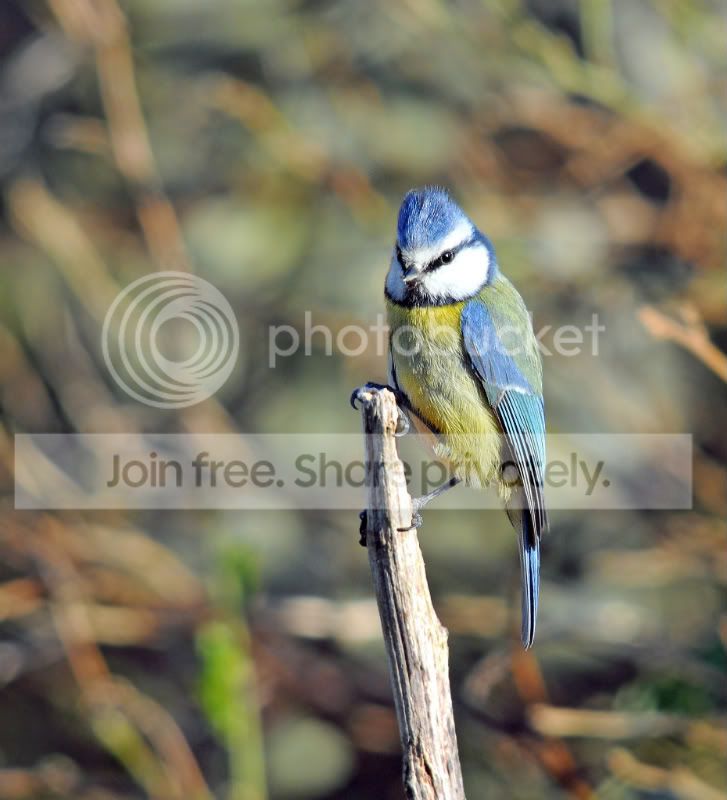
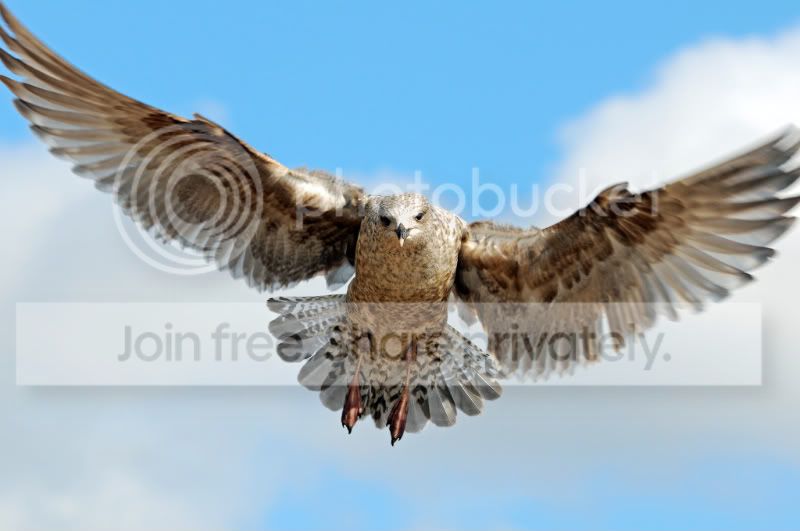
Thanks also for the other comments about lenses guys, much appreciated.
 
I had the Sigma 170-500mm lens version and I found the lens wasn't as good as I expected.

There is a "cheats" way of photographing birds close up and thats by using a wireless remote to trigger the shutter. However you would have to tempt the birds to a fixed spot by feeding them at that spot.

Realspeed
 
Last edited:
Are those are cropped a fair bit?
That's going to kill image quality. It's all a matter of getting close to the subjects. Most people are surprised after buying a lens like the 150-500 how close you still have to get to the subjects to get a really sharp photo, that's where a lot of the patience is needed.

The buzzard must have been in less than ideal light as well, ISO 800 and 1/800 sec, that'll be what's giving you noise.
 
Last edited:
Have a look through a sigma 150-500mm group on flickr, you'll see this lens can achieve superb results. When it comes to bird photography, it's 99% field knowledge, field-craft, patience and luck. Most of my best photos are taken while out on meets with other more experienced wildlife photographers, because they'll know things I haven't picked up yet and it sort of rubs off on you. One guy who is often on the meets uses a D300 and 80-400VR, a lens which you hear a lot of crap about, especially compared to the 100-400L, but he takes superb shots with it.

Like Rich said, the ~£1k telephotos is an area where canon have a lot more and better choice than nikon (though all the lenses are old designs, they are still superb).

I think the canon super-tele primes are also cheaper (not any more with the mark II canon ones coming out, but those are going to be amazing light weight for what they are) and easier to find on the used market than nikon's, which is a big plus for people looking to drop serious money on a massive super-tele. The one thing nikon doesn't have against canon in the super-tele line is the 200-400VR, canon haven't got anything like it until the 200-400 f/4L 1.4x finaly hits the market and that's supposed to be a brilliant lens for wildlife.
I've seen a lot of wildlife/birds photographs taken with D3's and 200-400's, the combination of a body that handles low light very well and a lens with the perfect focal length range for almost any wildlife (within reason) makes a brilliant tool.

If you're not satisfied with the 150-500 (and you're sure it's the lens not you), maybe have a look at the nikkor 300 f/4? It doesn't have VR which puts some people off, but I see many stunning quality shots from this lens, never heard a user report that isn't stellar.
Unless you particularly want one of canon's unique lenses like the 400mm f/5.6L (a popular choice with birders cos it's light weight, stupidly fast focussing and brilliantly sharp), there's not much to choose between canon and nikon IMO :).

Certainly food for thought Adam, thanks. I have posted a couple of pics in the meantime, I'm really hoping it's me and not the lens *** I'm on a budget of not very much:lol:
 
Definitely one of Canon's plus points. The Nikon 300mm f/4 is comparable to the Canon, but the others can't be matched by anything Nikon currently has - the 80-400mm is okay but not as good as the canon, and a 400mm f/5.6 doesn't even exist in Nikon land.

Your current set-up is nothing to do with the camera, unless there's something to do with megapixels or high ISO, then I guess it's another matter and one that would bring full-frame into the equation. I guess that the Sigma lens is your hurdle in this case; there's a lot being asked from a cost-effective optic and with a zoom range that is so big, it means compromises have to be made to meet its RRP and one of those will; be overall IQ, especially at 500mm. Try something brilliant like a 400mm f/2.8 and I reckon you'll find nothing wrong with your camera :thumbs:

Thanks for the info, much appreciated.
 
hi david bird photography is all abit being in the right place right time and like all photography decent light, those pics look like the light was harsh,
my advice is the really get to know your gear and how much ev you need to put in to get the shots right.
just dont get down hearted. heres some shots from my d300 and my old 150-500mm.
DSC_5342.jpg


DSC_3169.jpg


DSC_3207.jpg


and my d300 and my 50-500mm os.
SB1_1645-1.jpg


SJB_4539.jpg


SJB_8422.jpg
 
Are those are cropped a fair bit?
That's going to kill image quality. It's all a matter of getting close to the subjects. Most people are surprised after buying a lens like the 150-500 how close you still have to get to the subjects to get a really sharp photo, that's where a lot of the patience is needed.

The buzzard must have been in less than ideal light as well, ISO 800 and 1/800 sec, that'll be what's giving you noise.

Yeah, I'm one of those people:bonk: I thought wow, a 500mm here we go:cuckoo:

I'm still on my learning curve so I still have a lot to learn. When I got the D300 I was told that it could handle high ISO, so I thought 800-1250 wouldn't be a problem. But, if I understand it correctly, it is me and not my lens?
 
Thanks Scott, nice pics my man. So there is hope?:thumbs:
I'm trying to achieve such pics and seeing those with the same lens as I have, I guess more patience required. Appreciate the encouragement:thumbs:
 
Thank you Scott.

pic #1 is a cracker:thumbs::thumbs:
Thanks again for your valuable help. Appreciated.
 
It's probably been mentioned before but I'm a newbie, so I ask for forgiveness:)
I'm getting into bird photography and have seen in the bird section that nearly everyone has a canon. What I have seen, there are some cracking shots in that section. I am working with a D300 and a sigma 150-500mm, is it now because I'm learning or is it my equipment, but my pics are just not up to the standard of the others.
So my question is - Canon or Nikon for bird photography?:help:

Thanks in advance

Invest in yourself- get on a wildlife photography course and utilise the relevant boards here. No need to change brand- especially not to one with dodgy white lenses;):lol:. Seriously, no one picks up a camera and is world class-it takes time- how much time is where the gifted part comes in. Just remember, it's all a journey:)
 
and a 400mm f/5.6 doesn't even exist in Nikon land.

I have one ... 300 f4 + 1.4TC = 420mm f5.6 and it is 20mm longer ;), and it will take the 1.7TC to make it 510mm f6.7 :D


To the OP all of the shots in my gallery were taken using a D300, it takes time and practice to get decent shots, especially with the longer lenses.

You also still have to apply the basics of photography, especially having the sun behind you, so that the subject is well lit.

You may also want to read this LINK it gives some useful tips on how to process images, post #14 covers sharpening images for posting.
 
Invest in yourself- get on a wildlife photography course and utilise the relevant boards here. No need to change brand- especially not to one with dodgy white lenses;):lol:. Seriously, no one picks up a camera and is world class-it takes time- how much time is where the gifted part comes in. Just remember, it's all a journey:)

You know, I think you're right. It's hard to find English courses here in Belgium, I'll try Holland as it's only a stones throw away. As we always say "Rome wasn't built in a day" so.....

My journey begins.....:lol:
 
I have one ... 300 f4 + 1.4TC = 420mm f5.6 and it is 20mm longer ;), and it will take the 1.7TC to make it 510mm f6.7 :D


To the OP all of the shots in my gallery were taken using a D300, it takes time and practice to get decent shots, especially with the longer lenses.

You also still have to apply the basics of photography, especially having the sun behind you, so that the subject is well lit.

You may also want to read this LINK it gives some useful tips on how to process images, post #14 covers sharpening images for posting.

Thanks Martyn,
Had a look at the link, very useful (Rich has already given me a few tips - bless him:lol:). So the info he gives in the link, very useful.
 
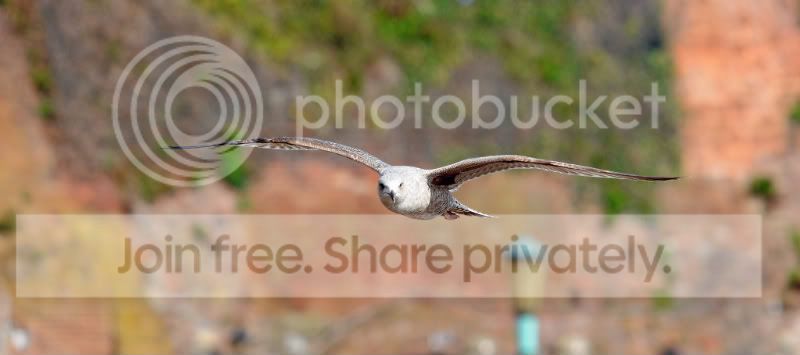
I've seen superb bird shots, including BIF, by photographers using the 300D and 350D - with lenses that were "sort of" affordable - when these cameras were introduced. High end gear makes it easier, but I agree with all the comments about practice and experience. A lot of people are quite surprised how close you have to get, even with a 500mm on a crop camera, to fill the frame with small - medium sized birds. One of the best pieces of advice I've read for BIF was to practice on seagulls, if you live anywhere near a coast. They're very common, a fair size, and usually fly slowly and quite predictably.
 
The main things with bird photography IMO is:
a) Finding the bird
b) Getting near to it.

Providing you can get near to your target then almost any modern Camera and lens can give good results.
The trouble with Digital is that there is a great temptation to crop heavily for web size images - this is when the better lenses come into their own as you can often retain more detail because of the sharpness.
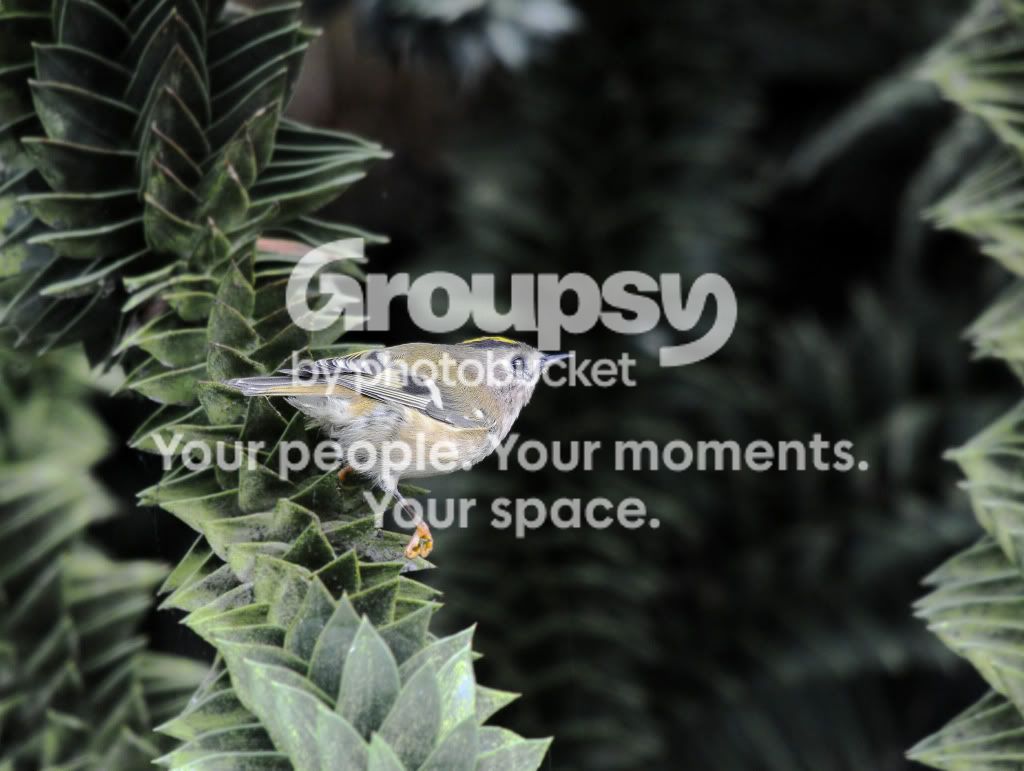
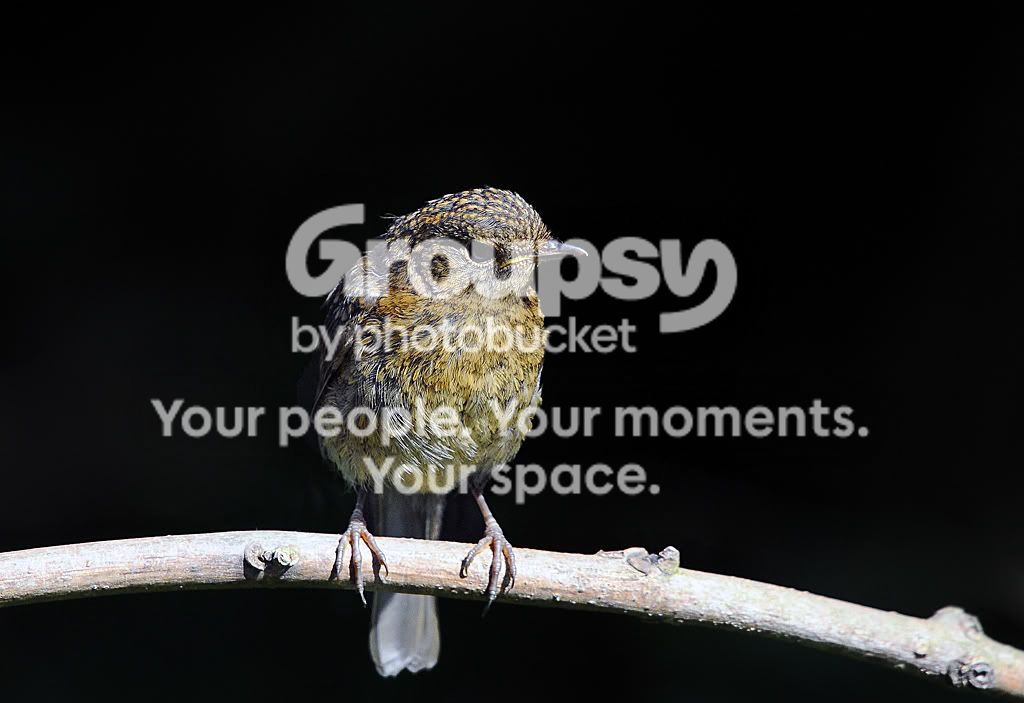
Attached is an example of a very heavy crop taken with a 400mm non IS lens hand held (sub £1k lens) - you would be hard pushed to retain the level of detail in one of the 'affordable' zoom lenses IMHO. With one of the super-teles from either Canon or Nikon you could do even better.

wren_org.jpg


wren3.jpg
 
Last edited:
Martyn... said:
I have one ... 300 f4 + 1.4TC = 420mm f5.6 and it is 20mm longer ;), and it will take the 1.7TC to make it 510mm f6.7 :D

http://www.talkphotography.co.uk/gallery/showphoto.php?photo=72531&title=blue-tit-iso-3200&cat=2718

To the OP all of the shots in my gallery were taken using a D300, it takes time and practice to get decent shots, especially with the longer lenses.

You also still have to apply the basics of photography, especially having the sun behind you, so that the subject is well lit.

You may also want to read this LINK it gives some useful tips on how to process images, post #14 covers sharpening images for posting.

Ha - good workaround. Will still be a fair chunk more expensive than the canon prime, but then again, you have two lenses in one with your option :)
 
I've seen superb bird shots, including BIF, by photographers using the 300D and 350D - with lenses that were "sort of" affordable - when these cameras were introduced. High end gear makes it easier, but I agree with all the comments about practice and experience. A lot of people are quite surprised how close you have to get, even with a 500mm on a crop camera, to fill the frame with small - medium sized birds. One of the best pieces of advice I've read for BIF was to practice on seagulls, if you live anywhere near a coast. They're very common, a fair size, and usually fly slowly and quite predictably.

Thanks Martyn, if it ever stops raining I'll nip to the seaside:lol: and have a go with the seagulls.
 
Thanks Roy, like what you've done with the crop. I guess I still have a lot to learn.
 
So my question is - Canon or Nikon for bird photography

That's like asking...Ford or Nissan to get from A to B....They will both get you there.

D in W
 
Last edited:
Back
Top