Orphaned Works

Messages
1,740
Name
Peter
Edit My Images
Yes
I wondered if anyone has some knowledge of this knotty subject.

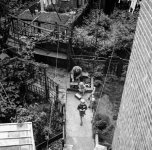
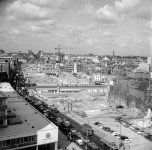
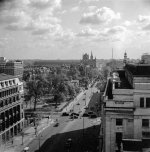
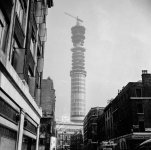
I bought 850 negatives from eBay and I have scanned them all, selected quite a few for further work and maybe printing.

The photographs were taken between 1961 and 1964 (a prolific amateur photographer!).

So, obviously, the copyright is not mine but what about publication of the images, or a selection, on TP? I wouldn't hesitate to distribute the photographs which don't include humans, not commercially obviously, but I'm reluctant to do the same for the photographs of those who might still be alive.

I have asked my sister to see if she can find the family in the 1961 census, it might provide a contact.

I have to say that, in the past, I've unremittingly distributed photographs I have found from the same era.

Interestingly I know exactly what the cam brand and model was, the negative are exhaustively annotated.
 
Copyright is 70 years from the death of the creator, I believe.

I've got a few boxes full of old slides that I've acquired, and have similar concerns but, if I'm honest, sharing them for non-commercial purposes is probably unlikely to cause any issues, especially if you're just sharing them on a photography forum for others to see. I think it's a good thing that their work gets to live on and be appreciated.

Obviously, the estate of the creator may view things differently, but I think it's likely that, if the negatives have ended up in an auction, that it's because the photographer either had no descendants, or that they weren't interested enough in the pictures to keep them anyway.

The Anonymous Project publishes found photographs online and in books, but I'm not sure what due diligence they had to carry out.

All that said, the UK Government has a detailed page on the subject here: https://www.gov.uk/government/publi...licants/orphan-works-diligent-search-guidance
 
Sadly Google AI, but I know the rough law ( pre CDPA 1988) and it's accurate....

Published Photographs (Taken in 1961)
    • Published before August 1, 1989: Copyright generally expired 50 years from the end of the calendar year in which it was first published.
    • Published on or after August 1, 1989: It typically attracts the standard life of the creator plus 70 years.

Unpublished Photographs (Taken in 1961)
    • Photographer died before January 1, 1969: Copyright subsists until December 31, 2039.
    • Photographer died on or after January 1, 1969: Copyright lasts for the life of the photographer plus 70 years from the end of the year of their death.
 
I would not take on any images from someone else as I enter competitions and you must own the copyright for every part of the image. If you are producing say an historical record, then such images may be useful for illustrations.

Dave
 
Based on that, all you own are the physical negatives.

You have no right of reproduction or publication.

There is, however, also the Orphaned Works scheme that dates from 2015 (off the back of a 2012 EU directive) designed for situations like this


If the rights owner cannot be discovered after a diligent search, you pay a fee to the Intellectual Property Office; if the rights owner later turns up, then they can make a claim on the fund IIRC

Edit; the list of fees on that page is just for processing the initial submission, not the licence itself. Top bracket is 30 works / £80

then


IPO said:
A non-commercial licence is £0.10 + VAT per work and allows several uses:

free hand outs for live event, exhibition or similar
use in a live event, exhibition or similar
in newsletter, bulletin, e-newsletter or e-bulletin
in non-commercial promotional material - print and digital
digitise and make available online, including on social media
preservation purposes
use on stage or in performance
educational purposes - use in learning/training materials, including e-learning
use in thesis/dissertation
personal use
 
Last edited:
Unless the picture is definitely out of copyright, why bother?

In 99 cases out of 100 all will be well. On the other hand, the 100th case could cost a great deal in both time and money.
 
I was doing some very quick research on the Anonymous project - as above Shulman doesn't own the copyright, but I think he's just got on with the project anyway. It's that obscure that no one cares, No one has come forward about the photos, not even a relative or a partner who recognises someone.
The works editing, sequencing, presentation, etc.. are his authorship
 
I would not take on any images from someone else as I enter competitions and you must own the copyright for every part of the image. If you are producing say an historical record, then such images may be useful for illustrations.

Dave
Working with found photos / archives is a major part of some photographers' practice
 
There is, however, also the Orphaned Works scheme that dates from 2015 (off the back of a 2012 EU directive) designed for situations like this


They aren't orphaned works.

He knows the name of the photographer. How else could his sister search for them in a census?

Just because you cannot contact a work's author, that does not make it/them orphaned.
 
They aren't orphaned works.

He knows the name of the photographer. How else could his sister search for them in a census?

Just because you cannot contact a work's author, that does not make it/them orphaned.

I didn’t say they are orphaned works, just that there is a legally defined process that must be followed for them the IPO to determine whether they are orphaned or not, which is described on the sites I linked to.

Form the IPO, the definition is

Orphan works are copyright works where one or more right holder is unknown or cannot be located.

[emphasis added]

The guidance includes scenarios where the name of the author is known, but the rights holder is not.

Diligent searches must be conducted to reveal whether or not any rights holders can be located. Those are not trivial exercises.
 
Last edited:
Well, unfortunately the 1961 census is closed for couple of decades so the whole research avenue is more or less closed, at least to discover the photographer's full name. I only surmised the photographers first name, no idea of his surname, based on a caption.

Diligent searches must be conducted to reveal whether or not any rights holders can be located. Those are not trivial exercises.

Quite right, but a more rigorous definition of 'diligent' would be useful, eh?

Anyway, this isn't something I can take further, for the time being I'll keep the pictures for myself, but I might post some, not featuring actual actors, on here, for your delectation.

It's quite a difficult subject, and, yes, how do people who publish books of found photographs handle these issues?

The photographer of my negatives was shooting in the early 1960's so might be 10 years older than me. If so, the likely hood is that he is dead and unavailable to give any permissions. Otherwise, how would his photographs have become available outside of his family.

Well, whatever, thanks for everyone's opinions. An interesting discussion.

The next problem for me is to dispose of the negatives. I obviously don't want to destroy them and I can't see my relatives wanting them, so, anybody like to adopt them?
 
Last edited:
The photographer of my negatives was shooting in the early 1960's so might be 10 years older than me.

Or he might not be. From your profile, I'm 2 years younger than you are. I have 35mm negatives going back to at least 1963; and when I went to university in 1967 I was using about 3 36exp films a day. That means about 10 days to reach your 950 negatives...
 
Great work lads! You've now ensured they will never be seen, and in fact may even be destroyed!
 
No, they won't be destroyed, by me at least. Disposal ideally involves finding some else who would look after them, I don't think my sons or grandchildren will be interested (although they might preserve the family archive of my negatives and slides and my father's negs and slides).

For the moment I have chosen about 150 of the collection which I'll finish post processing and add to my galleries. I'm going to print a choice few as well, in fact I might dedicate a small album to this collection.

So would anyone else like the negs?

Or he might not be. From your profile, I'm 2 years younger than you are. I have 35mm negatives going back to at least 1963; and when I went to university in 1967 I was using about 3 36exp films a day. That means about 10 days to reach your 950 negatives...

My reasoning was based on my age, 14, in 1961 compared to the parents in the photographs. The mother is definitely not 14. Assuming she was in her early 20's and that her husband might have been of the same or similar age is how arrived at the ten years.
 
Last edited:
Are there any local museums or libraries who might be interested in the archive? I would expect that, if there are photographs showing the local area as it was in the past, that these would be of value to such places.

If not, then I might be interested in having a look at them. What sort of subjects are on the negatives?
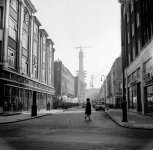
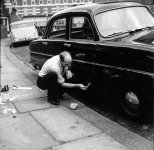
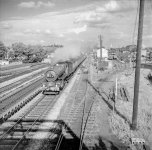
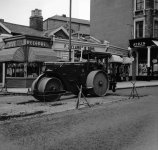
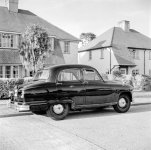
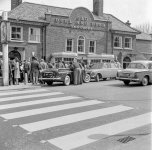
Family holidays particularly to holiday camps, trips to the zoo, portraits of family members and friends, Christmas and birthdays, the dogs, rather dull landscapes, central London (around Euston Square), all the same stuff I suspect you or I would still take. Fascinating. Taken using a Microflex I believe, looks like mainly Kodak film. The pictures will take you back to a different time.

If you would like to go to PM and give me your address I'll send you the negatives, I'll bear the postage cost.
 
Back
Top