

Perceived Perils of Purple Fringing

Messages
2,777
Name
Drake
Edit My Images
Yes
I was considering purchasing either the Nikkor 70-200 f2.8 VRII or the Nikkor 85 f 1.4G lens. I took the following two pictures, among several others, in the shop. My plan was to review them to determine if both lenses were suitable for my needs.

I was very surprised to see the severe purple fringing in the 85 mm f1.4G but understand that wide open this sort of thing can happen. (Look at the edges of the ammonite and all the white lettering.) The shot taken with the 70-200 is stopped down to 7.1, so is an unfair comparison, but I offer it up to show what the store display really looks like.

The 85 1.4G is still there, and at a fair price ($1600 US).

First, would you be put off by the purple fringing at f1.4, or is this just one of the perils of a very fast lens?

Second...since I'm not a physicist or optical engineer...could someone knowledgeable explain why purple fringing occurs and how to avoid or minimize it?

TIA

70-200 f2.8 VRII @ 112 mm and f7.1; ISO 800, 1/60 sec.
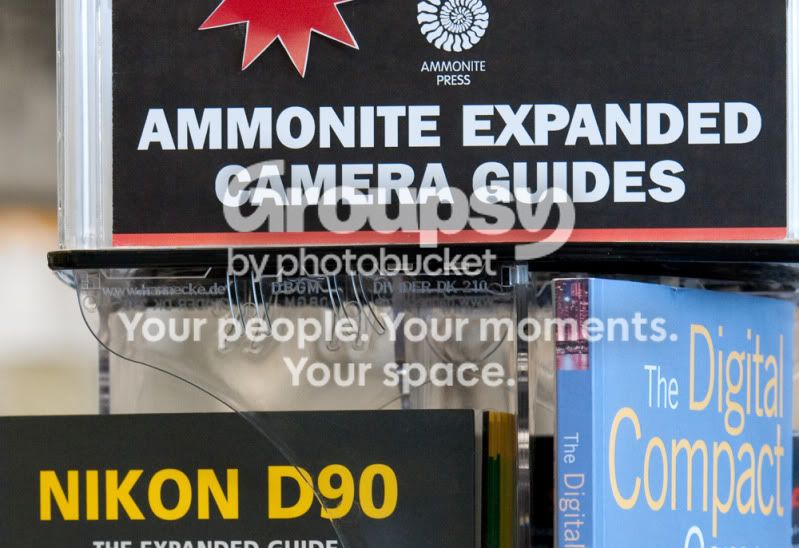
70_20028_Full.jpg


85mm f1.4G @ 85 mm and f1.4; ISO 200, 1/320 sec
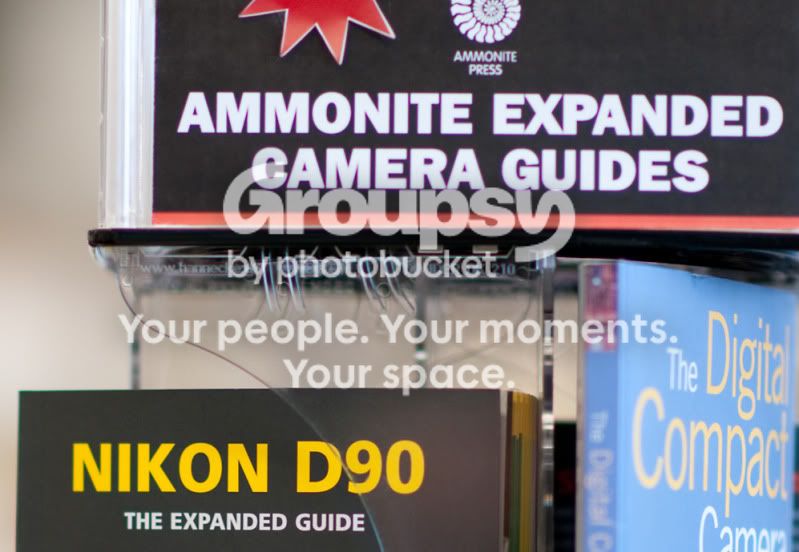
85mm14G_Web.jpg
 
Most (all?) fast primes show purple fringing (not CA) in out of focus highlight areas. I believe 70-200 would have some fringe wide open too. The best way to avoid it is to avoid out of focus foreground elements with highlights in it.
I am not sure if that helps, I'd rather have 70-200mm f/2.8 which is fast enough for most applications and only then think about something even faster but very limited.
 
I really notice CA on my 10-22 lens but lightrooms camera /lens correction works well to correct the problem.
 
Purple fringing is my pet hate. I stayed away from digital for ages due to it. You also notice it in tree leaves if you photograph them with a back lit bright sky. Panasonic were about the first manufacturer to successfully control it. Their lumix bridge and compact range a years ago showed much less CA than even the multiple thousand pound DSLRs from canon/nikon.

I sort of assumed it was a feature of the past and modern digitals just didn't do it now.
 
Well...my D300 is "older technology" comparatively speaking, so perhaps this problem would be better controlled with newer cameras/firmware.
 
srichards said:
Purple fringing is my pet hate. I stayed away from digital for ages due to it. You also notice it in tree leaves if you photograph them with a back lit bright sky. Panasonic were about the first manufacturer to successfully control it. Their lumix bridge and compact range a years ago showed much less CA than even the multiple thousand pound DSLRs from canon/nikon.

I sort of assumed it was a feature of the past and modern digitals just didn't do it now.

Really? I used to get it terrible on my fuji film cameras. I find it much more managable with digital.
 
The lighht which makes up the the spectrum has different wave lengths depending on colour. CA is caused bybthe inability of the lens to focus those different wave lengths at the same point. It,s most obvious in areas of adjoining light and dark tones, which is why you're seeing it in the black and white sign.

All lenses suffer from it some degree and the more extreme the max aperture is, the more likely you are to get CA, although cheaper lenses are likely to be poor CA performers.
 
Never noticed it on film. Haven't scanned in old negs taken with a fuji compact though. Only used to get 6 x 4 prints so maybe you only see it on enlargements and nothing I took was worth having in a bigger size :)
 
I think most very low f/number lenses are prone to purple fringing. Canon 85 1.8 is notorious for it.

It's axial chromatic aberration, which occurs all over the frame at very bright light/dark edges, and disappears on raising the f/number a bit. As opposed to lateral CA (pink/green) which is stronger around the edges and tends to stick around at all apertures.

I've got a Canon 35L 1.4 for the weekend and, with the right subject (eg specular reflections) it's very noticeable at f/1.4. You only get it with certain subjects but TBH I'm not that impressed with it, especially as it's got regular CA around the edges too! Though not much to be fair.

Software should clear this up very effectively, such as the custom corrections that are just a mouse-click away in Canon's DPP Raw processor (and other prgrammes, like Lightroom). I've not tried it on this lens yet though.


You should see what 135L and 85L are 'capable' of. 70-200mm f/2.8L can be also pushed far enough sometimes. This is hardly the reason not to get these lenses.
 
Back
Top