SHOOTING WATERFALLS

Messages
258
Name
clive
Edit My Images
Yes
WHAT IS THE BEST WAY TO TACKLE WATERFALLS IE ND FILTERS AND HOW MANY STOPS OF LIGHT .
PEOPLE ON HERE SEEM TO GO ON ABOUT A 10 STOPPER .
IS THERE ANOTHER TECHNIQUE THAT DOESENT REQUIRE A FILTER.
MUST ADMIT I REALLY LIKE THE DREAMY LOOK OBTAINED BY SOME OF THE TOGS ON HERE.
 
Last edited:
WHAT IS THE BEST WAY TO TACKLE WATERFALLS IE ND FILTERS AND HOW MANY STOPS OF LIGHT .
PEOPLE ON HERE SEEM TO GO ON ABOUT A 10 STOPPER .
IS THERE ANOTHER TECHNIQUE THAT DOESENT REQUIRE A FILTER.
MUST ADMIT I REALLY LIKE THE DREAMY LOOK OBTAINED BY SOME OF THE TOGS ON HERE.

Hi Clive

The best way to tackle waterfalls without a filter is get there before sunrise.

Waterfalls need various exposures between 1/3 of a second to 15+ seconds depending on the effect you wish to achieve. These exposures are easily possible before the sun is up.

Another technique is choose the right falls. If the falls are out in the open then you will struggle to get a long shutter speed whereas if you find some falls deep in a wooded valley there will be lots less light and a slower speed is more achievable.

I have used a polariser to slow my shutter down a bit, and I also purchased a hoya ND8 which drops some light off. OK, you don't get the effect of a big stoper but it was under 1/4 the price!

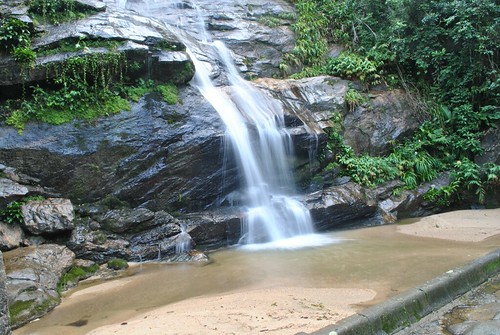
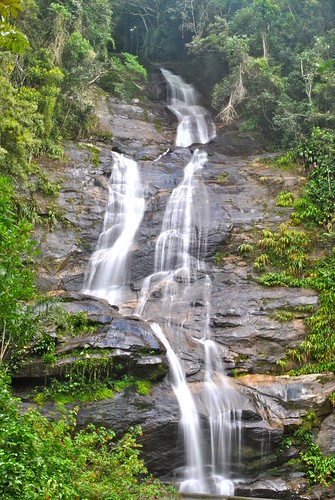
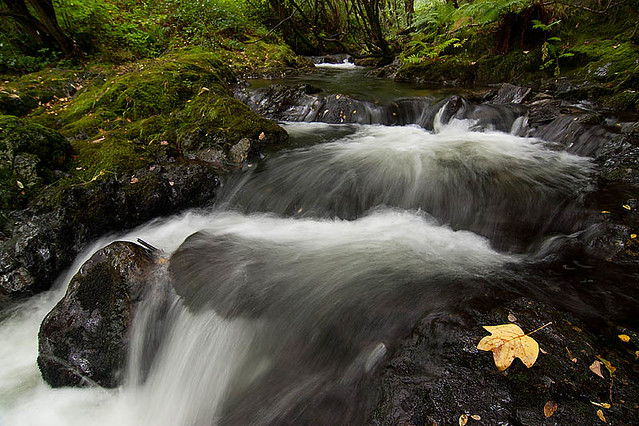
This photo was taken in a wooded valley after sunrise just using a polariser - obviously tripod mounted!


Coledale Beck, Cumbria by Richard Lindley, on Flickr
 
This one was without any filters at all.

DSCF8899photo.jpg


You don't really need that slow a shutter speed, but it depends how wispy you want your water....
 
You don't really need that slow a shutter speed, but it depends how wispy you want your water....

Another thing to consider is if there's any wind and you start using long exposures you might find the plants start to look fuzzy because they're blowing around (unless they're frozen solid).

Oh, it's not good form to post all in capitals. People consider it to mean that you're shouting.
 
As Richard has said, it's all about the shutter speed.. the filters are only a tool to get you to the shutter speed you want.

From about 1/3-1/4 second and longer you'll get the water blurred. How long you go on the shutter speed depends entirely on the effect you want. Too long a shutter speed and the water might become too whispy, or that could be the effect you want.

About the only essential is a tripod when you get to these shutter speeds.

If you were shooting in broad daylight, open sky conditions and your camera was giving a suggested exposure of:

ISO100
f/16
1/100th
(sunny 16)

Then 5 stops would get you to about 1/3rd second, you could achieve this by closing the aperture to f/22 and a 4-stop filter. Or opening the aperture to f/11 and using a 6-stop (or a 4-stop plus a 2-stop).

Once you start moving away from daylight and open sky conditions, e.g. early morning, late evening, winter, under a full or partial tree canopy, you're already going to be closer to the desired shutter speed due to the reduced light levels and you may get away with a less powerful filter or no filter at all.

Have a search for "welding glass" for the cheapest high-stop filter of them all.. 12-14 stops of almost-ND filter for £5-7.

 
thanks guys some good info there to chew over going to have a go at padley gorge.
bye the way im typing with cap lock off dont want to give the impression im shouting at anyone where much to polite from derbyshire to do that lol.
 
thanks guys some good info there to chew over going to have a go at padley gorge.
bye the way im typing with cap lock off dont want to give the impression im shouting at anyone where much to polite from derbyshire to do that lol.

Also if you have filters but dont have an ND , bear in mind that a polariser will reduce light by about 2 stops
 
hi pete re the cpl does mean i should meter the scene first without the cpl then replace it and up the exposure by two stops of light.
 
Hey Clive,

Hope you have fun doing these waterfall shots - I've found that once you've had a go at it once, and experimented with a few of the settings, you begin to realise what you need to do. Change the ISO, shutter speed and aperture, and see what effects you get. You might find that you're limited to the light available, and like what has been mentioned in posts before, you may need to shoot at a different time of day, or with different weather, or get hold of a couple of filters and see if they help.

Let us know how you get on!
 
hi pete re the cpl does mean i should meter the scene first without the cpl then replace it and up the exposure by two stops of light.

I'm not 100% sure tbf

I don't but that doesnt mean you shouldn't - I generally just put whatever filters on i'm using then let the TTL meter.

what I meant is that if your waterfall is giving you 1/60 at f13 unfiltered , if you add a cpl it you'll have 1/15 at f13 which is more what you want to get the milky water.

if you need it slower still you can go to a smaller aperture - but be aware that the smaller the aperture , the more crap on the sensor will show up
 
hi pete re the cpl does mean i should meter the scene first without the cpl then replace it and up the exposure by two stops of light.

No, you should be able to meter with the CPL in place.
 
Back
Top