Sony A700 replacement Out 2011 25MP...On a cropped body..

Well that's going to be interesting...

Bubolo was also able to confirm that Sony's priority for this coming product will be high ISO settings 'up into the hundreds of thousands'. The body shell will be made from magnesium alloy and the finished product will be priced in the same area as Canon EOS 60D type products. The current A700 uses an APS-C sized sensor, and Bubolo told AP he expected the replacement to do the same – with 'rumours' suggesting a resolution of 25 million pixels.

So that's an APS-C sensor with 25Mp, ISO of 102,400 or greater at a street price of around £800.

Me thinks someone is being a trifle optimistic!
 
I'm inclined to agree. Given that Canon squeezed 18 megapixels into an APS-C image sensor, 21 megapixels is credible but 25 is pushing it a bit.
 
I think the 25MP on a crop sensor is likely to be pie in the sky TBH. These things always attract escalated claims.
If it does get priced the same as a 60D then I would expect 18MP tops!

That said if it becomes a reality I hope to god the in camera noise control is good!!!!!
 
Last edited by a moderator:
It's not the sensor size that was my main point, it's the ISO.

There are only two cameras on the market that breach 25,600 at the moment, those being the D3s and the 1DMkIV both plateauing at 102,400. Claiming that an APS-C is going to equal, if not exceed, that for under £2,000, let alone under £1,000, and still have usable images is pie in the sky in the current market.
 
I really hope Sony's been putting their grunt behind this - the A700 was a huge hit and it's been a while - given how desperate they are to break into the market and the financial backing, I reckon Sony could afford to take the hit of underselling these cameras in exchange for brand loyalty and market presence :S
 
I suspect Sony will achieve it using multi-image noise reduction which it turns out well at 25,600. The trick will be to have some kind of processing that will work out what to do with things that move between exposures. At least sony are coming up with novel ways of solving problems. And as nikon use their sensors they can't be too shabby. Just wish sony would pinch nikon's noise reduction methods though :)

If you want low light high iso then the D3S is the daddy.
 
I suspect Sony will achieve it using multi-image noise reduction which it turns out well at 25,600. The trick will be to have some kind of processing that will work out what to do with things that move between exposures. At least sony are coming up with novel ways of solving problems. And as nikon use their sensors they can't be too shabby. Just wish sony would pinch nikon's noise reduction methods though :)

If you want low light high iso then the D3S is the daddy.

You also need a buttload of money!

Your suggestion does sound reasonable - a translucent mirror would mean that with the right processor and shutter speed, the camera could take obscenely high fps bursts to drop the noise :)
 
Multi imaging wouldn't work though. The whole point (or at least the main one) of having high ISO is the ability to increase/maintain shutter speed to stop movement, and that's usually 1/250th at the very slowest, 1/400th+ in preference.

Creating multiple exposures given that time frame just doesn't work out mathematically.
 
It does seem the logical solution if they've tried all the standard electronics ways of noise reduction.

If they want to gain market share then they have to blow the competition out of the water with features that will make people switch. I assume they have realised that a low noise high iso crop sensor has great advantage for wildlife and sports photographers. With their G glass 70-400 being so good then it could be an unbeatable combination.
 
Multi imaging wouldn't work though. The whole point (or at least the main one) of having high ISO is the ability to increase/maintain shutter speed to stop movement, and that's usually 1/250th at the very slowest, 1/400th+ in preference.

Creating multiple exposures given that time frame just doesn't work out mathematically.

With the right processor and a translucent mirror it's going to work out a lot faster than with a reflex mirror - maybe they got it fast enough to be able to get shots to be fired of quick enough to actually use it?
 
With the right processor and a translucent mirror it's going to work out a lot faster than with a reflex mirror - maybe they got it fast enough to be able to get shots to be fired of quick enough to actually use it?

It doesn't matter how fast the shutter is. It's the volume and intensity of the light that the sensor is exposed to that matters, and how sensitive that sensor is. If anything, multiple exposures for a 1/400th capture will dim the image, meaning that a higher ISO rating would be required.
 
Or perhaps they are going to use some feedback or reverse technique to fire off 2 and remove noise that way?
 
This is interesting news. Particularly as the A33 and A55 both suffer in the noise stakes due to loss of light through the mirror (and therefore I presume some pushing of the image). Remember the A55 has the same sensor as the D7000 and K-5, which are said to have the best APS-C high ISO performance going....
 
It doesn't matter how fast the shutter is. It's the volume and intensity of the light that the sensor is exposed to that matters, and how sensitive that sensor is. If anything, multiple exposures for a 1/400th capture will dim the image, meaning that a higher ISO rating would be required.

Yes, but the multiple exposure noise reduction could be good enough now to compensate for that!
 
Yes, but the multiple exposure noise reduction could be good enough now to compensate for that!


OK, lets do this slowly.

To freeze movement you require an exposure of 1/400th of a second.

There is a fixed volume of light available in that time.

To amplify the light available in that 400th you are required to increase the sensitivity of the sensor when the EV is low.

These are are finite figures and a single exposure of 1/400th is always going to gain more light than, say, 10 exposures of 1/4000th, even if that were physically possible.

The only way to increase light capture when you have a maximum possible time exposure is to either raise the sensitivity of the sensor, enlarge it or to increase the number of sensors and combine the image.

That is why only cameras which are designed for motion capture have high such ISO capabilities. In all other cases you would increase the exposure time and support the camera if necessary.
 
OK, lets do this slowly.

To freeze movement you require an exposure of 1/400th of a second.

There is a fixed volume of light available in that time.

To amplify the light available in that 400th you are required to increase the sensitivity of the sensor when the EV is low.

These are are finite figures and a single exposure of 1/400th is always going to gain more light than, say, 10 exposures of 1/4000th, even if that were physically possible.

The only way to increase light capture when you have a maximum possible time exposure is to either raise the sensitivity of the sensor, enlarge it or to increase the number of sensors and combine the image.

That is why only cameras which are designed for motion capture have high such ISO capabilities. In all other cases you would increase the exposure time and support the camera if necessary.

Wonderfully patronising...

My point is that the noise reduction could mean that the ISO sensitivity can be increased much higher levels while still maintaining a clean output after NR. They don't need to increase light capture, just reduce noise. Rapid multiple exposures would mean that they could do so, and incredibly high ISO limits would allow this to be quick enough to be usable.

Shooting these multiple exposure shots at over 100,000 ISO sensitivity could mean that the shots are so fast that 1/4000 frames can be combined over, say, a 1/400s length of time...
 
Wonderfully patronising...

Well I'm sorry about that, but it's a bit frustrating having to explain the basic laws of physics three times.

My point is that the noise reduction could mean that the ISO sensitivity can be increased much higher levels while still maintaining a clean output after NR. They don't need to increase light capture, just reduce noise. Rapid multiple exposures would mean that they could do so, and incredibly high ISO limits would allow this to be quick enough to be usable.

Shooting these multiple exposure shots at over 100,000 ISO sensitivity could mean that the shots are so fast that 1/4000 frames can be combined over, say, a 1/400s length of time...

OK, bearing in mind that we are talking about the real world, and the camera is meant to be announced this year, what you've suggested is tosh.


NR by image averaging is designed for long exposures and the number of exposures decreases the ISO by a factor of n whilst increasing the exposure time by the same amount.

Even if you create the reverse of the formula to make the exposures shorter, you then multiply the ISO by inverse of the time decrease.

For example:

1 Exp of 1/400 @ ISO 102400 = 2 Exp of 1/800 @ 204800 = 4 Exp of 1/1600 @ 409600

EV is a fixed triangle calculation of time + aperture + ISO and you can't break that.
 
Well I'm sorry about that, but it's a bit frustrating having to explain the basic laws of physics three times.


OK, bearing in mind that we are talking about the real world, and the camera is meant to be announced this year, what you've suggested is tosh.


NR by image averaging is designed for long exposures and the number of exposures decreases the ISO by a factor of n whilst increasing the exposure time by the same amount.

Even if you create the reverse of the formula to make the exposures shorter, you then multiply the ISO by inverse of the time decrease.

For example:

1 Exp of 1/400 @ ISO 102400 = 2 Exp of 1/800 @ 204800 = 4 Exp of 1/1600 @ 409600

EV is a fixed triangle calculation of time + aperture + ISO and you can't break that.

As it's all tosh, go ahead and explain how Sony are releasing a 100,000 ISO+ crop sensor 25mp camera at £800.
 
I remain sceptical, we all know that small sensors don't mix with either big MP or high ISO, although Panasonic has managed to achieve wonderful things on the GH sensors - it's still a LONG way off what that Sony is claiming. If they manage it though, well hats off to them and I may consider a new camera!
 
1 Exp of 1/400 @ ISO 102400 = 2 Exp of 1/800 @ 204800 = 4 Exp of 1/1600 @ 409600

EV is a fixed triangle calculation of time + aperture + ISO and you can't break that.

1 EXP of 1/400 @ ISO 1600 = 2 Exp of 1/800 @ 3200 = 4 Exp of 1/1600 @ 6400 ... 16 Exp of 1/6400 @ 25,600
1 ISO 6400 - 16 ISO 102,400 etc.

Nobody's saying this is supposed to render the D3s or 1D obsolete for sports, but with 16 shots it's perfectly plausible that average image NR could work well enough to counteract 25,600 ISO - perhaps not quickly enough on fast action shots but almost certainly in normal light conditions with a relatively steady hand.
 
Last edited:
The Sony A580 already has multi frame noise reduction. Takes 6 shots and stacks them to give you 25,600 equivalent. It already exists.
 
from that forum it does seem good for static subjects - but it won't work for ones that move
 
1 EXP of 1/400 @ ISO 1600 = 2 Exp of 1/800 @ 3200 = 4 Exp of 1/1600 @ 6400 ... 16 Exp of 1/6400 @ 25,600
1 ISO 6400 - 16 ISO 102,400 etc.

Nobody's saying this is supposed to render the D3s or 1D obsolete for sports, but with 16 shots it's perfectly plausible that average image NR could work well enough to counteract 25,600 ISO - perhaps not quickly enough on fast action shots but almost certainly in normal light conditions with a relatively steady hand.

If the ISO required for a shot was 1600 then any decent level modern camera could do it without resorting to the need for excessive noise reduction. 3200 is easily achievable on the D300s and 7D. Again, to remind you, the extremes are what we are talking about, and in real terms that means producing usable shots in the 12800 to 25600 bracket.

Your concept of hiking the ISO to produce multiple exposures to achieve a single image only increases the noise level in the picture, which is utterly pointless.

As I said at the beginning, I still don't believe that Sony can produce a camera that renders usable images at extreme ISO values and sells in the £800 bracket. It just doesn't makes sense.
 
As I said at the beginning, I still don't believe that Sony can produce a camera that renders usable images at extreme ISO values and sells in the £800 bracket. It just doesn't makes sense.

Nor do I, however clearly they're planning something for it and wouldn't both putting in that sort of capability if there was no use for it, and even ignoring the ISO performance, I'd wager the a77 (I'll go with that as it's SLT) will be a pretty good camera in it's own right given its heritage and probable position as SLT flagship for a while.
 
As I said at the beginning, I still don't believe that Sony can produce a camera that renders usable images at extreme ISO values and sells in the £800 bracket. It just doesn't makes sense.

Makes perfect sense to me. I've just preordered mine along with the 10-1000mm f1.2 (weight 400g) for £95. :nuts:
 
Excellent, so I can bash you over the head with my new toys then!!
icon_twisted.gif
 
Fun around the forae today, init?

Seen any decent traffic jams recently?
 
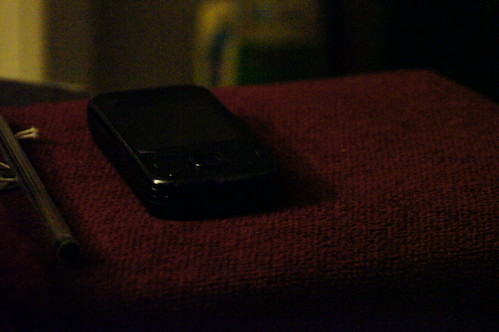
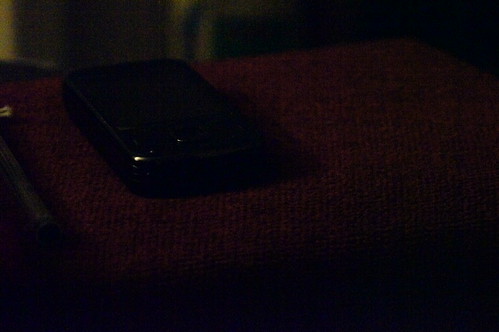
Now I've seen the original light levels it isn't so good with the multi shot NR... unscientific handheld test of junk on the sofa arm:

This is the most correct looking - iso 1600

5343786662_a60a1574ba.jpg


At iso 12,800 (1/40th shutter speed) :

5343176449_b64d58eb68.jpg


Same image with the 25,600 multi shot mode recorded as 1/80:

5343786152_c993433afa.jpg
 
Back
Top