

You are using an out of date browser. It may not display this or other websites correctly.
You should upgrade or use an alternative browser.
You should upgrade or use an alternative browser.
Still not getting CPL
- Thread starter ukpbz
- Start date

TCR4x4
Wishes he had a couple more Inches
- Messages
- 8,852
- Name
- Tom
- Edit My Images
- Yes
Depends on what you are shooting.
If you want to cut reflections, then twist it until the reflections are gone.
If you want to make a blue sky bluer,twist it til it's more blue.
It's not really any more complicated than that. You can dial in as much effect as you want, there is no right setting.
If you want to cut reflections, then twist it until the reflections are gone.
If you want to make a blue sky bluer,twist it til it's more blue.
It's not really any more complicated than that. You can dial in as much effect as you want, there is no right setting.


- Messages
- 422
- Name
- Damien
- Edit My Images
- Yes
What brand is it? i know some of the cheapo fong kong ones are really bad you dont really notice a difference. Always best to stick to a known brand.
This is the kind of difference to expect with regards to blue sky/clouds.

(from here: http://www.allensphotoblog.com/blog1/2006/11/circular_polarizer_filter.html)
(from here: http://www.allensphotoblog.com/blog1/2006/11/circular_polarizer_filter.html)

- Messages
- 8,995
- Name
- Bazza
- Edit My Images
- No
http://www.photoanswers.co.uk/Video...niques/Removing-reflections-with-a-poloriser/
Check out this link and click on picture of him for video demo
Realspeed
Check out this link and click on picture of him for video demo
Realspeed
Last edited:

- Messages
- 23,200
- Name
- Richard
- Edit My Images
- No
Ahhhhh
Thast the problem. Apart from this week I don't think I have seen that combination
Polarising filters only work with polarised light, in particular, blue skies and reflections. They won't work on an overcast sky, because the atmosphere has effectively de-polarised the light.
With blue skies, the easiest way is just to rotate the filter and watch what happens to the sky, though depending where the camera is pointing varies the effect.
If you're shooting into the light for example, you'll probably get nothing as the angle of maximum polarisation if 90 degrees to the sun. Check it like this: form a 'gun' with your forefinger and thumb, at right angles. Point at the sun, and rotate your hand around the axis of the forefinger. Your thumb will scribe an arc in the sky which is the band of maximum polarisation, so you can tell from this that if you're shooting towards the sun, that arc will be above and behind you.
With reflections, the optimum angle is 30-40 degrees to the surface (Brewster's Angle) with the filter rotated accordingly.

- Messages
- 3,696
- Name
- Frank
- Edit My Images
- Yes
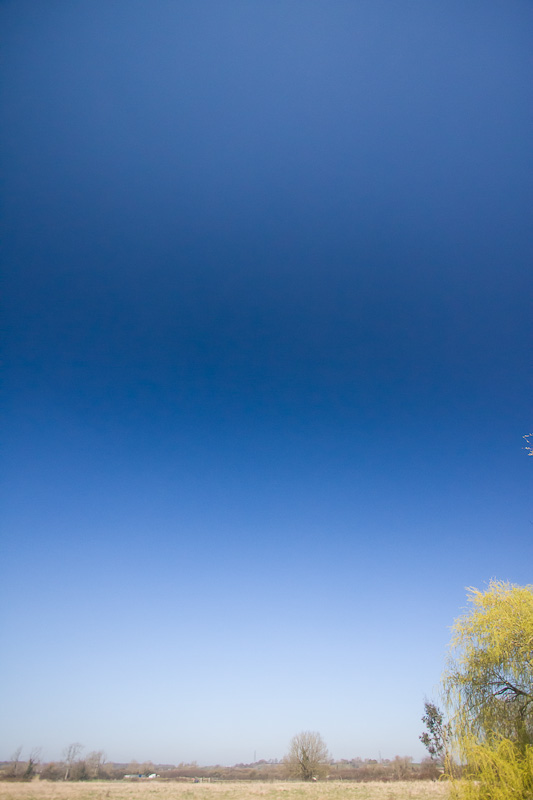
If you're shooting into the light for example, you'll probably get nothing as the angle of maximum polarisation if 90 degrees to the sun. Check it like this: form a 'gun' with your forefinger and thumb, at right angles. Point at the sun, and rotate your hand around the axis of the forefinger. Your thumb will scribe an arc in the sky which is the band of maximum polarisation, so you can tell from this that if you're shooting towards the sun, that arc will be above and behind you.
Like this....

- Messages
- 690
- Name
- Craig
- Edit My Images
- Yes
ukpbz said:I will give it another try.
I had really bad results with my 24-105. It never seemed to focus but having more luck with other lens. Will keep you posted
Thanks
You do have a circular polarizer and not a linear?
On a blue sky day you should be seeing quite a difference and it should be focusing as normal, try back to sun and turn around slowly while twisting it and you will see it work as your angle to the sun changes as well...
- Messages
- 2,217
- Name
- Brian
- Edit My Images
- No
I know Craig knows what he means here, but just to be clear - both a circular and linear polariser will give the same effect in the end image, however some cameras have autofocus and/or exposure systems that can be confused with some settings on a linear polariser. Hence the question about focussing!You do have a circular polarizer and not a linear?
- Messages
- 690
- Name
- Craig
- Edit My Images
- Yes
My own personal issue with polariZers is not spelling it polariser always a pet hate of mine, but for some reason this word always gets the American treatment from me
always a pet hate of mine, but for some reason this word always gets the American treatment from me SnappyHappy said:You do have a circular polarizer and not a linear?
On a blue sky day you should be seeing quite a difference and it should be focusing as normal, try back to sun and turn around slowly while twisting it and you will see it work as your angle to the sun changes as well...
Ahhhh I am pretty sure it's CPL. Will check when in. TBH never heard of linear

- Messages
- 3,209
- Edit My Images
- Yes
i have very similar setup as you: 5D2 with 24-105mm + Hoya HD CPL.
what brand is it? good and bad brands make a large difference.
make sure you keep twisting it. when it gets dark it's probably when the effect is highest. you also have to be 90 degrees to the sun for maximum blue sky. to remove glare/reflections, look at the reflections and twist until it's reduced.
if you are still struggling, point it at a computer screen and twist, at one point the computer screen should be completely black. if not, your filter is very bad quality, i'm afraid.