

Strong ND filter recommendations

Messages
601
Name
Richard
Edit My Images
Yes
Im after a fairly severe (9 or 10 stop or so) ND filter for long exposure shots in daytime and wondering the best way to go about it.

The main issue is the lenses i want to use have different diameters but i dont want to have to buy 2 filters if at all possible. Can anyone suggest a filter holder system that would allow me to use both lenses with 1 filter?
(I guess for long exposures simply holding the thing in front of the lens is going to seriously degrade quality?)
 
What's your biggest lens filter diameter? Just get a 10 stopper at that diameter and use a step down ring to fit the smaller lens, e.g. if your lenses are 77mm and 67mm, buy a 77mm ND filter and a 77mm to 67mm step down ring, they're only a few pounds.
 
I think the screw on ones are the best to stop light leakage, i use a B+W, i waited 2 months for delivery, i don't know how long the Lee big stopper takes.
 
Are there any colour cast or other issues with the Light Craft filter?

Ive looked at the Big Stopper and others but can't find anywhere at all in the UK with stock of them. Im going away for 6+ months in 3 weeks time so a lead time measured in months is no good to me at all.

A 10 stop would be ideal but would make do with the 8.5 if it didn't produce a colour cast or have other problems purely as id be able to get hold of one.
 
I got the Light Craft and have used it for a little while. Not noticed any real colour cast, but is a bit annoying to screw it in. Overal am happy. You can buy it on their website - about £43 (us$73) and free postage; which is pretty much what I paid for it in Hong Kong when I bought it directly from the company.
 
Last edited:
If a 10 (or high value ND) stop ND filter doesn't produce a warm cast, then it's not neutral - something to do with Infra Red light and camera sensors inability to deal with the amount of IR light that hits it during a long exposure.
If the 'out of the camera' image taken with a high stop filter has no cast, then the filter is not a neutral density - certainly Lee don't market the Big Stopper as a ND, they sell it as a 'Long Exposure Filter'.
 
I just dropped my B&W 110 onto a pebble beach :'(:'(:'(:'(

There's a new one on order for tomorrow, but I may buy the Lightcraft filter as well and return it if there is a colour cast. The B&W does slightly warm the image, but I think it looks good.
 
Are there any colour cast or other issues with the Light Craft filter?

Ive looked at the Big Stopper and others but can't find anywhere at all in the UK with stock of them. Im going away for 6+ months in 3 weeks time so a lead time measured in months is no good to me at all.

A 10 stop would be ideal but would make do with the 8.5 if it didn't produce a colour cast or have other problems purely as id be able to get hold of one.

The Light Craft ND500 is the most neutral I've tried. It's very fractionally bluish, similar to the Lee Big Stopper, but you'll probably only notice it if you do comparsion shots with and without the filter.

The B+W is the least neutral, distinctly warm/orangy/copperish but some folks like it. Either way it's not too much of a problem which you can correct in post processing or with a custom white balance. Shoot a test frame for WB and keep it on your memory card so you can reference it any time without messing about in the field. Or store it in custom memory if your camera has that feature.

Some manufacturers blame IR interference with their dark ND filters for colour casts, but that's 95% techno-bollx. You only have to look through them at a light to see they're not neutral.

NB The Lee BS seems to be on back order everywhere. Half of the US is waiting for them too.
 
I'm not really sure what part of Infra red wavelengths is "tecno-bollx.", they are pretty much science fact. Heliopan, Hoya and B+W all produce ND filters that are designed to offer a neutral result in the visible light spectrum which is what we see. Unfortunately camera sensors are also sensitive to light in the infrared spectrum, so the extended exposures a 9 or 10 stop filter give compound the problem of the colour cast. Basically the ND filter is blocking the visible light and emphasising the Infrared which may also be why they look warm when you look through them at a light.

I certainly don't believe that any of these brands would be able to get away with offering a product that was not what it said on the tin, an ND filter - as I mentioned in an earlier post, Lee get around this by referring to their Big Stopper as a Long Exposure Filter.

Either way, as HoppyUK says it is relatively easy to correct out any colour cast using various WB methods. Both Heliopan and B+W also recommend using their relative IR blocking filters in conjunction with strong ND filters to remedy this problem which I suppose is nice business if you can get it.
 
I'm not really sure what part of Infra red wavelengths is "tecno-bollx.", they are pretty much science fact. Heliopan, Hoya and B+W all produce ND filters that are designed to offer a neutral result in the visible light spectrum which is what we see. Unfortunately camera sensors are also sensitive to light in the infrared spectrum, so the extended exposures a 9 or 10 stop filter give compound the problem of the colour cast. Basically the ND filter is blocking the visible light and emphasising the Infrared which may also be why they look warm when you look through them at a light.

I certainly don't believe that any of these brands would be able to get away with offering a product that was not what it said on the tin, an ND filter - as I mentioned in an earlier post, Lee get around this by referring to their Big Stopper as a Long Exposure Filter.

Either way, as HoppyUK says it is relatively easy to correct out any colour cast using various WB methods. Both Heliopan and B+W also recommend using their relative IR blocking filters in conjunction with strong ND filters to remedy this problem which I suppose is nice business if you can get it.

The "techno-bollx" is when manufacturers try to use this IR business as an excuse for the simple fact that their filters are not even neutral in the visible spectrum. It is a popular theory put about by sales people ;) If they were visibly neutral in the first place, and still caused colour casts, then the theory would have some credibility, but the truth is that when you fit an ND filter on a modern DSLR that 'looks' neutral, then it also delivers neutral images.
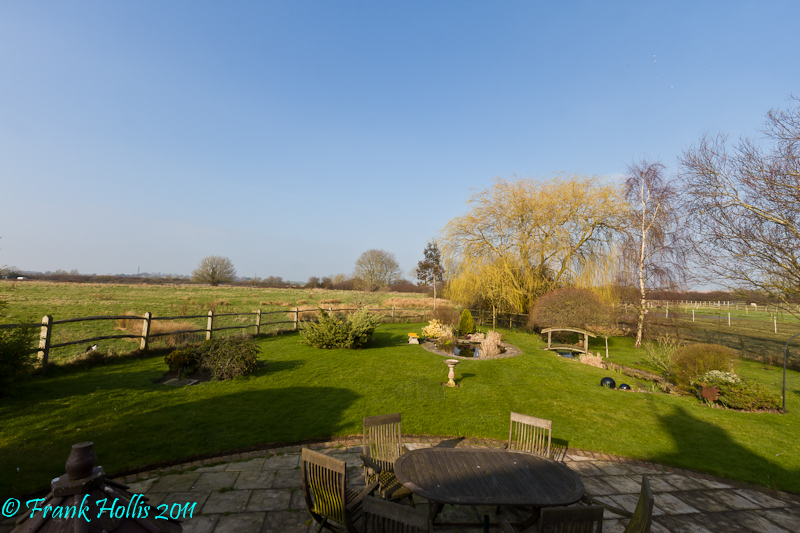
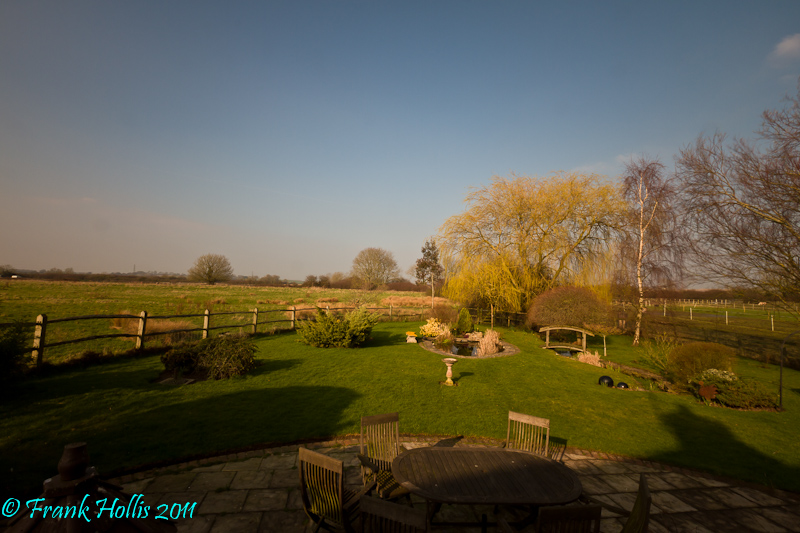
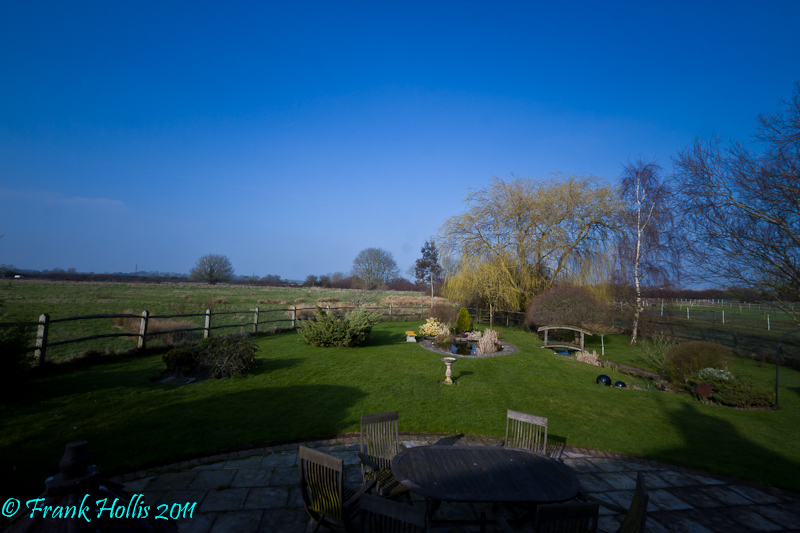
Technically, you might well find that filters like the Lee Big Stopper and LightCraft ND500 have some variation in their spectral response, but overall they're pretty good and they certainly work well pictorially.

The theory only has any bearing at all with older cameras whose integral IR filters over the sensor are either a bit weak or not a very sharp cut. In that case, it is possible for a bit of semi-IR to squeeze through. But that doesn't happen these days, and even when it did the IR contribution was arguably a lot less significant than the lack of neutrality in the visible range.
 
Last edited:
Hmmmm, my Lightcraft ND500 has just arrived - and it certainly isn't neutral. Unlike the B+W 110 10-stop ND, which gave a distinct warming effect, the Lightcraft is very chilly.

This is the original -

ND%20Test-1.jpg


And this is the B+W 6-stop (as my 110 is broken)

ND%20Test-2.jpg


And this is the LCW ND500

ND%20Test-3.jpg


I think I'm gonna have to send the LCW back as I prefer the warming of the B+W.

Actually, thinking about it, I'm gonna have to start using a grey-scale target whichever I decide to use. So I might just stick with the LCW.
 
Last edited:
Am i right in assuming these casts can be fixed easily with RAW editor or if not manual white balance? In which case, they dont overly worry me.

This is totally true. I was just showing that the claims for the LCW filter to have no colour problems wasn't true.
 
Back
Top