Taking Down The (seed) Feeders.

Dale.

Bo Derek
Messages
13,832
Name
Dale.
Edit My Images
Yes
I read just over a week ago, that the RSPB are advising people to remove seed feeders from thier gardens, as we are now in the months that tricominosis is now coming to it's most dangerous phase, through the summer months. It affects mostly finches, hence one of it's pseudonyms, 'fat finch disease' but can affect other birds too. It is mostly fatal to infected birds.

I generally have feeders out all year round, mainly seeds, (sunflower hearts, nyger) and peanuts too. I also use suet and fatballs, now and again.

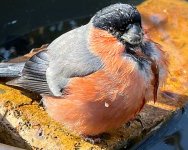
I was in the hide today, watching for signs of 'tricho' and sure enough, a female Siskin I saw is very puffed up, a sure sign.

The decision has been made for me, the seed feeders are now down and soaking in disenfectant but for the first time, I will be withdrawing them altogether over the summer months. It's a shame, as up to now, I've always had a healthy population of finches, even Greenfinches and Redpolls. I carried on feeding year round, thinking it was a good thing.

The advice seems to say ( I stand to be corrected ) that it is seed feeders that are the main concern, especially ones that have a flat, tray type fitting. Also, the ground beneath, where dropped seeds accumulate can also harbour the disease. Finches are the main seed eaters and by withdrawing seed as a feed, it can reduce the risk and spread.

Suet, fatballs and mealworms can still be used during this time but conservatively.

One of the things that concerns me though is that for this to really work, all seed feeders will have to be withdrawn. I have neighbours who feed seed, some might listen to the advice, others probably wouldn't.

Anyway, for now, my seed feeders are down, according to the advice, I'm doing the right thing, so we'll see. Time will tell if the advice rings true.
 
Last edited:
I haven't fed birds for a long time, actually because various neighbours cut down trees and shrubs and the former safe flight lines into my garden weren't there any more, so the birds stopped coming before the major decline in numbers. My neighbour feeds a seed/flake/suet pellet mix in a tray on her path to the few sparrows we have left, wood pigeons and collared doves and rather a lot of corvids. I hope she heeds advice and stops but for a professed animal lover she has remarkably little sense. I'll be happy to be wrong about her this time though.
We used to have a lot of chaffinches in the village, now there are none. The greenfinches, however seem to be making a comeback this year, so far at least. They do all seem to be in the field hedges and trees, which is probably a much better place for them.
 
We are taking ours down as well, will miss the goldfinch coming for their seed though.

Have not checked but are bird baths ok?
 
is this area specific ??? I have just filled my three feeders up :(

I would imagine it is nationwide, sadly.

It's advice though, but I'm erring on the side of caution. (y)


We are taking ours down as well, will miss the goldfinch coming for their seed though.

Have not checked but are bird baths ok?

Changing water daily should cover bird baths.

I'll put this here, covers more than I can, it's what I first read. (y)
 
Last edited:
Everyone seems to be missing the point... It is 'dirty' feeders that cause the problem. The solution is to keep feeders and water containers clean!

More birds die of starvation, than disease and with the general decline in insect numbers, our birds need all the help we can give them!

The only reason the RSPB made the warning, was because people leave dirty feeders up, which can cause the problem. I watched the TV interview with the RSPB and at no point did they say, "do not feed the birds". However, it was widely mis-reported in the press and on TV.
 
Everyone seems to be missing the point... It is 'dirty' feeders that cause the problem. The solution is to keep feeders and water containers clean!

More birds die of starvation, than disease and with the general decline in insect numbers, our birds need all the help we can give them!

The only reason the RSPB made the warning, was because people leave dirty feeders up, which can cause the problem. I watched the TV interview with the RSPB and at no point did they say, "do not feed the birds". However, it was widely mis-reported in the press and on TV.
Report I saw on telly pointed out if a clean seed feeder is put up in the morning and an infected bird lands on it then any birds feeding after that will pick up the infection.
IIRC the report did say will pick up, rather than could, as the disease is highly infectious
 
We stopped putting out suet balls as they attracted rats from the fields, which peanuts also do but we can place them where rats can't get to (even the clever ones). We have been feeding seeds but will probably stop now. The birdbaths are frequently pressure washed before filling. All the more reason to bring natural food sources into the garden with plants that they can feed off, I guess, and which attract insects.
 
  • Like
Reactions: nog
I’ve removed mine, even though I regularly clean them.
Visited two nature reserves recently (not RSPB) who have also removed them for the summer.

I do hope this improves things for the finches etc.
 
All the more reason to bring natural food sources into the garden with plants that they can feed off, I guess, and which attract insects.

This............. :plus1:

Initially, my rewilding project wasn't really anything to do with the taking down of feeders but now, it may have been good timing. I am going to introduce some native trees over the next weeks to attract more, naturally occuring foods. I am also going to plant some sunflower seeds and plant them out when they are ready, I believe it is still ok to do this, whch will provide naturally occuring sunflower hearts in a couple of months, whilst my feeders are off limits.

I'm going to look into teasels as well, I've had a 'problem' one in my lawn for a few years which fortunately, I haven't dug out, I've just mown over it every week. This year, I may leave it grow and see what comes of it. Also fortunately, it is in one of the rewilding sections of garden. I've also started recycling our grass cuttings, partly because I grudge £50 a year to get our garden waste bin lifted, every 4 weeks, over the summer. My grudge is we're already paying close to £2k council tax........but that's another story for elsewhere.

My mower ( a Toro Recycler ) has the ability to mulch cuttings rather than collecting them ....... rather than just dump the cuttings on the lawn, the mower cuts them very finely. I've been doing this for 2 weeks now and have noticed an increase in garden birds foraging on the cut areas of grass.

I think the key for now is to try and replace, or at least try to mitigate taking down the seed feeders with natural alternatives.
 
Report I saw on telly pointed out if a clean seed feeder is put up in the morning and an infected bird lands on it then any birds feeding after that will pick up the infection.
IIRC the report did say will pick up, rather than could, as the disease is highly infectious

In which case, you might as well cut down every tree in existence, as they are just as likely to pick up the disease from 'anything' they land on!
 
IMG_4009a.jpg
 
In which case, you might as well cut down every tree in existence, as they are just as likely to pick up the disease from 'anything' they land on!
Interesting idea, the problem with bird feeders is their popularity with birds, lots of birds on the feeder means lots of infections.
The RSPB have been looking into the declining bird numbers for a while and this is what they have come up with to try and stop the spread of disease. It's the bird version of covid masks/2metre rule:)
We can't carry on without trying anything, can we?
 
The RSPB advice on their website includes:

May to 31 October​

  • Pause filling your bird feeders with seeds or peanuts.
  • You can continue to offer small amounts of mealworms, fatballs or suet.
 
Yeah, stopped filling mine, probably best to take them down and give them a good clean before autumn.
 
We've taken down the seed feeders and put up some fatal ones; I didn't notice it was peanuts as well. the truble is the woodpeckers adore peanuts and it would be a shame not to see them.
 
That's my feeders been down for getting on for 2 weeks now. I'm amazed by how quickly the birds have deserted our garden, I'm rarely seeing any finch type birds now, still getting house sparrows and the occasional blue tit but that's it. It's a little sad, I'm used to and almost take for granted a wide variety of bird species in our garden but maybe this goes some way to proving the point (if it were needed) that removing the feeders is effectively stopping finches mixing in close contact on feeders (30 odd at at ime at our feeders wasn't uncommon), lessening the spread of disease.


Must say though, I am looking forward to putting my feeders back up but not until October. It will be interesting to see what finch numbers are like then.
 
Back
Top