


- Messages
- 61
- Name
- Andreas
- Edit My Images
- No
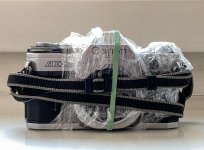
In a recent article on camera testers, the question arose as to whether such devices are absolutely necessary for checking the functionality of an electromechanical SLR.
The answer is yes, if you want the most accurate results. For camera repairers, this is a prerequisite for adjusting an SLR.
But if you are buying a used SLR to take pictures with, you don't need a camera tester and should only check a few things once you have the SLR in your hands.
Here are a few recommendations in no particular order and not completely.
Anyone who would like to add to the list is welcome to do so. If I think of anything else, I will add it in the comments.
- Trust your instincts when it comes to whether an SLR makes a trustworthy impression. The same applies to the seller. There should always be a right of return so that the SLR can be tried out.
- You should take the time to read the user manual and try out all the functions.
- An SLR with severe dents or cracks in the housing has been exposed to strong forces. This can result in internal parts being damaged or misaligned.
- Dust and dirt on the outside say little about what it looks like on the inside. The bodies are usually sufficiently sealed, but they do not provide protection against moisture or the ingress of liquids. The exception to this are top models with extra seals, which do not make an SLR waterproof, however, such as a current smartphone.
- All controls should be easy to operate. Some switches, such as the main switch and the self-timer switch on the Nikon F3, can become stiff from disuse. Dirt can also cause this. As long as the switch can be operated without any problems, this is acceptable.
- All indicators in the viewfinder and on the displays must be complete. When setting the aperture and shutter speed, there should be no flickering, which indicates contact problems.
- The shutter can be observed in operation on many electromechanical SLRs when the back door is open. To do this, set the camera to manual (M) mode and hold it without a lens in front of a bright surface. Now trigger the individual shutter speeds and look through the shutter from behind. The amount of light that the shutter allows through towards shorter shutter speeds should decrease evenly. Even at the shortest shutter speeds, some light should still be visible. It is best to trigger the shutter several times in succession and check that it opens evenly.
- With newer SLRs, you often have to hold down a small switch manually for the SLR to release when the back door is open. This switch is usually located on the top of the SLR under the back door. It's best to ask about this here in the forum.
- The mirror should be undamaged and not sitting crookedly in the mirror box. A little dust is normal.
- The focusing screen can be checked by looking through the viewfinder. Dirt that is clearly visible is on the outside and can be removed. If it is blurred, it is on the inside and may only be removed after disassembling the SLR. Except for interchangeable focusing screens.
- The battery compartment must be free of blue-turquoise battery electrolyte leakage. The substance attacks metal and can spread inside the SLR via the battery contacts and wires. I would not buy such SLRs, as they are difficult to clean or repair.
- Lenses on the SLR must be able to form all set apertures without delay. At the largest aperture, the aperture blades should not be visible when looking into the lens from the front. Some zoom lenses are excluded.
- Oil on the aperture blades of a lens is an indication that the grease on the helicoids has liquefied. Such lenses require regular cleaning of the aperture blades or a complete service with relubrication.
- Shutter curtains and blades should be free of damage. Repair is costly or impossible.
- Many electronic problems can be traced back to contact difficulties, which can be remedied. However, this almost always requires the SLR to be disassembled.
- The rails on which the film slides during transport and the film pressure plate on the back door must be clean and free of scratches that could damage the film.
- The shutter speeds can be checked using smartphone apps. However, this is not a very accurate method. It does not allow the important curtains-travel times to be measured. These are the times that the two shutter curtains need to run. The times should be identical to avoid uneven film exposure. A camera tester is required for measurement.
- The electronics of an SLR are adjusted with the housing open. This requires special knowledge and instructions. Fortunately, these settings are very consistent and rarely need to be changed.
- Light seals and mirror shock absorbers made of foam are often rotten and sticky. Be careful if the mirror shock absorber under the focusing screen is already disintegrating. The sticky parts can get onto the shutter when releasing.
- If an SLR passes this superficial and quick test, a test film will show whether everything is working satisfactorily.
- As said, if problems arise, there should be a return option. For repairs, you should contact a repair shop or acquire DIY skills.
 A word of caution
Please keep in mind that you’ll be using highly flammable solvents for service work, and their fumes are harmful to your health. Soldering also produces fumes that should not be inhaled. Dangerous high voltages can be present when handling electronics, especially in conjunction with electronic flash units and mains. Therefore, familiarize yourself with the safety regulations beforehand and ensure your safety. Depending on the activity, protective gear may be advisable.
All information is provided without guarantee. Any action you take upon the information in this report is strictly at your own risk.
This report describes my personal experience and approach; it does not constitute a professional or certified repair instruction. I am not liable for any property damage or personal injury resulting from actions taken based on the information provided in this report.
Acknowledgments
Without the work of Master Larry Lyells, in particular, we wouldn’t have the detailed technical information we need today for service/repair of electromechanical SLRs.
The SPT Journal and The Camera Craftsman, which he helped shape significantly as an author, and which contain all the necessary information and instructions are available for a fee through Learn Camera Repair.
We owe our access to them to Eugene Pate, the founder of Learn Camera Repair.
As a Shodan in Jiu-Jitsu, I view camera repair as part of my Do, the Way. I am grateful to my revered Grandmaster, Erich Ebetshuber, 10th Dan in Jiu-Jitsu, for everything I have been privileged to learn from him.

