UV Filter

Messages
41
Edit My Images
No
Sorry - a very, very basic question from a 'newbie': I have just switched from a bridge camera to something more gorgeous and I have a UV (0) filter on my new camera and wondered whether this was the best choice as a 'leave on'? Also, if I'm taking general outdoor stuff, is it a good choice or should I be switching ... if so, to what?! All advice gratefully received!
 
Well it will help protect the front element from scratches and dust. So yes leave it on.

There are two schools of thought on this one, 1st is the leave it on on all occasions (which I personally subscribe to) and 2nd "Why risk compromising the picture quality of a lens by introducing another layer of glass"?

You pays your money and you takes your pic! as they say:lol:
 
take the filter off and hold it under a desklamp so you see the lightbulb reflected on the glass

if it's WHITE...........it's uncoated......throw it away

if it's GREEN like the Hoya HMC UV(0) ......it's coated and can be used to protect the lens

better is Hoya Pro-1 HMC UV(0) or Pro-1 MC Protector

i believe Hoya HD series are the best - just too expensive for me


having said that -- many, many here just use a lens hood....your choice
 
Last edited:
....................? Also, if I'm taking general outdoor stuff, is it a good choice or should I be switching ... if so, to what?!.......................!

invest in a good quality Digital Polarising filter.............:D
 
...and possibly a grad.

But if you buy a rainbow effect filter, I may have to kill you. :D
 
If there is an imminent danger of something damaging your lens, like sea spray for example, then use a high quality UV or Protector filter. Otherwise, use a lens hood for protection, which might also improve your pictures in some conditions. They also help prevent greasy finger marks which are the most common problem and they cause havoc with flare.

If the lens gets a bit dirty, then clean it. Blower brush to remove dust, then a microfibre cloth. A bit of breath and firm pressure with the cloth gets finger marks and rain spots off. Don't be frightened - lens coatings are pretty robust and meant to be cleaned.

The problem with all filters is that they induce flare and ghosting, particularly with bright lights against dark areas in the frame, like street lights and sunsets. Try it - shoot a sunset with and without the filter. You can't see the worst effect looking through the viewfinder, because it's a reflection off the sensor. You can in live view though - frame up that sunset in live view (or any bright light against a dark background) and watch the flare and ghosts move around :eek: You won't want to use a protection filter after that.
 
Last edited:
Photographers choice really. I'm of the opinion that - for protection purposes - unless you're actively taking photographs in a hostile location where you're going to have spray/sand violently whipping across the lens, then a lens hood is best. Use a lens cap when not using your gear, and clean the front element if/when it gets too dirty and all should be fine.

My mate that I go on regular trips with prefers to use a UV filter on all his lenses all of the time, sometimes at the expense of a lens hood, but it's his gear and his choice.

Damage from being dropped is different, I don't see how a thin flimsy filter will protect a lens from concussive damage when impacting on a hard surface, for that I have insurance - plus I try to be careful. :thumbs:
 
Thanks to all - have a lens hood on too! I'll leave the filter on then - spend many an hour among the Gormleys on the blustery Mersey so all your advice holds good. So grateful ...
 
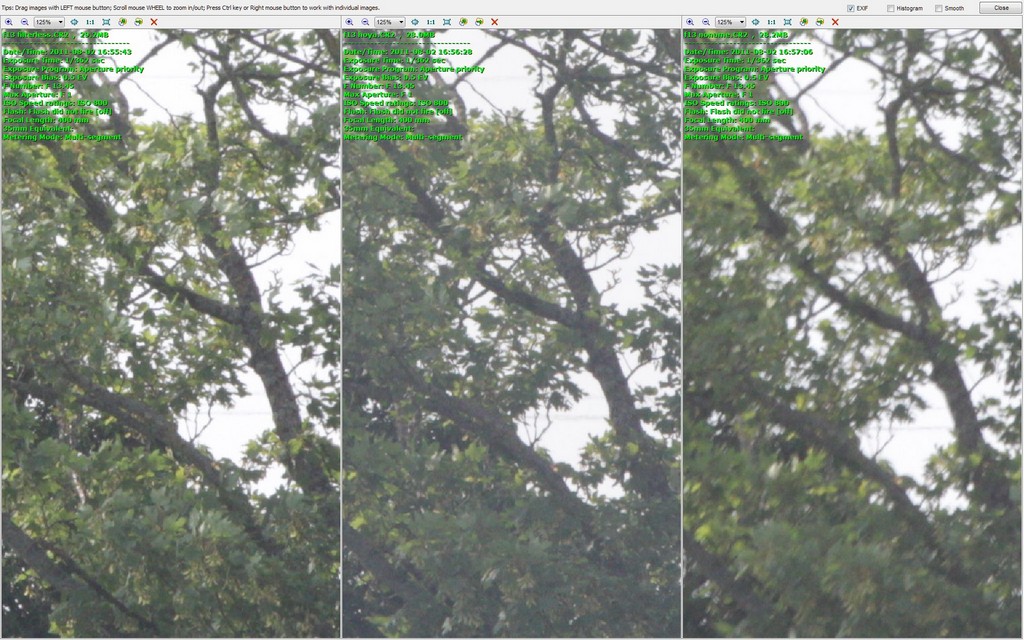
Crops from three shots of a distant tree, one filterless and the other two with 'protective' filters attached.

Filter%20Comparison%20100-400.jpg
 
Note the dramatically brighter ghost image of the lamp, the increased flare around the lamp itself, and also note that the whole image is fractionally lighter as the filter has induced veiling glare over the entire frame.

And the Hoya Pro1-D is one of the highest quality filters you can get - you have to pay quite a lot of money to get this amount of image degradation :eek: :D

No filter
IMG_0424.jpg


With Hoya Pro1-D UV
IMG_0425.jpg
 
did not know that even a good filter can have such detrimental results.

It's because most of the time they don't make any noticeable difference, and when they do, nobody ever takes pictures with and without and compares the two.

Plus the fact that the guy in the shop said they don't make any difference, and he possibly had a couple of pictures demonstrating that they don't affect sharpness - which they very rarely do, even though most people think that's the main problem.

The sales guy will also have failed to mention how much profit they make on accessories like this ;)

In addition to the common flare/ghosting issues, we get lots of 'problem' pictures on here, sometimes showing strange background/bokeh effects with longer lenses, that are hard to pin down. But take the filter off, and they magically go away.
 
Quite surprising to see this side by side, just realised I've been using my HOYA UV filter on my kit lens (that I don't tend to use) and the Jessops (uncoated) filter on my 35mm f/1.8 that has been a good lens for me since I started with my DSLR.

Think I'll take a few test shots and pending results put the uncoated filter back in my bag.
 
I stick to a lens hood.. unless dealing with salt spray (beach) or flying grit/dust (e.g. speedway).
 
As above. I always use a lens hood, and usually add a filter if I'm shooting in challenging conditions. Must say, I haven't always followed this rule and I haven't had any problems when I leave it off, and I am a bit sceptical about the value of a filter if the front element of the lens gets a real smack from something. This is just a personal choice, and there a lot of threads arguing the pros and cons of this. My camera and lenses aren't weather sealed, so that's not a factor for me.

FWIW, UV filters were developed for film. They don't serve any purpose as UV filters per se on a digital camera, and you can use a plain glass filter for physical protection too.
 
That's brilliant, thanks; didn't know that about uv film/digital thang - really interesting stuff!
 
Back
Top