

You are using an out of date browser. It may not display this or other websites correctly.
You should upgrade or use an alternative browser.
You should upgrade or use an alternative browser.
what filter is the best for blue skies?
- Thread starter Matt L
- Start date


- Messages
- 4,240
- Edit My Images
- No
The polariser can help to produce stronger colours/more contrast but needs to be used correctly. Maximum effect is at 90 degrees to the sun, if the sun is directly infront/behind you the polariser won't do anything significant.
It will also struggle during the peak hours of the day when the sky appears more white than blue, due to the intensity of the sun
nice little article here with more info..
http://www.ephotozine.com/article/Polarisers--a-guide-to-using-polarizing-filters-4757
Simon
It will also struggle during the peak hours of the day when the sky appears more white than blue, due to the intensity of the sun
nice little article here with more info..
http://www.ephotozine.com/article/Polarisers--a-guide-to-using-polarizing-filters-4757
Simon


- Messages
- 6,776
- Name
- Andy Drake
- Edit My Images
- Yes

quick shot (through a window) which wont help but this is probably one of the better skies that i get as there is atleast a bit of blue
Try not shooting into the sun for a start.
You'd struggle with any filter, although a 3 stop ND Grad would help.
A C-Pol won't as the sun needs to be behind you.
Shoot with your back to the sun, not into it.
OP

- Messages
- 852
- Name
- Matt
- Edit My Images
- Yes
Also a CPL can cause banding in the sky if used on a wide angle lens, when it's used properly though the blue can be very deep.
stupid question what does cpl stand for?

- Messages
- 15,780
- Name
- Rich
- Edit My Images
- Yes
Don't worry it will soon be summer and you won't have to worry about blue skies

Chaz Photos
Jack Elam
- Messages
- 6,283
- Name
- Chaz
- Edit My Images
- Yes
To use a polarizer you need the sun at 90deg to your lens with very wide angle lens you will have a fall off of effect to edges as view goes out of the 90deg angle to the sun
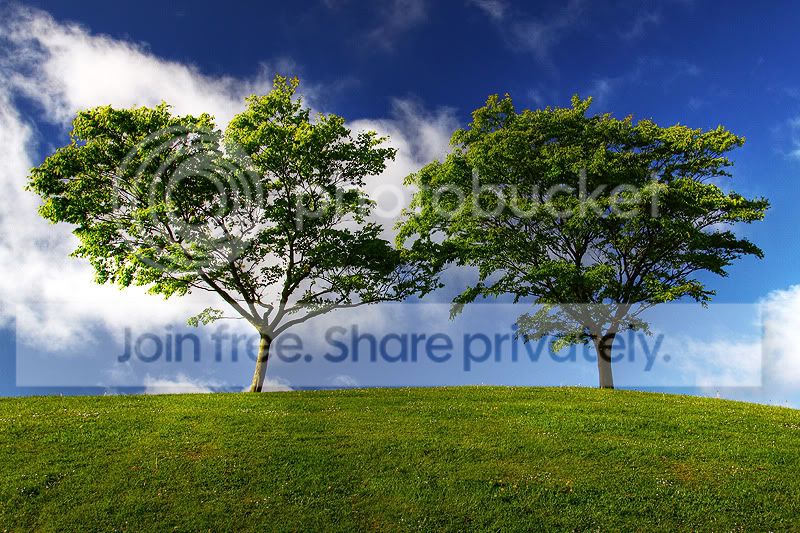
I have used one here

I have used one here

- Messages
- 12,531
- Name
- Jeremy Moore
- Edit My Images
- No
A C-Pol won't as the sun needs to be behind you.
Puddleduck! How could you?
A polariser works best at 90 degrees to the angle of the sun.
Chaz Photos
Jack Elam
- Messages
- 6,283
- Name
- Chaz
- Edit My Images
- Yes
Love the blue Chaz
Yes and with the yellow its look hot
I had one judge complain as one petal was soft on focus ??? Hard to get depth at this close.


- Messages
- 3,751
- Name
- urrrm.... Matt
- Edit My Images
- Yes
have a read about dynamic range on digital cameras
that should explain why you think your skies are all bleached out
then have a look exposure bracketing which should be a setting on your camera
then you can look in to HDR or gradient filters
that should explain why you think your skies are all bleached out
then have a look exposure bracketing which should be a setting on your camera
then you can look in to HDR or gradient filters

- Messages
- 3,156
- Name
- Simon Everett
- Edit My Images
- Yes
Seems ot be a bit of misunderstanding about polarisation here.
Polariser works best with the light at 30 degrees to the lens. That doesn't have to be from behind, but it can be at any 30 degree (or more) angle...up, down, sideways AND from in front. The amount of polaristion can be controlled by the rotation of the grid ( a polariser is basically a diffraction grating) in lowest common denominator terms.
It will also work well in fog, as it cuts down on the amount of light lost through the water vapour that fog is.....so even bland skies which look pale grey/white with cloud can be rescued a great deal with a polariser, because it cuts through the haze....at a cost to EV of course. A heavily polarised scene might lose 4 stops of light. For the newcomers, that means your shutter speed for a given aperture will reduce from 1/1000th to 1/60th. If you only have a 1/125th to start with, 4 stops loss will mean you have to make do with 1/8th and so on...or you can gain a bit of shutter speed by giving up some aperture......but you have 4 stops less light hitting the film plane.
An ND grad can also rescue a blue sly by reducing the amount of light hitting the film plane from that sector of the picture covered by the reducing filter..an ND filter is a light reducer, nothing else, a grad ND is still a light reducer, just it only works on part of the scene - that bit which is covered.
hard grads have a sharp line between the reduction bit and clear. Soft grads have a more gradual meeting point. Generally for landscapes a hard grad is better, because you can line it up with the horizon between the dark land and the light sky....bringing the two closer together in terms of exposure vlaue. It won't just make blue slies go bluer, but sunrise/sets will also be more saturated, or storm clouds or all sorts of things where you have a large difference between a bright area and a darker one.
That is probably enough to take in at one go.
Polariser works best with the light at 30 degrees to the lens. That doesn't have to be from behind, but it can be at any 30 degree (or more) angle...up, down, sideways AND from in front. The amount of polaristion can be controlled by the rotation of the grid ( a polariser is basically a diffraction grating) in lowest common denominator terms.
It will also work well in fog, as it cuts down on the amount of light lost through the water vapour that fog is.....so even bland skies which look pale grey/white with cloud can be rescued a great deal with a polariser, because it cuts through the haze....at a cost to EV of course. A heavily polarised scene might lose 4 stops of light. For the newcomers, that means your shutter speed for a given aperture will reduce from 1/1000th to 1/60th. If you only have a 1/125th to start with, 4 stops loss will mean you have to make do with 1/8th and so on...or you can gain a bit of shutter speed by giving up some aperture......but you have 4 stops less light hitting the film plane.
An ND grad can also rescue a blue sly by reducing the amount of light hitting the film plane from that sector of the picture covered by the reducing filter..an ND filter is a light reducer, nothing else, a grad ND is still a light reducer, just it only works on part of the scene - that bit which is covered.
hard grads have a sharp line between the reduction bit and clear. Soft grads have a more gradual meeting point. Generally for landscapes a hard grad is better, because you can line it up with the horizon between the dark land and the light sky....bringing the two closer together in terms of exposure vlaue. It won't just make blue slies go bluer, but sunrise/sets will also be more saturated, or storm clouds or all sorts of things where you have a large difference between a bright area and a darker one.
That is probably enough to take in at one go.

- Messages
- 5,450
- Name
- April 2008
- Edit My Images
- No
It will also work well in fog
And can be used to cut down reflection on water so that you can 'see through' to reveal rock detail on the bottom of a river for instance.
