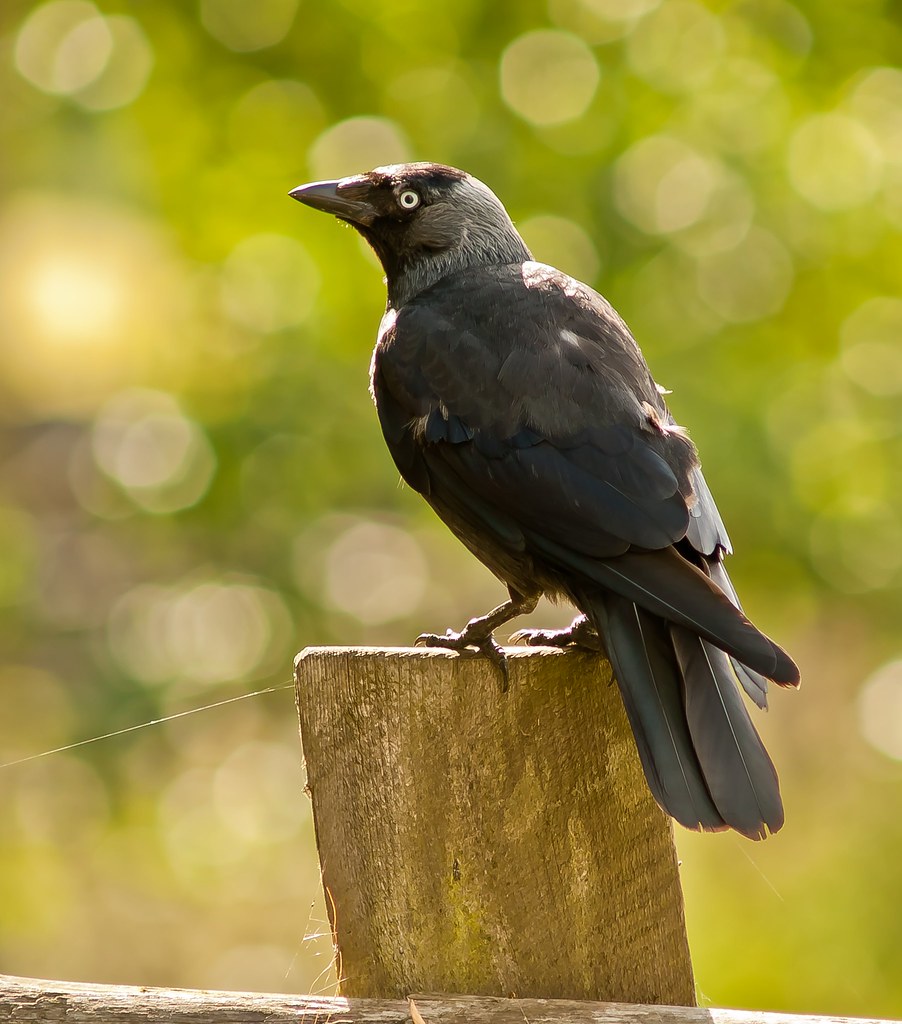
What to do about swirly bokeh

Messages
1,194
Name
Rucel (but call me Rusty)
Edit My Images
Yes
Hey, everyone.

I've found that my Sony 50mm 1.8 (and my 75-300mm, although more mildly) have a tendency towards swirly bokeh. Is this good? Is there a way to make it go away?

Thanks in advance for your help! TP is such a good place to ask questions! ;)
 
Not sure what you mean by "swirly"...... can you post some examples?
 
Hey, everyone.

I've found that my Sony 50mm 1.8 (and my 75-300mm, although more mildly) have a tendency towards swirly bokeh. Is this good? Is there a way to make it go away?

Thanks in advance for your help! TP is such a good place to ask questions! ;)

Every lens has its own characteristics - swirly/smooth/doughnut bokeh being a few. Does it happen wide open though, or when you close down a couple of stops?
With the longer zoom, I would have thought it possible to get a nice creamy bokeh, wide open at long zoom/short distance shots.
 
For the most part it's when it's wide open. It's not real noticeable, but I notice it. I'll see if it goes away if I stop it down. Thanks, guys! :clap:
 
Ok, here are some samples that I took a couple days ago. First one was taken at f1.8; the second at f2.5. Maybe I'm just dreaming? :help:

DSC06274.JPG


DSC06275.JPG
 
I think as Andy700 said, the type of Bokeh depends on the lens.

For instance, the Canon f1.8 MKII can make lights in the background look "angular" and not rounded which I believe is due to the number of blades that make up the aperture.

The more blades the smoother the bokeh and then you have the optical characteristics of the glass itself.

Apart from stopping down (which then defeats the object of a fast lens) the "swirlyness" is down to the lens rather than anything you're doing or not doing.
 
Yep. If it bothers you, the only real answer is to stop down, use it open where it won't notice so much (plainer backgrounds without much detail) or use a different lens.
 
Can't are anything wrong with the posted images?
 
Ok, thanks for the reassurances, everyone! I know there are more obvious instances but the mild form in mine annoy me a little. Guess I'll just have to live with it and learn to enjoy it and use it to its best advantage.
 
I think as Andy700 said, the type of Bokeh depends on the lens.

For instance, the Canon f1.8 MKII can make lights in the background look "angular" and not rounded which I believe is due to the number of blades that make up the aperture.

The more blades the smoother the bokeh and then you have the optical characteristics of the glass itself.

Apart from stopping down (which then defeats the object of a fast lens) the "swirlyness" is down to the lens rather than anything you're doing or not doing.

Agreed about the number of blades but I believe the shape makes a difference as well.
 
For the most part it's when it's wide open. It's not real noticeable, but I notice it. I'll see if it goes away if I stop it down. Thanks, guys! :clap:

It will go away completely if you stop the lens down, because everything will become sharper over a greater DoF.
Looking at some of my own images, I think that lighting and background influence bokeh, and of course camera to subject difference.
Try using your 75 - 300 lens wide open (f5.6 at a guess) to take a portrait (head and shoulders) shot of a person. Choose an uncluttered background, preferably around the same colour and shade. Your shot should have nice sharp eyes, but everything else should gradually go soft, and the background should be one colour with no pattern to it.
Another experiment could involve shooting a subject with the sun in the background, maybe shielded by trees (you do not want the camera lens pointing in to the sun though), again wide open.

Backlit bokeh

5871614785_69b5cd71c4_b.jpg


Creamy bokeh

5957808442_85532c6f68_b.jpg
 
Back
Top