Which would you choose

Messages
2,390
Name
Nick
Edit My Images
Yes
Afternoon all!

Struggling at the minute to decide whether I have a "need" for my Sigma 30mm f1.4 lens.

My main use for it is portraits, where shooting at f1.4 produces fantastic background blur.
However I can create just as much, if not more background blur when using my 55-250 telephoto lens - and I have the option of standing further away

I still cant quite understand why shooting with a telephoto creates so much background blur - if anyone is willing to help me understand it would be massively appreciated!

So my question really is this...

You have a photoshoot coming up. You have a choice of the following 3 lenses:

Sigma 30mm F1.4
Canon 50mm F1.8
Canon 55-250mm F4.5-5.6 IS

You have an enormous park with which you can use as much or as little of it as you like. You can stand as near or as far from the subject (a female model) as you like.
You want a head and shoulders type portrait shot.
You want her to "pop" out of the photo, ie loads of background blur.

Which lens would you use, and why?

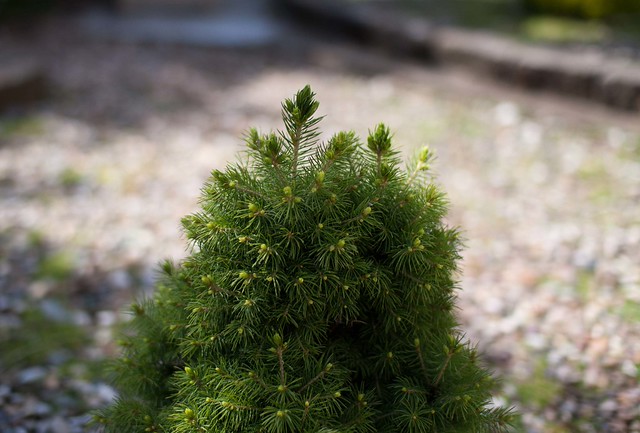
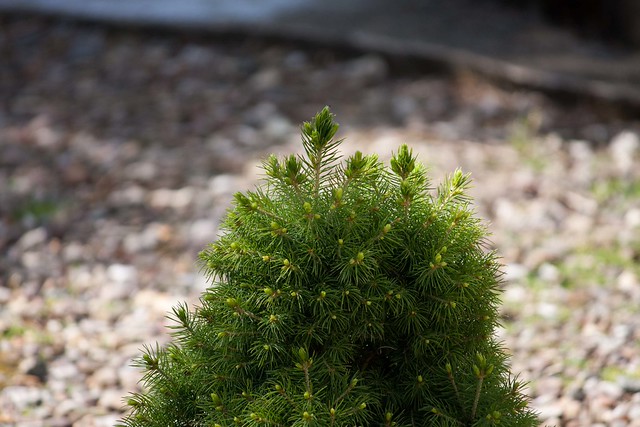
Playing about this afternoon I put my theory into practise... and although it isnt a female model, I have been practising with a blue haired troll...

Ive tried my best to frame these identically to get as similar results as possible to demonstrate why I am confused!

1st shot = Canon 50mm @ f1.8
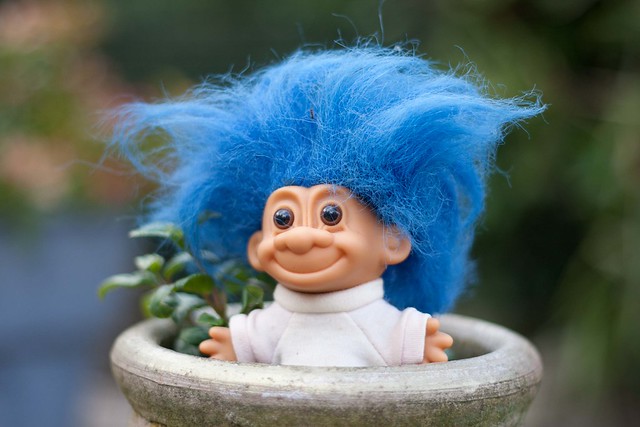
IMG_7391 by futureal33, on Flickr

2nd shot = Canon 55-250mm @ 250mm zoom & f5.6
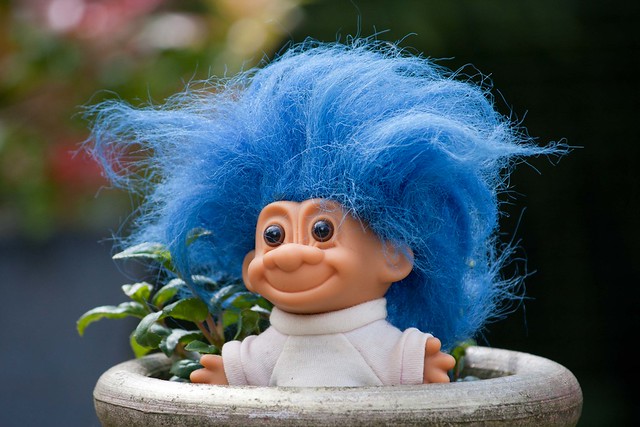
IMG_7404 by futureal33, on Flickr

Now to my eyes they produce near enough the same result?! Albeit that the angle is slightly different due to me moving a bit!

So the question... if you were trying to produce a model photograph that "popped" like the above example, which lens would you use?

Cheers for any help! Really cant get my head around this atm :(
 
Now to my eyes they produce near enough the same result?! Albeit that the angle is slightly different due to me moving a bit!
Err.... nope.
Take a look at the leaves and cup the gonk is sitting in. In the first, the green leaves and back of the cup are already out of focus as the DoF is so narrow. On the 50-250, the whole cup/leaves are in focus as the DoF is not so narrow.
 
Again... to me these both look nigh on identical?

Why the heck does a telephoto produce so much blur?

Totally dont get it!
Nope again. You're looking in the wrong place.

The 30mm has the back of the tree blurred, with the tele it's all sharp. You will be able to "pop" the eyes from the rest of the face with the fixed lenses. You can always stop down to keep the whole body in focus, but you won't be able to do that with the tele.

Also the 30mm has the background even more blurred....
 
Nope again. You're looking in the wrong place.

The 30mm has the back of the tree blurred, with the tele it's all sharp. You will be able to "pop" the eyes from the rest of the face with the fixed lenses. You can always stop down to keep the whole body in focus, but you won't be able to do that with the tele.

Also the 30mm has the background even more blurred....

Oops didnt see your first reply, apologies!

Hmm I see what you mean... but it is very marginal
Id say that with the 30mm @f1.6 the focus area is narrower, but only just

For the purpose of doing a portrait, which lens would you use? Looking at what you mention, im thinking that maybe the 30mm @f1.6 might be too narrow and the back of the models head might be OOF? Therefore my options would be to stop down a few notches... or use telelphoto...no?
 
Hmm I see what you mean... but it is very marginal
Id say that with the 30mm @f1.6 the focus area is narrower, but only just
If you did it with a deeper object, you'd notice it more. Personally, I think there's a huge difference with the troll and the cup..

For the purpose of doing a portrait, which lens would you use? Looking at what you mention, im thinking that maybe the 30mm @f1.6 might be too narrow and the back of the models head might be OOF?
Depends what look you're trying to get. Some people like the dreamy effect just having a few inches of depth in focus gives. That's why people pay silly money for f/1.2 lenses. If you're doing shots where you want everything apart from the distance in focus, you stop down and a fast lens isn't so important...
 
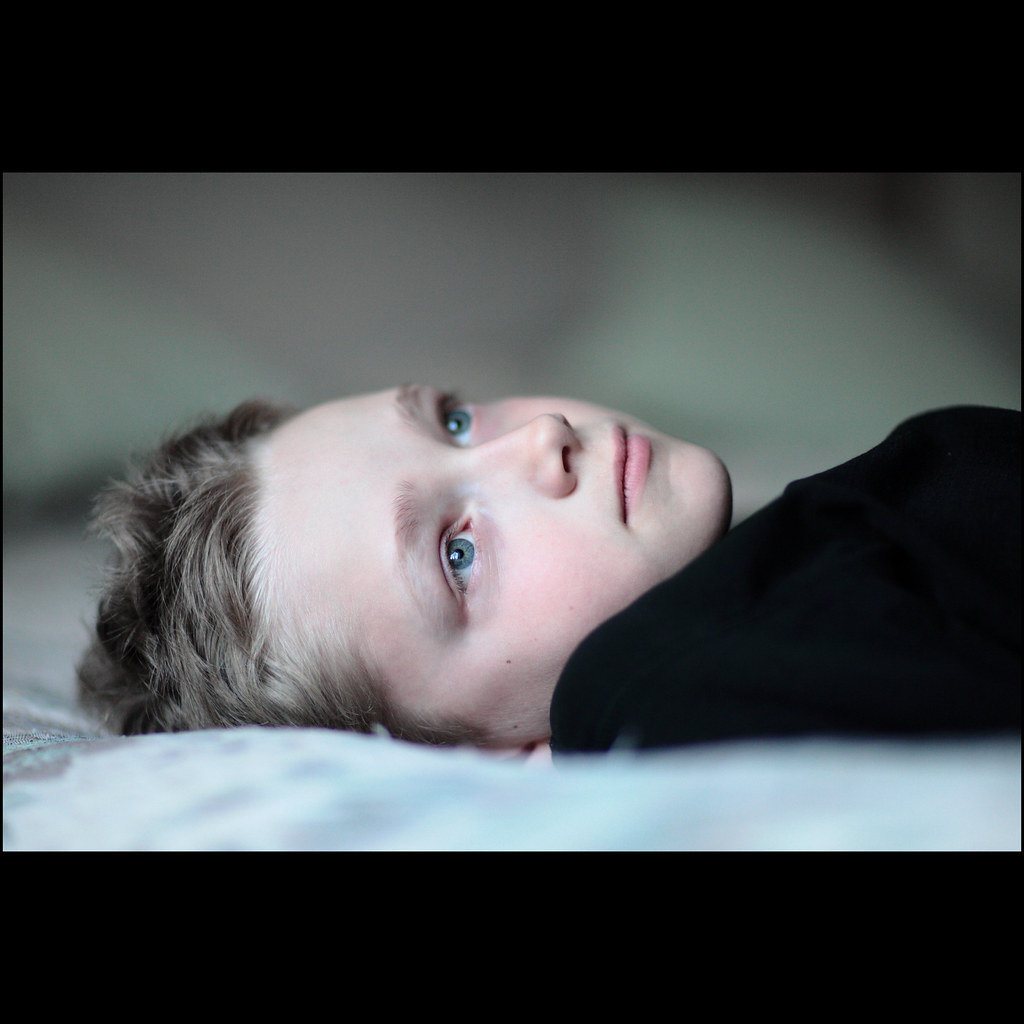
This is an example of where you'd use DoF in a portrait (look at the eyes)

5503143966_1df991f086_b.jpg


Not mine BTW.

Have a look here for different depth of fields: http://dofmaster.com/dofjs.html
 
Longer lenses make background out of focus elements in the shot look bigger and therefore make them more obvious whereas a wider lens will make things look smaller in the frame and small things look sharper.

After reading much on this subject and doing my own comparative shots I believe that focal length does not affect DoF but just presents out of focus objects in a different way making them more obvious and creating the effect of less DoF.

So, if you want the image to look like it's got shallow DoF choose a long lens, get closer to the subject and make the subject relatively large in the frame. Background elements should then be more obvious and more clearly out of focus.

The only problem with the lenses listed is that the long lens has a relatively small aperture. I can't do the maths so I can't say for certain but I suspect that the 50mm f1.8 would appear to give the least DoF. Use a 150/200mm f2.8 and I think that the situation would be reversed and that the longer lens would appear to give the least DoF, more so as magnification increases. But remember that all this is an illusion, as DoF itself is, and that if the shot is framed the same the focal length doesn't change the DoF, it just looks different and in the case of a longer lens the DoF looks shallower if the aperture is the same or maybe even with a smaller aperture.
 
Last edited:
This is an example of where you'd use DoF in a portrait (look at the eyes)

5503143966_1df991f086_b.jpg


Not mine BTW.

Have a look here for different depth of fields: http://dofmaster.com/dofjs.html

Great example, thank you. So would I be right in saying a lens such as the Sigma 30mm 1.4 would be ideal for re-creating that type of shot (the one you linked above)
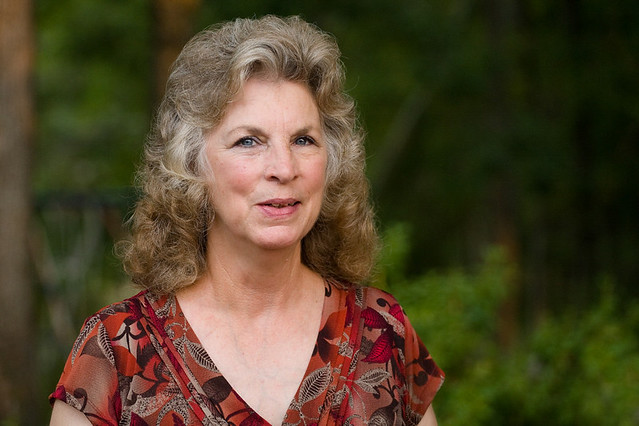
Whereas the type of shot below would be re-created best with a telephoto lens

p294132508-4 by futureal33, on Flickr
 
Great example, thank you. So would I be right in saying a lens such as the Sigma 30mm 1.4 would be ideal for re-creating that type of shot (the one you linked above)
Whereas the type of shot below would be re-created best with a telephoto lens
Yes, I think so...
 
Longer lenses make background out of focus elements in the shot look bigger and therefore make them more obvious whereas a wider lens will make things look smaller in the frame and small things look sharper.

After reading much on this subject and doing my own comparative shots I believe that focal length does not affect DoF but just presents out of focus objects in a different way making them more obvious and creating the effect of less DoF.

So, if you want the image to look like it's got shallow DoF choose a long lens, get closer to the subject and make the subject relatively large in the frame. Background elements should then be more obvious and more clearly out of focus.

The only problem with the lenses listed is that the long lens has a relatively small aperture. I can't do the maths so I can't say for certain but I suspect that the 50mm f1.8 would appear to give the least DoF. Use a 150/200mm f2.8 and I think that the situation would be reversed and that the longer lens would appear to give the least DoF, more so as magnification increases. But remember that all this is an illusion, as DoF itself is, and that if the shot is framed the same the focal length doesn't change the DoF, it just looks different and in the case of a longer lens the DoF looks shallower if the aperture is the same or maybe even with a smaller aperture.

Jesus ive read that 10 times now and Im still struggling lol. I think I just about get it though, thank you :)
Basically....

Long lens, subject filling most of the frame = very OOF background and subject in focus (all of subject, not just a pin-point section of the subject)
Background blur characteristics: soft blur, mashed potato style

Short lens, subject filling around half the frame, blurry background but still enough clarity to define what the background is, it will just be blurry/soft.
Background blur characteristics: hard OOF, structure/shape will still be intact it will just appear soft

Correct?
 
The OOFness is dependent on how far away the background is from your subject. If you use a telephoto and the background is 1ft behind the person, it will not be OOF. If you used a 50mm at 1.8, it probably would be. It's about relative distance to the subject vs distance to the background together with the aperture being used.

Play with the DoF calculator I posted a link to and you'll see the effect of distance, lens and aperture...
 
The thing to hang on to is that the longer lens will make background stuff in the frame look bigger and therefore more out of focus.

If you framed the shot the same with a wider lens the DoF would be exactly the same but the spacial relationship between foreground and background things would look different, background stuff would look further away, and it'd look like you had more DoF but if you zoomed in on your computer screen you'd see that things were just as out of focus.

I think that it's easier with digital than with film to prove this to yourself and then you can try and understand and prove to yourself the effect of different sensor sizes on DoF.
 
Last edited:
Yeah my current way of understanding it is that a telephoto/long zoom lens makes the emphasis between near and far seem greater than it is (3D esque) hence will make things "pop" out of the blurred background

Whereas a shorter lens will generally keep the relativity of near/far more accurate but will have a much narrower DOF making getting things in focus at f1.4 difficult
 
Sorry I've not read it all because I'm lazy, but... I wouldn't want to be shooting head and shoulders portraits with a 30mm lens, you'll have to get right up in the subjects face. For outdoor portraiture I'd want to shoot with a long lens and stand back. As for getting a blurry background it's all a matter of DOF which is a product of three factors - focal length, aperture and distance from the subject.

Looking at your test shots the 50 f1.8 can deliver a shallower DOF than the 55-250 (which is to be expected). I think I'd go with the 50 f1.8 unless you can get your hands on a longer fast(ish lens). Below are a couple shots taken with longer fast lenses.

5568556923_663811d4cf_o.jpg


4979727231_a987b9238a_o.jpg
 
Last edited:
Lovely pictures, thank you.
Do you have any portraits done with that lens, head and shoulders style?

Just taken this with my 50mm 1.8, it "pops" out nicely, thanks for the tip. I'll be taking my 55-250 and 50mm 1.8 along with me :)
Although I cant afford an 85mm 1.2L, would the 85mm f1.8 perform in the same fashion - that it emphasises the distance between near and far, popping subject out?


IMG_7469 by futureal33, on Flickr
 
Man with many lenses! Lucky guy :

Thanks for posting, the 1.2 does have a certain something about it that you cant help but like, but like you say the 1.8 isnt exactly shabby either!!

Thanks again :)

I don't have both now, but had the 1.8 before 'upgrading' to the f1.2... I do have too many lenses (well so my wife tells me), but hey it's fun to have toys to play with!
 
I wouldn't want to be shooting head and shoulders portraits with a 30mm lens, you'll have to get right up in the subjects face. For outdoor portraiture I'd want to shoot with a long lens and stand back. As for getting a blurry background it's all a matter of DOF which is a product of three factors - focal length, aperture and distance from the subject.
[/IMG]

No, if the shot is framed the same DoF isn't affected by focal length and you'll get the same DoF at 20mm that you get at 400mm. There are lots of good explanations of this on the net and you can carry out your own tests to prove it to yourself.
 
No, if the shot is framed the same DoF isn't affected by focal length and you'll get the same DoF at 20mm that you get at 400mm. There are lots of good explanations of this on the net and you can carry out your own tests to prove it to yourself.

I think "head and shoulders" defines the framing quite precisely - and that is definitely not suitable for any short lens. If we were talking about an environmental portrait where the subject was placed a long distance away - this would be OK, but that would be a totally different shot that we are not talking about.
 
No, if the shot is framed the same DoF isn't affected by focal length and you'll get the same DoF at 20mm that you get at 400mm. There are lots of good explanations of this on the net and you can carry out your own tests to prove it to yourself.

It is still true to say that DOF is a product of the three factors - if you fix the focal length and the aperture then the DOF varies depending on distance to the subject. With a fixed distance and focal length DOF is dependant on aperture. If aperture and distance are fixed then the DOF is effected by the focal length.
 
I think "head and shoulders" defines the framing quite precisely - and that is definitely not suitable for any short lens. If we were talking about an environmental portrait where the subject was placed a long distance away - this would be OK, but that would be a totally different shot that we are not talking about.

err... Fine, but what you wrote is nothing to do with what I wrote and what you quoted :thinking: and doesn't alter anything about DoF :thinking:

The framing, as you define it, will lead to identical DoF no matter what the focal length, focal length doesn't alter DoF if the shot is framed the same. Check it out.
 
It is still true to say that DOF is a product of the three factors - if you fix the focal length and the aperture then the DOF varies depending on distance to the subject. With a fixed distance and focal length DOF is dependant on aperture. If aperture and distance are fixed then the DOF is effected by the focal length.

But what you'll be taking is a completely different picture.

The original question related to a head and shoulders shot with different lenses. I assume therefore that the framing will be the same and if it is then the DoF is the same. If you want to change the shot to one taken at a fixed position with different lenses then you change the size of the image in the frame and if you do that you'll get a different result.

Remember that there really is no DoF. Only one distance is in focus but we perceive that some things in front of and behind what is in focus are also in focus. The size of the image affects this so if you take a shot with a 300mm lens from 30 feet the subject will be large in the frame and any out of focus areas will be easy to see. Take the same shot with a 12mm lens and the subject will be smaller and will appear to have a lot of DoF but it's not the same picture, make it the same picture and things are more equal.

Here's an example of 17mm and 50mm taken from the same position. Equalise the size of the images and see what happens. The softness in the 17mm image is due to the extreme enlargement of what is these days quite a low res image taken with a 20D, also I suppose all will be mangled slightly by photobucket.

Combo-DoF-1.jpg


Combo-DoF-2.jpg


With things like this what is real probably doesn't matter, what matters is what we perceive and what works for us in the field. In reality focal length may / may not really alter DoF but if we perceive that it does and if believing that it does works for us then that's just fine. The way I work is to believe that I can get the same DoF with different lenses but I also know that the final image will look different because of the way that each focal length presents the various elements within the image.
 
All I was trying to do was to show that two lenses or in that case one zoom set at it's two extremes, 17 and 50mm, the same aperture, could from the same position take pictures which would look very different but in reality have the same DoF.
 
Back
Top