Wildlife - how much -EV do you use on sunny days?

Messages
3,744
Name
Keith
Edit My Images
Yes
I know there's a lot of factors to consider here, I doubt people keep the same exposure compensation for a brown cow that they would use for a white seagull.

And of course the sky conditions may dictate, or whether the sun is bouncing off of the back of an animal or the wings of a bird etc.

Does the size of the sensor make a difference or are the exposure compensations basically set to reflect each particular camera?

I use a Panasonic G9 and on sunny days I tend to stick with a full stop -1 EV. I tend to find it's safe for most sunny day shoots with the sun at my back and then lift things in post to suit my eye. I do go as low as -2 on some white/bright subjects, on bright days.

Occasionally I will adjust it if the sun goes behind a cloud or if it gets particularly bright so I can move it either way if the conditions change but a full stop -1 EV is my go to, with flying birds and running animals at 2000 shutter speed knocking it back accordingly if it's static images and it's not a windy day.

Interested to know if people think I'm on the right track and what they do.
 
Last edited:
I tend to use highlight weighted metering and let the camera change the ISO. It tends to be at least -1 stop and often over compensates. But my camera is essentially ISO invariant so it doesn't matter much. And it's not perfect; nothing is.
 
I mostly keep everything on matrix metering 99% of the time. And on occasion for a given subject dial in some compensation, but normally no more than 2/3 of a stop. I find my cameras do an excellent job and I often prefer the 0 compensated shot more.
 
I use a pair of Panasonic G9s and just leave the computer to sort out the exposure. It's probably a lot more accurate than I would be!

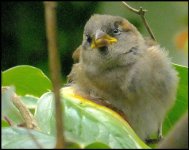
Small brown bird through window FZ82 P1010324.jpg
 
For seagulls I often go down to -2.7EV. I judge it by eye and experience with my particular camera. Other people use the histogram. For other shots I will tend to underexpose to be on the safe side. -1 EV sounds reasonable to me. -2 would be unusual.
I've recently upgraded from an Olympus EM1 to the OM1 and I'm having to retrain myself because the viewfinder behaves differently.
 
It all sounds very complicated to me. It doesn't have to be. I will always have my blinkies on to warn me if my exposure is going to blow the highlights, and adjust accordingly. You've got loads of latitude, and so you can raise the shadows afterwards.
 
The only time I use any plus compensation is on birds in a bright sky . But that’s only if I’m in av mode if in m mode I let the camera handle it
 
There’s no ‘settings’ for a subject.

It’s always about how much light, what’s your subject and where’s your subject.
In exactly the same amount of light, your little white bird can be against a very bright background or a very dark one.
Your meter will make a set of assumptions, and you can use your experience to override those assumptions or not. That’s what learning photography is.

If you keep trying to believe that photography is about ‘settings’, you’re destined to a future of constant disappointment.
 
These days, I have accepted my limitations and generally only take bird shots for ID purposes and they are usually at a significant distance, of dark birds' undersides against fairly bright sky, so it's more likely to be + a stop or 2. Even spot metering is likely to include too much sky and will confuse the meter - and footzoom is NOT an option!
 
There’s no ‘settings’ for a subject.

It’s always about how much light, what’s your subject and where’s your subject.
In exactly the same amount of light, your little white bird can be against a very bright background or a very dark one.
Your meter will make a set of assumptions, and you can use your experience to override those assumptions or not. That’s what learning photography is.

If you keep trying to believe that photography is about ‘settings’, you’re destined to a future of constant disappointment.
Yes exactly, as I said at the start there's a lot of factors to consider here, amount of light, sun bouncing off the subject and conditions will often dictate.

I was just looking for some starter for 10s, if people had “go to” options and work around it from there.

Interesting comments on using different types of metering, something I've started to play with a bit more lately and now on the learning curve.
 
Back
Top