Zoo photos - how to not focus on the mesh/fencing?

Messages
530
Name
Gaz
Edit My Images
Yes
Hi all.

I am a beginner to photography, and learning :)

What are the best ways to minimise focusing on the fence, and achieving a good photo of the subject?

I have a D3100 now, and i really want to improve the photos i take, as i am a little disappointed with the ones i took today at a zoo, although i appreciate, it is all a learning curve.

Furthermore, what settings/modes do you guys tend to go for when utilising moving subjects, such as those seen at a zoo?

Many thanks :)
 
Get as close to the fence as you can and use the largest aperture ( smallest f number) you can,that will throw the fence out of focus.
I don't know Nikon cameras but on my Canon I use AI servo,focus using the back ( AF-On) button not the shutter button ,centre point focus and burst mode
 
Get as close to the fence as you can and use the largest aperture ( smallest f number) you can,that will throw the fence out of focus.
I don't know Nikon cameras but on my Canon I use AI servo,focus using the back ( AF-On) button not the shutter button ,centre point focus and burst mode

Hi Chris.

Thanks for your reply!

Thank you for the tips, probably should have asked them before i visited but there we go :lol:

They will come in handy for next time, so thank you very much for taking your time to reply.


Back button focusing isnt set up as standard on a D3100, to set it, see here, just so you arent trying to get it to work and wondering why it isnt.

http://youtu.be/gd2zk9FRjUE?hd=1

Hi Tom.

Thanks for your reply!

Thank you for the link too, i will have a look at that. Useful to know that about the D3100, so thanks for that!
 
A telephoto will do the trick too. I took this shot through a small wire fence with my telephoto at 200mm.

462528_10151445908260565_770195564_23964837_1739754616_o.jpg
 
I don't know what AF options there are on the D3100, but stick to single-point if it has that option- no dynamic-AF assist or anything like that, the mesh would confuse it otherwise.
 
The first tip and one that applies to most photography is take your time. Step back, visualise the shot that you want to get and figure out the possible ways of getting that shot.

I have gone to the zoo and not fired a single shot because either the animal is not doing what i want, standing where i want or the light is not how i would like.

Other tips for captive animals.
- walk around the whole enclosure, check for glass viewing panels and the best angles for backgrounds.
- get as close to the fencing as possible (as already noted).
- get to know the animal behaviour, stand & survey, lets be honest it's not going anywhere is it! Knowing that a big cat likes a certain tree means you can anticipate a shot better.
- take note of feeding times, keeper talks and get there 15 mins early. Most animals are habitual and will know when its feeding time. They will start to appear before the keeper (and crowds) arrive giving you time to fire off some shots.

And finally the probably the best tip of all - GET LUCKY!!! Sometimes being in the right place at the right time is all you need.
 
Hi all.

Just wanted to say thanks very much again for the tips and advice, much appreciated! Really helpful forum is this.
 
The first tip and one that applies to most photography is take your time. Step back, visualise the shot that you want to get and figure out the possible ways of getting that shot.

I have gone to the zoo and not fired a single shot because either the animal is not doing what i want, standing where i want or the light is not how i would like.

Other tips for captive animals.
- walk around the whole enclosure, check for glass viewing panels and the best angles for backgrounds.
- get as close to the fencing as possible (as already noted).
- get to know the animal behaviour, stand & survey, lets be honest it's not going anywhere is it! Knowing that a big cat likes a certain tree means you can anticipate a shot better.
- take note of feeding times, keeper talks and get there 15 mins early. Most animals are habitual and will know when its feeding time. They will start to appear before the keeper (and crowds) arrive giving you time to fire off some shots.

And finally the probably the best tip of all - GET LUCKY!!! Sometimes being in the right place at the right time is all you need.

Sorry to butt into your thread, but just wanted to say after reading these tips I decided we're off to Chester Zoo tomorrow! Thanks
 
just to add as an aside - go to dartmoor zoo - no mesh :thumbs: (they've got a lot of ditch/moat type barriered enclosures)
 
Poochops said:
Sorry to butt into your thread, but just wanted to say after reading these tips I decided we're off to Chester Zoo tomorrow! Thanks

Good good. I hope to see some shots in the photo section.
 
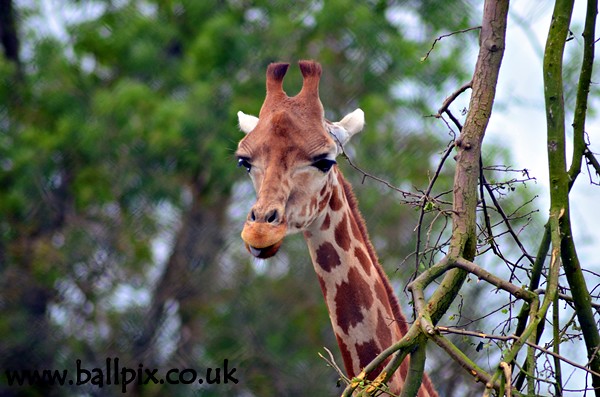
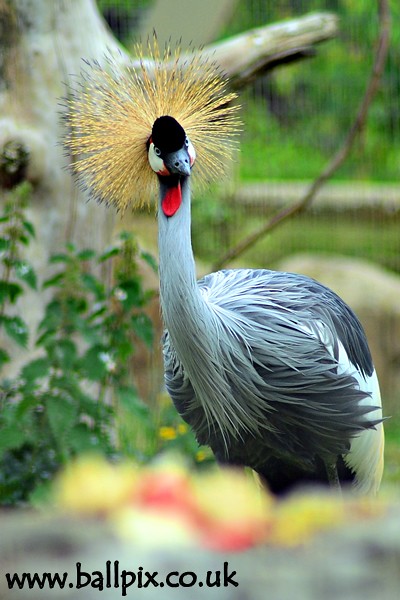
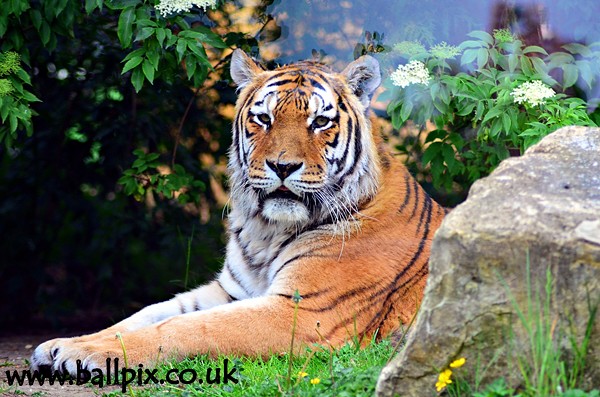
Here are a few of mine through the fence, although it sometimes helps to throw it out of focus it can give a weird bokeh effect.
1. Large chain link fence

FlamingoDSC_1221-007 by Ballpix Photography, on Flickr
2. Steel fence small holes

FlamingoDSC_1246-013 by Ballpix Photography, on Flickr
3. Through the glass.

FlamingoDSC_1370-033 by Ballpix Photography, on Flickr

Practise is the key here, large aperture really helps and what you see on your rear screen is magnified on your monitor.

As for moving subjects, depends on if you want to show the movement or freeze it.

Phil.
 
Some great pictures there Phil!

If one were wanting to freeze the action, what sort of settings would you typically go for? Thanks again!
 
Thanks, a higher shutter speed will freeze the action, a lower one will 'see' movement (blur).
here is a link that should help you understand the basics shutter speed ;)

Phil.
 
Back
Top