Why are people buying electric cars?

  • Thread starter Thread starter Deleted member 68495
  • Start date Start date
I always thought it was weight and performance that influenced tyre prices, and many EVs have significant acceleration
 
Mrs Nod had to do all 4 corners recently and her usual supplier suggested that she bought the tyres through Black Circles but delivered to them for fitting. Saved her the thick end of £150. Still cost her £850 though. Goodyear Eagle Sport all season V rated, reinforced sidewalls.
 
An Ioniq5 is on my (very)shortlist for my next car.

I've averaged 18,000 miles / year in a 2019 Kuga, 2l tdci, 180awd, spending c£17,000 on diesel over the five and a half years I've had it. Tyres, servicing, a new sensor for the dpf (£350 fitted), and a repair to a keyed door was probably about another £6-8,000. It's on 120,000 miles now and will be changed early next year.

Since moving back to Yorkshire, annual mileage will be down to about 12-15,000 I expect and with solar panels and good overnight home charging rates, my maths suggests I can seriously reduce fuel costs. £25k for an 18 month old EV should pay for itself in a few years.

The Kuga is probably worth a couple of grand teade in, a little more selling private. So looking at the predicted mileage, I think diesel would cost about £3,000. At current overnight charging rates (not to mention free solar charging), and paying 5p per mile, plus occasional public charging, I expect to pay about £1,000. So a £2k per year saving makes an EV a better option as far as I can see.

Anything I'm missing out? I generally buy a car about 18months old and an Ioniq5/ Karoq 80/85 is around the £25k mark. Better long term running costs with an EV i hope.

 
Last edited:
An Ioniq5 is on my (very)shortlist for my next car.

I've averaged 18,000 miles / year in a 2019 Kuga, 2l tdci, 180awd, spending c£17,000 on diesel over the five and a half years I've had it. Tyres, servicing, a new sensor for the dpf (£350 fitted), and a repair to a keyed door was probably about another £6-8,000. It's on 120,000 miles now and will be changed early next year.

Since moving back to Yorkshire, annual mileage will be down to about 12-15,000 I expect and with solar panels and good overnight home charging rates, my maths suggests I can seriously reduce fuel costs. £25k for an 18 month old EV should pay for itself in a few years.

The Kuga is probably worth a couple of grand teade in, a little more selling private. So looking at the predicted mileage, I think diesel would cost about £3,000. At current overnight charging rates (not to mention free solar charging), and paying 5p per mile, plus occasional public charging, I expect to pay about £1,000. So a £2k per year saving makes an EV a better option as far as I can see.

Anything I'm missing out? I generally buy a car about 18months old and an Ioniq5/ Karoq 80/85 is around the £25k mark. Better long term running costs with an EV i hope.

As long as you are comfortable defrauding the taxpayer (thought I would get in before someone else did) :p

Insurance may be more. EVs (well Tesla) have had issues with parts meaning some cars are written off when they should be. Mine did jump up a bit (linked with a new 3 points), but has come down a bit since. Still a few hundred more than a normal car though.

Tyre wear likely to be more - think I got about 24k out of my rears (replaced the fronts too as one had a puncture than couldn't be fixed). Not sure how that compares to Kuga.

Not had anything done service wise in 3 years. Think you are out on the cost per mile. I just put this into google for my Tesla - obviously thats no public charging and if you do 12k it will be even less. Dont know if your choice is more efficient etc but could be cheaper! Even with 15k and public I cant see that going above 500 for the year? Getting an even lower tariff could see it below 2p per mile

At 15,000 miles a year charging exclusively on a 9p/kWh off-peak EV tariff, your annual electricity cost will be roughly £330 to £355.
This assumes you manage to complete 100% of your charging overnight during the off-peak window. It translates to an incredibly low running cost of just 2.2p to 2.4p per mile.
 
Tyre wear likely to be more - think I got about 24k out of my rears (replaced the fronts too as one had a puncture than couldn't be fixed). Not sure how that compares to Kuga.

For 'spirited' driving then 25-30k miles per set is normal depending on the tyre (Michelin's seem to go on forever, OTOH Goodyear eagle F1 only lasted 25k). Current Hankook original tyres on my BMW X1 have done 36k and are probably good for another 5-10k.

A friend who was an EV early adopter would always squeal the tyres on his Leaf when pulling out of the carpark, because he just got a kick from the acceleration. If that's a sensation you love then tyre wear will be higher than usual.
 
  • Like
Reactions: Nod
For 'spirited' driving then 25-30k miles per set is normal depending on the tyre (Michelin's seem to go on forever, OTOH Goodyear eagle F1 only lasted 25k). Current Hankook original tyres on my BMW X1 have done 36k and are probably good for another 5-10k.

A friend who was an EV early adopter would always squeal the tyres on his Leaf when pulling out of the carpark, because he just got a kick from the acceleration. If that's a sensation you love then tyre wear will be higher than usual.

I'm getting 15k max out of my tyres. :(
 
Worst for wear I ever bought were some Pirelli I had on an MR2 a couple of decades ago. Currently getting 30K plus on my Ford Focus diesel using the standard Goodyear's it came with.
 
My Honda S2000 gets a rear set every 5k miles and fronts every other change, Pilot sports from Michelin so not concerned, bought for grip rather than longevity, it is my toy though and this is expected.
 
Nope. A few of my mates do drifting. You can do a set of rear tyres in about half a dozen laps of Castle Combe.... That's got to be about 10 miles linear and less than 10 minutes.

Our son did drifting for a while too - he'd get used tyres from a local tyre fitter, and would get through quite a lot.
 
Are they a sports compound, rather than conventional road tyres?

Classed as ultra-high-performance; they do seem to be wearing a little better than the Eagle 6's I previously used, so I'm hoping for at least 20k miles this time. Permanent AWD doesn't help.

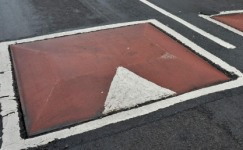
I have to go over a lot of those square type speed bumps and my last set of tyres had to be changed with 5mm still in the centre, but those damn speed bumps had worn the inner* sections down to 2mm (I don't wait until 1.6mm). Since putting a new set of tyres on I drive one side of the car fully over the centre of the bumps so they don't prematurely wear away at the edges. I have to slow right down and it probably annoys the driver behind, but at £200 a tyre they can just be patient.


1790093624251.png


* Correction
 
Last edited:
An Ioniq5 is on my (very)shortlist for my next car.

I've averaged 18,000 miles / year in a 2019 Kuga, 2l tdci, 180awd, spending c£17,000 on diesel over the five and a half years I've had it. Tyres, servicing, a new sensor for the dpf (£350 fitted), and a repair to a keyed door was probably about another £6-8,000. It's on 120,000 miles now and will be changed early next year.

Since moving back to Yorkshire, annual mileage will be down to about 12-15,000 I expect and with solar panels and good overnight home charging rates, my maths suggests I can seriously reduce fuel costs. £25k for an 18 month old EV should pay for itself in a few years.

The Kuga is probably worth a couple of grand teade in, a little more selling private. So looking at the predicted mileage, I think diesel would cost about £3,000. At current overnight charging rates (not to mention free solar charging), and paying 5p per mile, plus occasional public charging, I expect to pay about £1,000. So a £2k per year saving makes an EV a better option as far as I can see.

Anything I'm missing out? I generally buy a car about 18months old and an Ioniq5/ Karoq 80/85 is around the £25k mark. Better long term running costs with an EV i hope.

In an EV tariff you should/could be getting about 3.5p per mile depending obvsly on how you drive and what rate to get from your supplier. I'm changing from E-on to EDF just now, dropping from 7.5p per kwh to just under 6p and with an hour extra per night (7 hours at the low rate) Averaging 22k per year in thew work car the 7 hour time slot is just about enough to top the car up every work night.
 
In an EV tariff you should/could be getting about 3.5p per mile depending obvsly on how you drive and what rate to get from your supplier. I'm changing from E-on to EDF just now, dropping from 7.5p per kwh to just under 6p and with an hour extra per night (7 hours at the low rate) Averaging 22k per year in thew work car the 7 hour time slot is just about enough to top the car up every work night.
Thanks, I'm trying not to be too optimistic - about 4p/mile seems about the average cost but adding the government 3p onto it bumps it up. Pretty sure the government levy will increase as more people switch to EVs but I'll be happy to get in on the bottom rung of these charges.
 
I've read that both EV and PHEV pay-per-mile rates will rise with inflation from 2019. It's expected to make them £1.1 billion in 2028-29 and then £1.9 billion in 2030-31, presumably frmo a combination of predicted more EV uptake and of course inflationary increases.

However, I believe VED currently brings in ~£9.1 billion (which will presumably include some EV's and PHEVS), £24 billion from fuel duty and ~£6 billion in VAT from fuel. I'm sure a reasonable portion comes from heavy goods and plant (much of which now has to use DERV), and they won't be replaced by EV any time soon. That aside, I can envisage that if the scales tip heavily towards EV's, then when considering these numbers that the Government will start to lose, it's pretty obvious that they will have to hammer EV's hard and the easiest way will be the pay-per-mile scheme.

What I'm wondering is if the Government will cotton on to seeing an opportunity here to somewhat replicate how ICE are taxed. In general, cars with higher emissions pay more VED and as they are also usually less economical, then they will use more fuel and therefore pay more in fuel duty and fuel VAT. The more they travel, the more they pollute, but also the more they pay in taxes by using more fuel.

So, with EV's, the Government could move away from a single pay-per-mile charge (ppm) for EV's, and have ppm rate based on the weight of the EV on the theory that they will burn more rubber. Also, just like ICE, the more an EV drives the more it will pollute with its tyres and therefore the more it will pay via ppm, with some potentially at higher ppm rates, so a double bonus for the treasury.
 
I've read that both EV and PHEV pay-per-mile rates will rise with inflation from 2019. It's expected to make them £1.1 billion in 2028-29 and then £1.9 billion in 2030-31, presumably frmo a combination of predicted more EV uptake and of course inflationary increases.

However, I believe VED currently brings in ~£9.1 billion (which will presumably include some EV's and PHEVS), £24 billion from fuel duty and ~£6 billion in VAT from fuel. I'm sure a reasonable portion comes from heavy goods and plant (much of which now has to use DERV), and they won't be replaced by EV any time soon. That aside, I can envisage that if the scales tip heavily towards EV's, then when considering these numbers that the Government will start to lose, it's pretty obvious that they will have to hammer EV's hard and the easiest way will be the pay-per-mile scheme.

What I'm wondering is if the Government will cotton on to seeing an opportunity here to somewhat replicate how ICE are taxed. In general, cars with higher emissions pay more VED and as they are also usually less economical, then they will use more fuel and therefore pay more in fuel duty and fuel VAT. The more they travel, the more they pollute, but also the more they pay in taxes by using more fuel.

So, with EV's, the Government could move away from a single pay-per-mile charge (ppm) for EV's, and have ppm rate based on the weight of the EV on the theory that they will burn more rubber. Also, just like ICE, the more an EV drives the more it will pollute with its tyres and therefore the more it will pay via ppm, with some potentially at higher ppm rates, so a double bonus for the treasury.

Perfect - another stealth tax like the freezing of tax bands!!
 
Perfect - another stealth tax like the freezing of tax bands!!
I don't know why people call these tax rises "stealth taxes". They're as stealthy as a tribe of elephants strolling down the high street in the rush hour!
 
I don't know why people call these tax rises "stealth taxes". They're as stealthy as a tribe of elephants strolling down the high street in the rush hour!

Because a government will say we will not increase income tax yet do that - then they can claim not to have increased tax (when they have).
 
Classed as ultra-high-performance; they do seem to be wearing a little better than the Eagle 6's I previously used, so I'm hoping for at least 20k miles this time. Permanent AWD doesn't help.

I have to go over a lot of those square type speed bumps and my last set of tyres had to be changed with 5mm still in the centre, but those damn speed bumps had worn the outer sections down to 2mm (I don't wait until 1.6mm). Since putting a new set of tyres on I drive one side of the car fully over the centre of the bumps so they don't prematurely wear away at the edges. I have to slow right down and it probably annoys the driver behind, but at £200 a tyre they can just be patient.


View attachment 493449
Tyres wearing heavily on the edges rather than even including the centre would suggest running them at too a low a pressure, the speed cushions/sleeping policemen etc might upset wheel alignment rather than excess wear, I always drive over these at an angle so both front wheels don’t hit them at the same time, much better feeling in the car too.
 
Tyres wearing heavily on the edges rather than even including the centre would suggest running them at too a low a pressure, the speed cushions/sleeping policemen etc might upset wheel alignment rather than excess wear, I always drive over these at an angle so both front wheels don’t hit them at the same time, much better feeling in the car too.

My tyre pressures are always perfect, I have OCD with them due to my earlier days of riding sportsbikes. My current tyres aren't wearing like that now, it's definitely the speed bumps.

EDIT: Sorry, I should have said, it was the inner sections of my tyres being worn, it's the outer sections of the speed bumps causing it.
 
Last edited:
Because a government will say we will not increase income tax yet do that - then they can claim not to have increased tax (when they have).
Not changing one tax has no bearing on changing another tax. On the other hand, if we decided to go down the single tax route, I'd be in favour.
 
Tyres wearing heavily on the edges rather than even including the centre would suggest running them at too a low a pressure, the speed cushions/sleeping policemen etc might upset wheel alignment rather than excess wear, I always drive over these at an angle so both front wheels don’t hit them at the same time, much better feeling in the car too.


Pillow speed humps cause wear on the inside of tyres if you straddle them. Potentially dangerous since it's not the easiest place to see wear and/or damage.

When possible, I drive over the centre of the humps, especially on one road where they're damaged (yes, I've reported it several times to no avail) and have exposed bolt heads where the shoulder of one hump SHOULD be.
 
Back
Top