Minimalism..?

Messages
5,601
Edit My Images
Yes
What do you think of when asked about minimalistic photos ?

We've all seen the high-key misty water scenes with a few rushes poking up or maybe a single tree with a lot of sky, and a lot of mono, but is there anything else that grabs you ?

I'm trying to come up with a couple of different ideas and struggling, so any suggestions would be appreciated!
 
What do you think of when asked about minimalistic photos ?

We've all seen the high-key misty water scenes with a few rushes poking up or maybe a single tree with a lot of sky, and a lot of mono, but is there anything else that grabs you ?

I'm trying to come up with a couple of different ideas and struggling, so any suggestions would be appreciated!
Bruce Percy might be worth looking at. aA lot of what you describe, but also some that might be a bit different.

 
I love minimalism. There is something very satisfying about communicating something with the absolute bare minimum of elements. It takes a certain type of confidence to do it, but I love it as an artistic movement.
 
It seems to me that this is about following a trend.

I get more pleasure out of photographing the subject as best I can, to share with others what I saw. If that means isolating the subject, then I'll isolate it. If it requires showing the busy surroundings, I'll show the busy surroundings...
 
Interesting and something I've been trying to apply to my wildlife images. I love minimalism, even if I don't always use it but done correctly, it can be breathtaking.

Have you thought about trying it with wildlife?
 
I have a couple of "minimalist" shots on the wall - both are seascapes with the horizon on the bottom third. Just blue sea and blue sky, one is in portrait and the other in landscape orientation. There are a few little whitecaps on the surface but not many.
 
It seems to me that this is about following a trend.

I get more pleasure out of photographing the subject as best I can, to share with others what I saw. If that means isolating the subject, then I'll isolate it. If it requires showing the busy surroundings, I'll show the busy surroundings...
It could be just following a type of photographs, paintings, and drawings that give you pleasure through a specific type of emotional reaction invoked by pictures that adopt this approach.

Minimalism isn't about isolating the subject, even if this is a common approach; it's about reducing the essence of the subject into as few details/tones/colours as possible.

As far as I am aware, the definitions of minimalist art vary across cultures. In the West, from the 1950's it seems to refer to abstract art that (according to Wikipedia) is

"...a modern abstract movement that strips art down to it's basic geometric forms, clean lines and simple materials"

But, for photography and photographers, it's might be more useful to look to Japan, where minimalist art,

"...focuses on simplicity, natural elements, and negative space to evoke quiet contemplation"


And you can see this approach applied to photographs, paintings, and drawings across many centuries and from many cultures, even if it isn't formally identified as minimalism.

I have a couple of books on Sumi-e (traditional Japanese ink painting that has been around for a thousand years) and it's easy to see why modern minimalist photographers, like Bruce Parcy and Michael Kenna have found inspiration from Japan for their photography. Especially if you read a bit more deeply into Japanese culture and philosophy, where you can see that the principles behind minimalist art in Japan, are the same principles behind much of Japanese culture.

The Japanese even have a special word for negative space "Ma", which has a much more positive meaning of being the "space between", which plays a positive role in understanding the objects in the picture. The non-photographic explanation of what this means is the pause between notes in a piece of music, where the pause is just as important as the actual notes.

I hasten to add, I'm (obviously) not an art scholar, but I like the minimalist approach to art and its use in photography (along with other approaches).

 
What do you think of when asked about minimalistic photos ?

We've all seen the high-key misty water scenes with a few rushes poking up or maybe a single tree with a lot of sky, and a lot of mono, but is there anything else that grabs you ?

I'm trying to come up with a couple of different ideas and struggling, so any suggestions would be appreciated!
There is also this:

 
It could be just following a type of photographs, paintings, and drawings that give you pleasure through a specific type of emotional reaction invoked by pictures that adopt this approach.
So: it's about what the maker hopes the viewer will like.
Minimalism isn't about isolating the subject, even if this is a common approach; it's about reducing the essence of the subject into as few details/tones/colours as possible.
Again, isn't this is just the picture editor's instruction to "get rid of the clutter"?
I like the minimalist approach to art and its use in photography (along with other approaches).

Me too and I see it in many images.

The classical painters were, in my opinion, often minimalist, inasmuch as they put in only what was needed. Jacques-Louis David's "Oath of the Horatii" is one example, in my opinion. It may look complicated but there is nothing in it which doesn't need to be there, in order to tell the story. Frans Hals’s Portrait of a Man in a Wide-Brimmed Hat, is another example of an image which shows much; but only enough to tell its story.

So to me, minimalism is not on its own but a technique which any image maker or recorder can and will use, to tell their story in the best way.
 
Last edited:
The classical painters were, in my opinion, often minimalist, inasmuch as they put in only what was needed. Jacques-Louis David's "Oath of the Horatii" is one example, in my opinion. It may look complicated but there is nothing in it which doesn't need to be there, in order to tell the story. Frans Hals’s Portrait of a Man in a Wide-Brimmed Hat, is another example of an image which shows much; but only enough to tell its story.

Eliminating unnecessary details isn't minimalism. https://www.tate.org.uk/art/art-terms/m/minimalism

In photography minimalism generally means having the subject very small in a lot of negative space, or no discernable subject at all, just patterns or blocks of tone/colour. https://fraenkelgallery.com/portfolios/hiroshi-sugimoto-seascapes
 
Last edited:
So: it's about what the maker hopes the viewer will like.
That's not how I see it. It's about making pictures that reflect how you feel when looking at the subject. You like looking at minimalist pictures because they capture that same feeling and mood.
Again, isn't this is just the picture editor's instruction to "get rid of the clutter"?
Again, it's about how you "feel" when you look at the picture. That differs greatly from getting rid of the clutter because it detracts from the subject or story. The latter could apply to any style of picture, and in itself doesn't define the minimalist style.

I can't think of any example where excluding anything that detracts from the story wouldn't be good advice, but a minimalist style of photography goes well beyond that,where the subject is probably subservient to the mood evoked.
Me too and I see it in many images.

The classical painters were, in my opinion, often minimalist, inasmuch as they put in only what was needed. Jacques-Louis David's "Oath of the Horatii" is one example, in my opinion. It may look complicated but there is nothing in it which doesn't need to be there, in order to tell the story. Frans Hals’s Portrait of a Man in a Wide-Brimmed Hat, is another example of an image which shows much; but only enough to tell its story.

I don't see either of your examples as having any relationship to the minimalist style of painting or photography. See my comment above.
 
Surely, minimalism is what someone thinks is minimalism, or is there a civil or criminal law that defines it?

In the absence of such, anyone and everyone gets to say what minimalism is to them,
 
Surely, minimalism is what someone thinks is minimalism, or is there a civil or criminal law that defines it?

In the absence of such, anyone and everyone gets to say what minimalism is to them,
You are free to define it as you want, but it tends to improve communication if we all stick to accepted understandings of what a term means, whether it's minimalism, impressionism, cubism, etc.

That doesn't mean there isn't any room for debate over the details of what these terms mean, but I'm not convinced that an individual inventing their own definition, which has no relationship to ones that are well documented and used by the majority helps the discussion.
 
No law, but dictionary definitions. :headbang:
A dictionary seeks to advise on the, allegedly, accepted use of a word. It doesn't mean anything beyond "that's what we agreed in the pub last week".

Hope your headache is better soon! ;)
 
IMO, minimalism is as much about what you don't see (space/detail/etc) as it is about what is included in the image (the subject).

I would consider these minimalist:


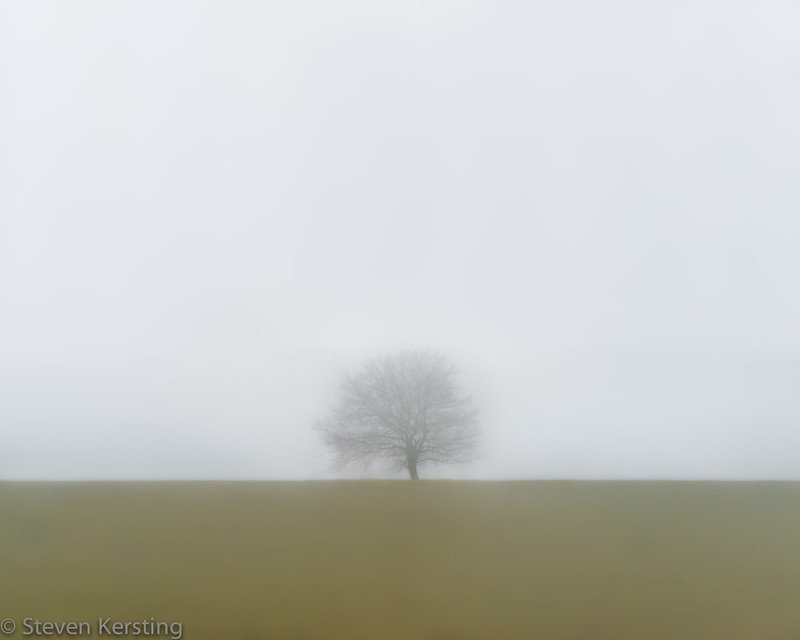
A Tree Ver 2.0 by Steven Kersting, on Flickr
Because of the lack of detail and amount of space (mood)


Indian dancer by Steven Kersting, on Flickr
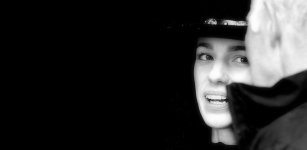
Because the image is dependent on the dancer looking into the negative space and at the source of light (which can't be seen)

But I wouldn't call these minimalist no matter how much negative space I included:


The Attack by Steven Kersting, on Flickr


SGK_6349.jpg by Steven Kersting, on Flickr

And I would consider this a minimalist image that would probably be more successful with more negative space, because the idea is that the flower reminds me of fireworks in the night sky. I.e, the negative space isn't just negative space; it represents something...


Springtime Fireworks by Steven Kersting, on Flickr
 
Last edited:
That doesn't mean there isn't any room for debate over the details of what these terms mean, but I'm not convinced that an individual inventing their own definition, which has no relationship to ones that are well documented and used by the majority helps the discussion.
I doubt I'm the only person, whose opinion on the meaning of these words, in this context, is contrary to yours. Art has a long history of debate about how to describe techniques and styles, let alone what is "good".
 
I doubt I'm the only person, whose opinion on the meaning of these words, in this context, is contrary to yours. Art has a long history of debate about how to describe techniques and styles, let alone what is "good".
As I said, I'm all for debating what these terms mean, but I think there needs to be some common understanding of language and the meaning of words to facilitate serious and useful debate.

It doesn't take too much effort to find consistent enough views on what different styles of art look like to have a fairly good idea of what to expect from those different styles. My book on Impressionist painting, my book on Sumi - e (Japanese ink painting), and the link I posted earlier to the online minimalist photography magazine all have pictures in a style I expect.

I believe this provides a framework for debate, and the use of words is important. "Minimalist Art" or Minimalist Photography is associated with a well-established style of picture, and can form the basis for any debate on what is and isn't Minimalist Photography.

This isn't necessarily the same as taking a minimalist approach, which can describe multiple approaches to photography.For example, a minimalist approach might be to only use a 50mm prime lens for all your photography.

As with many words, the exact meaning often depends on context, and in the context of this thread, we are clearly talking about Minimalist Photography as a style of photography.
 
I really like minimalist still life photography. There's something about an arrangement of one, two or even a few objects in an uncluttered scene, with lots of negative space.
 
.... in the context of this thread, we are clearly talking about Minimalist Photography as a style of photography.
...and so am I. You just need to accept that my definition is different to yours.
:rolleyes:

Here's a picture of an elephant...
Obviously, a woolly mammoth. ;)
 
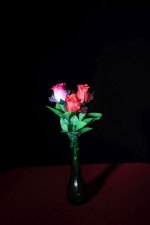
I've taken quite a few minimalist type still life shots, Attached is the one that seems to get the most attention of those looking through them, and it was relatively easy to shoot.

Just some roses in a vase, with a studio strobe about 5' from the vase, and a 7"reflector attached, with a 10 degree grid (honeycomb) attached to the reflector. The grid keeps the light from spreading, so it remains almost the same diameter while crossing the 5' distance to the roses.only the roses get the light from the flash, of course with a little leakage and bounce to light the vase and table top at a considerably lower level. Behind the table, hiding in the darkness are various pieces of photo gear that can't be seen because the light doesn't reach them sufficiently for them to be seen. The ceiling light (work light) in my shooting room that had been a large bedroom before I converted it into my studio shooting room was ON while I took this and most of the time that I'm shooting. Neither the ceiling light nor the photo gear behind the table show, because I raised the camera F-Stop setting just enough to keep the ceiling light from showing in the shot. I take "Test shots" ahead of the shoot and set the F-Stop just high enough that I get a totally black shot with the ceiling light ON and no flash. Blocking the lower constant light in the room then gives me only the level of the flash to light the shot, and I have full control of the flash level. This is the second of the photos that I took during this shoot. The first shot 0001 was too well lit, so I cut the level of the single flash that I used back a couple of F-Stops and tried a second shot. This time I was very happy with the result.

I wanted just enough light on the vase and table so the viewer would see the orientation of the shot from the view of the table and the vase, but at just enough light level to see them clearly, but with very brightly lit roses, and a completely dark background. I don't remember any of the camera or flash settings, but when dealing with my ceiling light in my shooting room, the F-Stop setting usually required is about F-8. Something shiny that reflects enough light to be seen with no flash in the light from this ceiling light might require a higher F-Stop setting, or I might want to raise it even higher for increased depth of focus, but this setting worked well for this shot and is a good starting point for my test shots. A shot requiring a shorter depth of focus might require a significantly lower F-Stop setting, and I would need to turn this ceiling work light off so as to keep it's light from being seen by the camera at the lower F-Stop setting. So The F-Stop setting is one camera adjustment that has two effects and leaning how to make use of both to your advantage is quite important for the shot's like this. Again, I make the adjustments to the camera and flash power levels to get the desired shot without the ambient light from the ceiling light affecting the shot, if it's at all possible. I want full control of the flash to get the shot that I want and to be able to see and move around safely in my studio while doing it. So I have added a wireless light control system for the ceiling light that gives me a wireless switch at the original shooting room door location, plus one on each of my camera stands, one on my computer table, and one on a wheeled tool box where I like to place the camera when shooting hand-held and want to take a break for some reason. If turning off the ceiling light becomes necessary because a low F-Stop setting is required, then I want to have an ON-OFF switch near me so I don't need to move when turning the light on and off. With this setup, I can use a low F-Stop setting, turn the ceiling light off briefly, take the shot, then turn the ceiling light back on, and never need to move around in the dark to do it. So here is that shot, straight from the camera, with no editing needed, except to size.


Charley
 

Attachments

  • Roses In Vase IMG_0002.jpg
    Roses In Vase IMG_0002.jpg
    23.6 KB · Views: 4
It always amazed me how the footprints are dents until the sand around them blows away and the footprints become bumps. I know why, but it still interests and amazes me. I like the shot, so you've got my like.

Charley
 
...and so am I. You just need to accept that my definition is different to yours.
I have accepted that you have a definition that is different to the one described in the literature on painting, drawing and photography, which is the one I have accepted.

Based on the photographs I've seen published under the label of "Minimalist", I have had no reason to question how the definition of Minimalist as described in the literature canot also be applied to this style of photography. But I am still learning about these things.

There is certainly some debate on whether a particular image might fall within the "Minimalist style," and across the history of art, there are different approaches to Minimalism, but these have obviously been sufficiently similar for art historians to have labelled them as having a shared identifiable style.

That's how it works. And along with other things, we can then discuss whether a particular piece of work really is Minimalist or not, or Impressionist or not, or Cubist or not etc etc and debate whether the "accepted" boundaries of these categories are appropriate.

The importance of defining categories of things, is to facilitate fluid and understandable discussion by using "single" words like Minimalist and Impressionist to convey a large body of information that would otherwise take multiple hours/pages of description.

There is, of course, also a place to challenge an entire categorisation, and a disruption of the status quo can be valuable, but I feel this needs to come from a place of deep knowledge and expertise of the subject being disrupted.

I've already said that you are free to use any definitions you want, whatever best suits your purposes, but your definition isn't one that anyone with any knowledge of the subject will recognise.


Obviously, a woolly mammoth. ;)
 
I wouldn't consider this a minimalist image as such... the image doesn't really "read/convey" any differently with more/less of the negative space MO.
Fair enough, but I didn't claim it to be, it was a portrait with a lot of negative space, in response to a reply from @Phil V..
 
... but your definition isn't one that anyone with any knowledge of the subject will recognise.
Surely, what you mean is: "anyone who agrees with me"?

There have been many disruptive trends and events in the art world. Waldemar Januszczak is just one person who has brought these "full and frank exchanges of opinion" to the public's attention. There are claimed to be rules in the world of art but they are basically what the Americans describe as "local ordinances", with no validity outside of a particular group.

I actually did "A level" art in the 1960s and the only useful thing I learned, it seems to me, is that "art is in the eye of the beholder" and like "beauty" comes in many, many different forms.
 
Surely, what you mean is: "anyone who agrees with me"?
You mean anyone who agrees with the previously agreed, and widely accepted, definition.
There are claimed to be rules in the world of art but they are basically what the Americans describe as "local ordinances", with no validity outside of a particular group.
Naming genres isn't making rules, it's doing as Graham says - making discussion simpler.
I actually did "A level" art in the 1960s and the only useful thing I learned, it seems to me, is that "art is in the eye of the beholder" and like "beauty" comes in many, many different forms.
Things have moved on since the 1960s, but I doubt even then they taught that "art is in the eye of the beholder". But the whole 'art' thing has been done to death on TP many times over.
 
But the whole 'art' thing has been done to death on TP many times over.
This is the thing.

Art is what an individual says it is or, if you prefer, whatever anyone says is art, is.
 
Back
Top