Beginner A beginners first proper adventure, and when are you no longer a beginner?

Messages
450
Edit My Images
Yes
This morning I went out to take some photographs, I usually go to the shore and as its so close to home it is great for experimenting and trial and error.
Not today I decided to have a very small adventure, so I drove inland a short way, when I found a spot that was interesting, I decided to stop the car and go and investigate.
It was a small stream with an old stone bridge, I thought it would be good for wildlife and flowers etc.
So as I was reversing the car in to a space at the end of a disused track, out of the corner of my eye I saw the roof of an abandoned house.
So I changed my mind about the stream and went to the house.
Here is the first photograph I took, what a find.
Looks to me this was used by people who were quite artistic.
The face on the farm.
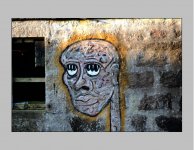
The face on the farm..jpg
 
That's excellent!

As to your question in the title, I think there is a difference between when someone is a beginner and when someone reaches a level of expertise etc

I think a beginner is probably someone 'beginning' in their journey who is still learning what they 'should' do.

Some beginners can achieve very good results very quickly.

Equally you can have people who have learnt what they should do and maybe have been taking phtographs for a while but may be less naturally talented in composition, judgment about how to set the photo up and processing etc but struggle to get as good results

I am a beginner but I suspect my path is in the second camp!
 
I have other photographs from that day yet to process and I will go back when the light is better, this was done early morning, I think I should have waited an hour to take the one I have posted.
 
Went out this morning, went to the last place I took some photographs, but for some reason did not take any, don't know why, might be because I don't want to repeat what I have done, maybe at a later date I will go back there.
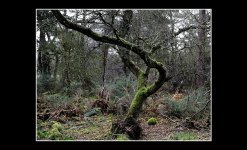
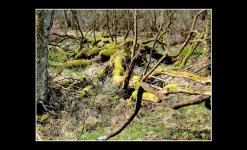
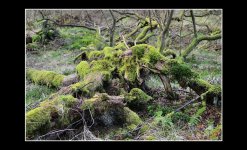
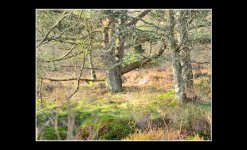
I did fine a small patch of trees so I decided I would give woodland photography a wee try.
Here is what happened.
Woodland 1.jpg

Woodland 2.jpg

Woodland 3.jpg

Woodland 4.jpg

Woodland 5.jpg

Woodland 6.jpg
 
I can relate to your content & your framings - you have a good eye - keep it up, and keep refining it. In the one with the old spreading larch tree (at least in this posted version of it) there's a blown highlight near the middle of the picture which is a bit of a no-no and something to try & guard against. It could even be recoverable by re-processing, depending ...
 
I can relate to your content & your framings - you have a good eye - keep it up, and keep refining it. In the one with the old spreading larch tree (at least in this posted version of it) there's a blown highlight near the middle of the picture which is a bit of a no-no and something to try & guard against. It could even be recoverable by re-processing, depending ...
Thank you for your very helpfull input, its exactly what I need, there has been a few comments very close to yours from members of the camera club I am in.
Its only recently that I have been leaving the house and useing the car to find spots which are in my eyes suitable for my photography.
Before that its was very local and on the beach not far from the house.
What spured me to leave the local vicinity was after an internal club comp, where it went well for me.
A boost to my confidence so to speek.
With editing, i have found that I go too far at times, which of course is beginners problems..
Again thank you, it really helps.
 
Personally I'd say you're no longer a beginner when you can get a reasonable amount of positive feedback without any caveats about your inexperience etc - i.e. People appreciate your work for what it is.

BUT if I stopped there that would be a hugely misleading post.

You could be accomplished at landscapes, but clueless about studio lighting. A fantastic sports photographer but terrible at weddings. A street photographer natural but clueless about macro. The list goes on. There are so many different skill sets within photography that I think everyone is always a beginner in some (if not most) aspects, but that doesn't mean that you don't know your chosen field damn well.

Just my 2p.
 
As @droj says, you appear to be able to 'see' pictures. Keep doing what you're doing and evaluating as you go.
You could be accomplished at landscapes, but clueless about studio lighting. A fantastic sports photographer but terrible at weddings. A street photographer natural but clueless about macro. The list goes on. There are so many different skill sets within photography that I think everyone is always a beginner in some (if not most) aspects, but that doesn't mean that you don't know your chosen field damn well.
However, there's no need to be good at all areas of photography so long as you are good, and keep getting better at, at the areas that interest and excite you.
 
@Oldbones I'd say that if you spend more time figuring out HOW to shoot something than actually shooting it, you're a Beginner :)

Think of it like learning to drive a car. initially, all the knobs and pedals are confusing, once you get past the HOW you can apply yourself to the actual driving

Then the confusing knobs are just the other drivers :D
 
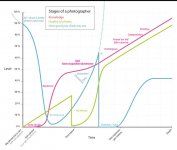
very late to the party... but this pretty much covers the whole journey...

Screenshot 2025-12-13 172733.jpg

Beginner really starts at "Just Started" and ends just before the line plummets to "Dammit, I suck"

50 years of shooting so far, and I reached the "composition" plateau about 10 years ago, before, honestly, just taking photo's now to support my other hobbies.
 
As for the question about being a beginner vs. moving up, I'd say you are no longer a beginner when you feel confident enough in what you're doing, you have more or less stable style you've found for yourself and you are able to analyze the critique and decide whether listening to it would benefit you or not.
I don't think it depends a lot on the amount of positive feedback, as other suggested, though that certainly means you're doing something right. The real question is whether it feels right for you, and if it does then you're no longer a beginner imo.
The learning process never stops though, you can be fluent with your camera and know enough Photoworks tricks to edit your pictures properly, but there will always be something new.
 
For the question in the title: I came from the technical side of the craft, so I'll break the mold this time...

Since the advent of automatic exposure control in electronic cameras (0): the point I would consider someone being graduated from the novice state, is when he finally managed to consistently produce usable shots with Manual mode.

Because every adjustments that entail in Manual mode: sensitivity, white balance, aperture, exposure time, and focus distance, are the fundamentals variables in all camera-based optical imaging works. Ability of making these variables work together or compensate each other to produce usable snapshots is a mark of someone who understands the basic mechanism behind his craft. Once accomplished this, he could proudly peel off the "novice" or "beginner" label he had given to himself.

A use of Manual mode also usually involve reading the camera's full user manual (1), which helps in the "know thy camera" department as well. It baffles me that many people in general either don't RTFM on their gadget, or mistook quick start guide as the manual; then proceed to ask around about things that manufacturers had already spent effort documenting up front...

Even with that said though, this doesn't mean that an intermediate-level or expert photographers couldn't or shouldn't use Auto or similar modes when appropriate or sufficient. The rite of passage in Manual mode however, makes sure that he knows which exact intervention was needed in scenarios where the camera's automatic adjustments fail to give desirable result. (2) Bonus points when he also knows how to do so in the least-effort fashion; including by using semi-automatic whatever-priority modes or scene-position presets that the camera provides.

For the matters beyond the camera operations: like having eyes for spotting good scenes, creative uses of impromptu scene compositions, creating and managing artificial scenes and lighting, making optimal/creative uses of found lighting, achieving fast lens-open-to-shutter-press, ability to capture both details and hints of movement in fast-moving objects as a still, and ability to creatively position optical quirks or custom exposure time as photographic effects, etc... I'd consider those rather are matters that distinguish between intermediates and experts in each photographic sub-fields.


(0) For the film age before the automatic cameras, I would rather draw the line at someone's ability to consistently produce usable shot at all.

(1) Not the quick-start pamphlet or abridged booklet that's often provided in the camera's box! I meant the full version that is a few-hundred-pages PDF file provided in the CD or made available on the manufacturer's website. You don't have to read it back-to-back to be effective; just jump directly to the section that concerns usage relevant to your current photographic subject/practice session. Eventually, your curiousity would get better of you; and you would find yourself casually sift through the nearby chapters on your own.

The manual would also narrate on how you should take care of your camera (including quirks and unexpected catches you might need to watch out for), which I think can be important too; DSLRs and mirrorlesses are not cheap. Some would even teach you how to hold the camera in the way that manufacturer thought to make an "optimal" shooting experience on that camera model; which can be interesting to read and compare with the way you are currently using.

(2) Or clear, normally-desirable result; but without the aesthetics/artistic quality the photographer was looking for.
 
Last edited:
Some might say that in some respects you are always a beginner. In some respects I'm old hand but in a technical sense I'm still learning. Modern cameras are SO complex there is always a feature somewhere whose purpose is unknown to me, and if I did know what it did I wouldn't know how to get there successfully!
 
Some might say that in some respects you are always a beginner. In some respects I'm old hand but in a technical sense I'm still learning. Modern cameras are SO complex there is always a feature somewhere whose purpose is unknown to me, and if I did know what it did I wouldn't know how to get there successfully!

Ah, but an experienced photographer might know he didn't need them. :D
 
I'd say that you're no longer a beginner when you know...
  • what you want to photograph
  • why you want to photograph it
  • when you want to photograph it
  • where you want to photograph it from
  • how you want to photograph it
  • who you are photographing it for
 
I would say to consider - a beginner is a person who does not know what aperture is and what it does, does not know how that relates to shutter speed and how they relate to ISO, once you understand that relationship and can then use that knowledge to get the image you wanted the rest is simply photography - you are now a photographer. The subject, artistic interpretation and technical set up of each image is done with knowledge of what you want out of it, the subject matter is irrelevant, ultimately you are only required to please yourself, if it pleases others thats nice, but you take your images for you, be careful with club and competitions - comparing your images with another persons and 'grading' them is not helpful to developing your photography but listening to the feedback can point you in directions you may have not thought of or missed and can help you develop your photography, in essence we are all beginners as we can all learn something new from others. Bottom line don't get hung up on it - go out and enjoy it :)
 
I am working my way along the photographic road I have taken, starting to gain confidence and have some great moments of enjoyment.
Shoot in manual mode all the time, just took the plunge a while ago and haven't really looked back to much.
Don't really think about it too deeply.
I always take a few practice shots to sort of warm me up, and now am starting to work on other aspects.
Some days I feel I do well. not everything works, but I usually get some thing to post on here.
I have been doing a bit more with editing, that has helped and I have taken shots of various different subjects.
Things I have found out, a few steps to the left or right or forwards or back can really change a shot.
Older towns that have access to the sea are gold mines for subject matter. Most of all I have slowed down and am far more deliberate about what I am doing.
Found out that I really like mono, and less busy subjects.
A big advantage is the amount of walking, which is good for me.
So I am happy with things, considering its not too long since I began this.
 
I'd say that you're no longer a beginner when you know...
  • what you want to photograph, something that is not modern day.
  • why you want to photograph it, because it will eventually be gone or stop happening.
  • when you want to photograph it, when it looks its best.
  • where you want to photograph it from, not the same place everyone else does.
  • how you want to photograph it, respectfully.
  • who you are photographing it for, myself.
 
I'd say that you're no longer a beginner when you know...
  • what you want to photograph
  • why you want to photograph it
  • when you want to photograph it
  • where you want to photograph it from
  • how you want to photograph it
  • who you are photographing it for
This is more profound than you might expect.
But I agree with this largely, and it’s made me realise I’m sometimes back to being a beginner.

I do have quite a task based approach to life, and for 40+ years most of my photography was performed for other people. It was technically challenging, but ‘easy’ cos I had all the answers to the questions above.

Now though, whilst I still ‘love’ photography, I don’t really know why anymore. This could deserve its own thread.

I’ve got a few regular ’jobs’ a year, and they’re easy, but the rest of the time, I’m aimless. I will add in, I’m still working part time and we’re doing major renovations on the house that’s keeping me busy 7 days most weeks.

We’re travelling a lot, but they’re not ‘photography’ trips, so it’s difficult to do the proper planning and spend the time to get ‘photographs’, so I’m just taking tourist shots that often don’t justify carrying around all the gear.

I’ve got 7 grandkids, but don’t often go out with them, when I do, again it becomes easy, I have the task of photographing people, recording them having fun.

So this photographer of 40+ years who’s shot countless weddings and events, finds himself a ‘beginner’ in his autumn years.
 
This is more profound than you might expect.
But I agree with this largely, and it’s made me realise I’m sometimes back to being a beginner.

I do have quite a task based approach to life, and for 40+ years most of my photography was performed for other people. It was technically challenging, but ‘easy’ cos I had all the answers to the questions above.

Now though, whilst I still ‘love’ photography, I don’t really know why anymore. This could deserve its own thread.

I’ve got a few regular ’jobs’ a year, and they’re easy, but the rest of the time, I’m aimless. I will add in, I’m still working part time and we’re doing major renovations on the house that’s keeping me busy 7 days most weeks.

We’re travelling a lot, but they’re not ‘photography’ trips, so it’s difficult to do the proper planning and spend the time to get ‘photographs’, so I’m just taking tourist shots that often don’t justify carrying around all the gear.

I’ve got 7 grandkids, but don’t often go out with them, when I do, again it becomes easy, I have the task of photographing people, recording them having fun.

So this photographer of 40+ years who’s shot countless weddings and events, finds himself a ‘beginner’ in his autumn years.
Although I think this is a great list from @AndrewFlannigan I'm inclined to think these are questions more likely to be asked by someone once they get beyond the beginner's stage.

Although, it's not a simple dichotomy, Photographers seem to fall into roughly two categories:

The first are those with passion, empathy, knowledge, and connection to a subject, which they want to capture in a photograph, but lack the technical skills.

The second are those who, for whatever reason, just become fascinated with taking photographs, who also start with a desire to learn technical skills.

The problem for this group is that once they learn the technical skills, they don't really know what they want to do with them. And only then do they start "asking", not knowing, the answers to the questions on Andrew's list.

I think this might be a particular problem for ex-professional photographers, who still have a passion for photography but no longer have a clear outlet for this passion.

I've mentioned this before, but when I was at college studying photography, one of my lecturers, in a rather exasperated manner, told the class that our biggest problem was that we were "only" interested in taking photographs. None of us really knew what he meant back then, but I do now.

In my case, I came to photography through a passion for wildlife and a desire to make wildlife photographs, but this became a passion to take photographs which largely displaced my passion for wildlife.

An obvious future career in wildlife from when I was around five turned into an aspiration for a career in photography from around 12 or 13: by 14 of 15, I was making money from pet and people portraits. It wasn't until I was around 25 that I rethought this and began making my way back towards a career in wildlife. However, I never lost my passion for taking photographs, which by then had expanded into a passion for "photography". By "photography" I mean not just an interest in "taking" photographs, but a broader interest in photographers, the history of photography, and the importance of photography in society and the arts.

So, to answer the question from @Oldbones I think the sign of no longer being a beginner is when the technical side of photography becomes intuitive and your energy turns to "asking" and answering the questions on Andrew's list. And to return to your point, I think these are questions that, in some form, many photographers never stop asking.
 
Although, it's not a simple dichotomy, Photographers seem to fall into roughly two categories:
I agree that photographers can be grouped together but I think that it's not quite as simple as your two groups.

May I suggest another list?
  1. Those who use a camera to keep, and perhaps share, memories of events in their lives, with no interest in the technicalities.
  2. People who use a camera for what may be called "technical memories", to do with their work or their leisure and will accept a need to acquire some more detailed knowledge of the technical aspects to achieve their aims.
  3. Artistic people who delight in finding and/or creating images for their own benefit or to share with others; and will investigate the technical issues, where they are relevant to their intentions.
  4. Scientifically minded people for whom the aim is to master the skills of photography for their own pleasure or as part of their investigations.
  5. Those who combine two or more of the above reasons, according to their needs.
 
I agree that photographers can be grouped together but I think that it's not quite as simple as your two groups.
Well, as you quote me saying it isn't a simple dichotomy, it should come as no surprise that I agree with this.
May I suggest another list?
  1. Those who use a camera to keep, and perhaps share, memories of events in their lives, with no interest in the technicalities.
  2. People who use a camera for what may be called "technical memories", to do with their work or their leisure and will accept a need to acquire some more detailed knowledge of the technical aspects to achieve their aims.
  3. Artistic people who delight in finding and/or creating images for their own benefit or to share with others; and will investigate the technical issues, where they are relevant to their intentions.
  4. Scientifically minded people for whom the aim is to master the skills of photography for their own pleasure or as part of their investigations.
  5. Those who combine two or more of the above reasons, according to their needs.
All these examples are subcategories of my first category. That is people who have a clear aim of what they want from their photographs, but haven't yet gained the technical skills to achieve it.

Your examples 3 and 4 were exactly the people I was thinking of when trying to define my first category, but it's easy to see how your examples 1 and 2 would also fit.

The view I was trying to express is that once your technical skills reach a sufficient level to allow you to focus your mind on making the pictures you want to make without being distracted or hindered by a lack of technical skills, you are probably no longer a beginner "photographer" within your chosen use of photography.

The issue, to repeat myself, is for people who are just "interested in taking photographs" who, unlike all the people in your "another list" have no clear aims for their photographs beyond making "good" photographs. Which often seem to be judged on their technical merit rather than how well they meet a personal or external brief.


For me, the points you raised in this first list are all questions which I regularly ask in some form or another; as they all seem to relate to the ongoing challenge of making "good" pictures long after leaving beginner status behind.
 
What I like in a photograph is when people such as myself stop to really look at it.
Then start to see how light and shade as well as composition has been used to create something that has made me the viewer change what I was doing to suddenly thinking about what I am seeing.
I am an amateur and will always be, but I want to be a good one. (eventually)
Ordinary things when done properly can be amazing, such as glass of wine or a bottle of perfume and many other things.
Then I ask my self, wonder if I could do that, or at least a good attempt.
Its fun to create, and improve as experience is gained, some disappointments along the way happen, working through that is a challenge.
Like a lot of things in life its the several small details that then make the bigger differences in the long run.
Sort of strange when I go in to Greggs the bakers while on my trips out with my camera. They always have mono photographs of the local area in their shops.
I never ever noticed until now, strange that a sausage roll shop highlights local scenes, but I guess that is one of the powers of photography.
Cameras, I started with a D3100, works fine and can do what I would call respectable, its as far as I can see good enough, or is it I did ask myself after a few months of ownership. More out of curiosity that anything else I bought a D70s, it was not expensive and I have lenses that will work with it.
This camera also works great and produces image's that I like. I know that some photographers get upset when someone tells then that their camera takes good photographs.
I know that it is not the camera its the photographer.
But I do see a clear difference between the two cameras images when I start to really look at them.
I now tend to use the D70s all the time, and the D3100 has sat unused for a few months.
This has stopped me from getting any more, as I feel the D70s would also sit unused, it may be a lesson learned there.
Below is a image taken with the D3100 and edited with NX Studio, that's a whole different skill.
I have done three edits and now am happy with it.
Trying to do indoor photography on a cold and wet day, but it was a great learning experience.
5 Analog Powerd_01_01_02.JPG
 
I agree that photographers can be grouped together but I think that it's not quite as simple as your two groups.

May I suggest another list?
  1. Those who use a camera to keep, and perhaps share, memories of events in their lives, with no interest in the technicalities.
  2. People who use a camera for what may be called "technical memories", to do with their work or their leisure and will accept a need to acquire some more detailed knowledge of the technical aspects to achieve their aims.
  3. Artistic people who delight in finding and/or creating images for their own benefit or to share with others; and will investigate the technical issues, where they are relevant to their intentions.
  4. Scientifically minded people for whom the aim is to master the skills of photography for their own pleasure or as part of their investigations.
  5. Those who combine two or more of the above reasons, according to their needs.
I think I am 3 on this list
 
My view on when one is no longer a beginner is when you can take a picture using ISO, aperture, shutter speed and focus and no longer need, or want, the scene modes on a camera. At that point you have moved from outright novice to someone who does actually have clue what they are doing. Once you've got that off pat, please refer to Andrew's list above and bear in mind that in photography, even an expert can learn something new.
 
Back
Top